
Steady pellet heat for Webster County's long, cold winters.
With 7,388 heating degree days and winter lows averaging 7°F, Webster County farmhouses and in-town homes alike need heat that runs for hours without tending. Find the right pellet stove or insert, and connect with a trusted local dealer.
Every Project Starts From One of These Five Situations
Consistent warmth without the wood-splitting work.
Webster County sits along the Des Moines River in north-central Iowa, anchored by Fort Dodge and surrounded by farm towns like Badger, Duncombe, Lehigh, Moorland, and Otho. At climate zone 6A with 7,388 heating degree days and average winter lows around 7°F—a stretch of cold that rivals Bismarck, ND—heating season here runs long, and homes with drafty additions or older farmhouse construction feel every degree of it.
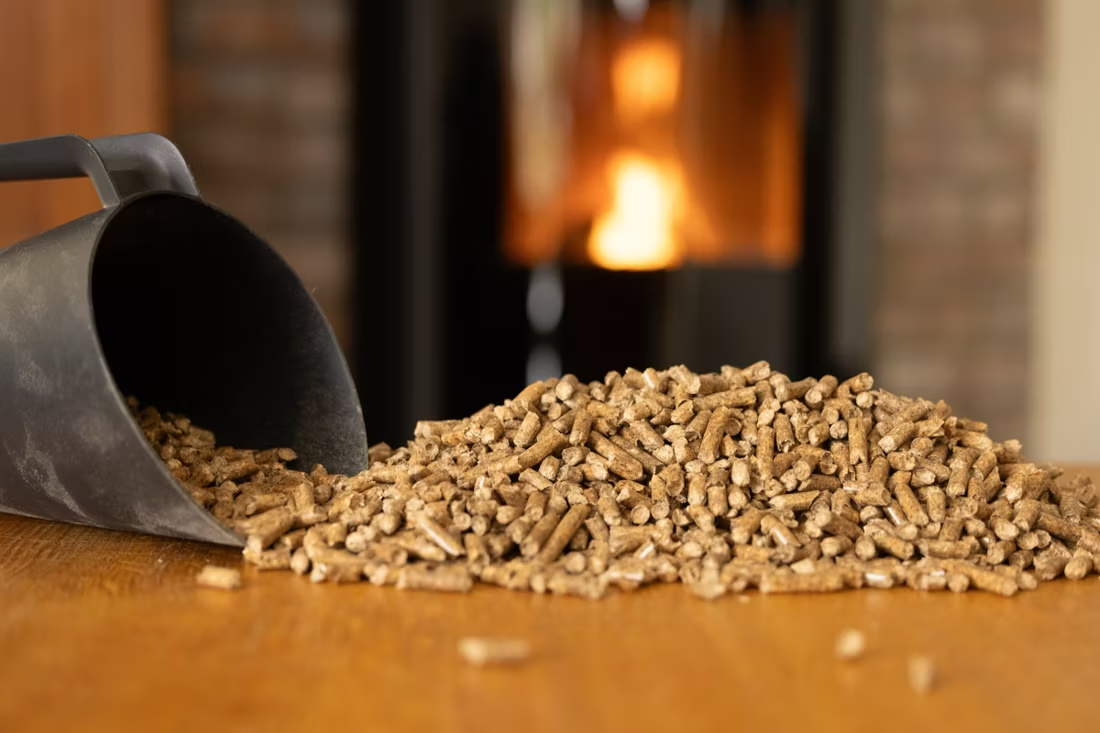
Webster County has plenty of oak, hickory, maple, and walnut on hand for wood burners, but a growing number of homeowners are choosing pellet stoves and inserts instead—for the hopper that feeds itself, the thermostat control, and the fact that there's no splitting, stacking, or hauling cordwood through a Fort Dodge winter. With no local air quality burn restrictions and regional pellet supply through brands like Lignetics and Indeck Energy Services, pellet heat is a practical, low-maintenance option for supplemental or even primary heat in this part of the state.
Three steps. No salesperson until you're ready.
Tell us about your project
Your zip code, your situation, and the fuel you're leaning toward—or let the answers point you to one.
See what's actually available
The brands dealers within 100 miles genuinely carry—real options, never a catalog mirage.
Get your dealer & Project Guide
A trusted local dealer, plus the free Project Guide & Parts List that names every component of the job.
Frequently Asked Questions
How much does a pellet stove installation cost in Webster County?
Pellet stove and insert installations typically run in the $3,500 to $6,500 range depending on the unit, whether you're venting through an exterior wall or an existing chimney, and whether a hearth pad or floor protection is needed to meet clearance requirements. Inserts going into an existing masonry fireplace using a stainless liner tend to fall on the lower end; freestanding stoves in new locations that require fresh wall penetrations run higher. A local dealer will give you a firm number after seeing your home.
Pellet stove vs. wood stove—which makes more sense for a Webster County home?
Wood stoves burn the oak, hickory, maple, and walnut that's plentiful in this part of Iowa, and they'll keep running through a power outage—a real consideration during winter ice storms. Pellet stoves need electricity to run the auger and blower, so they go dark when the power does, unless you add a battery backup. In exchange, pellet stoves offer a big convenience upgrade: load the hopper, set the thermostat, and walk away for a day or more without splitting or stacking wood. For a primary residence with reliable power, pellet is often the easier day-to-day choice; for a rural property where outages are common, a wood stove or a pellet stove paired with battery backup covers more bases.
What size pellet stove do I need for my home?
With Webster County's 7,388 heating degree days, sizing matters more here than in a milder climate. Small pellet stoves (under 1,000 sq ft) suit a single room, addition, or cabin. Medium units (1,000–2,000 sq ft) cover most main living areas in town homes around Fort Dodge. Larger units (2,000+ sq ft) are common in farmhouses outside the city where ceilings run higher and insulation is often older. If you're leaning on the stove as a primary heat source rather than supplemental warmth, size up and look for a larger hopper capacity so it can run through a cold overnight without a refill.
Will my pellet stove work if the power goes out?
Not without a backup power source. Pellet stoves rely on an electric auger to feed fuel and a blower to distribute heat, so a power outage stops the stove even if the hopper is full. Some homeowners pair a pellet stove with a small battery backup or portable generator specifically for this reason, since ice storms and high winds do knock out power in Webster County during winter. If uninterrupted heat during outages is a priority, a wood stove or a gas unit with battery-backed ignition is worth discussing with your dealer alongside a pellet option.
Do I need a permit to install a pellet stove in Webster County?
Most jurisdictions require a building permit for a new pellet stove installation, particularly when it involves a new wall penetration for venting or a change to an existing chimney. Within Fort Dodge, that permit runs through the city's building department; in unincorporated Webster County, it goes through the county's building and zoning office. Most local dealers handle the permit application as part of the installation, so you typically won't need to navigate it yourself, but it's worth confirming before work starts.
Where do I buy pellet fuel in Webster County, and what does it cost?
Regional pellet brands like Lignetics and Indeck Energy Services supply much of the Midwest, and bagged pellets are typically available through farm and hardware stores as well as hearth dealers around Fort Dodge. Pricing generally falls in the $220 to $280 per ton range depending on pellet quality (hardwood vs. softwood blends) and how far you are from a distribution point. Buying a season's supply—usually 2 to 3 tons for a primary-heat home in this climate—in late summer or early fall often gets better pricing than mid-winter purchases.
How much maintenance does a pellet stove need?
Pellet stoves need more routine attention than a gas unit but less than a wood stove. Expect to empty the ash pan every few days during heavy use, clean the burn pot and glass weekly, and vacuum the hopper and exhaust venting periodically through the season. An annual professional service—checking the auger motor, blower, and venting—is recommended before each Webster County heating season starts, especially if the stove is running as a primary heat source through the long stretch of cold from November into March.
What's the best pellet stove for a cold Iowa winter?
For a climate with winter lows averaging 7°F and nearly 7,400 heating degree days, look for a pellet stove with a larger hopper capacity—40 to 60+ pounds—so it can run through a long overnight without needing a refill, plus a higher maximum BTU output if you're heating a larger farmhouse rather than a single room. Ask your local dealer about auto-ignition and thermostat-controlled models, which cut down on daily fiddling during the stretch of the season when the stove runs nearly continuously.
Pellet vs. gas—which is right for my Webster County home?
Gas fireplaces and inserts turn on instantly, need no fuel storage, and run on natural gas or propane lines rather than bagged fuel you have to haul and store. Pellet stoves cost less to run per BTU in many cases, since regional pellet supply through Lignetics and Indeck Energy Services keeps fuel reasonably priced, but they require manual bag handling, hopper loading, and periodic ash cleanout. For a primary living space where convenience is the priority, gas often wins. For a den, workshop, or a homeowner comfortable with a bit more hands-on involvement in exchange for lower fuel costs, pellet is a strong fit.
Why is my open fireplace making my house colder?
Open fireplaces suck—literally. As the fire burns, it consumes air your furnace already paid to heat and pulls it out through the chimney, so the house is actually colder after the fire goes out than before you lit it. An insert fixes this: it seals the chimney, puts fixed glass across the front, and turns that hole in your house into a real heat source.
What's the difference between an insert and a zero-clearance fireplace?
An insert is a fireplace that slides into a pre-existing wood-burning fireplace—if you don't have one, there's nothing to insert it into. A zero-clearance fireplace is built into a framed wall, which makes it the answer for remodels and new construction. Simple test: existing masonry fireplace means insert; blank or framed wall means zero-clearance.
Can I install a fireplace myself?
If you're putting a fire in your house on purpose, it's best to work with an expert. Unless you're genuinely experienced in framing, gas line, vent pipe, and the national code on clearances to combustibles, have a professional do it—and ideally the same company that sells you the fireplace, so warranty, service, and liability all live under one roof.
Does a fireplace add value to my home?
On average, a fireplace adds back to the home about the same amount you spent installing it. Add the monthly savings from heating the rooms you actually use instead of the whole house—often hundreds of dollars a year—and the value case is strong before you even count what a fire does for how your family uses the room.
Stove and Fireplace Dealers in Webster County
Pellet Brands Stocked Around Webster County
Manufacturers will point you to the nearest stocking dealer.
Find your pellet stove in Webster County.
Tell us a bit about your home and we'll match you with a trusted local dealer and a free Project Guide & Parts List—sized for Webster County's winters, with the exact parts and vent kit your installer will need.
Find Your Fireplace →