
Electric fireplaces built for Webster County's cold, no chimney required.
Zone heat and real ambiance for Fort Dodge-area homes, basements, and additions—no gas line, no flue, no masonry work. Find the right electric unit and get matched with a trusted local dealer.
Every Project Starts From One of These Five Situations
Reliable warmth that plugs into what you already have.
Webster County sits in north-central Iowa's climate zone 6A, with an average winter low around 7 degrees and roughly 7,388 heating degree days a year—a heating season not unlike what homeowners deal with in Madison, Wisconsin. Fort Dodge and the smaller towns around it (Badger, Duncombe, Vincent) have plenty of oak, hickory, maple, and walnut timber, and wood heat still has a real following here. But electric fireplaces have carved out their own space, especially in finished basements, additions, bedrooms, and rental units where running a chimney or gas line isn't practical or worth the cost.
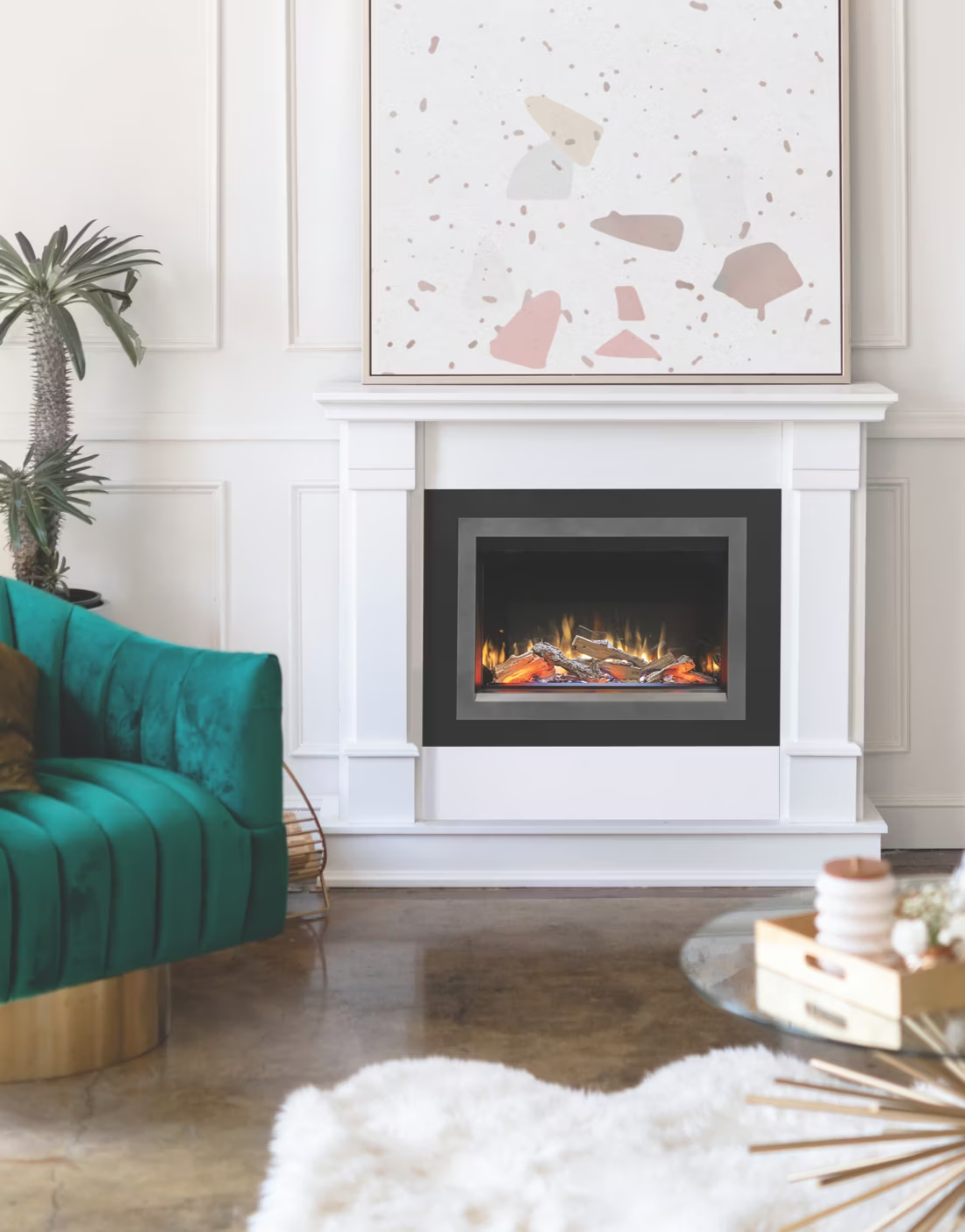
An electric fireplace doesn't require a permit for the unit itself in most cases, doesn't need combustion air, and can go into a wall or existing mantel opening with a standard 120V outlet or a dedicated circuit for larger built-ins. That makes it a fast, low-disruption project for Webster County homeowners who want supplemental heat in a specific room—a converted garage, a sunroom addition, a finished basement rec room—without touching the home's furnace or ductwork. It's worth being straightforward about the limits, too: at 7,388 heating degree days, electric resistance heat is not the most economical way to heat an entire drafty older home through a Webster County winter. It shines as zone heat and ambiance, paired with your existing furnace, not as a replacement for it.
Three steps. No salesperson until you're ready.
Tell us about your project
Your zip code, your situation, and the fuel you're leaning toward—or let the answers point you to one.
See what's actually available
The brands dealers within 100 miles genuinely carry—real options, never a catalog mirage.
Get your dealer & Project Guide
A trusted local dealer, plus the free Project Guide & Parts List that names every component of the job.
Frequently Asked Questions
How much does an electric fireplace installation cost in Webster County?
Plug-in electric fireplace inserts and stoves that use a standard 120V outlet typically run $400 to $1,200 installed, since there's no venting or gas line to run. Larger built-in units—a wall-mounted linear fireplace or a full mantel package—usually land between $1,500 and $2,500 once a dedicated electrical circuit and any framing or trim carpentry are included. Costs stay on the lower end for a straightforward basement or bedroom install in Fort Dodge, and can run slightly higher for rural Webster County addresses where an electrician has to factor in travel time.
Can an electric fireplace actually heat my whole house through a Webster County winter?
Generally, no—and it's worth saying plainly. With average winter lows around 7 degrees and roughly 7,388 heating degree days a season, Webster County winters ask a lot of a heating system. Most electric fireplaces max out around 4,600 to 9,000 BTU, which is enough to comfortably heat a single room (a basement, a bedroom, a sunroom addition) but not a whole house on the coldest nights. Think of an electric fireplace as zone heat that takes the load off your furnace in the room you use most, not a standalone replacement for central heat.
Do I need a permit to install an electric fireplace in Webster County?
Plug-in units that use an existing standard outlet typically don't require a permit. If you're installing a larger built-in that needs a new dedicated circuit, most electricians will pull an electrical permit through the local building department covering Fort Dodge or unincorporated Webster County, which is standard practice and usually handled as part of the install quote. There's no chimney, gas line, or combustion venting involved, which is part of why electric projects move faster than wood or gas installs.
What's the difference between an electric fireplace, insert, and stove?
An electric fireplace is typically a built-in unit set into a wall or mantel surround, designed to look like a traditional fireplace. An electric insert is sized to slide into an existing masonry or wood-burning firebox, which is a common option for Webster County homes with an old, rarely-used wood fireplace that the owner wants converted to something lower-maintenance. An electric stove is a freestanding cabinet-style unit that can go almost anywhere near an outlet—a basement corner, a home office, a converted porch. All three use the same resistance-heating technology; the choice mostly comes down to whether you have an existing opening to fill and how much of a design statement you want.
Will my electric fireplace work if the power goes out?
No—and this is a real consideration in Webster County, where winter storms occasionally knock out power for hours at a time. Electric fireplaces need grid power to run the heater and, in most models, the flame effect. If backup heat during outages matters to you, many Webster County homes pair an electric fireplace for everyday zone heat with a wood stove or fireplace elsewhere in the house—oak and hickory are both plentiful locally and burn hot and long—as the outage-proof option.
What's the best electric fireplace for a Webster County home?
Look for a unit with a true thermostat and a heater rated in the 4,600 to 5,000 BTU range if you want meaningful supplemental heat rather than just the flame effect—brands like Dimplex, Napoleon, and Touchstone all make models built for actual room heating rather than pure ambiance. For a basement or addition that runs cool in a Fort Dodge winter, a linear built-in with a higher wattage heater will do more work than a decorative mantel unit. A local dealer can size the unit to your room's square footage and insulation level during an in-home look.
Electric vs. wood—which makes more sense for my Webster County home?
Wood remains a strong choice here—Webster County has no air quality restrictions on burning, and oak, hickory, maple, and walnut are all common local species, so fuel is accessible and burns well. Wood also keeps working when the power is out, which matters through Iowa's winter storms. Electric wins on convenience: no ash, no chimney sweeping, no wood stacking, and instant on-off operation from a wall switch or remote. Many Webster County homeowners end up with both—wood in a main living space for real heat and backup capability, electric in a bedroom, basement, or addition where simplicity matters more than raw output.
Where do electric fireplaces make the most sense in a Webster County home?
The best fits are rooms without existing venting options and rooms where you want heat without a major remodel: finished basements, primary bedrooms, home offices, three-season porches converted to year-round use, and rental properties around Fort Dodge where landlords want supplemental heat without the maintenance and insurance considerations of a wood-burning unit. It's also a common choice for homeowners converting an old, rarely-used wood fireplace into something they'll actually use daily.
How much does it cost to run an electric fireplace in Webster County?
Most electric fireplace heaters draw around 1,500 watts on high. Running one for several hours an evening through a Webster County winter, at typical regional electric rates from providers like MidAmerican Energy or the local rural cooperatives, generally adds somewhere in the range of $15 to $40 a month depending on how often it's used and the local rate structure. That's meaningfully cheaper than heating an entire room with a portable space heater running around the clock, but still worth weighing against a wood stove if the room sees heavy daily use all winter.
Can I put a TV above my fireplace?
Yes—with an asterisk. Fireplaces are hot and TVs don't like heat. Either put a mantel between them to deflect rising warmth, or choose a fireplace with heat-management technology that creates a cool zone on the wall above—the wall stays around 125 degrees, barely warm, while the room still gets full heat. If you like clean lines and don't want a mantel, heat management is the answer.
Does an electric fireplace need a vent or chimney?
No—that's its superpower. An electric fireplace needs a wall and an outlet, period. No vent pipe, no gas line, no clearances to design around, which is why it works in bedrooms, offices, apartments, and walls where venting a gas or wood unit would be impractical or impossible. Installation is typically the simplest and least expensive of any fireplace type.
Can I install a fireplace myself?
If you're putting a fire in your house on purpose, it's best to work with an expert. Unless you're genuinely experienced in framing, gas line, vent pipe, and the national code on clearances to combustibles, have a professional do it—and ideally the same company that sells you the fireplace, so warranty, service, and liability all live under one roof.
Does a fireplace add value to my home?
On average, a fireplace adds back to the home about the same amount you spent installing it. Add the monthly savings from heating the rooms you actually use instead of the whole house—often hundreds of dollars a year—and the value case is strong before you even count what a fire does for how your family uses the room.
Stove and Fireplace Dealers in Webster County
Find your electric fireplace in Webster County.
Tell us about your room and how you plan to use it, and we'll put together a free Project Guide & Parts List with the right electric unit for Webster County's climate—plus a trusted local dealer to install it.
Find Your Fireplace →