
Pellet heat is rare in Fort Dodge, but not impossible.
Most Webster County homes run on natural gas, but a small number of Fort Dodge homeowners still choose pellet appliances for garages, shops, and backup heat. Here's what that actually looks like.
Every Project Starts From One of These Five Situations
Fort Dodge is natural gas country, not pellet country.
Webster County sits in north-central Iowa's flat farm belt, where winters bite hard—Fort Dodge averages a bitter 7°F overnight low and racks up a long, brutal heating season, cold enough to rival Fargo, ND in a bad stretch. But unlike mountain or forest regions where wood and pellet heat run deep, Fort Dodge homes are overwhelmingly built around natural gas furnaces served by MidAmerican Energy, which also supplies the area's electricity. Oak, hickory, maple, and walnut grow in the county's windbreaks and river bottoms, but there's no real wood-heating culture here, and pellet stoves have never caught on as a mainstream category either.
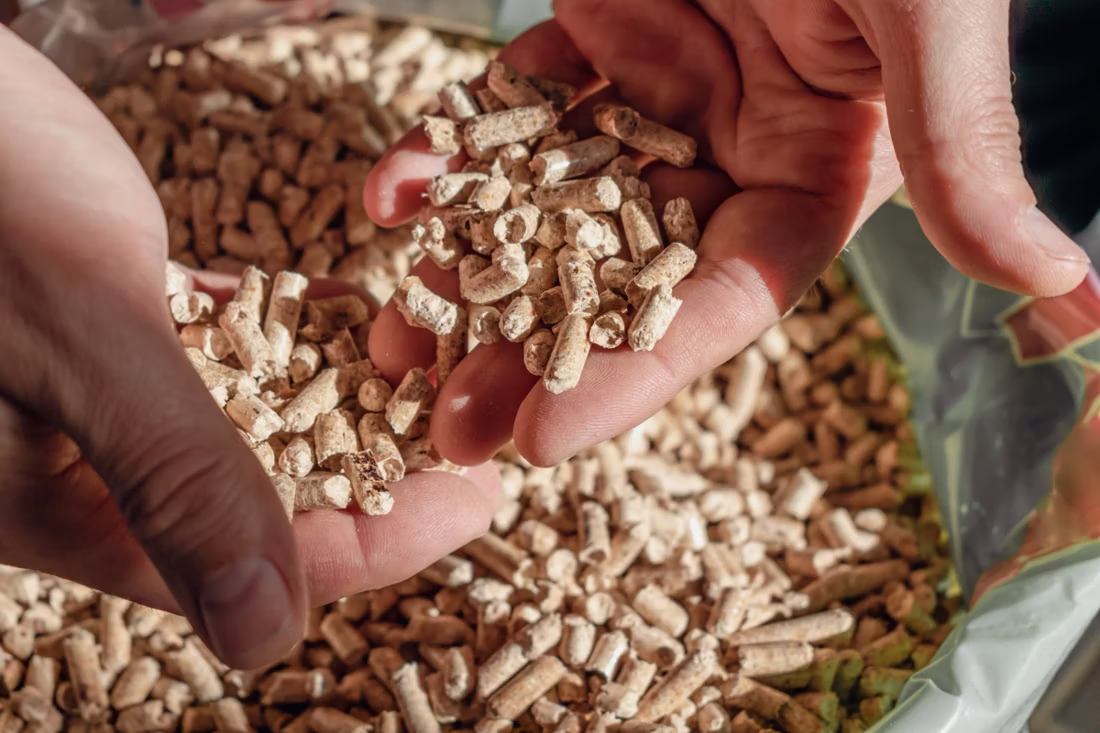
That doesn't mean pellet appliances are unheard of. A handful of Fort Dodge homeowners install pellet stoves in detached garages, workshops, or older farmhouses as supplemental heat, and some rural properties use them as a hedge against winter power outages when the grid takes a hit. Fuel isn't grown or milled locally the way it is in timber states—bagged pellets from brands like Lignetics typically come through farm and hardware suppliers, and larger volumes get ordered by the pallet ahead of the season. If a pellet stove genuinely fits your situation, a local dealer can still spec, size, and install one correctly—it's just a narrower lane than gas or electric here.
Three steps. No salesperson until you're ready.
Tell us about your project
Your zip code, your situation, and the fuel you're leaning toward—or let the answers point you to one.
See what's actually available
The brands dealers within 100 miles genuinely carry—real options, never a catalog mirage.
Get your dealer & Project Guide
A trusted local dealer, plus the free Project Guide & Parts List that names every component of the job.
Frequently Asked Questions
Are pellet stoves actually common in Fort Dodge?
No, and it's worth saying plainly: pellet stoves are a niche choice in Fort Dodge, not a mainstream one. The vast majority of Webster County homes heat with natural gas furnaces through MidAmerican Energy, and even wood-burning appliances are uncommon in this part of Iowa despite oak, hickory, and walnut growing locally. The homeowners who do install pellet stoves here are usually heating a detached garage or workshop, adding backup heat for outages, or supplementing an older farmhouse that struggles to stay warm through a 7°F January night. If that's your situation, a pellet stove can still make sense—it's just not the default option it would be in a heavier wood-heat region.
What does a pellet stove installation cost in Fort Dodge?
Because pellet installers are scarce locally, pricing tends to track regional Midwest averages rather than a tight local range: expect roughly $3,000 to $6,000 installed for a freestanding pellet stove, depending on the unit, whether venting runs through an exterior wall or an existing chimney, and any electrical work needed for the auger and blower circuit. Pellet inserts into an existing masonry fireplace run similarly. Since so few dealers in this market handle pellet work regularly, get a firm in-home quote before assuming a number—travel time and part availability can move the estimate more here than in a market with several competing installers.
Where do I actually buy pellets in Fort Dodge?
There's no pellet mill in Webster County, so most owners buy bagged pellets—brands like Lignetics show up at farm and hardware supply stores that also stock feed, fencing, and stove parts—or order by the pallet (roughly 50 forty-pound bags) ahead of winter to avoid a mid-January scramble. Indeck Energy Services, which has a regional biomass presence in the Midwest, supplies industrial-scale pellet volumes rather than retail bags, so it's not a source for homeowner quantities. Because supply isn't guaranteed on short notice the way it would be in a timber state, plan to stock a season's worth—generally 2 to 3 tons for a stove used as supplemental heat—before the first hard freeze.
Do I need a permit to install a pellet stove in Fort Dodge?
Yes—a new solid-fuel appliance installation typically requires a building permit through the City of Fort Dodge or Webster County, covering the unit's clearances, hearth pad, and venting termination. Because pellet installers are uncommon here, it's worth confirming directly with the jurisdiction rather than assuming a local dealer handles this routinely the way a gas or electric contractor would. A licensed installer familiar with solid-fuel code will know how to route the required paperwork, which is one more reason to work with someone who's actually done pellet installs before, not just a general HVAC contractor.
Should I consider a corn stove instead of a pellet stove?
It's a fair question in Iowa. Bi-fuel stoves that burn either wood pellets or shelled corn have a small but real following in Midwest farm country, since corn can sometimes be sourced directly or cheaply from a local elevator rather than shipped in as bagged pellets. The tradeoff is that corn burns hotter and dirtier, requires more frequent cleaning, and clogs auger systems more easily than pellets if it isn't dry. For a homeowner without direct access to farm-grade corn, straight pellet fuel is usually the lower-maintenance choice—but if you're on or near a working farm, it's worth asking a dealer about a bi-fuel unit specifically.
Pellet stove vs. natural gas—which makes more sense in Fort Dodge?
For most Fort Dodge homes, natural gas wins on convenience and cost predictability—it's the default fuel here, MidAmerican Energy's residential rates are stable, and gas fireplaces or furnaces need no fuel storage or hopper loading. Pellet stoves make sense in narrower cases: a detached garage or shop without a gas line, a rural property where backup heat during an ice-storm outage matters, or a homeowner who specifically wants a solid-fuel option without the wood-handling and chimney maintenance of cordwood. If your home already has gas service, there's rarely a strong case for pellet as primary heat here—it's much more often a supplemental or specialty choice.
Will a pellet stove keep working if the power goes out?
Not on its own—this is the biggest limitation to understand before buying. Pellet stoves rely on an electric auger to feed fuel and a blower to distribute heat, so a standard unit shuts down the moment power drops. Given that Webster County winters bring ice storms and heavy snow capable of knocking out MidAmerican Energy service for hours or days, some rural buyers pair a pellet stove with a small backup generator or battery inverter specifically to keep the auger running through an outage. If reliable off-grid heat during outages is the main goal, a wood stove or a battery-free gas fireplace with an on-demand pilot is a more dependable choice than pellet.
What size pellet stove do I need for Fort Dodge's winters?
With winter lows averaging 7°F and a long, brutal heating season, Fort Dodge sits solidly in a cold climate—but since pellet stoves here are almost always supplemental rather than whole-home heat, sizing is usually driven by the specific space, not the whole house. A stove rated for 1,000 to 1,500 square feet is typically plenty for a garage, workshop, or single large room; whole-home pellet heating in a home this cold generally isn't realistic unless the house is small and well-insulated. A dealer can walk through your specific space and insulation before recommending a BTU output.
How do I find someone to install a pellet stove near Fort Dodge?
Because pellet stoves are uncommon in this market, dedicated hearth dealers are thin on the ground in Fort Dodge itself—homeowners sometimes end up working with an installer based in Des Moines or Sioux City who's willing to make the trip, or a local HVAC contractor who occasionally handles solid-fuel units. This is exactly the kind of gap Find My Fireplace exists to close: rather than guessing which local contractor actually has pellet experience, we match you with a trusted installer who genuinely handles this equipment and can get parts and venting sized correctly for your home.
Why is my open fireplace making my house colder?
Open fireplaces suck—literally. As the fire burns, it consumes air your furnace already paid to heat and pulls it out through the chimney, so the house is actually colder after the fire goes out than before you lit it. An insert fixes this: it seals the chimney, puts fixed glass across the front, and turns that hole in your house into a real heat source.
Why is a fireplace insert so efficient?
An insert does two things: it seals the chimney completely, so you stop losing air you already paid to heat, and it radiates warmth into the room through the firebox and glass. Most add a heat-exchange fan that pulls cool room air underneath, wraps it around the hot firebox, and pushes it back out warm. Your home is more efficient before you've even lit the first fire.
Can a fireplace actually lower my heating bill?
Yes—by creating a comfort zone. A furnace heats every square foot of the house just to warm the one room you're in; a gas fireplace on low burns roughly a sixth of the gas a typical furnace does. Set the furnace around 55–60 degrees as a baseline, then heat the rooms your family actually uses. Families who heat this way commonly save $20–$60 a month.
Can I install a fireplace myself?
If you're putting a fire in your house on purpose, it's best to work with an expert. Unless you're genuinely experienced in framing, gas line, vent pipe, and the national code on clearances to combustibles, have a professional do it—and ideally the same company that sells you the fireplace, so warranty, service, and liability all live under one roof.
Nearby Dealers
Hearth shops serving Fort Dodge and the surrounding area.
Pellet Brands Stocked Around Fort Dodge
Manufacturers will point you to the nearest stocking dealer.
Get your Fort Dodge pellet stove plan.
Tell us about your space—garage, workshop, or home—and we'll match you with a trusted local dealer and send a free Project Guide & Parts List with the exact equipment and vent kit for your Fort Dodge installation.
Find Your Fireplace →