
Keep Your Family Warm and Safe—No Matter What
With winter lows averaging 7°F and a long, hard heating season, Palo Alto County gets plenty cold—but open farmland, not forest, defines this corner of northwest Iowa. For the small number of Emmetsburg-area homeowners who still want a wood stove, we'll match you with a real local dealer who can size and install it correctly.
Every Project Starts From One of These Five Situations
Open prairie, not the North Woods.
Palo Alto County is glaciated farmland drained by the East and West Forks of the Des Moines River, home to about 6,910 people spread across Emmetsburg and a handful of small towns. It's not short on cold—a 7°F average winter low and a long, hard heating season put it in the same range as Madison, Wisconsin, and colder than most of Iowa's larger cities. But the fuel infrastructure here leans hard on propane in the country and natural gas in town, and there's simply not the timber base or wood-heating culture you'd find in a forested state.
Oak, hickory, maple, and walnut still grow along the Des Moines River bottoms and in old farmstead windbreaks, so wood is available to anyone who wants it—and a modest number of Palo Alto County homeowners do install a stove or insert, usually as backup heat for when rural electric co-op lines go down in an ice storm, or simply for the ambiance of a fire in an older farmhouse. There's no air-quality restriction working against you here, unlike smoke-prone basins out West—it's mostly a matter of thin local demand and installer coverage. That's exactly the gap Find My Fireplace exists to close: we match the few homeowners who do want wood heat with a dealer who actually installs it correctly, rather than leaving you to guess at a big-box counter.
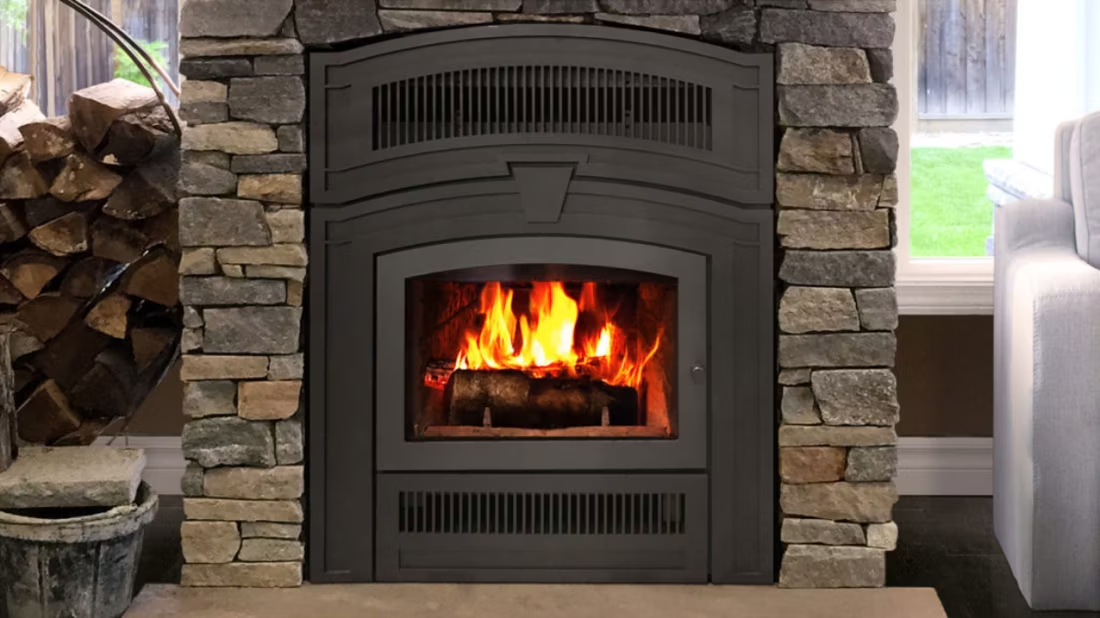
Three steps. No salesperson until you're ready.
Tell us about your project
Your zip code, your situation, and the fuel you're leaning toward—or let the answers point you to one.
See what's actually available
The brands dealers within 100 miles genuinely carry—real options, never a catalog mirage.
Get your dealer & Project Guide
A trusted local dealer, plus the free Project Guide & Parts List that names every component of the job.
Frequently Asked Questions
How much does a wood stove installation cost in Palo Alto County?
Because wood stove installs are infrequent out here, pricing isn't as standardized as it is in higher-demand wood-heating markets, but the same cost drivers apply: stove size, whether you're tying into an existing chimney or running new Class A pipe, and hearth pad work. A straightforward insert into a working masonry chimney sits on the lower end; a freestanding stove in an older farmhouse with no existing chimney—common in this county's housing stock—runs higher once venting through the roof is factored in. Your matched dealer will give you a firm number after seeing the home; that's part of the free Project Guide & Parts List.
What size wood stove do I need for an older Palo Alto County farmhouse?
Many homes in this county are older farmhouses with tall ceilings, uninsulated additions, and drafty original construction—all of which push sizing larger than a simple square-footage chart would suggest. With winter lows averaging 7°F and stretches well below zero, a stove sized for supplemental heat in a milder climate often falls short here. A dense hardwood like oak or hickory helps, since it packs more BTUs per load than softer species, but the stove itself still needs to be matched to the room's real heat loss. This is worth an in-home look rather than a guess—it's the single biggest factor in whether a stove keeps up on the coldest nights or smolders and creosotes up.
Where can I find a wood stove dealer near Palo Alto County?
Given the low local demand, you're less likely to find a dedicated hearth shop inside Palo Alto County itself and more likely to be served by an installer based in a larger regional hub—Spencer, Algona, or Fort Dodge are the closest markets with established hearth retailers. That's not a downside: those dealers cover rural farm counties like this one regularly and are used to installing in older farmhouses without existing chimneys. Expect a modest travel charge folded into the quote, and confirm the installer carries NFI or CSIA credentials for wood-burning work specifically—not just general HVAC.
Should I get a wood stove or a wood insert?
If your Palo Alto County home already has a working masonry fireplace and chimney—more common in older Emmetsburg-area homes than newer rural builds—an insert is usually the better move, since it uses venting you already have and turns a heat-losing open hearth into an actual heat source. If you're in a newer home or a farmhouse without an existing chimney, a freestanding stove with new Class A pipe is the more practical route. Either way, don't assume; have a local installer confirm your existing chimney is sound enough to line before committing to the insert path.
Do I need a permit to install a wood stove in Palo Alto County?
Yes, in general—new wood-burning appliance installations require a building permit, whether that's through Emmetsburg's city office if you're inside town limits or the county's building department if you're in unincorporated Palo Alto County. Enforcement and process can be less formalized here than in larger jurisdictions, so it's worth confirming directly with whichever office covers your address before work starts. Most dealers who regularly install in rural Iowa counties handle this step as part of the job, which is one more reason to work with someone who does this routinely rather than a general contractor doing their first wood stove.
What's the best wood stove for a climate like this?
With a long, hard heating season and lows regularly near or below zero—similar territory to Madison, Wisconsin, in a bad stretch—a catalytic stove from a brand like Blaze King is worth a look if you want the stove to actually carry meaningful heat load rather than just supplement it. Catalytic units hold a fire 15-20+ hours on a full load, which matters on the long, still-cold nights this part of Iowa gets. Dense local hardwoods—oak and hickory especially—burn well in a catalytic design. For a lighter-duty backup or ambiance unit, a smaller non-catalytic stove is simpler to operate and less expensive to install.
How often should my chimney be inspected?
An annual inspection before burning season is the standard recommendation from the CSIA, and it matters more, not less, in a county like this where the installer base is thin and a problem chimney might not get caught quickly otherwise. Older farmhouse chimneys—especially ones that sat unused for years before someone decided to put a stove back into service—should get a full Level 1 or Level 2 sweep and inspection before that first fire, not just a routine cleaning. If you're burning as a primary heat source rather than occasional backup, plan on the same annual schedule going forward.
Where does firewood come from if there's no national forest nearby?
Palo Alto County has no public forest land or Forest Service cutting permits—this is farm country, not timberland. Firewood here typically comes from private sources: farmstead windbreak trees being taken down, dead or storm-damaged oak and walnut along the Des Moines River bottoms, or a local tree service clearing land who's happy to have someone haul away the wood. Cord pricing runs on the informal side compared to forested states, so ask around locally or check with your installer—many keep a list of reliable local wood sources for customers.
Wood stove vs. pellet stove—does either make sense here?
Honestly, both are uncommon in Palo Alto County for similar reasons: propane and natural gas dominate the local heating market, and neither wood nor pellet has much of a local installer base. That said, wood has one clear edge for this county specifically—it runs with no electricity, which matters when rural electric co-op lines go down in a winter storm and you actually need heat. Pellet stoves (Lignetics and Indeck Energy Services both supply this region) need power for the auger and blower, so they're not a storm-outage solution. If backup heat during an outage is the goal, wood wins here; if it's just supplemental warmth in a home with reliable power, either can work, though you should expect to source pellets from a supplier rather than a nearby retail shelf.
Why is my open fireplace making my house colder?
Open fireplaces suck—literally. As the fire burns, it consumes air your furnace already paid to heat and pulls it out through the chimney, so the house is actually colder after the fire goes out than before you lit it. An insert fixes this: it seals the chimney, puts fixed glass across the front, and turns that hole in your house into a real heat source.
Why is a fireplace insert so efficient?
An insert does two things: it seals the chimney completely, so you stop losing air you already paid to heat, and it radiates warmth into the room through the firebox and glass. Most add a heat-exchange fan that pulls cool room air underneath, wraps it around the hot firebox, and pushes it back out warm. Your home is more efficient before you've even lit the first fire.
How much should I budget for a fireplace?
For an average home—covering the fireplace, the vent pipe, and basic installation—a budget between $3,900 and $5,500 gives you a lot of options across wood, gas, and pellet. By the time you add finish work, gas line, and electrical, the average complete installation lands between $5,000 and $12,000 all-in. In a remodel or new build, a good rule is to put about 2.5% of the total project cost toward the fireplace.
Does a fireplace add value to my home?
On average, a fireplace adds back to the home about the same amount you spent installing it. Add the monthly savings from heating the rooms you actually use instead of the whole house—often hundreds of dollars a year—and the value case is strong before you even count what a fire does for how your family uses the room.
Find your wood stove in Palo Alto County.
Tell us about your home and how you plan to use it—backup heat, ambiance, or something in between—and we'll match you with a trusted regional dealer and send over a free Project Guide & Parts List with the exact parts, vent kit, and installer recommendation for your Palo Alto County project.
Find Your Fireplace →