
Pellet heat is a niche choice in Palo Alto County, Iowa.
Most homes around Emmetsburg, Ruthven, and Palo Alto County's farm towns heat with propane or natural gas, but a small number of homeowners still add a pellet stove for backup warmth, a shop or garage, or a wood-look fire without the wood. We'll match you with a real dealer who can tell you what's actually installable here.
Every Project Starts From One of These Five Situations
A farm county built around propane, not pellet mills.
Palo Alto County sits in north-central Iowa's corn and soybean country, with roughly 6,900 residents spread across Emmetsburg and small towns like Ayrshire, Cylinder, Graettinger, Mallard, Ruthven, and West Bend. Climate zone 6A and 7,250 heating degree days put winters here on par with Fargo, North Dakota—average lows around 7°F, with stretches well below zero once an Alberta clipper comes through. That's cold enough that heating matters a great deal, but the county's heating culture developed around propane tanks and, in town, natural gas—not pellet appliances.
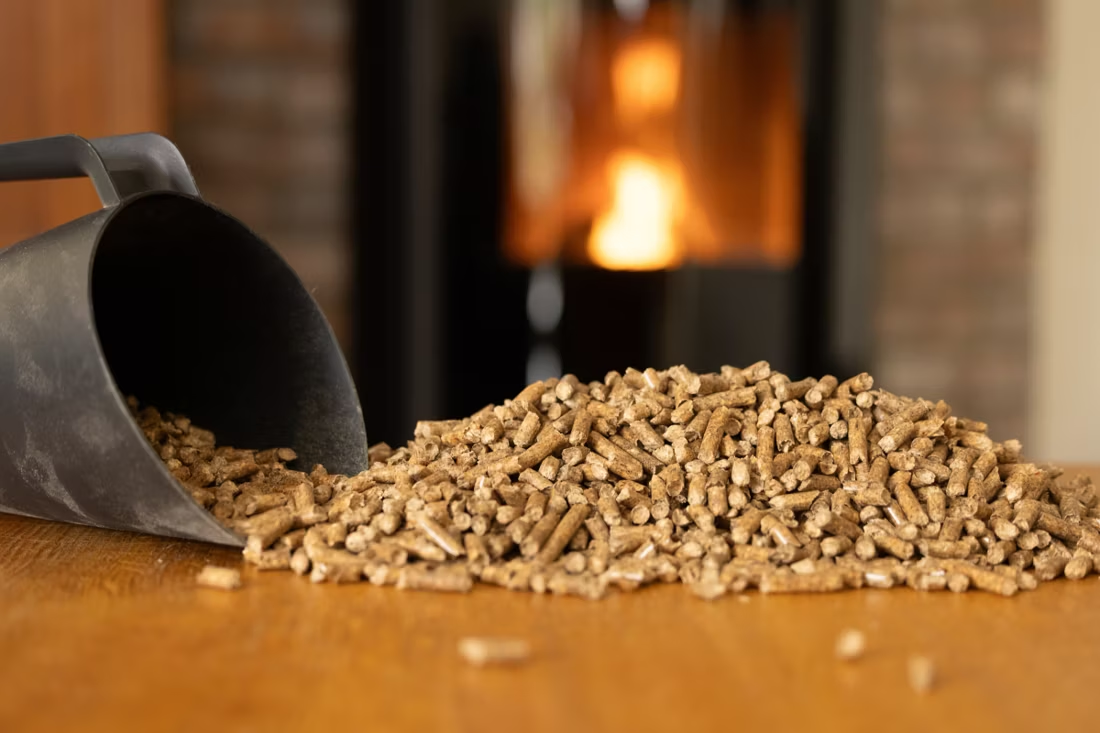
There's no dedicated hearth and pellet retailer based in Palo Alto County itself, and pellets aren't produced locally the way corn is. Bags from suppliers like Lignetics or biomass distributors such as Indeck Energy Services typically get trucked in from outside the region, sold through farm supply stores or ordered by the pallet rather than picked up at a specialty stove shop. None of that makes a pellet stove impossible—plenty of farmstead shops, machine sheds, and second homes across the county run one for supplemental heat or backup warmth when propane deliveries get delayed during a hard winter. It just means the nearest certified installer is more likely based in Spencer, Algona, or Fort Dodge than in Emmetsburg, and it's worth confirming with a local pro what's actually serviceable before you buy.
Three steps. No salesperson until you're ready.
Tell us about your project
Your zip code, your situation, and the fuel you're leaning toward—or let the answers point you to one.
See what's actually available
The brands dealers within 100 miles genuinely carry—real options, never a catalog mirage.
Get your dealer & Project Guide
A trusted local dealer, plus the free Project Guide & Parts List that names every component of the job.
Frequently Asked Questions
How much does it cost to install a pellet stove in Palo Alto County?
Nationally, a pellet stove installation typically runs $3,000 to $6,500 depending on the unit, venting, and whether you need electrical work for the hopper and blower. Palo Alto County doesn't have a hearth retailer within its own borders, so most installs here come from dealers based in Spencer, Algona, or Fort Dodge, and you should expect a trip charge folded into the quote. Ask any dealer you're considering for a firm, itemized estimate that includes the vent kit—that's usually where surprise costs show up.
Why don't more people in Palo Alto County heat with pellets?
Propane is the default here. Palo Alto County is farmland—corn and soybeans, not forest—and most rural homesteads already have an LP tank and a propane furnace, with natural gas available in Emmetsburg and other towns through the local utility. That infrastructure, plus the fact that no pellet mill or dedicated hearth shop operates in the county, means pellet stoves stay a secondary or novelty choice rather than a primary heat source. The handful of homeowners who do install one usually want backup heat for a farmstead outage, warmth for a shop or garage, or the look of a fire without cutting wood.
Where can I actually buy pellets in Palo Alto County?
You won't find a dedicated pellet retailer in the county, but bagged pellets from brands like Lignetics show up at farm supply and co-op stores in and around Emmetsburg, and larger volumes can be special-ordered through regional biomass suppliers such as Indeck Energy Services. Because pellets get trucked in rather than produced nearby, it's worth buying a season's supply early—roughly 40 to 60 forty-pound bags for average use—rather than restocking mid-winter when a storm makes deliveries unpredictable.
Will a pellet stove keep my house warm if the power goes out?
Not on its own. Pellet stoves rely on an electric auger and blower to feed fuel and move heat, so a standard unit shuts down the moment power drops—a real consideration in a county that sees its share of winter ice storms and rural outages. Some models accept a small battery backup or generator hookup for a few hours of runtime, which is worth asking about if backup heat is your main reason for wanting one. For true off-grid heat during an extended outage, a propane space heater or generator-backed furnace is generally the more dependable choice in Palo Alto County.
What size pellet stove do I need for a Palo Alto County home?
With 7,250 heating degree days and average lows around 7°F, this is genuinely cold-climate territory—similar to what you'd size for in Fargo or Bismarck. A mid-size pellet stove (rated for 1,000-1,800 square feet) handles a single large room or open living area as supplemental heat; a farmhouse wanting broader coverage typically needs a larger unit paired with realistic expectations, since most homes here still lean on a propane furnace as the primary system. A local installer can size it properly based on your insulation and layout during an in-home visit.
Do I need a permit to install a pellet stove in Palo Alto County?
Most jurisdictions require a building permit for any new solid-fuel appliance, including pellet stoves, and Palo Alto County is no exception—check with the county zoning and building office before installation, or ask your installer to confirm and handle it. Because pellet installs here are less common than in wood-heavy regions, don't assume the person pulling your permit has done one recently; a dealer who regularly installs pellet units in this part of Iowa will know the specific requirements and can walk the inspector through the venting setup.
Does a pellet stove make sense if I already have propane heat?
It can, mainly as a hedge. Rural Iowa propane prices spike in some winters when grain-drying demand competes with home heating demand right as cold weather sets in—a pattern that's hit LP customers hard in past years. A pellet stove in the main living area lets you cut propane use during the coldest stretches and gives you a second heat source if a delivery gets delayed by weather. It's not going to replace a whole-home propane furnace in a Palo Alto County winter, but as a supplemental system it can meaningfully offset your LP bill.
Pellet stove or electric heater—which is better for occasional heat in Palo Alto County?
For a shop, garage, or seasonal space, a portable electric heater or an electric fireplace insert is simpler—plug it in, no fuel to store, no venting to install. A pellet stove costs more upfront and needs a vent kit and a fuel supply, but it produces real, sustained heat at a lower running cost than electric resistance heat, especially useful given how far electric rates can push a bill across a 7,250-HDD winter. If you want ambiance plus meaningful heat output and don't mind stocking bagged fuel, pellet wins; if you want zero-maintenance convenience for occasional use, electric is the easier call.
Why not just burn wood instead of pellets?
Palo Alto County is cropland, not forest—oak, hickory, maple, and walnut do grow along the West Branch Des Moines River corridor and in farmstead windbreaks, but there's no real cutting-permit culture or firewood supply chain here the way there is in more wooded parts of the Midwest. Pellets solve that: no splitting, no seasoning, no chainsaw, just bagged fuel you can store in a garage or shed. For a farm family without time to manage a woodpile, that convenience is usually the deciding factor over a wood stove.
How often does a pellet stove need cleaning?
A clean pellet stove is a happy pellet stove. Plan on cleaning the burn pot about once a week when you're burning regularly—ash and clinkers gum up the air holes just like a pellet barbecue. Most pellet stove problems trace back to skipped cleaning that nobody explained up front. Some designs make it easy with a trapdoor burn pot: pull a lever and the gunk drops into the ash pan.
Why is my open fireplace making my house colder?
Open fireplaces suck—literally. As the fire burns, it consumes air your furnace already paid to heat and pulls it out through the chimney, so the house is actually colder after the fire goes out than before you lit it. An insert fixes this: it seals the chimney, puts fixed glass across the front, and turns that hole in your house into a real heat source.
Can a fireplace actually lower my heating bill?
Yes—by creating a comfort zone. A furnace heats every square foot of the house just to warm the one room you're in; a gas fireplace on low burns roughly a sixth of the gas a typical furnace does. Set the furnace around 55–60 degrees as a baseline, then heat the rooms your family actually uses. Families who heat this way commonly save $20–$60 a month.
Can I install a fireplace myself?
If you're putting a fire in your house on purpose, it's best to work with an expert. Unless you're genuinely experienced in framing, gas line, vent pipe, and the national code on clearances to combustibles, have a professional do it—and ideally the same company that sells you the fireplace, so warranty, service, and liability all live under one roof.
Pellet Brands Stocked Around Palo Alto County
Manufacturers will point you to the nearest stocking dealer.
Find your pellet stove fit in Palo Alto County.
Tell us about your home and how you plan to use a pellet stove, and we'll match you with a trusted local dealer plus a free Project Guide & Parts List—the exact parts, including the vent kit, for your Palo Alto County project.
Find Your Fireplace →