
Add real, on-demand warmth in Palo Alto County—no chimney, no gas line.
Zone heat for farmhouses, ranch homes, and in-town bungalows from Emmetsburg to West Bend—plug-in units and dedicated-circuit built-ins, matched to a trusted local dealer.
Every Project Starts From One of These Five Situations
Supplemental warmth built for prairie winters.
Palo Alto County is flat north-central Iowa farm country—roughly 6,910 people spread across Emmetsburg (the county seat) and small towns like Ruthven, Graettinger, West Bend, and Ayrshire. At climate zone 6A with winters comparable to Minneapolis and an average winter low of 7°F, winters here run about as cold as Minneapolis. What the county doesn't have is real forest—the oak, hickory, maple, and walnut you'll see are mostly planted shelterbelt rows breaking up the wind across cropland, not woodlots you can harvest cords from. That's a big reason wood stoves never took hold here the way they have in forested parts of the Midwest, and it's also why pellet stoves stay a non-factor even though suppliers like Lignetics and Indeck Energy Services serve the broader region. Most homes run on propane or electric furnaces for primary heat.
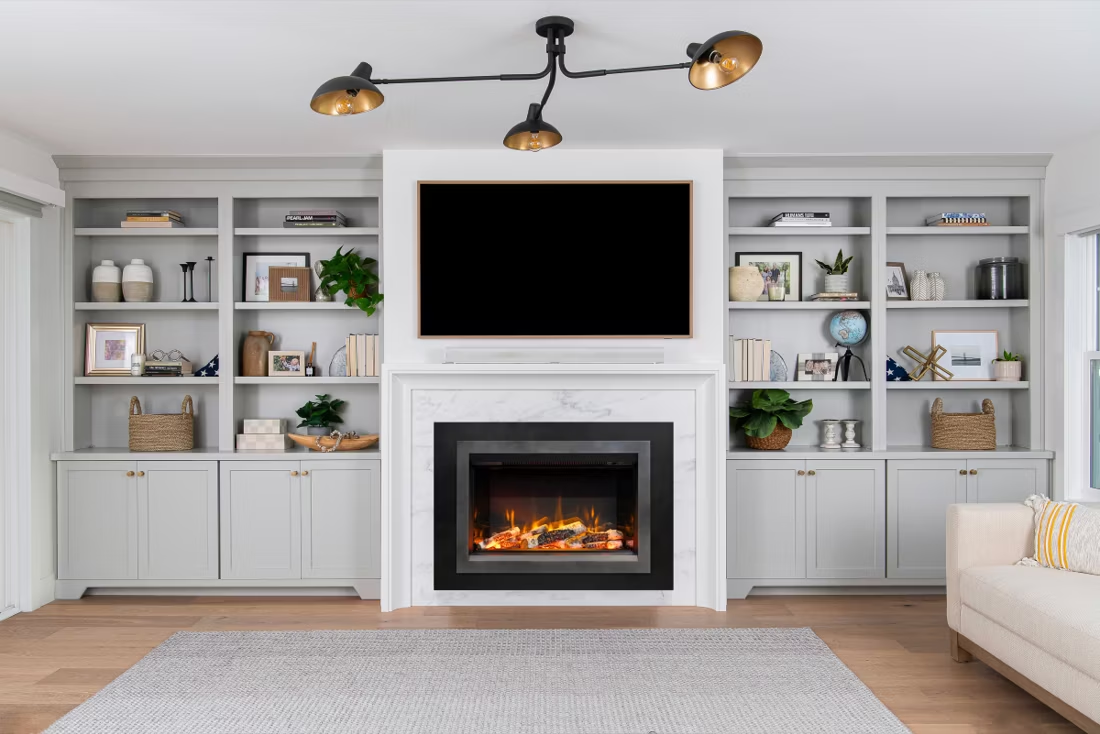
Electric fireplaces fill a specific and useful niche in that setup: zone heat and real flame ambiance in a living room, primary bedroom, or finished basement, with no venting and nothing burning in the house. A small plug-in insert or mantel unit runs off a standard 120V outlet; a larger built-in wall unit typically needs a dedicated 20-amp circuit run by a licensed electrician, with a permit through the county. Electric service in Palo Alto County comes through a mix of Iowa Lakes Electric Cooperative in the rural stretches and Alliant Energy in town—either way, running costs are predictable and there's no delivery or tank to schedule. The one honest tradeoff: when a January ice storm takes down co-op lines, an electric fireplace goes dark along with everything else, so most homeowners here treat it as a supplement to a propane furnace rather than a standalone heat source.
Three steps. No salesperson until you're ready.
Tell us about your project
Your zip code, your situation, and the fuel you're leaning toward—or let the answers point you to one.
See what's actually available
The brands dealers within 100 miles genuinely carry—real options, never a catalog mirage.
Get your dealer & Project Guide
A trusted local dealer, plus the free Project Guide & Parts List that names every component of the job.
Frequently Asked Questions
How much does an electric fireplace installation cost in Palo Alto County?
Most electric fireplace projects in Palo Alto County run $300 to $2,000. A freestanding insert or mantel unit that plugs into an existing 120V outlet sits at the low end—no electrician needed, no permit. A built-in wall unit or larger linear fireplace usually requires a dedicated 20-amp circuit, which means hiring a licensed electrician and pulling an electrical permit through the county, plus any surround or mantel carpentry. Homes in Emmetsburg with newer wiring tend toward the lower end of that range; older farmhouses in Graettinger or West Bend sometimes need panel work first if the existing service is maxed out, which pushes cost up.
What size electric fireplace do I need for my room?
Most electric fireplaces top out around 1,500 watts, which is enough supplemental heat for roughly 400 to 600 square feet in a reasonably insulated room—think a living room or finished basement family room, not a whole farmhouse. Older homes around the county with single-pane windows and less insulation will feel the difference less than a newer build in Emmetsburg with tighter construction. If you're trying to heat more than one room, or an open-concept space, a local dealer can walk you through whether a single larger unit or two smaller ones makes more sense—sizing is free during an in-home visit.
Do I need a permit or electrician for an electric fireplace in Palo Alto County?
It depends on the unit. A plug-in freestanding or mantel-style electric fireplace that uses a standard household outlet doesn't require a permit. A built-in wall unit or larger insert that needs a dedicated 20-amp circuit does require an electrical permit through Palo Alto County, and the wiring itself needs to be done by a licensed electrician—this isn't a DIY breaker job, especially in older farmhouse wiring that may not have the capacity without panel upgrades. Most local dealers coordinate the electrician and the permit as part of the installation.
Will my electric fireplace still work during a power outage?
No—and this is worth planning around. Electric fireplaces run entirely on household power, so when an ice storm or high wind event takes down lines (which happens most winters somewhere in the co-op's service territory), the fireplace goes dark with everything else. That's different from a wood stove or a battery-backed gas unit, which can keep running through an outage. For Palo Alto County homes, that usually means the electric fireplace is treated as everyday zone heat and ambiance, with a propane furnace or generator as the actual outage backup—not the other way around.
What's the difference between an electric insert, a built-in wall unit, and a freestanding electric stove?
An electric insert is sized to slot into an existing masonry fireplace opening, giving an old wood-burning fireplace a clean, no-venting upgrade. A built-in wall unit is framed into new construction or a remodel, usually with a dedicated circuit, and reads as a true architectural feature. A freestanding electric stove sits on the floor like a small appliance and just needs an outlet—the simplest option, and a good fit for a rental or a room where you don't want to touch the walls. For most Palo Alto County homes with an existing fireplace opening they want to modernize, the insert is the natural choice.
What's a good electric fireplace for a cold Iowa winter?
Look for a unit with a full 1,500-watt heater (not just a decorative flame effect) and a thermostat with a built-in fan, since that's what actually pushes warm air into the room rather than just glowing. Brands like Dimplex, Napoleon, Amantii, and Touchstone all make models with realistic flame technology and real heating output that hold up well as daily-use zone heat through a north-central Iowa winter. For a finished basement or an older farmhouse room that runs cold, ask a local dealer about placement near where you actually sit—supplemental heat only helps if it's aimed at the right spot.
Electric vs. gas—which fireplace makes more sense in Palo Alto County?
Gas fireplaces are common here too, mostly running on propane since natural gas mains don't reach much of the county outside Emmetsburg. Propane gas gives you real heat output—enough to matter on a 7-below night—plus a fireplace that can run during a power outage with battery backup ignition. Electric gives you zero venting, no propane tank or delivery to manage, and lower upfront cost, but it's genuinely supplemental—it won't carry a room the way a gas insert can, and it needs the power grid to work at all. Homeowners who already have propane service for their furnace often add gas; those who just want ambiance and a little extra warmth in one room tend to go electric.
Why don't more people in Palo Alto County heat with wood?
It comes down to geography. Palo Alto County is row-crop farmland—the oak, hickory, maple, and walnut you see are mostly shelterbelt plantings along field edges, not accessible woodlots, and there's no public forest land or cutting-permit system nearby the way there is in wooded parts of the Midwest. A handful of rural properties with mature trees still burn wood for ambiance or as an occasional backup, but it's genuinely uncommon—most homes here were built around propane or electric heat from the start, and that's still the practical default.
How much does it cost to run an electric fireplace through an Iowa winter?
A 1,500-watt electric fireplace run a few hours a day costs somewhere in the range of $15 to $40 a month, depending on your rate—Iowa Lakes Electric Cooperative members and Alliant Energy customers in Emmetsburg see slightly different per-kWh pricing, but both are in a similar ballpark. Run continuously as a room's main heat source through a full winter as cold as Minneapolis's, that cost climbs quickly, which is exactly why most homeowners here use it for zone heat in one room rather than as a whole-home solution.
Can I put a TV above my fireplace?
Yes—with an asterisk. Fireplaces are hot and TVs don't like heat. Either put a mantel between them to deflect rising warmth, or choose a fireplace with heat-management technology that creates a cool zone on the wall above—the wall stays around 125 degrees, barely warm, while the room still gets full heat. If you like clean lines and don't want a mantel, heat management is the answer.
What fireplace styles should I know before shopping?
Four cover most of the market: screen-front traditional (mesh front, open feel, fits craftsman homes), traditional door set (the classic look you grew up with), modern linear (wide, low, the statement piece for entertaining), and clean face contemporary (no trim—your tile or stone runs right to the fire's edge). Walk in knowing those four terms and you're ahead of most buyers.
Can a fireplace actually lower my heating bill?
Yes—by creating a comfort zone. A furnace heats every square foot of the house just to warm the one room you're in; a gas fireplace on low burns roughly a sixth of the gas a typical furnace does. Set the furnace around 55–60 degrees as a baseline, then heat the rooms your family actually uses. Families who heat this way commonly save $20–$60 a month.
Does a fireplace add value to my home?
On average, a fireplace adds back to the home about the same amount you spent installing it. Add the monthly savings from heating the rooms you actually use instead of the whole house—often hundreds of dollars a year—and the value case is strong before you even count what a fire does for how your family uses the room.
Find your electric fireplace in Palo Alto County.
Tell us a bit about your home and we'll match you with the right electric fireplace or insert, plus a free Project Guide & Parts List—the exact parts and a trusted local dealer for your Palo Alto County installation.
Find Your Fireplace →