
Find a pellet stove built for Page County winters.
Automated, hardwood-pellet heat for Clarinda, Shenandoah, and the farms and small towns across Page County—where winter lows average 12°F and heating season runs long. Get matched with a trusted local dealer who can size, install, and vent it correctly.
Every Project Starts From One of These Five Situations
Consistent warmth without the wood-splitting.
Page County sits in the rolling farmland of southwest Iowa, and its winters are no joke—a long, demanding heating season and an average winter low near 12°F, roughly the same heating load you'd see in Madison, Wisconsin. Farmhouses and small-town homes around Clarinda, Shenandoah, and Essex have long relied on the oak, hickory, maple, and walnut that grow in the county's timber stands and windbreaks. Pellet stoves take that same hardwood fuel base and deliver it in a compressed, thermostatically controlled form—no splitting, no stacking, and far less creosote to manage through a long heating season.
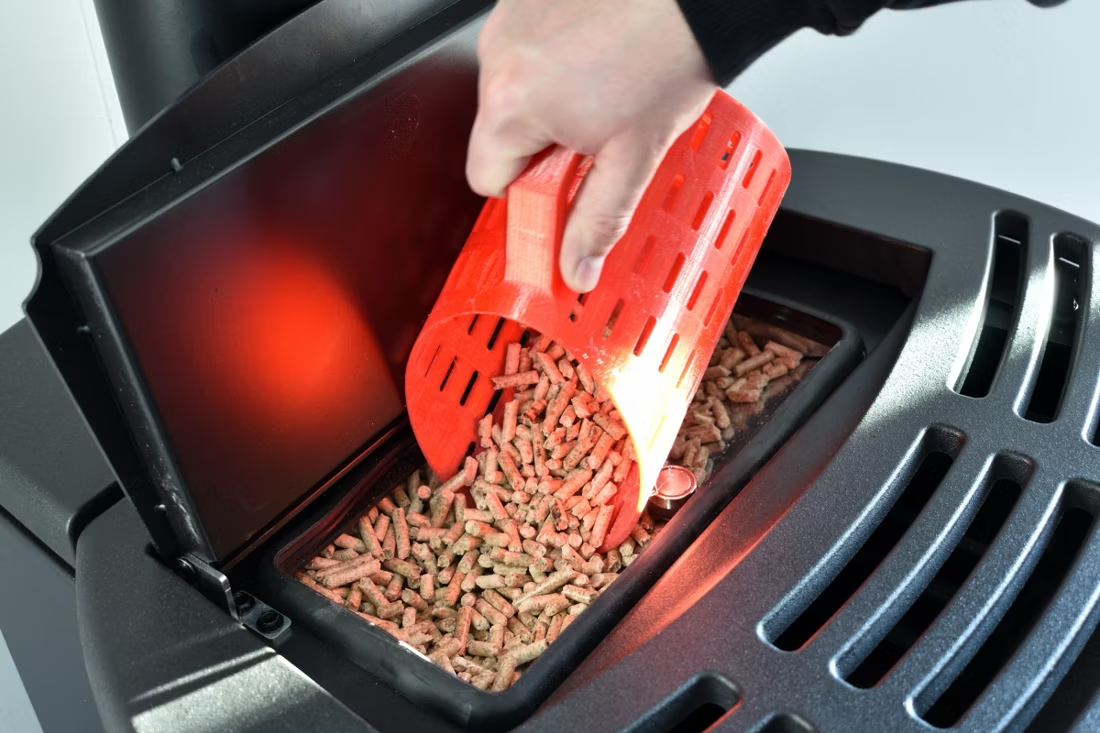
Because Page County has no air-quality non-attainment issues or winter burn curtailments, pellet heat here is a matter of convenience rather than compliance—you're not tracking burn-ban days the way homeowners in parts of the West have to. Regional suppliers including Lignetics and Indeck Energy Services keep hardwood pellet supply steady across southwest Iowa, and most local dealers can set you up with a hopper feed that holds a fire for 24-plus hours between reloads. For farm families managing livestock and equipment through an Iowa winter, that's one less thing to check before daylight.
Three steps. No salesperson until you're ready.
Tell us about your project
Your zip code, your situation, and the fuel you're leaning toward—or let the answers point you to one.
See what's actually available
The brands dealers within 100 miles genuinely carry—real options, never a catalog mirage.
Get your dealer & Project Guide
A trusted local dealer, plus the free Project Guide & Parts List that names every component of the job.
Frequently Asked Questions
How much does a pellet stove installation cost in Page County?
Most pellet stove installations in Page County run in the $3,000 to $6,500 range, depending on the unit, whether a new hearth pad is needed, and how much venting work is involved. Pellet stoves vent through a smaller-diameter pipe than wood stoves—often straight out a side wall—which keeps installation simpler and generally less expensive than a full masonry chimney project. You'll also want a dedicated electrical outlet nearby, since the auger, igniter, and blower all run on standard household current. A local dealer can walk your home and give you a firm number after seeing your layout.
What size pellet stove do I need for my Page County home?
With Page County's long, demanding heating season and winter lows regularly dipping into the single digits, sizing matters more here than in milder climates. A stove rated for 1,000 to 1,500 square feet suits a single living area or a smaller in-town home in Clarinda or Shenandoah; larger farmhouses or homes with open floor plans typically need a unit in the 40,000-plus BTU range to keep up on the coldest nights. Older, less-insulated farmhouses common throughout the county often need to size up compared to a newer build of the same square footage. A local dealer will factor in your ceiling height, insulation, and floor plan before recommending a specific model.
Where can I buy hardwood pellets in Page County?
Lignetics and Indeck Energy Services are the two regional brands most commonly stocked at farm supply stores, co-ops, and hearth dealers across southwest Iowa, and both produce hardwood-based pellets that burn cleanly in most stove models. Rural Page County residents often buy pellets by the pallet—roughly 49 to 50 forty-pound bags—rather than by the individual bag, since it's more economical and means fewer trips into Clarinda or Shenandoah during the coldest stretch of winter. Your local dealer can also tell you which pellet brand performs best in the specific stove model you buy, since not all pellets burn identically in every unit.
Do I need a permit to install a pellet stove in Page County?
Most jurisdictions in Page County require a building permit for a new pellet stove installation, and if new electrical circuits are involved, an electrical permit as well. Your local building department can confirm specifics for your address, but in practice, most local dealers handle the permitting paperwork as part of the installation so you're not coordinating it yourself. Because pellet stoves vent through a smaller sidewall or roof penetration rather than a full masonry chimney, the permitting process is typically more straightforward than a wood stove or fireplace project.
Pellet stove vs. wood stove—which makes more sense in Page County?
Wood stoves burn the oak, hickory, maple, and walnut that's abundant on farm woodlots throughout the county, run without electricity, and give you the classic fire experience—but they require splitting, stacking, and seasoning cordwood, plus more frequent chimney cleaning. Pellet stoves run on compressed hardwood pellets from suppliers like Lignetics, need only a bag-and-load routine, burn cleaner with less ash, and hold a steady temperature automatically—but they require electricity to run the auger and blower, so they won't provide heat during a power outage unless paired with a battery backup or generator. For Page County homeowners without a private woodlot or the time to process firewood, pellet is usually the lower-maintenance choice.
What's the best pellet stove for Page County's climate?
Look for a stove rated for continuous, high-output burns rather than a lighter-duty unit built for supplemental heat—Page County's heating season is long and demanding, comparable to what homeowners deal with around Madison, Wisconsin. A larger hopper, 60 pounds or more, reduces how often you're reloading during multi-day cold stretches, and a stove with a reliable auger feed and an easy-clean burn pot matters more here than in milder climates, since you'll be running it for months at a time. Ask your local dealer about hopper capacity and BTU output relative to your square footage before deciding.
Will my pellet stove work if the power goes out?
Not without a backup power source. Pellet stoves rely on electricity to run the auger that feeds pellets, the igniter, and the combustion blower, so a standard outage will shut the stove down even with a full hopper. In rural Page County, where winter storms can knock out power for hours at a stretch, some homeowners pair their pellet stove with a small battery backup unit or a portable generator specifically to keep the stove running through an outage. If uninterrupted heat during outages is a priority for your household, a wood stove or a gas unit with a battery-backed ignition system may be worth considering alongside a pellet stove.
How often does a pellet stove need to be cleaned or serviced?
Most pellet stoves need the burn pot and ash pan emptied every few days during heavy winter use, plus a deeper cleaning of the auger, exhaust fan, and venting system once a year—typically before the heating season starts in the fall. Annual professional servicing catches issues like a worn gasket or a clogged venting run before they become a bigger repair, and it's generally less involved and less costly than the annual chimney sweep a wood stove requires. Local hearth dealers who sell pellet stoves in Page County typically offer this service directly.
Pellet stove vs. gas fireplace—which is right for my home?
Gas fireplaces offer instant on-off heat at the flip of a switch and, with the right ignition system, can keep running during a power outage. Pellet stoves burn a renewable, often regionally sourced hardwood fuel, typically cost less to run per BTU than propane in rural areas without natural gas service, and give you more of a real-fire look and feel through the glass. For Page County homes without natural gas hookups—common outside Clarinda and Shenandoah—the ongoing fuel-cost comparison usually favors pellet over propane, though gas wins on convenience during outages. Many households end up choosing based on whether they'd rather manage a fuel supply or have an appliance they never have to think about between uses.
Why is my open fireplace making my house colder?
Open fireplaces suck—literally. As the fire burns, it consumes air your furnace already paid to heat and pulls it out through the chimney, so the house is actually colder after the fire goes out than before you lit it. An insert fixes this: it seals the chimney, puts fixed glass across the front, and turns that hole in your house into a real heat source.
Why is a fireplace insert so efficient?
An insert does two things: it seals the chimney completely, so you stop losing air you already paid to heat, and it radiates warmth into the room through the firebox and glass. Most add a heat-exchange fan that pulls cool room air underneath, wraps it around the hot firebox, and pushes it back out warm. Your home is more efficient before you've even lit the first fire.
Can I install a fireplace myself?
If you're putting a fire in your house on purpose, it's best to work with an expert. Unless you're genuinely experienced in framing, gas line, vent pipe, and the national code on clearances to combustibles, have a professional do it—and ideally the same company that sells you the fireplace, so warranty, service, and liability all live under one roof.
Can a fireplace actually lower my heating bill?
Yes—by creating a comfort zone. A furnace heats every square foot of the house just to warm the one room you're in; a gas fireplace on low burns roughly a sixth of the gas a typical furnace does. Set the furnace around 55–60 degrees as a baseline, then heat the rooms your family actually uses. Families who heat this way commonly save $20–$60 a month.
Pellet Brands Stocked Around Page County
Manufacturers will point you to the nearest stocking dealer.
Find your pellet stove in Page County.
Tell us about your home and we'll match you with a trusted local dealer and send over a free Project Guide & Parts List—the exact parts, including the vent kit, for your pellet stove project in Page County.
Find Your Fireplace →