
Warm your Page County home fast—no chimney required.
From Clarinda to Shenandoah and the farmsteads between, electric fireplaces give Page County homes clean zone heat and real flame-effect ambiance without touching the roofline. Find the right unit and get matched with a trusted local installer.
Every Project Starts From One of These Five Situations
Zone heat that doesn't fight your house.
Page County sits in the loess hills of southwest Iowa, tucked against the Missouri border with the East and West Nishnabotna running through it. It's small—about 12,168 people spread across Clarinda, Shenandoah (home to the Earl May and Henry Field seed operations that put this county on the map), and a scatter of farm towns like Coin, Braddyville, and College Springs. Winters here are genuinely cold: a 12°F average low, a long, demanding heating season, and a climate zone (5A) that puts Page County in roughly the same cold-climate bracket as Madison, Wisconsin. That's serious heating load for a furnace to carry alone, which is exactly where electric fireplaces earn their keep.
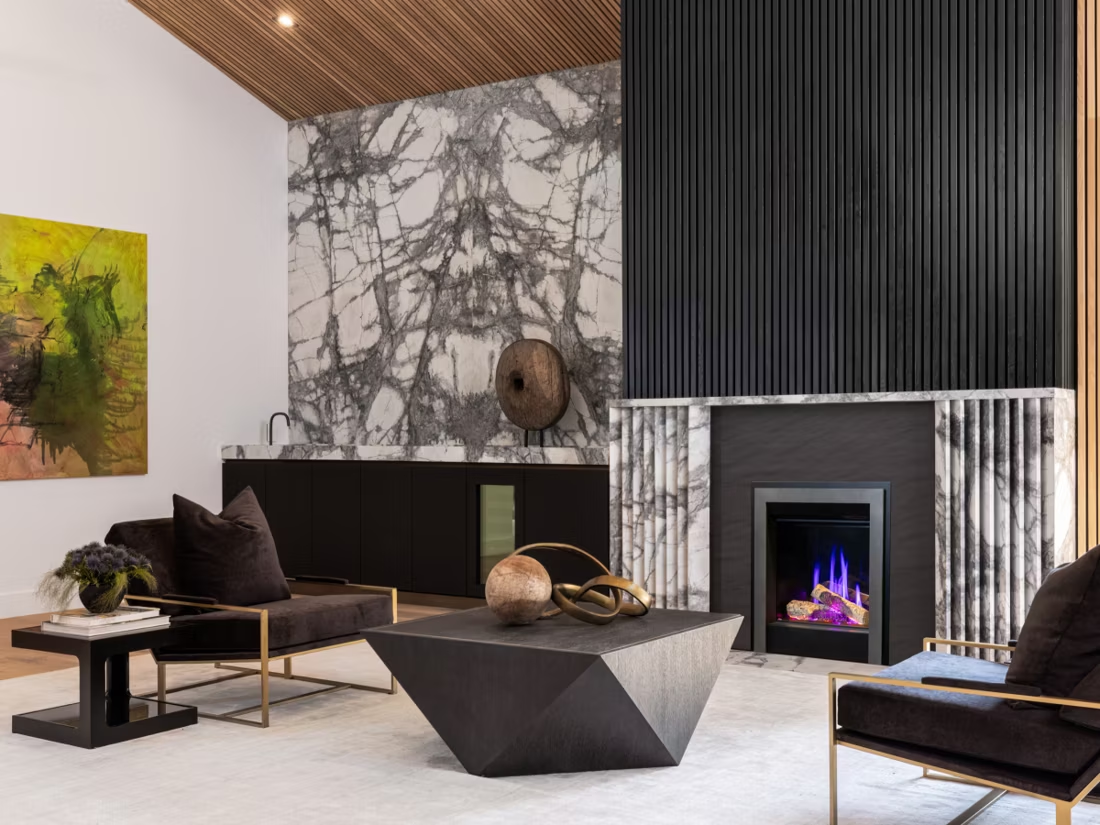
An electric fireplace or insert doesn't replace a furnace in a Page County winter, and it isn't trying to—it adds fast, controllable heat to the room you're actually sitting in, whether that's a farmhouse living room, a finished basement, or a bedroom addition without existing ductwork. There's no gas line, no chimney, no combustion byproducts to vent, and nothing to clean out each spring. For a county with a strong agricultural, do-it-yourself streak, that plug-in simplicity—paired with a local installer who wires it correctly and sizes the circuit right—is a big part of the appeal.
Three steps. No salesperson until you're ready.
Tell us about your project
Your zip code, your situation, and the fuel you're leaning toward—or let the answers point you to one.
See what's actually available
The brands dealers within 100 miles genuinely carry—real options, never a catalog mirage.
Get your dealer & Project Guide
A trusted local dealer, plus the free Project Guide & Parts List that names every component of the job.
Frequently Asked Questions
How much does an electric fireplace installation cost in Page County?
Plug-in electric fireplace inserts and stoves are the cheapest hearth option available—many units run $400 to $1,500 installed, since there's no venting, gas line, or masonry work involved. Built-in wall units or larger mantel packages that need a dedicated 120V or 240V circuit run higher, typically $1,000 to $2,500 once an electrician is involved. If you're converting an old wood-burning fireplace to an electric insert in an older Clarinda or Shenandoah home, expect the low-to-mid end of that range since most of the work is cosmetic fitting rather than new wiring. A local dealer will confirm the exact number after seeing your space and your panel.
Can an electric fireplace actually heat a room in a Page County winter?
Yes, for the room it's in—but don't expect it to carry the whole house through a 12°F night. Most electric fireplaces top out around 1,500 watts (roughly 5,000 BTU), which comfortably heats a well-sealed 400 to 600 square foot space like a living room or bedroom. With a long, demanding heating season on the books, Page County's furnace or boiler is still doing the heavy lifting; the electric unit is there for supplemental warmth in the room you use most, or to take the edge off in a space the central system doesn't reach well, like a converted porch or basement rec room.
Do I need a permit or an electrician to install an electric fireplace in Page County?
Small plug-in units that use a standard 120V outlet generally don't require a permit—you're not adding wiring or altering venting. Built-in electric fireplaces that need a dedicated circuit, or any installation that involves panel work, typically call for an electrical permit through the county or your local city building office (Clarinda and Shenandoah both handle permits separately from the county for in-town work). Most hearth dealers coordinate with a licensed electrician as part of the install, so you're not left tracking down a separate contractor.
What's the difference between an electric fireplace, insert, and freestanding stove?
An electric fireplace is typically a built-in unit set into a wall or mantel surround, designed for new construction or a remodel. An electric insert is sized to slide into an existing masonry fireplace opening—a common upgrade for older Page County farmhouses with a wood-burning fireplace that no longer gets used. An electric stove is a freestanding cabinet-style unit that mimics a wood stove's look and can sit almost anywhere near an outlet. For a straightforward retrofit into an existing hearth, the insert is usually the right call; for a room with no fireplace at all, a built-in or stove is more practical.
Will my electric fireplace still work during a power outage?
No—and this is the one honest trade-off compared to wood heat. Electric fireplaces need power to run, so during an ice storm or line outage (not uncommon in rural Page County in winter), the unit goes dark along with everything else on the circuit. If backup heat during outages matters to you, a wood stove burning local oak or hickory, or a battery-backed gas unit, is a better primary fit—many area homeowners pair one of those with an electric fireplace for everyday convenience and keep the other for storm season.
What should I look for in an electric fireplace for this climate?
Look for a unit with a real thermostat rather than just high/low heat settings—that gives you more control over supplemental heat output as outdoor temperatures swing from a mild 40°F day to a 12°F overnight low. LED flame technology has improved enough that most models look convincing without generating extra heat you don't need in shoulder seasons. Beyond that, size the unit to the room, not the whole house—oversizing an electric fireplace doesn't buy you more warmth for a bigger space the way it might with a wood stove, since output is capped by the electrical circuit.
Electric vs. wood—which makes more sense for a Page County home?
Wood offers something electric can't: heat that keeps working when the power doesn't, and a fuel source many Page County properties already have access to through oak, hickory, maple, and walnut woodlots. It does mean chimney maintenance, ash cleanup, and permitted construction work. Electric skips all of that—no venting, no combustion, no annual sweep—but it's strictly a plug-in convenience for supplemental warmth and ambiance, not a storm-ready backup. A lot of area homeowners end up with both: wood or a woodstove for the farmhouse's main room and reliability, electric for a bedroom, den, or basement where simplicity wins.
Electric vs. pellet—which is the better fit?
Pellet stoves, fed by regional brands like Lignetics or Indeck Energy Services, burn cleaner than cordwood and produce solid heat output, but they require a hopper to load, a vent through an exterior wall, and electricity to run the auger and blower—so they still go dark in an outage. Electric fireplaces skip the hopper and venting entirely; you're trading some heat output and fuel independence for a unit that installs in an afternoon and needs zero fuel handling. For a low-maintenance secondary heat source in a Clarinda or Shenandoah home, electric is simpler. For someone wanting real heating capacity from a renewable fuel, pellet is worth a look instead.
Where does an electric fireplace make the most sense in my home?
The best candidates in Page County are rooms without existing gas lines or a fireplace chase—a finished basement, a converted porch, a bedroom addition, or a rental unit where a landlord doesn't want combustion appliances. It's also a strong option for an old, unused masonry fireplace: an electric insert restores the look and adds real supplemental heat without opening up the chimney for gas or wood venting work. A local dealer walking your space can tell you quickly whether a built-in, insert, or freestanding stove fits best.
Can I put a TV above my fireplace?
Yes—with an asterisk. Fireplaces are hot and TVs don't like heat. Either put a mantel between them to deflect rising warmth, or choose a fireplace with heat-management technology that creates a cool zone on the wall above—the wall stays around 125 degrees, barely warm, while the room still gets full heat. If you like clean lines and don't want a mantel, heat management is the answer.
How much does an electric fireplace cost to run?
With the heater on, a typical unit draws about 1,500 watts—at average electric rates that's roughly 20 cents an hour. Run the flame effect alone and it costs pennies; the flames are LED-driven and use about as much power as a light bulb. There's no pilot light, no fuel delivery, and essentially no maintenance.
Does a fireplace add value to my home?
On average, a fireplace adds back to the home about the same amount you spent installing it. Add the monthly savings from heating the rooms you actually use instead of the whole house—often hundreds of dollars a year—and the value case is strong before you even count what a fire does for how your family uses the room.
What is an in-home preview and do I need one?
It's a visit where a hearth professional measures your space, confirms the model you picked actually works in your home, and walks the specs—framing, gas line, venting, finish work—before anything is ordered. Some details you just can't know until you see the house. Never make a down payment without one; it's the single most-skipped step that burns buyers.
Find your electric fireplace in Page County.
Tell us about your room and your home, and we'll match you with a trusted local dealer and send over a free Project Guide & Parts List—the exact parts and recommended installer for your Page County electric fireplace project.
Find Your Fireplace →