
Reliable gas heat for Page County's long Iowa winters.
From Clarinda to Shenandoah to the farmsteads in between, gas fireplaces deliver instant, dependable heat through a heating season that runs six months or more. Find the right unit and get matched with a trusted local dealer.
Every Project Starts From One of These Five Situations
Clean, instant heat for southwest Iowa farm country.
Page County sits in the rolling farmland of southwest Iowa, with Clarinda as the county seat and small communities like Shenandoah, Essex, College Springs, and Braddyville spread across the surrounding grid of section roads. At climate zone 5A with a winter heating load comparable to Madison, Wisconsin and average winter lows around 12°F, the heating season here stretches from October well into April—a stretch comparable in length and severity to Madison, Wisconsin. Farm families in the county have long relied on wood cut from oak, hickory, maple, and walnut stands along the Nishnabotna River bottoms, but gas fireplaces have become the go-to choice in homes and outbuildings where reliable, hands-off heat matters more than tending a fire during calving season or harvest.
Natural gas service reaches the more developed parts of the county—Clarinda and Shenandoah in particular—while most rural farmsteads and outlying towns rely on propane tanks from regional suppliers. Page County has no air quality non-attainment issues or seasonal burn restrictions, so the choice between gas and wood here comes down to convenience and lifestyle rather than regulation. A direct-vent gas fireplace or insert gives you heat at the flip of a switch, works well as zone heat alongside a farmhouse furnace, and—with the right ignition system—can even keep running when an ice storm knocks out power.
Three steps. No salesperson until you're ready.
Tell us about your project
Your zip code, your situation, and the fuel you're leaning toward—or let the answers point you to one.
See what's actually available
The brands dealers within 100 miles genuinely carry—real options, never a catalog mirage.
Get your dealer & Project Guide
A trusted local dealer, plus the free Project Guide & Parts List that names every component of the job.
Frequently Asked Questions
How much does a gas fireplace installation cost in Page County?
A typical gas fireplace or insert installation in Page County runs roughly $3,800 to $9,500, depending on the unit, the venting path, and whether you're on natural gas or propane. A direct-vent insert going into an existing masonry fireplace in a Clarinda or Shenandoah home with gas already run to that wall sits toward the lower end. New construction or a fireplace going into a room with no existing gas line—common on rural properties outside town—runs higher once trenching and a propane tank installation are factored in. Local dealers will give you a firm number after seeing the space in person.
Can I convert my existing wood fireplace to gas?
Yes, and it's a common project in the older farmhouses and in-town homes around Clarinda and Shenandoah, many of which still have the original open masonry fireplace. A gas insert typically slides into that existing firebox and uses a stainless liner run up the current chimney, so you keep the look of the fireplace while gaining real, controllable heat output. Cost usually falls in the $4,000 to $8,500 range in Page County, with the main variables being whether you're already on natural gas or need a propane line run, and whether the existing chimney needs relining work before the insert goes in.
Do I need natural gas, or can I use propane?
Either works, and which one you use largely comes down to where in the county you live. Natural gas service is available in the more built-up parts of Clarinda and Shenandoah, so homes there with an existing gas furnace or water heater can usually add a fireplace without much extra plumbing. Outside those towns—which describes most of Page County's farmland—propane from a regional supplier is the standard fuel, either from an existing tank or a new tank set specifically for the fireplace. Most gas fireplace models can be configured for either fuel with the correct orifice and regulator, so fuel type shouldn't limit which unit you choose.
Will my gas fireplace work during a power outage?
Most modern gas fireplaces will, which matters in a county where ice storms and summer derechos can knock out rural power lines for a day or more. Units with intermittent pilot ignition (IPI) run on a battery backup that kicks in the moment power drops, so the fireplace lights on demand just like normal. Valor fireplaces take a different approach—their pilot assembly generates its own electricity through the thermocouple, so there are no batteries to remember or replace. For farmsteads at the end of a long rural line, that kind of self-sufficiency is worth asking your local dealer about directly.
What's the difference between a gas fireplace, gas insert, and gas stove?
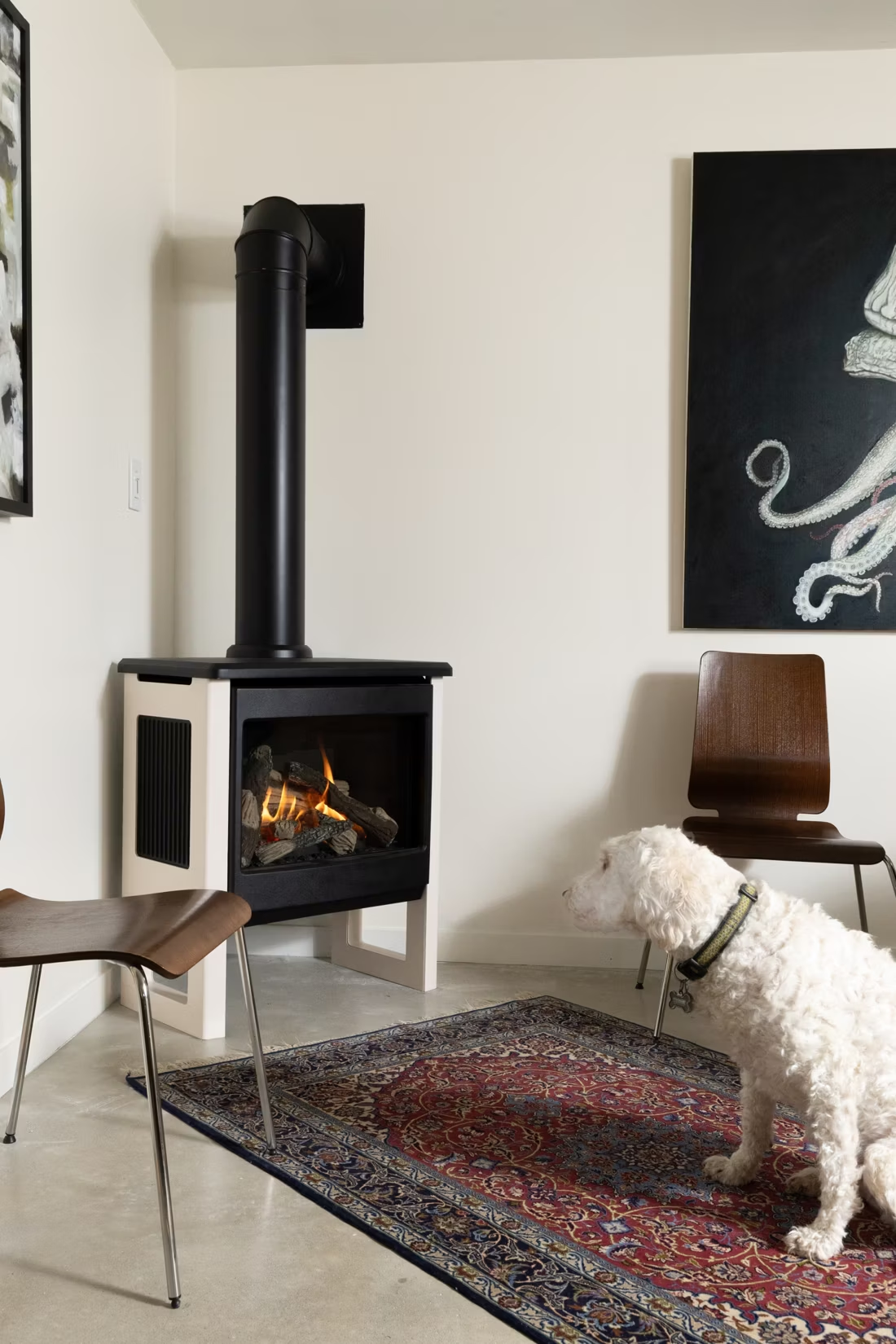
A gas fireplace is a fully built-in unit framed into a wall, typically chosen for new construction or a remodel. A gas insert is sized to slide into an existing masonry fireplace opening, turning an old open hearth into a sealed, efficient heat source using the existing chimney as the vent path. A gas stove is a freestanding cabinet unit that sits on the floor, similar in footprint to a wood stove, and works well in a room without an existing fireplace or chimney at all. For most Page County homes with an existing fireplace—especially the older housing stock around Clarinda and Shenandoah—an insert is usually the simplest upgrade.
Do I need a permit to install a gas fireplace in Page County?
Yes, a new gas fireplace install typically requires both a building permit and a gas line permit, handled through the Page County courthouse in Clarinda for unincorporated areas or the applicable city office if you're inside Clarinda or Shenandoah city limits. The gas line portion has to be done by a licensed gas-fitter, which is one reason it pays to go through a hearth dealer who coordinates the gas work, venting, and inspection together rather than juggling separate trades yourself.
What's the difference between vented and vent-free gas fireplaces?
Vented (direct-vent) gas fireplaces pull combustion air from outside and exhaust it back outside through sealed venting—they're the cleaner, more universally recommended option. Vent-free units burn gas directly into the room with no external venting, which is legal in Iowa but comes with strict room-sizing and oxygen-sensor requirements. In a county with long, sealed-up winters like Page County's, direct-vent units are the more common choice locally—they don't add moisture or combustion byproducts to an already tight farmhouse envelope, and they deliver more usable heat per unit of gas.
How often should my gas fireplace be serviced?
Plan on an annual inspection, ideally before the heating season starts in early fall. A technician checks the burner, pilot assembly, gas connections, and venting, and cleans the glass and firebox interior. It's a quicker job than a wood chimney sweep, but skipping it is the most common cause of pilot and ignition problems showing up on the first cold night of the year. Local dealers who sell and install gas units in the county typically offer this service directly.
Gas vs. wood—which makes more sense for a Page County home?
Wood cut from local oak, hickory, maple, or walnut still makes sense for households that want backup heat independent of the power grid or already have a woodlot on the property—a real consideration given how long rural outages can run after an Iowa ice storm. Gas wins on convenience: no wood to split and stack, no ash to haul, and consistent heat with the flip of a switch, which matters during calving season, harvest, or any stretch when there's no time to tend a fire. A number of homes in the county end up with both—gas for daily use in the main living space, wood as the fallback when the power's out.
Are new gas fireplaces really better than old ones?
Two ways, and they're both big. Looks: modern gas fireplaces are realistic enough that it's hard to believe they aren't burning wood. Cost: old units burn a standing pilot year-round (roughly $200 a year), while new ones use pilot-on-demand ignition and modern burners. Add remote controls and thermostat operation, and the day-to-day experience isn't close.
What's the difference between an insert and a zero-clearance fireplace?
An insert is a fireplace that slides into a pre-existing wood-burning fireplace—if you don't have one, there's nothing to insert it into. A zero-clearance fireplace is built into a framed wall, which makes it the answer for remodels and new construction. Simple test: existing masonry fireplace means insert; blank or framed wall means zero-clearance.
What is an in-home preview and do I need one?
It's a visit where a hearth professional measures your space, confirms the model you picked actually works in your home, and walks the specs—framing, gas line, venting, finish work—before anything is ordered. Some details you just can't know until you see the house. Never make a down payment without one; it's the single most-skipped step that burns buyers.
Can a fireplace actually lower my heating bill?
Yes—by creating a comfort zone. A furnace heats every square foot of the house just to warm the one room you're in; a gas fireplace on low burns roughly a sixth of the gas a typical furnace does. Set the furnace around 55–60 degrees as a baseline, then heat the rooms your family actually uses. Families who heat this way commonly save $20–$60 a month.
Find the right gas fireplace for your Page County home.
Tell us about your home and heating needs and we'll match you with a trusted local dealer, plus a free Project Guide & Parts List—the exact parts, vent kit, and install plan for your gas fireplace project in Page County.
Find Your Fireplace →