
Warm up a room without touching the thermostat.
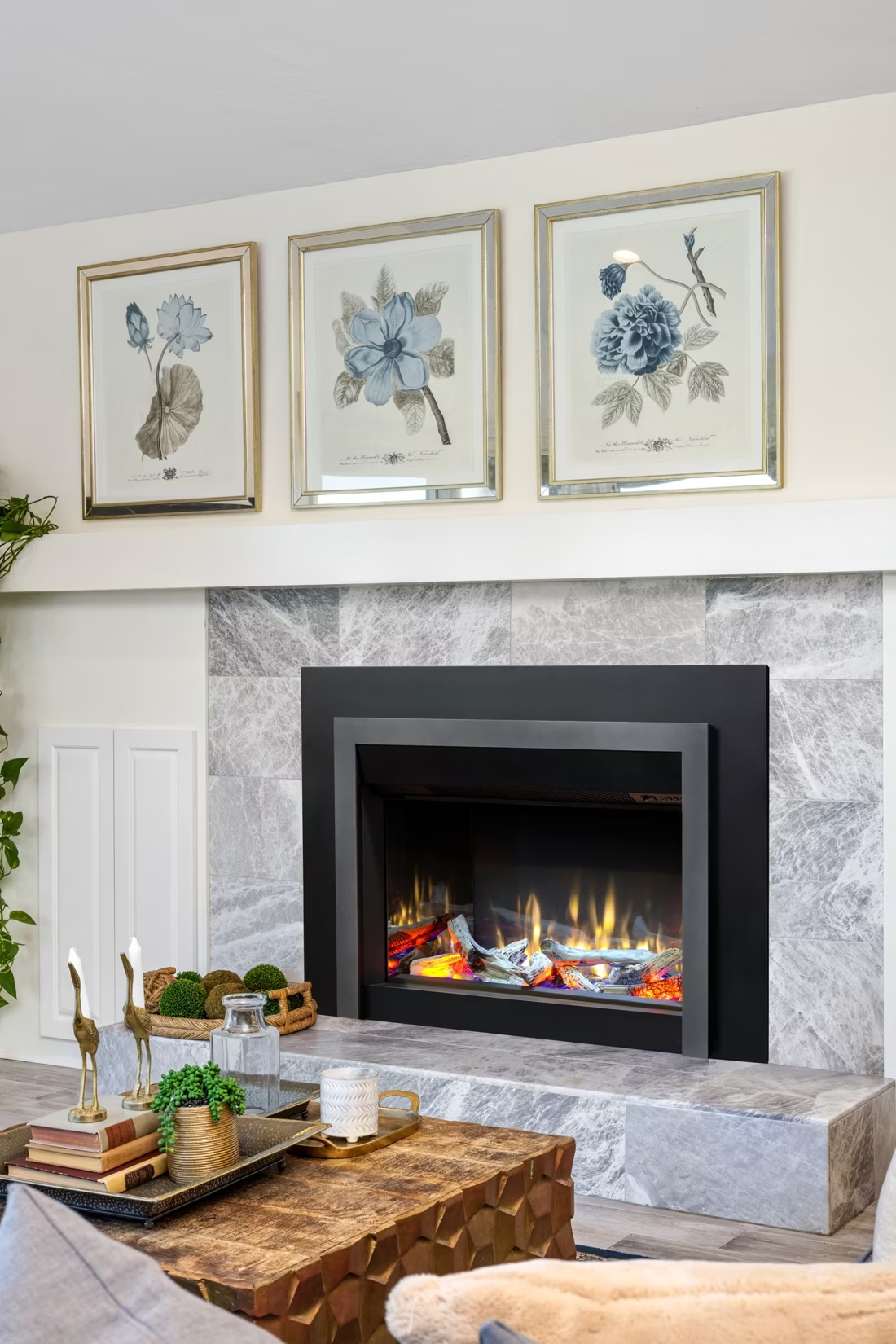
Electric fireplaces and inserts add instant, supplemental warmth to Fort Dodge homes at MidAmerican Energy's competitive residential rate—no venting, no gas line, and installation that often takes an afternoon.
Every Project Starts From One of These Five Situations
A low-cost way to add warmth room by room.
Fort Dodge sits on the Des Moines River in Webster County, in a climate zone (6A) with a long, cold winter season—cold enough to sit in the same range as Minneapolis, Minnesota. With average winter lows around 7°F, most homes here lean on a furnace for primary heat, which means an electric fireplace isn't competing to replace that system—it's filling a different job: warming the specific rooms where a family actually spends time, without cranking the whole-house thermostat.
MidAmerican Energy serves Fort Dodge at a residential rate around 11.01 cents per kWh, noticeably below the national average, which makes running a 1,500-watt electric fireplace for a few hours each evening genuinely affordable here. Because these units plug into a standard outlet (or a dedicated circuit for larger built-ins) and need no chimney, gas line, or exterior venting, they're one of the few hearth upgrades that can go into a finished basement, a converted garage, or a rental unit without opening a wall for anything more than a receptacle.
Three steps. No salesperson until you're ready.
Tell us about your project
Your zip code, your situation, and the fuel you're leaning toward—or let the answers point you to one.
See what's actually available
The brands dealers within 100 miles genuinely carry—real options, never a catalog mirage.
Get your dealer & Project Guide
A trusted local dealer, plus the free Project Guide & Parts List that names every component of the job.
Frequently Asked Questions
How much does an electric fireplace installation cost in Fort Dodge?
A plug-in electric insert or freestanding stove typically runs $300 to $1,200 installed, since most just need an existing outlet and a mounting bracket or hearth pad. A built-in wall unit or a linear electric fireplace set into custom cabinetry runs higher—usually $2,000 to $4,500—once you factor in framing, a dedicated 120V or 240V circuit, and finish carpentry. Local dealers around Fort Dodge can walk the specific wall or room and tell you which category your project falls into before you commit to a unit.
What size electric fireplace do I need for my room?
Most residential electric fireplaces are rated between 4,600 and 5,200 BTU (roughly 1,500 watts) and are designed to comfortably heat 400 to 1,000 square feet, depending on ceiling height and how well the room is insulated. For a single living room or finished basement rec room in a typical Fort Dodge home, a standard 1,500-watt unit is usually enough as supplemental heat. If you're trying to warm a larger open-concept space, talk to a dealer about a wider linear model or a unit with a higher-output heater fan—bigger isn't automatically better if you're pairing it with a furnace that's already doing the heavy lifting.
Do I need a permit to install an electric fireplace in Fort Dodge?
A simple plug-in insert or freestanding electric stove generally doesn't require a permit since there's no venting or gas work involved. If your project involves a built-in unit that needs new electrical wiring—a dedicated circuit, a new outlet behind a mantel, or work inside a wall—that electrical work typically does require a permit through the City of Fort Dodge Building Department, and it should be pulled by a licensed electrician. Most local dealers coordinate this step for you when the install calls for it.
How much does it cost to run an electric fireplace in Fort Dodge?
At MidAmerican Energy's residential rate of about 11.01 cents per kWh, a typical 1,500-watt electric fireplace costs roughly 16.5 cents an hour to run on the heater setting. Used for about 4 hours a night through a cold Fort Dodge winter, that works out to around $20 a month—far less than raising the furnace setpoint for the whole house. Running the flame effect alone, without the heater engaged, costs pennies since the LED lighting draws only a fraction of the wattage.
Will my electric fireplace still work during a power outage?
No—unlike a wood stove, an electric fireplace stops working the moment the power goes out, and Webster County does see winter ice storms and high-wind events that knock out MidAmerican service for hours at a time. If backup heat during outages matters to your household, plan on a generator to keep an electric unit running, or consider a gas fireplace with a battery-backed ignition system as a secondary heat source. Electric fireplaces are best thought of as everyday zone heat and ambiance, not emergency heat.
What's the difference between an electric insert, a built-in wall unit, and a mantel package?
An electric insert is a self-contained unit designed to drop into an existing fireplace opening—a common choice if you're replacing an old wood-burning firebox you no longer use. A built-in wall unit is framed into new construction or a remodel, recessed flush with the wall for a linear, modern look. A mantel package pairs a freestanding or recessed electric firebox with a surround and mantel shelf, giving you a traditional fireplace appearance without any structural fireplace behind it. For most Fort Dodge homes converting an unused wood fireplace, the insert is the fastest and least invasive option.
Do electric fireplaces actually look like a real fire?
Modern units have come a long way from the orange-plastic-log look. Current-generation electric fireplaces from brands like Dimplex and Napoleon use layered LED lighting and a moving reflective medium (water vapor or mirrored panels) to produce a realistic flame that can be dimmed, colored, or run without heat for ambiance-only use in warmer months. In a showroom side-by-side, most homeowners are surprised at how convincing the flame looks from across the room, though up close it's still visibly a light effect rather than combustion.
Should I get a gas fireplace or an electric fireplace for my Fort Dodge home?
Gas fireplaces produce real, higher-output heat, can be sized to actually contribute to whole-home heating, and—with the right ignition system—can run during a power outage on battery backup. Electric fireplaces cost far less to install, need no gas line or venting, and are simpler to add to a room that doesn't already have a chimney or gas service nearby. For a primary living room where real heat output matters through a long, cold winter like Fort Dodge's, gas is usually the stronger long-term investment. For a bedroom, basement, or rental unit where ambiance and light supplemental warmth are the goal, electric is the faster and cheaper path. Several local dealers carry both, so it's worth comparing at an in-home consultation.
Are there any rebates for installing an electric fireplace in Fort Dodge?
Because electric fireplaces are simple resistance heaters rather than high-efficiency heat pump systems, they typically don't qualify for MidAmerican Energy's efficiency rebate programs the way a heat pump or smart thermostat upgrade might. That said, it's worth checking MidAmerican's current residential energy efficiency offerings directly before you buy, since utility rebate programs change year to year. The bigger financial upside for most Fort Dodge homeowners is simply the low per-kWh cost of zone heating a single room instead of raising the thermostat for the whole house.
Can I put a TV above my fireplace?
Yes—with an asterisk. Fireplaces are hot and TVs don't like heat. Either put a mantel between them to deflect rising warmth, or choose a fireplace with heat-management technology that creates a cool zone on the wall above—the wall stays around 125 degrees, barely warm, while the room still gets full heat. If you like clean lines and don't want a mantel, heat management is the answer.
Do electric fireplaces actually produce heat?
Yes—most put out around 4,800–5,000 BTUs from a standard outlet, which comfortably warms a bedroom, office, or den as a comfort-zone heater. What they won't do is carry a whole house the way wood, gas, or pellet can. Think of electric as ambiance-first with honest supplemental heat: flames on with no heat in July, flames plus warmth in January.
How much should I budget for a fireplace?
For an average home—covering the fireplace, the vent pipe, and basic installation—a budget between $3,900 and $5,500 gives you a lot of options across wood, gas, and pellet. By the time you add finish work, gas line, and electrical, the average complete installation lands between $5,000 and $12,000 all-in. In a remodel or new build, a good rule is to put about 2.5% of the total project cost toward the fireplace.
What is an in-home preview and do I need one?
It's a visit where a hearth professional measures your space, confirms the model you picked actually works in your home, and walks the specs—framing, gas line, venting, finish work—before anything is ordered. Some details you just can't know until you see the house. Never make a down payment without one; it's the single most-skipped step that burns buyers.
Nearby Dealers
Hearth shops serving Fort Dodge and the surrounding area.
Electric Service in Fort Dodge
An electric fireplace's heater draws about 1,500 watts—pennies per hour at local rates.
Midamerican Energy Co
Find your electric fireplace in Fort Dodge.
Tell us a bit about your home and we'll put together a free Project Guide & Parts List for your electric fireplace project—sized right, wired right, and matched with a trusted local Fort Dodge dealer.
Find Your Fireplace →