
Keep Your Family Warm and Safe—No Matter What
With average winter lows around 7°F and a heating load in the same range as Minneapolis, Cherokee County homes need heat that keeps working when the wind comes off the fields. Find the right wood stove or insert and connect with a trusted local dealer.
Every Project Starts From One of These Five Situations
Wood heat is a fixture of farm life here.
Cherokee County sits in northwest Iowa along the Little Sioux River, home to just over 8,300 people spread across the county seat of Cherokee and small communities like Aurelia, Marcus, Cleghorn, Larrabee, and Meriden. This is climate zone 6A, with average winter lows around 7°F and a heating load in the same range as Minneapolis. Farmsteads and acreages here are used to long, hard winters, and a lot of them keep a wood stove running as either the main heat source in a shop or outbuilding, or as reliable backup for the house when an ice storm knocks out the co-op power lines.
Firewood isn't hard to come by out here. Farm woodlots, shelterbelts, and windbreaks throughout the county produce plenty of oak, hickory, maple, and walnut—all solid, dense firewood that burns hot and holds a coal bed overnight. There are no air quality restrictions or burn curtailment periods in Cherokee County, so residents can run a wood stove or insert without the smoke-advisory concerns that show up in more urban or basin-locked counties. For a lot of families here, a good wood stove is less about ambiance and more about keeping the house warm and the water lines from freezing when a January storm sits over the county for a few days.
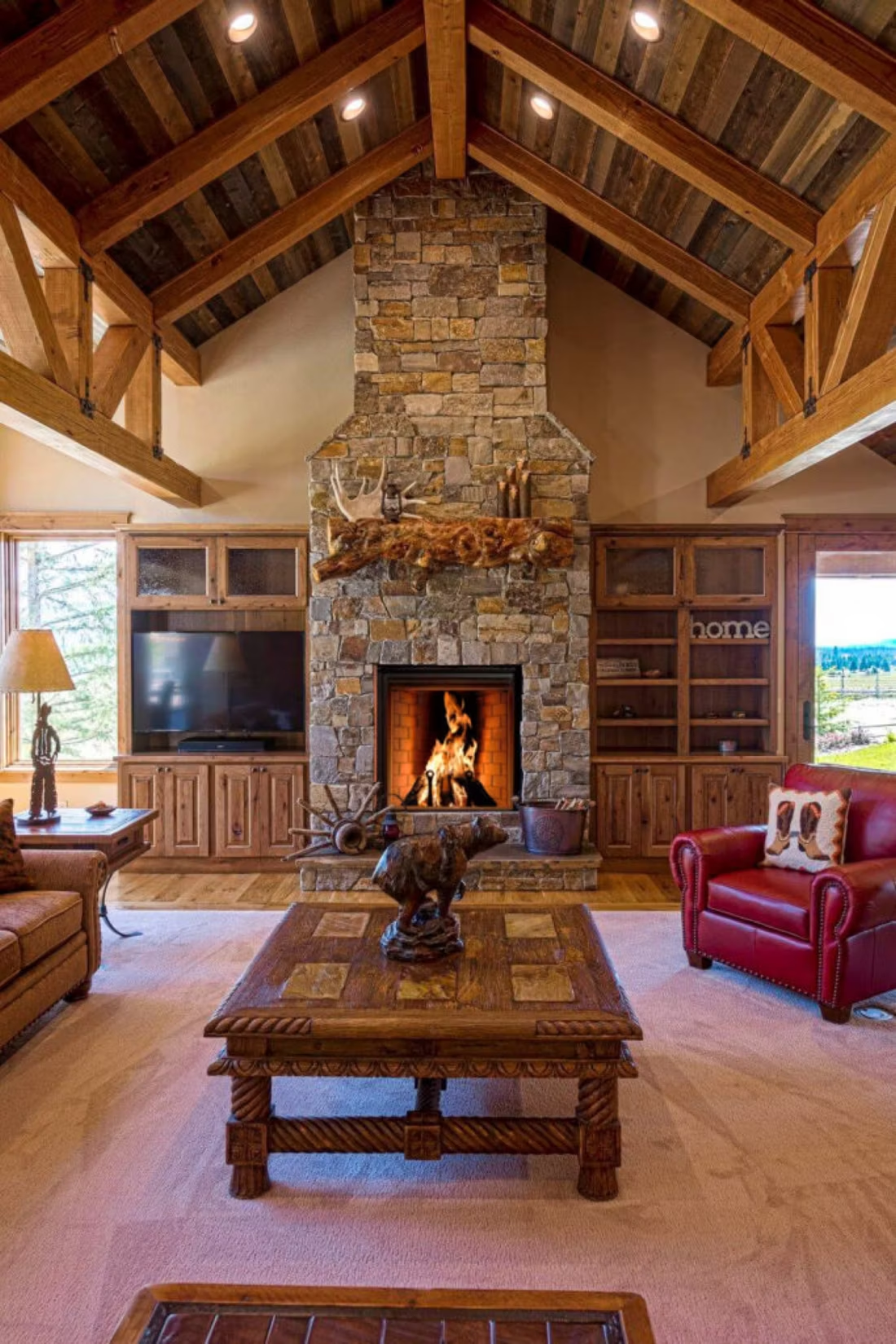
Three steps. No salesperson until you're ready.
Tell us about your project
Your zip code, your situation, and the fuel you're leaning toward—or let the answers point you to one.
See what's actually available
The brands dealers within 100 miles genuinely carry—real options, never a catalog mirage.
Get your dealer & Project Guide
A trusted local dealer, plus the free Project Guide & Parts List that names every component of the job.
Frequently Asked Questions
How much does a wood stove installation cost in Cherokee County?
Most wood stove installations in Cherokee County run somewhere between $3,500 and $8,000, depending on the stove model, whether the chimney needs to be replaced or extended, and whether a new hearth pad is required for clearance-to-combustibles compliance. Older farmhouses in Cherokee, Aurelia, and Marcus often have masonry chimneys that need lining before a new stove can be connected, which adds to the cost. Installing a stove in a detached shop or outbuilding—common on acreages throughout the county—is usually simpler and less expensive since there's no existing structure to work around. A local installer can give you a firm number after seeing the space.
What size wood stove do I need for a farmhouse or acreage in Cherokee County?
Sizing comes down to square footage, ceiling height, insulation, and whether the stove is your primary heat or backup. Older farmhouses in this part of Iowa tend to be drafty by modern standards, so a stove sized for a tight, newer-construction home the same square footage will usually fall short here on the coldest nights. A small stove works fine for a single room, a workshop, or a well-insulated addition, while a medium-to-large stove is typically needed to carry a full farmhouse through a stretch of single-digit lows. Local dealers will size the stove to your actual structure rather than a generic chart, which matters a lot in a county where home age and construction vary widely from block to block.
Where can I find certified wood stove installers near me?
Look for installers with NFI (National Fireplace Institute) certification or CSIA (Chimney Safety Institute of America) credentials, which confirm training specific to wood-burning appliances and venting. Given Cherokee County's rural layout, most hearth dealers cover the whole county from a base in Cherokee, but expect a small travel charge for installs out in Marcus, Larrabee, Cleghorn, or Meriden. It's worth avoiding a general contractor or handyman install for a wood stove—clearance and venting mistakes are the leading cause of chimney fires, and a certified installer will also know how to satisfy the county's permit and inspection requirements.
What's the difference between a wood stove and a wood insert?
A wood stove is a freestanding unit set on a hearth pad, vented up through a chimney—it can go almost anywhere with the right clearances, including a farm shop or garage. A wood insert is built to slide into an existing masonry fireplace opening, turning an old, inefficient open hearth into a sealed, high-output heat source using the chimney you already have. A lot of the older homes around Cherokee and Aurelia still have original brick fireplaces from the early-to-mid 1900s, and for those, an insert is usually the better upgrade. Homes without an existing fireplace—or a detached outbuilding—are better candidates for a standalone stove.
Do I need a permit to install a wood stove in Cherokee County?
Yes, a building permit is generally required for new wood stove installations, whether in the city of Cherokee or unincorporated parts of the county—check with the Cherokee County Zoning and Building Department before starting work. Most local hearth dealers handle the permit application as part of the installation, so it's rarely something you have to manage yourself. There are no burn restrictions or air quality curtailment periods in Cherokee County, so once your stove is installed and inspected, you're free to burn without the seasonal smoke advisories that some other regions deal with.
What's the best wood stove for Cherokee County's climate?
With average winter lows around 7°F and stretches of single-digit or below-zero weather most winters, a catalytic stove that holds a long, steady burn is a good fit here—models from Blaze King, for instance, can hold a fire for 20+ hours on a load, which matters when you want heat through an overnight cold snap without getting up to reload. For farm shops or outbuildings where the priority is fast, high heat output rather than an all-night burn, a non-catalytic stove from a brand like Pacific Energy or Lopi is usually the simpler, lower-maintenance choice. A local dealer will factor in your structure, insulation, and whether the stove is primary or backup heat before recommending a specific model.
How often should my chimney be inspected and cleaned?
The CSIA recommends an annual inspection for any wood-burning stove or insert, and Cherokee County homes that run a stove as a primary or near-primary heat source through the winter should plan on a full sweep every year, typically before the first cold snap in fall. Households burning several cords a winter—common on farms using a stove to heat a shop as well as the house—sometimes need a mid-season check if creosote is building up faster than expected. Given how spread out the county is, it's worth scheduling your sweep early in the fall rather than waiting until the first freeze, when local chimney sweeps get booked up.
Where can I get firewood in Cherokee County?
Firewood is generally easy to source locally, whether from your own farm woodlot, a neighbor clearing a shelterbelt, or a local seller advertising split, seasoned cordwood. Oak, hickory, maple, and walnut are all common species harvested in the county, and oak or hickory in particular are prized for their long, hot burn and dense coal bed. Cordwood prices from local sellers typically run in line with regional Iowa averages, and buying seasoned wood (cut and split at least six months to a year prior) rather than green wood will save you a lot of chimney maintenance and smoke down the road.
Wood stove vs. pellet stove—which is right for my home?
Wood stoves burn cordwood, work without electricity, and pair naturally with a county where oak, hickory, and walnut are already being cut off farm ground—that's a real advantage here, since rural power outages during ice storms aren't rare in Cherokee County. Pellet stoves, using bagged pellets from regional suppliers like Lignetics or Indeck Energy Services, are more convenient to load and burn cleaner, but they need electricity to run the auger and blower, so they go dark in the same outage a wood stove would keep running through. For a farmhouse or shop where reliable backup heat matters, wood tends to be the better fit. For a household prioritizing convenience and consistent electric service, pellet is a solid alternative—either option is available through local dealers.
Why is a fireplace insert so efficient?
An insert does two things: it seals the chimney completely, so you stop losing air you already paid to heat, and it radiates warmth into the room through the firebox and glass. Most add a heat-exchange fan that pulls cool room air underneath, wraps it around the hot firebox, and pushes it back out warm. Your home is more efficient before you've even lit the first fire.
Can a wood stove burn all night?
The right one can. If waking up to a warm house and live coals matters to you, say exactly that when you're shopping—firebox size and burn-rate control determine overnight performance far more than any number on a spec sheet. It's a much more useful question than asking about BTUs.
Can a fireplace actually lower my heating bill?
Yes—by creating a comfort zone. A furnace heats every square foot of the house just to warm the one room you're in; a gas fireplace on low burns roughly a sixth of the gas a typical furnace does. Set the furnace around 55–60 degrees as a baseline, then heat the rooms your family actually uses. Families who heat this way commonly save $20–$60 a month.
Can I install a fireplace myself?
If you're putting a fire in your house on purpose, it's best to work with an expert. Unless you're genuinely experienced in framing, gas line, vent pipe, and the national code on clearances to combustibles, have a professional do it—and ideally the same company that sells you the fireplace, so warranty, service, and liability all live under one roof.
Find your wood stove in Cherokee County.
Tell us a bit about your home or farm building and we'll match you with the right wood stove or insert, plus a free Project Guide & Parts List with the exact venting and parts you need—and a trusted local dealer to install it.
Find Your Fireplace →