
Warm up any room in Cherokee County—no venting required.
Zone heat for the cold rooms your furnace never quite reaches—from Cherokee to Aurelia, Marcus, Meriden, Quimby, Cleghorn, and Washta. Find the right unit and connect with a trusted local dealer.
Every Project Starts From One of These Five Situations
Supplemental heat that plugs in, no masonry required.
Cherokee County sits in the rolling farmland of northwest Iowa, anchored by the county seat of Cherokee and the smaller communities of Aurelia, Cleghorn, Marcus, Meriden, Quimby, and Washta. With roughly 8,300 residents spread across mostly rural land, the county's climate zone 6A and a winter heating load about as demanding as Fargo, North Dakota put it in the same cold-climate bracket—winters here average lows around 7°F, and the open cropland wind makes it feel colder still. Many of the county's older farmhouses predate efficient central heating, and homeowners have long supplemented forced-air furnaces with wood stoves burning the oak, hickory, maple, and walnut that grow in local shelterbelts and woodlots.
Electric fireplaces and inserts have become a practical answer for the rooms those older systems don't reach—a finished basement, a mudroom addition, an upstairs bedroom that's always cold. Most of Cherokee County is served by Alliant Energy or a rural electric cooperative covering the townships outside city limits, and either way, adding a 120V or 240V electric fireplace doesn't require a gas line, a chimney, or masonry work—just an outlet, or a licensed electrician for a hardwired unit. That makes electric a fast, code-simple option for zone heat, especially in the county's mobile homes, apartments above Main Street storefronts in Cherokee, and rental properties where a wood or gas installation isn't practical.
Three steps. No salesperson until you're ready.
Tell us about your project
Your zip code, your situation, and the fuel you're leaning toward—or let the answers point you to one.
See what's actually available
The brands dealers within 100 miles genuinely carry—real options, never a catalog mirage.
Get your dealer & Project Guide
A trusted local dealer, plus the free Project Guide & Parts List that names every component of the job.
Frequently Asked Questions
How much does an electric fireplace installation cost in Cherokee County?
Most plug-in electric fireplace inserts and mantels installed in Cherokee County run $400 to $1,200 for the unit plus a straightforward outlet installation. Built-in units that require a dedicated 240V circuit—common for larger wall-mounted or linear models—add $300 to $600 for electrician labor, since most older farmhouses in the county weren't wired with a spare circuit near the intended install location. Local dealers serving Cherokee and the surrounding towns can typically install a plug-in unit the same day; hardwired installs usually take a scheduled electrician visit.
What size electric fireplace do I need for my room?
Electric fireplaces are rated in watts, not BTUs, and most full-size units top out around 5,000 BTU (roughly 1,500 watts)—enough to noticeably warm a 300 to 400 square foot room, but not a whole house. For a bonus room over an unheated garage, a finished basement rec room, or an addition on one of the older Cherokee County farmhouses, that's usually plenty as supplemental heat alongside your furnace. For larger open rooms, some homeowners install two units or pair the fireplace with a rated space heater. A local dealer can walk through your specific room dimensions and insulation level to recommend the right wattage.
What's the difference between an electric fireplace, insert, and stove?
An electric fireplace is typically a wall-mounted or built-in unit designed to look like a traditional fireplace, often set into new framing or a mantel surround. An electric insert is sized to slide into an existing masonry or wood-stove opening—a common upgrade for Cherokee County homes with an old, rarely-used wood fireplace that the owners want without the wood handling or chimney upkeep. An electric stove is a freestanding cabinet-style unit that mimics a wood stove's look and can sit anywhere near an outlet, which makes it popular in mobile homes and additions around the county where there's no existing masonry to build around.
Do I need an electrician or permit to install an electric fireplace in Cherokee County?
A basic plug-in unit that runs on a standard 120V outlet doesn't require a permit—just plug it in. If you're installing a larger built-in model that needs a dedicated 240V circuit, that electrical work should go through a licensed electrician, and depending on the scope, Cherokee County's building department may require an electrical permit for the new circuit. Local dealers who sell and install electric fireplaces in the area typically coordinate with a licensed electrician for anything beyond a plug-in unit, so you're not left tracking down separate trades.
Can an electric fireplace heat my whole house in a Cherokee County winter?
No—and this is worth being direct about. With a winter heating load about as demanding as Fargo, North Dakota and average winter lows around 7°F, Cherokee County needs a real primary heating system, whether that's a furnace, boiler, or a wood stove sized for the whole structure. Electric fireplaces top out around 1,500 watts of heat output, which is enough for one room but not a home this cold. They work well as zone heat—taking the edge off a specific room so you can turn the thermostat down elsewhere—but nobody in the county should plan to heat a farmhouse through a northwest Iowa winter on electric fireplace heat alone.
Will my electric fireplace work during a power outage?
No—and that's the main tradeoff against wood heat in Cherokee County, where winter storms and ice can knock out rural electric cooperative lines for hours or longer. An electric fireplace goes dark the moment the power does, unlike a wood stove burning local oak or hickory, which keeps running regardless of the grid. Homeowners who want ambiance and simple zone heat day-to-day but also want backup warmth during outages often keep a wood stove or a propane heater as a second heat source rather than relying on electric alone.
Is electric a good option for homes without natural gas service?
Yes—much of rural Cherokee County, including the areas around Aurelia, Cleghorn, Marcus, Meriden, Quimby, and Washta, is outside any natural gas utility's service territory, and propane is the standard alternative for whole-home heat. For a supplemental fireplace, electric skips the propane tank, delivery contract, and gas line work entirely—you're simply adding load to your existing electric service. That makes electric fireplaces a common, low-hassle choice in these outlying areas even though propane or wood still handles primary heating.
Are there rebates for electric fireplaces in Cherokee County?
Alliant Energy and the rural electric cooperatives serving Cherokee County occasionally offer efficiency rebates, but they're typically aimed at heat pumps, insulation, and whole-home efficiency upgrades rather than electric fireplaces specifically, since fireplaces are supplemental rather than primary heat. It's worth checking with your provider directly before you buy, since program details change year to year. Local dealers can usually tell you whether any current rebate applies to the model you're considering.
Electric vs. wood or pellet—which makes sense for my Cherokee County home?
Wood, burning the oak, hickory, maple, and walnut common to the county's woodlots, delivers the most heat per dollar and keeps working through a power outage—a real consideration given how exposed rural electric lines are to ice and wind here. Pellet stoves, stocked locally through brands like Lignetics and regional suppliers such as Indeck Energy Services, offer more convenience than wood but still need electricity to run the auger and blower. Electric fireplaces are the simplest and cleanest option—no fuel storage, no venting, no ash—but they're supplemental only and won't help during an outage. Many Cherokee County homeowners land on a mix: a wood or pellet stove for serious cold-weather backup, and an electric unit for easy ambiance in a room the primary system doesn't reach well.
Can I put a TV above my fireplace?
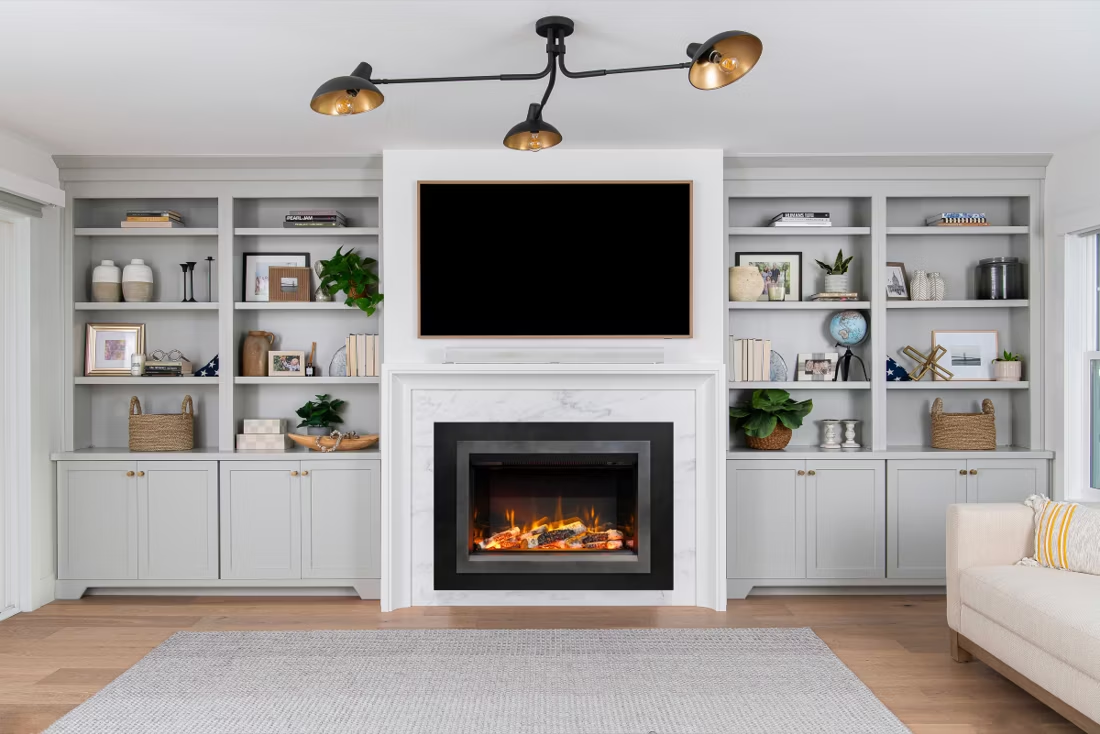
Yes—with an asterisk. Fireplaces are hot and TVs don't like heat. Either put a mantel between them to deflect rising warmth, or choose a fireplace with heat-management technology that creates a cool zone on the wall above—the wall stays around 125 degrees, barely warm, while the room still gets full heat. If you like clean lines and don't want a mantel, heat management is the answer.
Does an electric fireplace need a vent or chimney?
No—that's its superpower. An electric fireplace needs a wall and an outlet, period. No vent pipe, no gas line, no clearances to design around, which is why it works in bedrooms, offices, apartments, and walls where venting a gas or wood unit would be impractical or impossible. Installation is typically the simplest and least expensive of any fireplace type.
What is an in-home preview and do I need one?
It's a visit where a hearth professional measures your space, confirms the model you picked actually works in your home, and walks the specs—framing, gas line, venting, finish work—before anything is ordered. Some details you just can't know until you see the house. Never make a down payment without one; it's the single most-skipped step that burns buyers.
Does a fireplace add value to my home?
On average, a fireplace adds back to the home about the same amount you spent installing it. Add the monthly savings from heating the rooms you actually use instead of the whole house—often hundreds of dollars a year—and the value case is strong before you even count what a fire does for how your family uses the room.
Find your electric fireplace in Cherokee County.
Tell us about your room and your home, and we'll match you with a trusted local dealer and send over a free Project Guide & Parts List—the exact parts and recommended installer for your electric fireplace project in Cherokee County.
Find Your Fireplace →