
Steady heat, less hassle, for Cherokee County winters.
With average lows around 7°F—winters here run about as cold and long as Fargo, ND—Cherokee County homes need heat that doesn't quit. A pellet stove delivers thermostat-controlled warmth without a woodpile. We'll match you with a trusted local dealer.
Every Project Starts From One of These Five Situations
Wood-heat comfort, without cutting or splitting wood.
Cherokee County sits in the rolling farmland of northwest Iowa, with the city of Cherokee as the county seat and small communities—Aurelia, Marcus, Meriden, Quimby, Cleghorn, Larrabee, Washta—spread across a landscape of roughly 8,300 residents and a lot of open ground between them. The county's hardwood shelterbelts and farmstead groves run heavy on oak, hickory, maple, and walnut, so wood heat has deep roots here. But with a 6A climate zone and winters that rival Fargo, ND for sheer duration, many homeowners want the radiant comfort of a wood-style fire without the daily chore of hauling and splitting cordwood.
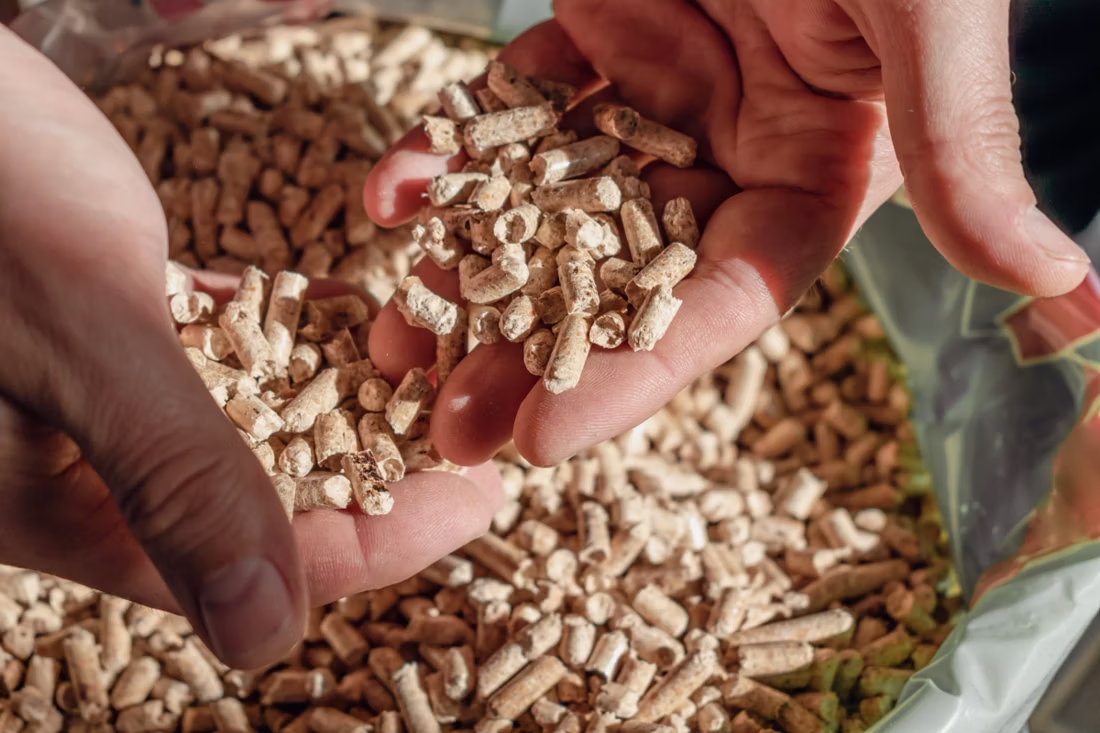
That's where pellet appliances fit in. Cherokee County has no air quality non-attainment issues or burn restrictions to navigate, so pellet stoves and inserts install cleanly with none of the smoke-curtailment concerns you'd see in a western basin. Regional pellet supply runs through brands like Lignetics and Indeck Energy Services, both distributed across the Midwest, so fuel sourcing isn't a scramble even out in the rural stretches of the county. The tradeoff worth planning for: pellet stoves run on an electric auger and blower, so a farmstead losing power during an Iowa ice storm needs a backup plan—a small battery backup or generator hookup—if the stove is doing real heavy lifting.
Three steps. No salesperson until you're ready.
Tell us about your project
Your zip code, your situation, and the fuel you're leaning toward—or let the answers point you to one.
See what's actually available
The brands dealers within 100 miles genuinely carry—real options, never a catalog mirage.
Get your dealer & Project Guide
A trusted local dealer, plus the free Project Guide & Parts List that names every component of the job.
Frequently Asked Questions
How much does a pellet stove installation cost in Cherokee County?
Most pellet stove installs in Cherokee County run in the $3,500 to $6,500 range, depending on whether it's a freestanding stove venting through an exterior wall or a pellet insert going into an existing masonry fireplace. Homes with an existing chimney or hearth typically land on the lower end since the venting path is already there. New construction or a stove going into a room with no existing hearth pad or vent penetration will run higher once framing and wall penetration are factored in. A local dealer will give you a firm number after seeing your space in person.
What size pellet stove do I need for my home?
Sizing depends on square footage, ceiling height, and how drafty the house is—and a lot of Cherokee County's older farmhouses fall into the drafty category. As a rough guide: a small pellet stove (rated for up to roughly 1,000 sq ft) works for a single room or a tight, well-sealed space, a medium unit (1,000–1,800 sq ft) covers most main living areas, and a larger unit with a bigger hopper handles a whole small home through a long Iowa winter. Given the county's winters on par with Fargo, ND for length and cold, it's worth sizing toward the higher end rather than the lower—a stove that's undersized will run flat-out all winter and still not keep up on the coldest nights.
Pellet stove vs. wood stove—which makes more sense in Cherokee County?
Wood stoves burn the oak, hickory, maple, and walnut that's common across Cherokee County's farmsteads and shelterbelts, work without electricity, and are the traditional choice for backup heat during winter storms. Pellet stoves trade the woodpile for a hopper you fill with bagged pellets from suppliers like Lignetics or Indeck Energy Services, offer thermostat-set, even heat output, and produce far less ash and mess. The catch is that pellet stoves need electricity to run the auger and blower, so they're not a true off-grid backup during an outage unless you pair one with a battery backup. For daily convenience in a home with reliable power, pellet usually wins. For pure storm-proof backup heat, wood still has the edge.
Where does pellet fuel come from, and what does it cost in Cherokee County?
Pellet fuel for Cherokee County homes is typically supplied through Midwest-region brands including Lignetics and Indeck Energy Services, sold in 40-pound bags through local hardware stores, farm supply retailers, and hearth dealers, or by the ton for bulk buyers. Expect roughly $220 to $280 per ton in a typical winter, with some price movement tied to hardwood pellet demand across the region. A home burning pellets as a primary heat source through a full Cherokee County winter can go through 2 to 3 tons; supplemental use in one room is usually well under a ton.
Will my pellet stove work if the power goes out?
Not without help. Pellet stoves rely on an electric auger to feed the fuel and a blower to move heat into the room, so a power outage stops the stove even with a full hopper. This matters in Cherokee County, where winter ice storms and high winds can take down rural power lines for hours or longer. If backup heat during outages is a priority, ask your local dealer about a battery backup unit sized for your stove, or plan for a generator that can run the stove's electrical components. Homes that need guaranteed off-grid heat sometimes pair a pellet stove for daily convenience with a wood stove or fireplace as true storm backup.
Do I need a permit to install a pellet stove in Cherokee County?
Most pellet stove and insert installations require a building permit through Cherokee County's building department, covering the appliance installation and the venting penetration through the wall or roof. Requirements can vary slightly for incorporated communities like Cherokee versus unincorporated rural parts of the county, so it's worth confirming with your installer before work starts. Local dealers who install pellet appliances regularly typically handle the permit paperwork as part of the job, so you're not left coordinating it yourself.
How much maintenance does a pellet stove need?
Pellet stoves need more routine attention than a wood stove but far less than you'd think—daily ash removal from the burn pot, a weekly glass and hopper check, and a full professional cleaning and inspection once a year, ideally before the heating season ramps up in the fall. The exhaust fan, auger motor, and gaskets should also get checked annually since those are the parts most likely to need service after a long Cherokee County winter of daily use. Skipping the annual service is the most common reason pellet stoves start running inefficiently or shutting down mid-season.
What's the best pellet stove for Cherokee County's cold winters?
With average lows around 7°F and winters on par with Fargo, ND, look for a pellet stove with a large hopper capacity—40 to 80 pounds—so you're not refilling constantly during the coldest stretches, and a higher BTU output rating suited to whole-home heating rather than just supplemental warmth. Models with variable-speed feed systems give more consistent heat output across a wide temperature swing, which matters here given how much Iowa winters fluctuate week to week. Ask your local dealer which models they stock and service regularly—a stove that's easy to get parts for locally matters more long-term than a spec sheet.
Pellet stove vs. gas fireplace—which is right for my home?
Gas fireplaces offer instant on-off heat with no fuel storage or refilling, which is appealing if your Cherokee County home is already set up with propane, common across much of rural northwest Iowa. Pellet stoves require periodic hopper refills and pellet storage but burn a renewable fuel, produce a real visible flame, and don't depend on a propane delivery schedule holding up during a hard winter. For homes prioritizing zero-maintenance convenience, gas usually wins. For homes that want a wood-fire look and feel with more control over fuel costs, pellet is the better fit. Either way, a local dealer can walk you through what your home's existing utility setup makes easiest.
What's the difference between an insert and a zero-clearance fireplace?
An insert is a fireplace that slides into a pre-existing wood-burning fireplace—if you don't have one, there's nothing to insert it into. A zero-clearance fireplace is built into a framed wall, which makes it the answer for remodels and new construction. Simple test: existing masonry fireplace means insert; blank or framed wall means zero-clearance.
How often does a pellet stove need cleaning?
A clean pellet stove is a happy pellet stove. Plan on cleaning the burn pot about once a week when you're burning regularly—ash and clinkers gum up the air holes just like a pellet barbecue. Most pellet stove problems trace back to skipped cleaning that nobody explained up front. Some designs make it easy with a trapdoor burn pot: pull a lever and the gunk drops into the ash pan.
How much should I budget for a fireplace?
For an average home—covering the fireplace, the vent pipe, and basic installation—a budget between $3,900 and $5,500 gives you a lot of options across wood, gas, and pellet. By the time you add finish work, gas line, and electrical, the average complete installation lands between $5,000 and $12,000 all-in. In a remodel or new build, a good rule is to put about 2.5% of the total project cost toward the fireplace.
Does a fireplace add value to my home?
On average, a fireplace adds back to the home about the same amount you spent installing it. Add the monthly savings from heating the rooms you actually use instead of the whole house—often hundreds of dollars a year—and the value case is strong before you even count what a fire does for how your family uses the room.
Pellet Brands Stocked Around Cherokee County
Manufacturers will point you to the nearest stocking dealer.
Find your pellet stove in Cherokee County.
Tell us a bit about your home and heating needs, and we'll match you with a trusted local dealer and send over a free Project Guide & Parts List—the exact parts, including the vent kit, for your Cherokee County pellet project.
Find Your Fireplace →