
Keep Your Family Warm and Safe—No Matter What
Reliable radiant heat for the farmhouses and small towns of Appanoose County—from Centerville out to the rural township roads. I'll match you with a trusted local dealer who can size and install it right.
Every Project Starts From One of These Five Situations
Hardwood country, and heat that doesn't quit when the power does.
Appanoose County sits in south-central Iowa, climate zone 5A, with roughly 6,330 heating degree days a year and average winter lows around 12°F—a season with a similar bite to Madison, WI, though without the lake-effect snow. Winters here run long, and rural stretches of the county see the kind of ice storms and wind-driven outages that make a code-compliant wood stove more than a nostalgia purchase. For farmhouses and older homes around Centerville and the surrounding townships, a wood stove or insert is often the difference between a cold night huddled by the propane furnace and steady radiant heat that keeps running no matter what the grid is doing.
The county's hardwood stands—oak, hickory, maple, and walnut are all common locally—mean good-burning, dense firewood is easy to source, whether from your own timber, a neighbor with a woodlot, or a local seller. With no air quality non-attainment issues or burn curtailment restrictions in Appanoose County, wood heat here is straightforward: no winter inversion advisories to track, no smoke-season limits on when you can run the stove. A properly sized EPA-certified stove or insert, installed by a local pro who pulls the permit and sizes the venting correctly, gives you efficient, long-burning heat suited to oak and hickory cordwood and the county's real winter lows.
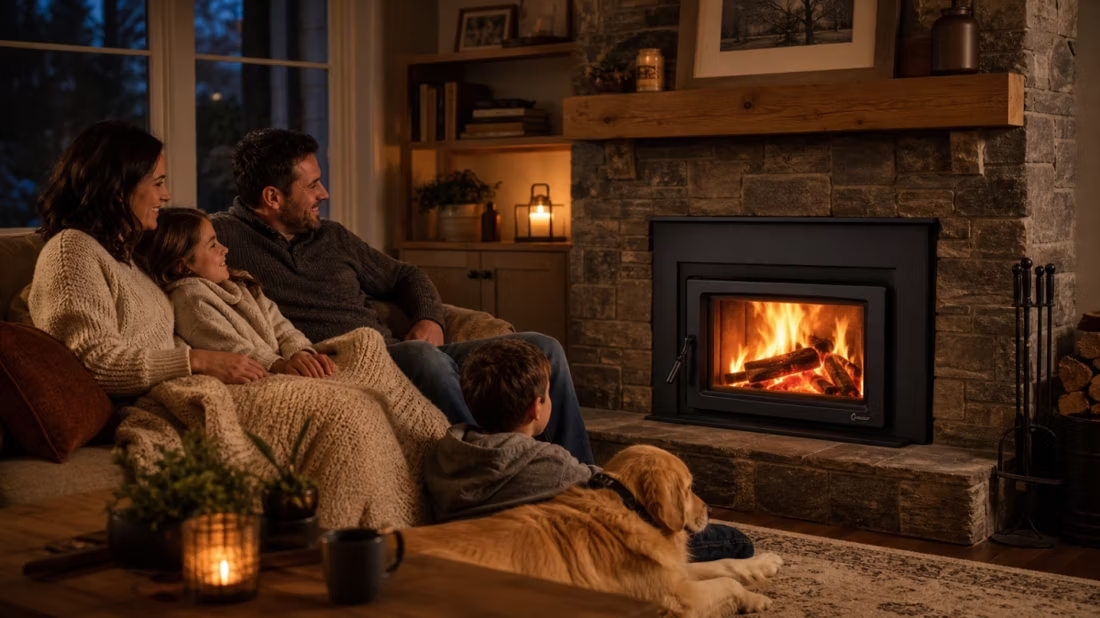
Three steps. No salesperson until you're ready.
Tell us about your project
Your zip code, your situation, and the fuel you're leaning toward—or let the answers point you to one.
See what's actually available
The brands dealers within 100 miles genuinely carry—real options, never a catalog mirage.
Get your dealer & Project Guide
A trusted local dealer, plus the free Project Guide & Parts List that names every component of the job.
Frequently Asked Questions
How much does a wood stove installation cost in Appanoose County?
Wood stove and insert installations in this part of Iowa typically run $4,500 to $9,000, with the range driven by the stove model, whether an existing masonry chimney can be reused with a liner, and whether new Class A chimney pipe needs to be run through a wall or roof. Older farmhouses around Appanoose County without an existing chimney tend toward the higher end once venting and a code-compliant hearth pad are factored in. A local dealer can walk your specific home and give you a firm number rather than a range.
What size wood stove do I need for a farmhouse in Appanoose County?
With average winter lows around 12°F and roughly 6,330 heating degree days a year, most homes here need more heating capacity than a mild-climate stove chart suggests. A small stove (up to 1,000 sq ft) suits a single room, cabin, or shop; a medium stove (1,000–2,000 sq ft) covers most main living areas in a typical Centerville-area home; larger, older farmhouses with higher ceilings and less insulation often need a stove rated toward the top of the medium range or into large-stove territory even at modest square footage. A local dealer will size the stove to your actual floor plan and insulation level, not just square footage on paper—oversizing leads to smoldering, undersizing means you're still running the furnace on the coldest nights.
Where can I find certified wood stove installers near me?
Look for installers with NFI (National Fireplace Institute) or CSIA (Chimney Safety Institute of America) credentials—both indicate real training in wood-burning appliance clearances and venting, not just general contracting experience. In a county this size, most hearth dealers cover Centerville and the surrounding rural townships as part of their normal service area, sometimes with a small travel charge for the farthest reaches of the county. Avoid handyman installs on wood-burning units—improper clearances and undersized venting are the leading causes of chimney fires, and it's not a place to cut corners on an older farmhouse with an aging chimney.
What's the difference between a wood stove and a wood insert?
A freestanding wood stove sits on its own hearth pad and can go almost anywhere in a room with proper clearances to combustibles—a good fit for shops, additions, or homes without an existing fireplace. A wood insert slides into an existing masonry fireplace opening and uses the existing chimney (typically with a stainless liner) to vent, turning a drafty, inefficient open hearth into a sealed, high-output heat source. Many older homes around Appanoose County already have a masonry fireplace that was built for looks more than heat—an insert is usually the more efficient upgrade for those homes, while a freestanding stove makes more sense where there's no chimney to reuse.
Do I need a permit to install a wood stove in Appanoose County?
Yes—a building permit is required for new wood stove and insert installations, and the unit itself needs to meet current EPA emissions standards. Most local hearth dealers handle the permit application as part of the installation, so it's not something you typically have to manage yourself. Unlike some western states, Appanoose County has no winter burn curtailment periods or air quality advisories to track, so once the stove is installed and inspected, you're free to burn as needed through the season.
What's the best wood stove for Appanoose County's climate?
With winter lows regularly near 12°F and long, steady heating seasons more typical of Madison, WI than a milder climate, a catalytic stove from a brand like Blaze King is worth considering for homes using wood as a primary or heavy supplemental heat source—these hold a fire 20+ hours on a load of dense hardwood like oak or hickory, which matters on the coldest overnight stretches. For smaller homes, additions, or supplemental use, a non-catalytic stove from Pacific Energy or Lopi is simpler to operate and still performs well on local hardwood. A local dealer can match the stove to your home's insulation, square footage, and how much of your heat load you actually want it to carry.
How often should my chimney be inspected and cleaned?
The CSIA recommends an annual inspection for any wood-burning appliance, and that holds true in Appanoose County whether you're burning as a primary heat source or just on cold evenings. Late summer or early fall, before the first cold snap, is the typical window locally. Households burning oak and hickory as a primary heat source through a full Iowa winter—several cords a season—may need a mid-season cleaning if creosote builds up faster than expected. Older farmhouse chimneys, especially unlined masonry ones, deserve extra attention since deterioration isn't always visible from the ground.
Where can I get firewood in Appanoose County?
Given the county's hardwood timber—oak, hickory, maple, and walnut are all common locally—firewood is usually easy to source through local sellers, farm connections, or your own woodlot if you have timbered acreage. Seasoned oak and hickory are prized for long, hot burns and are widely available regionally; green wood needs six months to a year of proper stacking and covering before it's ready to burn cleanly. If you're new to the area, your local hearth dealer can usually point you toward a reliable firewood source as part of the sale.
Wood stove vs. pellet stove—which is right for me?
Wood stoves burn cordwood, work with zero electricity—a real advantage during the ice-storm outages that hit rural Appanoose County—and pair naturally with the local hardwood supply of oak, hickory, maple, and walnut. Pellet stoves burn bagged pellets (regional brands like Lignetics are available), are simpler to load and run, and produce less ash, but they require electricity to run the auger and blower, so they go dark in the same outage a wood stove would keep running through. For farmhouses and rural properties where storm-related outages are a real planning concern, wood is usually the better primary or backup heat source. For in-town homes where convenience matters more than off-grid backup, pellet is worth a look. A local dealer carries both and can talk through which fits your situation.
Why won't my new wood stove get going like my old one?
New wood stoves are 70%+ efficient, so far less heat goes up the flue—which also means less draft to get a fire established. The rule: build a genuinely hot fire for about 45 minutes before you choke it down. Skip that and you get smoke in the room, creosote in the chimney, and a fire that never takes off. Most performance complaints trace straight back to this.
What's the difference between an insert and a zero-clearance fireplace?
An insert is a fireplace that slides into a pre-existing wood-burning fireplace—if you don't have one, there's nothing to insert it into. A zero-clearance fireplace is built into a framed wall, which makes it the answer for remodels and new construction. Simple test: existing masonry fireplace means insert; blank or framed wall means zero-clearance.
Can I install a fireplace myself?
If you're putting a fire in your house on purpose, it's best to work with an expert. Unless you're genuinely experienced in framing, gas line, vent pipe, and the national code on clearances to combustibles, have a professional do it—and ideally the same company that sells you the fireplace, so warranty, service, and liability all live under one roof.
Can a fireplace actually lower my heating bill?
Yes—by creating a comfort zone. A furnace heats every square foot of the house just to warm the one room you're in; a gas fireplace on low burns roughly a sixth of the gas a typical furnace does. Set the furnace around 55–60 degrees as a baseline, then heat the rooms your family actually uses. Families who heat this way commonly save $20–$60 a month.
Get your free Project Guide & Parts List for a wood fireplace in Appanoose County.
Tell me a bit about your home and heating goals, and I'll match you with a trusted local dealer and send over a free Project Guide & Parts List—the exact stove, vent kit, and install plan for your Appanoose County home.
Find Your Fireplace →