
Reliable pellet heat for Appanoose County winters.
Thermostat-controlled warmth for the farmhouses and ranch homes around Centerville and Rathbun Lake—no wood splitting, no chimney sweep, just a hopper you fill every day or two. Find the right pellet stove and connect with a trusted local dealer.
Every Project Starts From One of These Five Situations
Consistent, low-maintenance heat for southern Iowa's cold season.
Appanoose County sits in south-central Iowa along the Missouri border, with Centerville as the county seat and Rathbun Lake anchoring the county's eastern half. At roughly 7,600 residents spread across small towns like Moulton, Mystic, Numa, and Moravia, this is farm and small-town Iowa—older housing stock, a lot of it with baseboard or forced-air systems that struggle to keep up when temperatures drop. Climate zone 5A here brings a long, demanding heating season and winter lows that average 12°F, a stretch of cold comparable to what Madison, WI sees most winters. That's enough sustained cold that supplemental heat isn't a luxury for a lot of Appanoose County households—it's how the electric bill stays manageable from November through March.
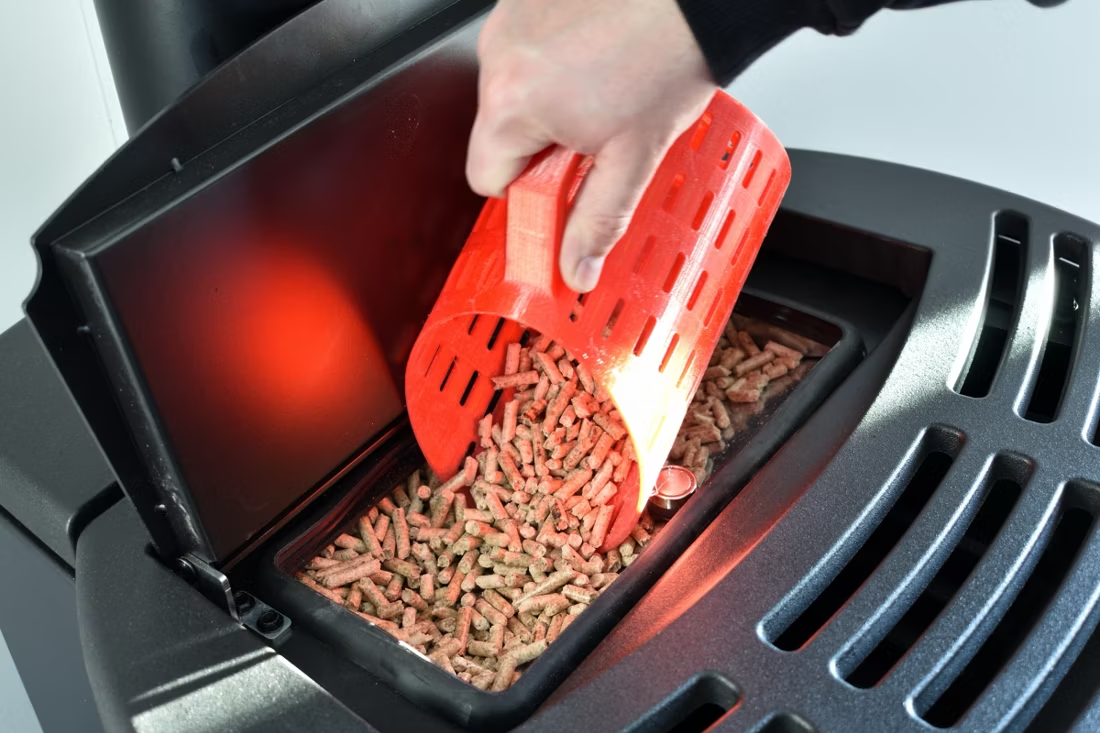
Pellet fuel is a standard, well-established option here, not a novelty. The county sits in hardwood country—oak, hickory, maple, and walnut stands are common across the timber ground and creek bottoms—and regional suppliers including Lignetics and Indeck Energy Services keep bagged hardwood pellets reasonably accessible without a long drive to Ottumwa or Des Moines. For a lot of homeowners here, a pellet stove hits the sweet spot between wood heat's low fuel cost and gas heat's convenience: load the hopper, set the thermostat, and let an auger feed the fire automatically instead of tending it by hand every few hours.
Three steps. No salesperson until you're ready.
Tell us about your project
Your zip code, your situation, and the fuel you're leaning toward—or let the answers point you to one.
See what's actually available
The brands dealers within 100 miles genuinely carry—real options, never a catalog mirage.
Get your dealer & Project Guide
A trusted local dealer, plus the free Project Guide & Parts List that names every component of the job.
Frequently Asked Questions
How much does a pellet stove installation cost in Appanoose County?
Most pellet stove installations in Appanoose County run in the $3,000 to $6,000 range, depending on the unit and whether it's a freestanding stove or an insert going into an existing fireplace opening. Pellet stoves vent through a wall with PL (pellet vent) pipe rather than needing a full masonry chimney, which keeps installation simpler and generally less expensive than a comparable wood stove project—especially useful in older Appanoose County homes that were never built with a chimney flue to begin with. Ask your installer whether the quote includes the wall-thimble kit and any electrical work for the hopper's auger and blower.
What size pellet stove do I need for my home?
With Appanoose County's long, demanding heating season and winter lows averaging 12°F, sizing matters more here than in milder parts of the state. Small pellet stoves (rated for roughly 1,000-1,300 sq ft) work fine as supplemental heat in a single living area of an older farmhouse. Medium units (1,300-2,000 sq ft) cover most of a main floor. Larger units are worth considering for drafty two-story farmhouses common around Centerville and the rural county roads, where heat loss through uninsulated walls and older windows is significant. A local dealer will walk your home and factor in insulation, ceiling height, and layout before recommending a model—that in-home look matters more than square footage alone.
Where can I find a certified pellet stove installer near Appanoose County?
Look for installers with NFI (National Fireplace Institute) certification, which covers proper venting, clearance, and electrical setup for pellet appliances. Because Appanoose County is a smaller, rural market, some homeowners default to ordering online and having a handyman set the unit up—but pellet stoves still involve wall venting, dedicated electrical circuits, and manufacturer-specific installation requirements that affect the warranty. A trusted local dealer who regularly installs pellet appliances in this part of southern Iowa will get the venting run correctly the first time and know how the unit performs at the temperatures Appanoose County actually sees.
What's the difference between a pellet stove and a pellet insert?
A pellet stove is a freestanding unit that sits on its own hearth pad and vents through an exterior wall—it can go almost anywhere in a room, which makes it a common retrofit choice in Appanoose County homes without an existing fireplace. A pellet insert is built to slide into an existing masonry fireplace opening, using the same footprint while dramatically improving heat output over an open hearth. If your home already has a fireplace you rarely use, an insert is usually the more efficient path; if you're adding heat to a room with no fireplace at all, a freestanding stove is the simpler install.
Do I need a permit to install a pellet stove in Appanoose County?
Most pellet stove installations require a building permit through the Appanoose County Building Department, and any new electrical circuit for the stove's auger and blower may need a separate electrical permit. Requirements can vary slightly depending on whether the home is inside Centerville city limits or in unincorporated parts of the county, so it's worth confirming with your installer before work starts. Most local dealers handle the permit paperwork as part of the installation, so this typically isn't something you have to manage yourself.
What's the best pellet stove for Appanoose County's winters?
With winter lows averaging 12°F and stretches of sustained cold typical of a Madison, WI-style winter, look for a pellet stove with a large hopper capacity—40 to 60 pounds—so it can run overnight without needing a refill at 2 a.m. Models with a thermostat or programmable feed rate help the stove ramp up automatically during a cold snap rather than requiring constant manual adjustment. Since local hardwood pellets from suppliers like Lignetics and Indeck Energy Services are readily available, most homeowners here aren't limited to a narrow brand selection—a local dealer can match the stove to whichever pellet supply is easiest for you to keep stocked through the season.
Where can I buy pellet fuel in Appanoose County?
Regional pellet brands including Lignetics and Indeck Energy Services supply hardwood pellets that are stocked by farm and hardware stores across this part of southern Iowa, with bagged pellets typically running in the $5 to $6 range per 40-lb bag depending on the season and how far in advance you buy. Because Appanoose County sits in oak, hickory, maple, and walnut country, hardwood pellet supply tends to be steady rather than scarce—but buying your season's supply early in the fall, before demand picks up with the first cold snap, is still the standard local advice.
Will my pellet stove work during a power outage?
Not without a backup power source—pellet stoves rely on an electric auger to feed fuel and a blower to circulate heat, so they shut down when the power does. That's worth planning around in Appanoose County, where ice storms and summer derecho-style wind events occasionally knock out rural power lines for extended stretches. Some homeowners here pair a pellet stove with a small battery backup or generator specifically to keep the auger and igniter running through an outage. If backup-free heat during outages is a priority, a wood stove is worth discussing alongside a pellet unit—plenty of local dealers sell both.
Pellet stove vs. wood stove—which is right for my home?
Wood stoves work without electricity, burn fuel you can cut or buy locally from the oak, hickory, and walnut stands common around the county, and generally cost less to run if you have access to your own wood supply. Pellet stoves are more convenient—load the hopper, set the thermostat, and let the auger do the work, with cleaner burns and easier ash cleanup, but they need continuous power and rely on bagged fuel rather than what's on your own property. For Appanoose County homes with reliable power and a preference for set-it-and-forget-it heat, pellet is usually the easier day-to-day choice. For rural properties with wood on hand and a priority on power-outage resilience, wood still holds an edge. A local dealer can walk through both options for your specific home.
How often does a pellet stove need cleaning?
A clean pellet stove is a happy pellet stove. Plan on cleaning the burn pot about once a week when you're burning regularly—ash and clinkers gum up the air holes just like a pellet barbecue. Most pellet stove problems trace back to skipped cleaning that nobody explained up front. Some designs make it easy with a trapdoor burn pot: pull a lever and the gunk drops into the ash pan.
Why is my open fireplace making my house colder?
Open fireplaces suck—literally. As the fire burns, it consumes air your furnace already paid to heat and pulls it out through the chimney, so the house is actually colder after the fire goes out than before you lit it. An insert fixes this: it seals the chimney, puts fixed glass across the front, and turns that hole in your house into a real heat source.
Can I install a fireplace myself?
If you're putting a fire in your house on purpose, it's best to work with an expert. Unless you're genuinely experienced in framing, gas line, vent pipe, and the national code on clearances to combustibles, have a professional do it—and ideally the same company that sells you the fireplace, so warranty, service, and liability all live under one roof.
Does a fireplace add value to my home?
On average, a fireplace adds back to the home about the same amount you spent installing it. Add the monthly savings from heating the rooms you actually use instead of the whole house—often hundreds of dollars a year—and the value case is strong before you even count what a fire does for how your family uses the room.
Pellet Brands Stocked Around Appanoose County
Manufacturers will point you to the nearest stocking dealer.
Find your pellet stove in Appanoose County.
Tell us a bit about your home and we'll match you with the right pellet stove or insert, plus a free Project Guide & Parts List with the exact venting and parts your local dealer recommends.
Find Your Fireplace →