
Real heat for southern Iowa winters, from a dealer who actually installs here.
Wood, gas, pellet, and electric fireplace resources for Centerville, Moulton, Mystic, Cincinnati, and the rural crossroads of Appanoose County. Find the right unit for your farmhouse or in-town home and connect with a trusted local hearth retailer.
Every Project Starts From One of These Five Situations
Hardwood country in the Chariton River valley.
Appanoose County sits along the Chariton River in the rolling hill country of south-central Iowa, with winters comparable to Madison, Wisconsin—and average winter lows near 12°F. The county's timbered draws and river bottoms are thick with oak, hickory, maple, and walnut, and a lot of long-time Centerville and Moulton residents still burn wood they've cut or bought from a neighbor rather than trucking in cordwood from outside the county. With just over 7,600 people spread across mostly rural townships, a good portion of the housing stock is older farmhouses and small-town homes where a wood or pellet stove does real work heating a living space, not just supplementing a furnace.
What you'll find on this hub: hearth retailers, service technicians, and fuel suppliers covering Centerville and the smaller communities around it—Moulton, Mystic, Cincinnati, Udell, and the unincorporated crossroads in between. Pick your fuel below to see local dealers, typical installed costs, and recommended units for this climate. Whether you're replacing a worn-out box stove in a farmhouse living room or adding a gas insert to a Centerville square-front home, this page is the starting point.
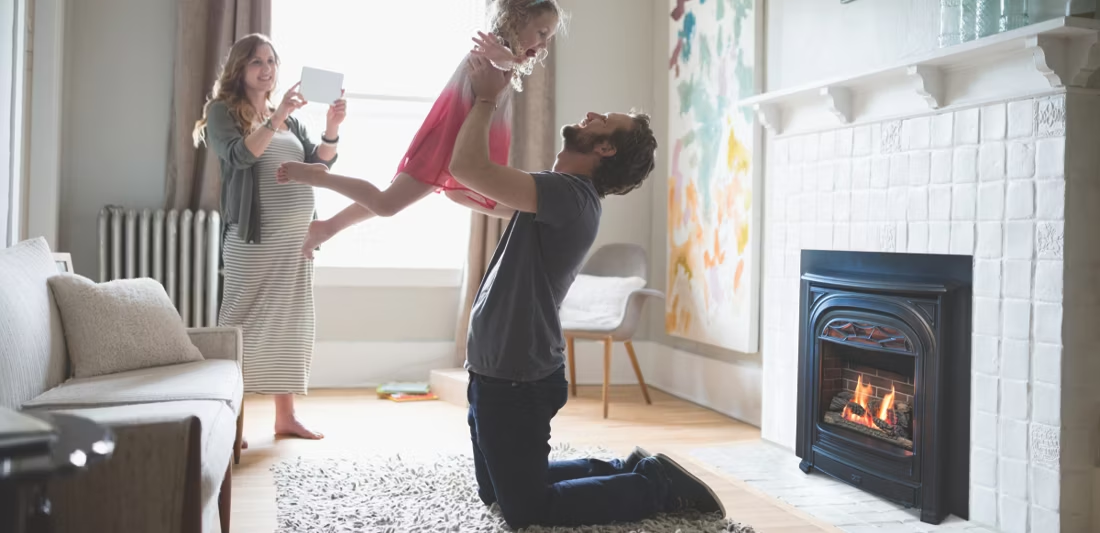
Four fuels. One honest answer for Appanoose County.
Three steps. No salesperson until you're ready.
Tell us about your project
Your zip code, your situation, and the fuel you're leaning toward—or let the answers point you to one.
See what's actually available
The brands dealers within 100 miles genuinely carry—real options, never a catalog mirage.
Get your dealer & Project Guide
A trusted local dealer, plus the free Project Guide & Parts List that names every component of the job.
Frequently Asked Questions
Which fuel makes the most sense for a home in Appanoose County?
It depends on the house and how you use it. Wood is a strong fit here—the county's oak, hickory, and walnut timber means good-burning, high-BTU firewood is often free or cheap if you or a neighbor cut it, and a well-sized wood stove can genuinely carry a farmhouse through a 12°F night. Gas is the low-maintenance option for in-town Centerville homes on natural gas or rural homes running propane tanks—no wood handling, works during the day when nobody's tending a fire. Pellet splits the difference: less labor than wood, and Lignetics and Indeck Energy Services pellets are both available regionally, though you'll want to confirm which local suppliers actually stock them before committing to a pellet stove as your primary heat. Electric is best treated as supplemental—a bedroom or sunroom unit, not something you'd lean on through a full Iowa winter. Plenty of Appanoose County households run wood or pellet as primary heat with a furnace or electric unit as backup.
Do I need a permit to install a wood or gas stove in Appanoose County?
Within Centerville city limits, building permits are generally required for new wood stoves, inserts, gas fireplaces, gas inserts, and pellet stoves, and any new gas line work needs a licensed installer. In the unincorporated parts of the county, permitting requirements can be lighter, but insurance carriers will often still want proof of a code-compliant installation before they'll cover a wood-burning appliance—so it's worth confirming with both the local building authority and your homeowner's insurance agent before work starts. Most hearth retailers serving the county handle the permit paperwork as part of the installation, which is one less thing to chase down yourself.
Are there any air quality restrictions on burning wood in Appanoose County?
No—Appanoose County has no designated air quality non-attainment status and no burn-ban program tied to wood stoves. That's different from places like the Klamath Basin in Oregon or parts of Montana that deal with winter temperature inversions trapping smoke. That said, a well-seasoned load of local oak or hickory (moisture content under 20%) will always burn cleaner and give you more heat per cord than green or wet wood, so seasoning your wood properly is still worth doing even without a regulatory reason to.
Can one hearth retailer in Appanoose County handle wood, gas, pellet, and electric?
Some can, but it's worth asking directly rather than assuming. In a county this size, a single dealer carrying a genuine, well-stocked lineup across all four fuel types is less common than in a larger metro area—some retailers specialize in wood and pellet stoves with a smaller gas and electric selection, while others lean toward gas hearth products. If you're cross-shopping fuels, ask to see working display units for each type you're considering, and confirm the dealer actually installs (not just sells) the fuel type you want—installation capability varies more than showroom inventory does in a rural county like this.
How does fireplace service work if I live outside Centerville?
Most technicians serving Appanoose County are based in or near Centerville and travel out to Moulton, Mystic, Cincinnati, Udell, and the rural townships on a scheduled route rather than same-day dispatch. Expect a modest travel charge for calls well outside town, and expect that scheduling in late summer or early fall (before the first cold snap) will get you an appointment much faster than calling in December when everyone's chimney needs sweeping at once. If you're on a well-worn wood or pellet stove as primary heat, an annual pre-season service call is the single easiest way to avoid a mid-winter breakdown.
What does fireplace installation typically cost in Appanoose County across fuel types?
Costs run roughly in line with rural Midwest norms, though exact pricing depends on the retailer you're matched with. Wood stove or insert installation typically runs $4,000–$8,500, more if a full chimney liner or masonry work is needed. Gas fireplace, insert, or stove installation typically runs $4,000–$10,000, with cost driven heavily by whether a new gas line has to be run. Pellet stove or insert installation typically runs $4,000–$7,000. Electric fireplace costs are the lowest of the four—often $200–$2,500 for the unit itself, plus $300–$1,000 in labor unless it's a simple plug-and-play placement. For a firm number, the county + fuel pages above break down costs by specific dealer and unit type.
Can I install a fireplace myself?
If you're putting a fire in your house on purpose, it's best to work with an expert. Unless you're genuinely experienced in framing, gas line, vent pipe, and the national code on clearances to combustibles, have a professional do it—and ideally the same company that sells you the fireplace, so warranty, service, and liability all live under one roof.
How much should I budget for a fireplace?
For an average home—covering the fireplace, the vent pipe, and basic installation—a budget between $3,900 and $5,500 gives you a lot of options across wood, gas, and pellet. By the time you add finish work, gas line, and electrical, the average complete installation lands between $5,000 and $12,000 all-in. In a remodel or new build, a good rule is to put about 2.5% of the total project cost toward the fireplace.
Wood, gas, pellet, or electric—how do I choose?
Match the fuel to your life, not the other way around. Wood: lowest fuel cost and total power-outage independence, but you're hauling and stacking. Gas: press a button, set a thermostat, no maintenance to speak of. Pellet: wood economics with automatic feeding, in exchange for weekly cleaning and a need for electricity. Electric: plugs in anywhere with honest supplemental heat. Nobody regrets the fuel that fits how they actually live.
What is an in-home preview and do I need one?
It's a visit where a hearth professional measures your space, confirms the model you picked actually works in your home, and walks the specs—framing, gas line, venting, finish work—before anything is ordered. Some details you just can't know until you see the house. Never make a down payment without one; it's the single most-skipped step that burns buyers.
Stove and Fireplace Dealers in Appanoose County
Listings include WhyFire partner dealers, dealers we have verified as authorized for the brands we recommend, and established local businesses that carry hearth products. Every listing shows which one it is. The ones marked Preferred run on WhyFire's software, so they can show you real pricing and book your appointment right here. No manufacturer pays for placement. How we verify dealers →
Gingerich Stoves And Plumbing
Peters Heating & Ac
Jc Huffman Cabinetry
Stoves & Chimneys Of Iowa, Inc.
Blazing Burners L.L.C.
Find your fireplace in Appanoose County.
Pick your fuel below and I'll match you with a trusted local dealer and send over a free Project Guide & Parts List—sized for your home, with the vent kit and install details already worked out.
Find Your Fireplace →