
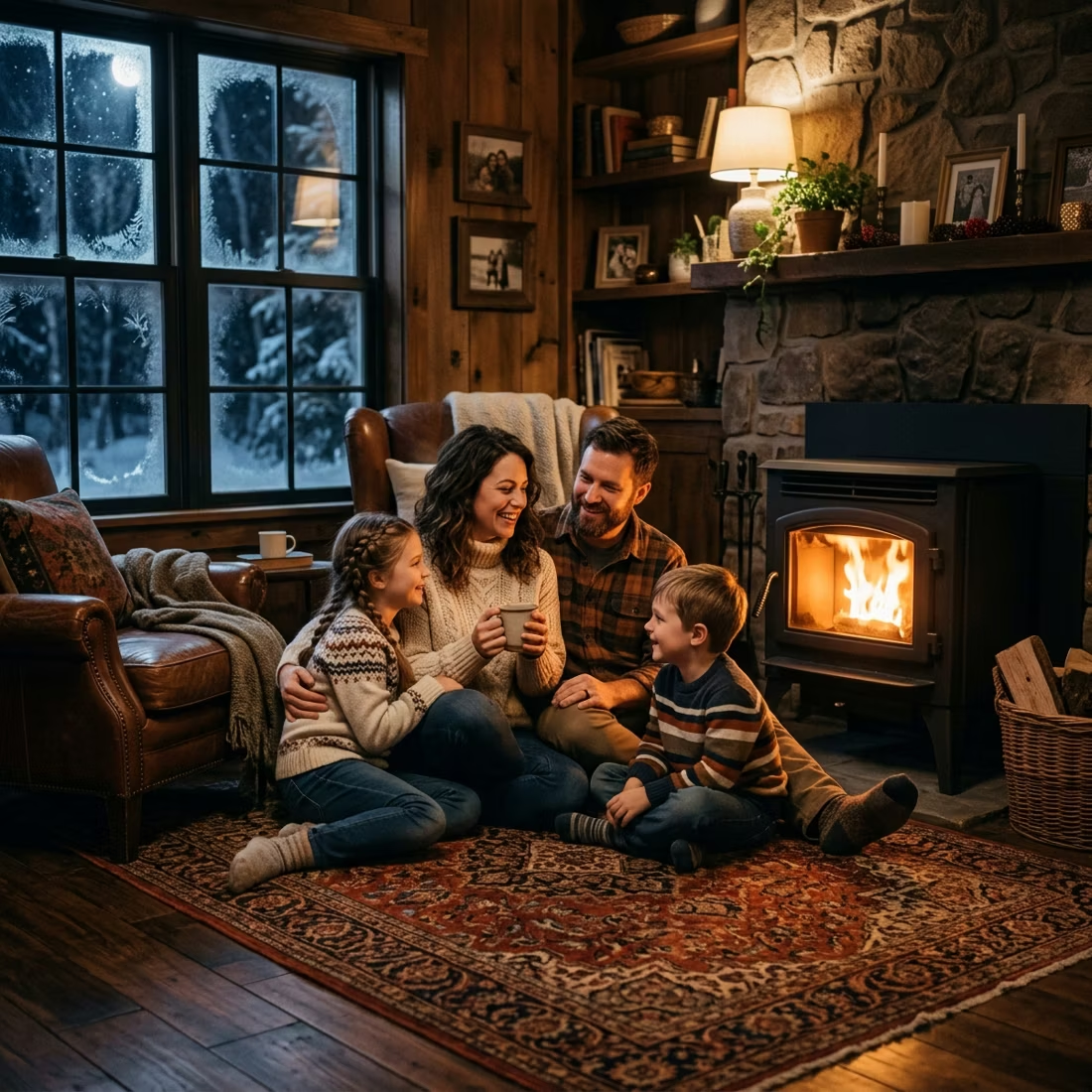
Steady pellet heat for Jasper County's long, gray winters.
From Rensselaer to DeMotte to the farm ground along the Kankakee River, Jasper County has a long, cold heating season with average winter lows near 16°F. Pellet appliances give hopper-fed, thermostat-like heat without the wood pile—find the right unit and connect with a trusted local dealer.
Every Project Starts From One of These Five Situations
A thermostat-like fire for corn-belt winters.
Jasper County is flat, working farm country in northwestern Indiana—corn and soybean ground stretching between Rensselaer, DeMotte, and Wheatfield, with the Kankakee River marsh country to the north. At roughly 12,000 residents spread across small towns and unincorporated townships, a lot of housing stock here is older farmhouses and ranch homes that lean hard on supplemental heat through a season that runs from October into April. Climate zone 5A and winters in the same range as Madison, WI—not the coldest in the country, but long enough and cold enough (average lows around 16°F) that a fireplace or stove earns its keep every year, not just during cold snaps.
Local oak, hickory, maple, and beech woodlots make cordwood a real option here, but pellet stoves have found a solid following with homeowners who want set-and-forget heat without splitting and stacking wood—farm families, retirees, and anyone running a busy household who still wants a real flame and real backup heat. Bagged pellets are easy to find through farm supply and co-op channels in this part of Indiana, with regional brands like Lignetics and Somerset Pellet Fuel showing up on shelves, and Indeck Energy Services producing biomass pellets in-state. No air quality non-attainment issues or wood-burning curtailment periods affect Jasper County, so pellet appliances run here purely on comfort, cost, and convenience—not regulatory pressure.
Three steps. No salesperson until you're ready.
Tell us about your project
Your zip code, your situation, and the fuel you're leaning toward—or let the answers point you to one.
See what's actually available
The brands dealers within 100 miles genuinely carry—real options, never a catalog mirage.
Get your dealer & Project Guide
A trusted local dealer, plus the free Project Guide & Parts List that names every component of the job.
Frequently Asked Questions
How much does a pellet stove installation cost in Jasper County?
A typical freestanding pellet stove installation in Jasper County runs roughly $3,500 to $7,000, depending on the unit, whether it vents through an exterior wall (the most common and least expensive path) or requires a longer vertical run, and whether a hearth pad or floor protection needs to be added for clearance. Converting an existing masonry fireplace to a pellet insert usually lands in a similar range once the liner and venting are accounted for. Rural properties on the outskirts of Rensselaer, DeMotte, or Wheatfield sometimes see a modest travel charge added to the quote, but the county's flat, accessible layout keeps that minimal compared to more remote regions.
How big of a pellet stove do I need for a Jasper County farmhouse?
Sizing depends on square footage, ceiling height, and how well-insulated the home is—and a lot of Jasper County's housing stock is older farmhouses with less insulation than newer construction, which pushes sizing up. As a rough guide: small pellet stoves (under 1,000 sq ft) suit a single large room or addition, mid-size units (1,000–2,000 sq ft) cover most main living areas, and larger stoves can carry a well-sealed whole home in the 2,000+ sq ft range. Drafty older farmhouses with high ceilings or an open stairwell to a second floor often need to size up from what the square footage alone would suggest. A local dealer will walk the space and size it properly rather than guessing off a floor plan.
Where can I buy pellets locally in Jasper County?
Bagged hardwood pellets are typically available through farm supply and co-op retailers serving the Rensselaer and DeMotte areas, with regional brands like Lignetics and Somerset Pellet Fuel commonly stocked, and pellets from Indeck Energy Services also circulating through Indiana distribution channels. Most homeowners buy by the ton (usually 50 pound bags, 40–50 bags per ton) and stock up in late summer or early fall before demand and pricing tighten up heading into the coldest months. Buying early also means you're not competing with everyone else in the county for the same pallet in December.
Do I need a permit to install a pellet stove in Jasper County?
Yes—new pellet stove and insert installations generally require a building permit through the Jasper County building department, covering clearance-to-combustibles, venting termination location, and hearth protection. Most local dealers handle the permitting and inspection scheduling as part of the installation, so you're not coordinating it yourself. Because pellet stoves vent horizontally through a wall in most cases rather than requiring a full chimney, the permitting and inspection process is typically more straightforward than a wood stove installation with masonry or Class A chimney work involved.
Pellet stove vs. wood stove—which makes more sense in Jasper County?
Both are common choices here, and the right one depends on what you're solving for. Wood stoves run on cordwood cut from local oak, hickory, maple, or beech, need no electricity to operate, and work as true backup heat during a power outage. Pellet stoves are more convenient day to day—load the hopper, set the thermostat, and let it run—but the auger and blower need electricity, so a pellet stove alone won't help during an outage unless it's paired with a battery backup or generator. For Jasper County homes where NIPSCO service is generally reliable but rural lines can still go down in ice storms or summer wind events, some homeowners choose wood specifically for outage resilience and add pellet elsewhere in the house for daily convenience.
Will my pellet stove work during a power outage?
Not without a backup power source. Pellet stoves rely on an electric auger to feed fuel and a blower to distribute heat, so a standard unit will shut down when the power goes out—a real consideration in rural Jasper County, where NIPSCO's rural distribution lines can be slower to restore after ice or wind damage than in-town service. Many pellet stove owners pair their unit with a small battery backup (some models even offer this as a factory option) or a portable generator sized to run the stove's low electrical draw. If backup heat during outages is a priority and you don't want to manage a generator, it's worth discussing a wood stove or insert alongside pellet options with your local dealer.
How much maintenance does a pellet stove need?
Pellet stoves need more routine attention than a gas unit but less than a wood stove overall. Plan on emptying the ash pan every few days to weekly depending on use, cleaning the burn pot and glass every week or two during heavy winter use, and a full professional cleaning and inspection of the venting and exhaust fan once a year—typically before the season starts in early fall. Because Jasper County doesn't have any wood-burning air quality restrictions, there's no regulatory reason to service more or less often than the manufacturer recommends, but consistent maintenance is still what keeps ignition reliable and heat output where it should be through a long Indiana winter.
How should I store pellets so they stay dry?
Pellets absorb moisture quickly and turn to sawdust if they get wet, so storage matters as much as the fuel itself. In Jasper County's farm-country setting, that usually means a dry garage, barn, or basement rather than an open shed—bags should sit off a concrete floor on a pallet or shelving to avoid ground moisture, and stacked bags should be covered if stored anywhere with humidity swings. Buying a season's supply in late summer and storing it properly through fall and winter avoids the scramble (and the price bump) that comes with shopping for pellets mid-cold-snap when local supply tightens.
What's the best pellet stove for Jasper County's climate?
With average lows around 16°F and a heating season that stretches on for months, Jasper County doesn't demand the extreme-cold engineering that Upper Midwest markets like Duluth or International Falls require, but a stove that can run efficiently for long stretches still matters given how many months the heating season covers here. Mid-size to large freestanding pellet stoves in the 40,000–60,000 BTU range handle most Jasper County homes well, and models with a larger hopper capacity cut down on how often you're reloading during overnight burns in the coldest stretches of January and February. Your local dealer can match hopper size and BTU output to your home's square footage and insulation level rather than sizing off national averages alone.
Why is my open fireplace making my house colder?
Open fireplaces suck—literally. As the fire burns, it consumes air your furnace already paid to heat and pulls it out through the chimney, so the house is actually colder after the fire goes out than before you lit it. An insert fixes this: it seals the chimney, puts fixed glass across the front, and turns that hole in your house into a real heat source.
Why is a fireplace insert so efficient?
An insert does two things: it seals the chimney completely, so you stop losing air you already paid to heat, and it radiates warmth into the room through the firebox and glass. Most add a heat-exchange fan that pulls cool room air underneath, wraps it around the hot firebox, and pushes it back out warm. Your home is more efficient before you've even lit the first fire.
Can a fireplace actually lower my heating bill?
Yes—by creating a comfort zone. A furnace heats every square foot of the house just to warm the one room you're in; a gas fireplace on low burns roughly a sixth of the gas a typical furnace does. Set the furnace around 55–60 degrees as a baseline, then heat the rooms your family actually uses. Families who heat this way commonly save $20–$60 a month.
How much should I budget for a fireplace?
For an average home—covering the fireplace, the vent pipe, and basic installation—a budget between $3,900 and $5,500 gives you a lot of options across wood, gas, and pellet. By the time you add finish work, gas line, and electrical, the average complete installation lands between $5,000 and $12,000 all-in. In a remodel or new build, a good rule is to put about 2.5% of the total project cost toward the fireplace.
Pellet Brands Stocked Around Jasper County
Manufacturers will point you to the nearest stocking dealer.
Find your pellet stove in Jasper County.
Tell us a bit about your home and we'll match you with a trusted local dealer and put together a free Project Guide & Parts List—the exact parts, including your vent kit, for a pellet stove or insert sized right for Jasper County winters.
Find Your Fireplace →