
Find your electric fireplace in Jasper County.
Zero-clearance heat and ambiance for Jasper County homes, from Rensselaer to DeMotte to the farms in between. Find the right unit and get matched with a trusted local dealer.
Every Project Starts From One of These Five Situations
Supplemental warmth without the venting or the mess.
Jasper County sits in the flat farmland of northwest Indiana, where winter lows average 16°F and the county racks up roughly 6,147 heating degree days a year—a climate closer to Madison, WI than to central Indiana in terms of raw cold. Wood is genuinely common here, with oak, hickory, maple, and beech all growing across the county's woodlots and windbreaks, and wood stoves remain a standard choice for rural homeowners heating drafty farmhouses. But electric fireplaces have carved out a real, growing niche of their own—especially for homeowners who want a second heat source or a focal-point upgrade without touching a chimney or a gas line.
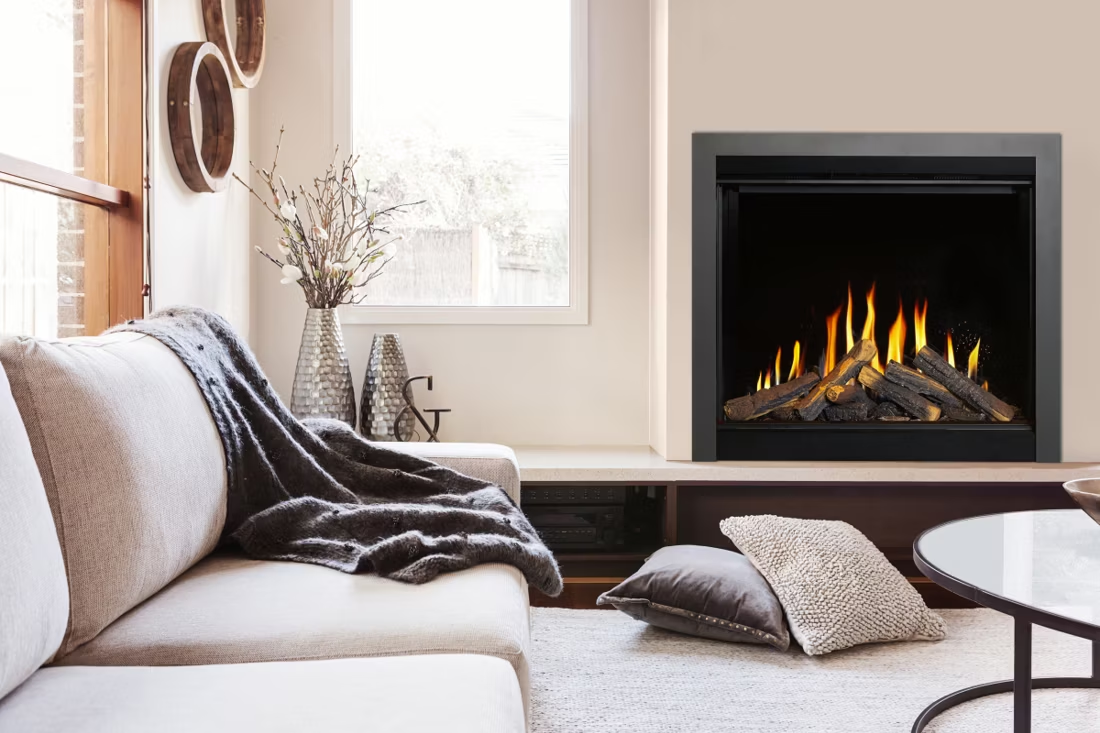
Most Jasper County homes run on electric service from NIPSCO, which makes plug-in or hardwired electric fireplaces one of the simplest additions a homeowner can make—no permit for cutting a flue, no venting run, and none of the creosote or ash cleanup that comes with wood. For a rental property in Rensselaer, a finished basement in DeMotte, or a bedroom that never quite gets warm from the furnace during a January cold snap, an electric insert or wall unit adds real supplemental heat and instant ambiance at a fraction of the install cost of a wood or gas system.
Three steps. No salesperson until you're ready.
Tell us about your project
Your zip code, your situation, and the fuel you're leaning toward—or let the answers point you to one.
See what's actually available
The brands dealers within 100 miles genuinely carry—real options, never a catalog mirage.
Get your dealer & Project Guide
A trusted local dealer, plus the free Project Guide & Parts List that names every component of the job.
Frequently Asked Questions
How much does an electric fireplace installation cost in Jasper County?
Most electric fireplace installations in Jasper County run $400 to $1,200, which is dramatically less than wood or gas projects because there's no venting, no chimney work, and no gas line to run. A plug-in unit that drops into an existing mantel surround or a recessed wall opening is on the low end. A built-in electric fireplace requiring new framing, a dedicated electrical circuit, or a licensed electrician for a 240V hardwire sits toward the higher end. Local dealers can walk you through which tier fits your space during a quick in-home or virtual consultation.
Is an electric fireplace enough heat for a Jasper County winter?
On its own, no—most electric fireplaces are rated for 400 to 1,500 watts of heat output, enough to comfortably warm a single room (roughly 250-400 sq ft) but not a whole house during a stretch of 16°F nights. In Jasper County, electric units work best as supplemental heat: a bedroom that runs cold, a finished basement, a sunroom, or a living room where you want to turn the furnace down and zone-heat with the fireplace running instead. For whole-home heating in this climate, wood or gas remains the more standard choice—many rural Jasper County homes run wood as primary heat and add an electric unit somewhere the furnace doesn't reach well.
Do I need a permit to install an electric fireplace in Jasper County?
In most cases, no—a plug-in electric fireplace or a unit that uses an existing outlet doesn't typically require a permit. If your installation requires a new dedicated circuit or a 240V hardwired connection, an electrical permit is usually required and the work should be done by a licensed electrician, both for safety and to keep your homeowner's insurance intact. Local dealers who sell built-in electric units generally coordinate the electrical work or can refer you to an electrician who handles this routinely in Jasper County.
What's the difference between an electric insert and an electric fireplace?
An electric insert is sized to slide into an existing fireplace opening—including an old wood-burning masonry fireplace that's no longer used—and typically plugs into a nearby outlet or is hardwired behind the surround. An electric fireplace (or wall-mount/built-in unit) is a standalone or framed-in installation that doesn't require an existing firebox at all. For a Jasper County farmhouse with an unused masonry fireplace, an insert is usually the simplest upgrade. For new construction or a room without a fireplace at all, a wall-mount or built-in unit gives you more placement flexibility.
How does NIPSCO electric service affect my fireplace choice?
Most of Jasper County is served by NIPSCO, and electric fireplace operating costs are modest relative to a furnace—running a 1,500-watt unit for a few hours a night adds a manageable amount to a monthly bill. The bigger consideration is your home's electrical panel and existing circuit load: older farmhouses in the county sometimes have panels that are already near capacity, which is why a licensed electrician should confirm circuit capacity before a hardwired install, especially for a unit that draws close to 1,500 watts continuously.
Can an electric fireplace run during a power outage?
No—electric fireplaces require power to operate the heater, blower, and flame effect, so they go dark along with everything else during an outage. This is the main tradeoff against wood heat in Jasper County, where winter storms and downed lines can knock out power for hours or, occasionally, longer. Many rural homeowners in the county pair an electric fireplace for everyday convenience and ambiance with a wood stove elsewhere in the home as a genuine backup heat source that works with no electricity at all.
Are electric fireplaces safe for renters or apartments in Jasper County?
Yes—this is one of the strongest use cases for electric units. A freestanding or wall-mounted electric fireplace can be installed in a Rensselaer rental or a DeMotte apartment without any permanent modification, no chimney, and no open flame. Because there's no combustion, there's no carbon monoxide risk and no clearance-to-combustible requirements like a wood or gas unit. Most models simply plug into a standard 120V outlet, making them one of the few hearth options a renter can genuinely install and later remove without a trace.
Electric vs. wood—which makes more sense for my Jasper County home?
Wood remains the standard choice for primary or serious supplemental heat in Jasper County's cold, rural setting—local oak and hickory burn hot and long, and a wood stove keeps working when the power doesn't. Electric wins on installation simplicity, upfront cost, and zero maintenance: no chimney sweep, no ash, no permit hassle in most cases. For a lot of Jasper County households, the answer isn't either-or—a wood stove or insert handles the cold months in the main living space, while an electric unit adds ambiance and a little extra warmth to a bedroom, basement, or room the furnace struggles to reach.
How long do electric fireplaces last, and what maintenance do they need?
Most electric fireplaces last 10 to 15 years with minimal upkeep—there's no creosote, no chimney to sweep, and no annual gas line inspection. The main maintenance items are periodically cleaning dust off the heating element and blower (which affects airflow and can cause a burning-dust smell if neglected) and replacing the LED flame bulbs or light strips every several years as they dim. Because there's no combustion involved, there's no code-required annual inspection the way there is for wood or gas units in Jasper County.
Can I put a TV above my fireplace?
Yes—with an asterisk. Fireplaces are hot and TVs don't like heat. Either put a mantel between them to deflect rising warmth, or choose a fireplace with heat-management technology that creates a cool zone on the wall above—the wall stays around 125 degrees, barely warm, while the room still gets full heat. If you like clean lines and don't want a mantel, heat management is the answer.
Do electric fireplaces actually produce heat?
Yes—most put out around 4,800–5,000 BTUs from a standard outlet, which comfortably warms a bedroom, office, or den as a comfort-zone heater. What they won't do is carry a whole house the way wood, gas, or pellet can. Think of electric as ambiance-first with honest supplemental heat: flames on with no heat in July, flames plus warmth in January.
How much should I budget for a fireplace?
For an average home—covering the fireplace, the vent pipe, and basic installation—a budget between $3,900 and $5,500 gives you a lot of options across wood, gas, and pellet. By the time you add finish work, gas line, and electrical, the average complete installation lands between $5,000 and $12,000 all-in. In a remodel or new build, a good rule is to put about 2.5% of the total project cost toward the fireplace.
Does a fireplace add value to my home?
On average, a fireplace adds back to the home about the same amount you spent installing it. Add the monthly savings from heating the rooms you actually use instead of the whole house—often hundreds of dollars a year—and the value case is strong before you even count what a fire does for how your family uses the room.
Get your Jasper County electric fireplace Project Guide.
Tell us a bit about your home and we'll put together a free Project Guide & Parts List for your electric fireplace project—plus a match with a trusted local Jasper County dealer who can install it right.
Find Your Fireplace →