
Wood, gas, pellet, or electric—matched to your Jasper County home.
From the farmhouses around Rensselaer to the flat cornfields near DeMotte and Wheatfield, Jasper County sees real winter—winters comparable to Madison, Wisconsin and average lows around 16°F. Find the right fuel for your house and connect with a trusted local hearth retailer.
Every Project Starts From One of These Five Situations
Steady Midwest winters across Jasper County, Indiana.
Jasper County sits in the flat farm country of northwest Indiana, drained by the Kankakee River, with Rensselaer as the county seat and DeMotte, Wheatfield, Remington, and Fair Oaks rounding out the county's towns. With winters comparable to Madison, Wisconsin and average winter lows near 16°F, the climate here runs close to what Madison, Wisconsin sees most winters—cold enough that heating isn't optional, but without the extreme lows of the deep Upper Midwest. Wood heat is common on the county's farms, where oak, hickory, maple, and beech from personal woodlots supply plenty of fuel without needing a public land cutting permit—this is farmland and private timber, not national forest.
On this hub you'll find hearth retailers, service technicians, and fuel suppliers covering every corner of Jasper County—from Rensselaer's mix of farmhouses and in-town homes to the rural properties scattered near Wheatfield and Fair Oaks. Pick your fuel below to see local dealers, typical installation costs, and the units that make sense for your house. Whether you're heating an older farmhouse or adding a stove to a newer build, this is the starting point.
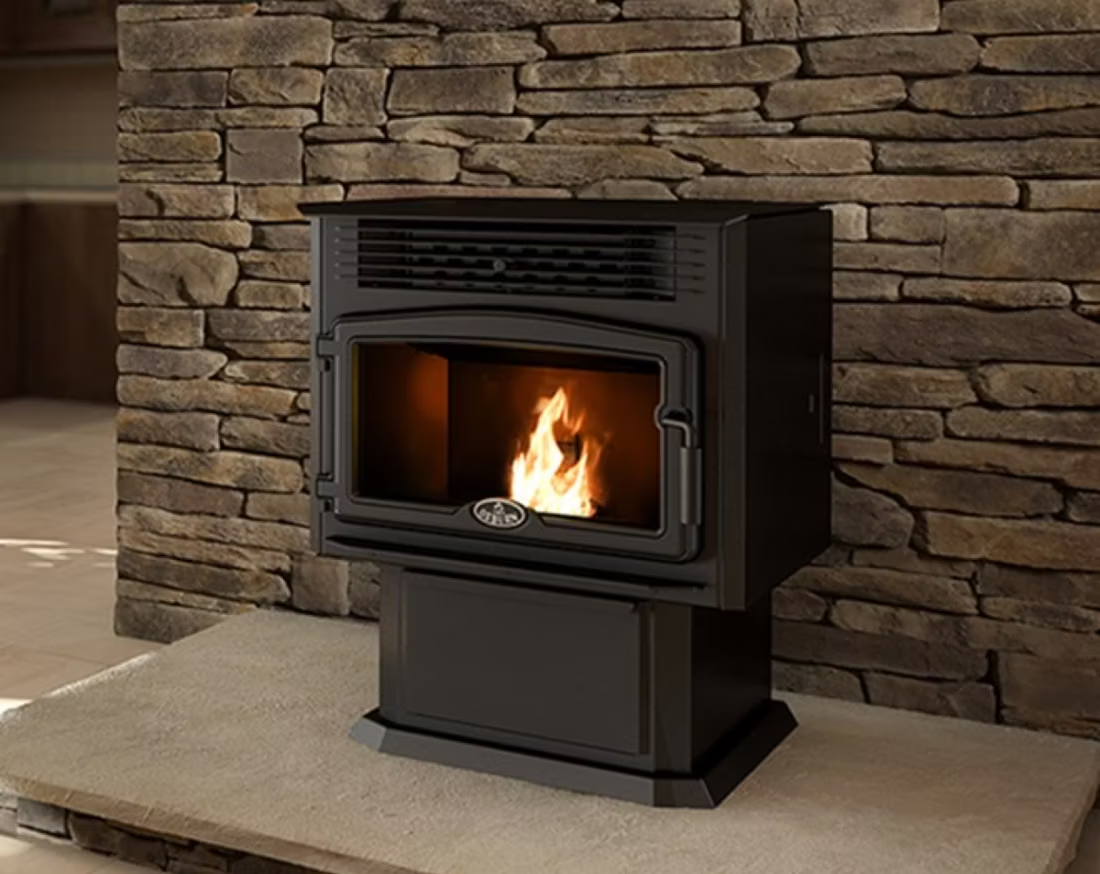
Four fuels. One honest answer for Jasper County.
Three steps. No salesperson until you're ready.
Tell us about your project
Your zip code, your situation, and the fuel you're leaning toward—or let the answers point you to one.
See what's actually available
The brands dealers within 100 miles genuinely carry—real options, never a catalog mirage.
Get your dealer & Project Guide
A trusted local dealer, plus the free Project Guide & Parts List that names every component of the job.
Frequently Asked Questions
Which fuel works best in Jasper County?
It depends on the house and how it's heated already. Wood remains a strong choice on Jasper County's farms—oak, hickory, maple, and beech from a farm's own woodlot cost nothing but the cutting and splitting, and a good stove or insert holds heat through nights in the teens without relying on the grid. Gas is the convenience option for in-town homes in Rensselaer and DeMotte with natural gas service, or propane for rural properties off the line—no wood handling, instant on. Pellet stoves are a solid middle ground for anyone who wants wood-style heat without stacking cordwood; regional supply from Indeck Energy Services, Lignetics, and Somerset Pellet Fuel keeps pellets reasonably easy to find in this part of Indiana. Electric fireplaces work well as supplemental heat in a bedroom or den, but with winters as cold as Jasper County sees, they're not sized to be a primary heat source. Most Jasper County homes end up pairing a primary fuel—wood or gas—with electric or pellet in a secondary room.
Do I need a permit to install a fireplace in Jasper County?
In most cases, yes. New wood stoves, wood inserts, gas fireplaces, gas inserts, and pellet stoves generally require a building permit through the Jasper County Building Department, and any new gas line work needs a licensed installer and a separate gas permit. Electric fireplaces usually skip the permit process unless you're doing a built-in installation with new wiring, which triggers an electrical permit. Since Jasper County doesn't have the air quality restrictions some counties do, permitting here is mostly about safe venting and code compliance rather than emissions rules. Most local hearth retailers pull the permit as part of the installation, so you typically don't have to navigate it yourself.
Are there air quality restrictions on wood burning in Jasper County?
No—Jasper County doesn't have the winter inversion patterns or non-attainment designations that trigger burn advisories in some parts of the country. The county's flat, open farmland doesn't trap smoke the way a mountain basin or dense urban area does, so there are no seasonal burn bans or curtailment periods to plan around. That said, an EPA-certified stove still burns cleaner and uses less wood than an older uncertified unit, which matters if you're running one through a full Indiana winter on oak and hickory cut from your own property.
Can one local hearth retailer handle all four fuel types?
Many hearth retailers serving a smaller rural county like Jasper carry at least two or three fuel types rather than specializing in just one—it's how a dealer covering a county of around 12,000 residents stays viable. If you're deciding between wood, gas, pellet, and electric, a multi-fuel dealer near Rensselaer can usually show you working displays of more than one option and walk through venting and cost differences for your specific house. If you already know your fuel—say you want a pellet stove because of the Somerset Pellet Fuel supply nearby—a smaller specialty dealer may still be worth a call for pricing.
How does service work in the rural parts of Jasper County?
Most chimney sweeps and gas technicians serving Jasper County are based near Rensselaer and travel out to DeMotte, Wheatfield, Remington, and the farm properties around Fair Oaks. Expect a modest travel charge for the more outlying calls. For wood-burning households, scheduling a chimney sweep in late summer or early fall—before the first cold front rolls in off Lake Michigan—is easier than trying to book one in December. Farm properties running a wood stove hard through the winter should plan on an annual sweep and inspection; it's cheap insurance against a chimney fire in a house that may be a long drive from the nearest fire department.
What's the typical cost range for fireplace installation across all fuel types in Jasper County?
Costs vary by fuel and by how much venting or gas line work is involved. Wood stove or insert installation typically runs $4,000–$8,000, more if a full chimney system has to be built from scratch. Gas fireplace, insert, or stove installation runs roughly $4,000–$10,000, with rural propane conversions sometimes higher than in-town natural gas hookups depending on line length. Pellet stove or insert installation generally falls in the $4,000–$6,500 range. Electric fireplaces are the least expensive option—$200–$3,000 for the unit itself, plus $300–$1,000 in labor for anything beyond a simple plug-and-play placement. See the county-plus-fuel pages above for pricing tied to specific local dealers.
Can I install a fireplace myself?
If you're putting a fire in your house on purpose, it's best to work with an expert. Unless you're genuinely experienced in framing, gas line, vent pipe, and the national code on clearances to combustibles, have a professional do it—and ideally the same company that sells you the fireplace, so warranty, service, and liability all live under one roof.
Wood, gas, pellet, or electric—how do I choose?
Match the fuel to your life, not the other way around. Wood: lowest fuel cost and total power-outage independence, but you're hauling and stacking. Gas: press a button, set a thermostat, no maintenance to speak of. Pellet: wood economics with automatic feeding, in exchange for weekly cleaning and a need for electricity. Electric: plugs in anywhere with honest supplemental heat. Nobody regrets the fuel that fits how they actually live.
How much should I budget for a fireplace?
For an average home—covering the fireplace, the vent pipe, and basic installation—a budget between $3,900 and $5,500 gives you a lot of options across wood, gas, and pellet. By the time you add finish work, gas line, and electrical, the average complete installation lands between $5,000 and $12,000 all-in. In a remodel or new build, a good rule is to put about 2.5% of the total project cost toward the fireplace.
What are the biggest mistakes people make buying a fireplace?
Five come up constantly: budgeting for the unit but not the full job (vent, gas line, electrical, finish work); drowning in options instead of starting from style and fuel; buying without an in-home preview; handing installation to a handyman instead of a pro; and giving up out of sheer indecision. Every one is avoidable with a clear plan—step one, step two, step three.
Stove and Fireplace Dealers in Jasper County
Listings include WhyFire partner dealers, dealers we have verified as authorized for the brands we recommend, and established local businesses that carry hearth products. Every listing shows which one it is. The ones marked Preferred run on WhyFire's software, so they can show you real pricing and book your appointment right here. No manufacturer pays for placement. How we verify dealers →
Michiana Fireplace
Fireside Hearth & Home - Merrillville
Judd & Son Chimney Services
Von Tobel Lumber & Hardware
Find your fireplace in Jasper County.
Tell us about your home and we'll match you with a trusted local dealer and send a free Project Guide & Parts List—the exact parts, including the vent kit, and the recommended dealer for your fuel and your house.
Find Your Fireplace →