
Find your pellet stove in Hancock County.
Pellet heat is uncommon here—Hancock County runs on natural gas and electric heat almost everywhere from Greenfield to Fortville. But for the right home, a pellet stove still offers clean, thermostat-controlled warmth. We'll connect you with a trusted local dealer who'll tell you straight whether it's the right fit.
Every Project Starts From One of These Five Situations
A rare choice in gas country.
Hancock County sits just east of Indianapolis along the U.S. 40 corridor—Greenfield, McCordsville, Fortville, and the farmland in between. At 5,706 heating degree days and average winter lows around 18°F, the climate here calls for real heat, but it's nowhere near the brutal, sustained cold of places like Madison, Wisconsin or Minneapolis, Minnesota. That matters, because it's mild enough that homeowners rarely feel forced into a dedicated backup heat source the way rural households do in colder regions.
Natural gas service reaches most of Hancock County's towns and subdivisions, and electric service is reliable countywide, so the two fuels marked 'standard' here—gas and electric—cover nearly every household's needs without much thought. Pellet stoves show up occasionally: a farmhouse outside the gas lines, a sunroom addition, or a homeowner who likes a real flame but doesn't want to split and haul cordwood from the county's oak, hickory, maple, and beech hardwoods. Regional pellet suppliers—Indeck Energy Services, Lignetics, and Somerset Pellet Fuel—do serve the wider region, so the fuel itself isn't hard to find. Finding a dealer who installs and services the stoves regularly is the harder part, and that's exactly where a trusted local match helps.
Three steps. No salesperson until you're ready.
Tell us about your project
Your zip code, your situation, and the fuel you're leaning toward—or let the answers point you to one.
See what's actually available
The brands dealers within 100 miles genuinely carry—real options, never a catalog mirage.
Get your dealer & Project Guide
A trusted local dealer, plus the free Project Guide & Parts List that names every component of the job.
Frequently Asked Questions
How much does a pellet stove installation cost in Hancock County?
Because pellet stoves are a niche request here, pricing varies more than it would for gas or electric units. Expect somewhere in the $3,000 to $6,000 range for a freestanding pellet stove with basic through-wall venting into an existing room—no masonry chimney required, which keeps costs down compared to a wood-burning setup. An insert conversion into an existing fireplace opening typically runs a bit higher once a stainless liner and hearth-pad adjustments are factored in. With fewer installers stocking pellet equipment countywide, get quotes from a dealer who actually carries and services the units regularly, not a big-box retailer selling a boxed unit with no local support.
Why aren't pellet stoves more common in Hancock County?
Natural gas service covers most of the county's towns—Greenfield, Fortville, McCordsville, and the subdivisions around them—through providers like CenterPoint Energy, and Duke Energy keeps electric service reliable countywide. With both of those 'standard' fuels readily available, most homeowners default to a gas fireplace or an electric insert rather than taking on a hopper-fed appliance. There's also no local air-quality mandate or wood-heating culture pushing adoption the way there is in, say, the Pacific Northwest. Pellet stoves still show up in rural pockets outside gas lines or in homes where someone specifically wants the look of a live flame without cutting and hauling cordwood.
Will a pellet stove work during a power outage?
Not on its own—this is the honest tradeoff. Pellet stoves rely on an electric auger to feed fuel and a blower to distribute heat, so a standard unit shuts down the moment the power does. Hancock County gets its share of summer thunderstorms and occasional tornado-warning outages, and a straight wood stove or a gas unit with battery-backup ignition holds up better in those moments. If backup heat during outages is the priority, pair a pellet stove with a small battery backup or generator, or ask a local dealer about lower-power-draw units. If ambiance and low-maintenance daily heat are the priority instead, a pellet stove still performs well.
What size pellet stove do I need for my Hancock County home?
Sizing follows square footage, insulation, and how much of the heating load the stove needs to carry. As a rough guide for this climate—5,706 heating degree days, winter lows around 18°F—a small stove (up to 1,000 sq ft) suits a single room or converted sunroom, a medium stove (1,000–1,800 sq ft) covers most main living areas in Hancock County's ranch and split-level housing stock, and anything larger is unusual here since most homes lean on gas or electric for whole-house heat and use a pellet stove for supplemental warmth in one zone. A local dealer will walk your specific layout before recommending a model.
Where can I buy pellet fuel near Hancock County?
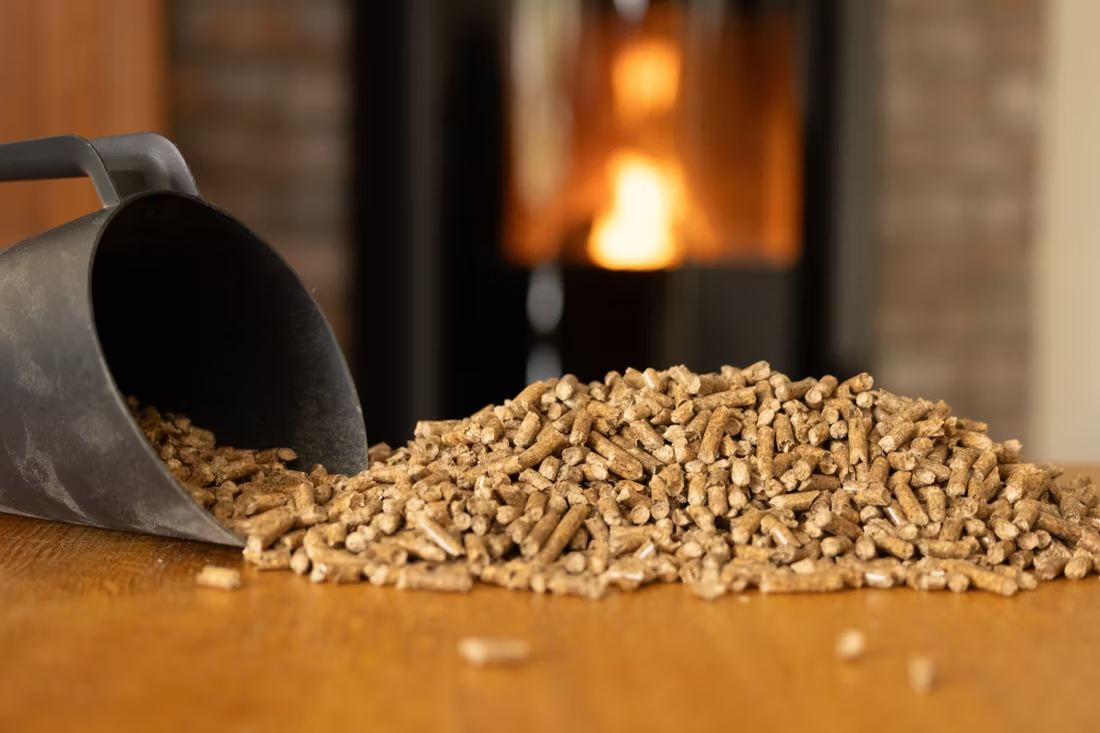
Pellets aren't sold on every corner here the way they might be in a heavier wood-heating region, but regional suppliers including Indeck Energy Services, Lignetics, and Somerset Pellet Fuel distribute hardwood pellets throughout central Indiana, and farm and hardware stores along the U.S. 40 corridor typically stock bagged pellets or ton pallets during heating season. Premium hardwood pellets generally run in the $250–$320 per ton range across the Midwest—buying a full ton pallet ahead of the season, rather than by the bag, is usually the better value.
Do I need a permit to install a pellet stove in Hancock County?
Yes—a building permit is typically required for a new pellet-stove installation, whether that's through the Hancock County Building Department for unincorporated areas or the City of Greenfield's building office if you're inside city limits. The permit covers venting placement and hearth clearances. Because pellet installs are uncommon, it's worth confirming with your installer that they've pulled permits for this exact appliance type before—not every wood-and-gas-focused installer in the area handles pellet equipment regularly.
What's the difference between a pellet stove and a pellet insert?
A pellet stove is a freestanding appliance that vents through an exterior wall or existing chimney and can go almost anywhere in a room. A pellet insert slides into an existing masonry fireplace opening, using a vent kit routed through the existing chimney to convert an old, rarely used fireplace into a working heat source. For the handful of older Hancock County homes with a masonry fireplace that's mostly decorative, an insert is often the more practical upgrade; newer construction without an existing fireplace opening is better suited to a freestanding stove.
Pellet vs. gas—which is right for my Hancock County home?
Gas is the default here for good reason: natural gas service reaches most of the county's towns, installation is straightforward, and a gas fireplace or insert can be sized and running with minimal fuss. Pellet stoves offer a live-flame look and the option to burn a renewable, locally distributed fuel, but they need electricity to operate and a hopper to refill every day or two during heavy use. For most homes with gas access already, gas wins on convenience. For a rural property without gas lines, or a homeowner who specifically wants the pellet-stove aesthetic and doesn't mind the daily hopper refill, pellet is a reasonable and clean-burning alternative—just go in knowing it's a less common install locally.
Where do the pellets themselves come from?
Most hardwood pellets sold in this part of Indiana are manufactured from compressed sawdust and wood byproduct—often the same oak, hickory, maple, and beech that make up Hancock County's hardwood stands and the broader regional timber supply. Brands like Indeck Energy Services, Lignetics, and Somerset Pellet Fuel source from mills across the Midwest and package pellets for retail sale by the bag or ton. Pellet quality varies by ash content and moisture, so a local dealer can point you toward the brand that runs cleanest in the specific stove you buy.
How often does a pellet stove need cleaning?
A clean pellet stove is a happy pellet stove. Plan on cleaning the burn pot about once a week when you're burning regularly—ash and clinkers gum up the air holes just like a pellet barbecue. Most pellet stove problems trace back to skipped cleaning that nobody explained up front. Some designs make it easy with a trapdoor burn pot: pull a lever and the gunk drops into the ash pan.
Why is my open fireplace making my house colder?
Open fireplaces suck—literally. As the fire burns, it consumes air your furnace already paid to heat and pulls it out through the chimney, so the house is actually colder after the fire goes out than before you lit it. An insert fixes this: it seals the chimney, puts fixed glass across the front, and turns that hole in your house into a real heat source.
How much should I budget for a fireplace?
For an average home—covering the fireplace, the vent pipe, and basic installation—a budget between $3,900 and $5,500 gives you a lot of options across wood, gas, and pellet. By the time you add finish work, gas line, and electrical, the average complete installation lands between $5,000 and $12,000 all-in. In a remodel or new build, a good rule is to put about 2.5% of the total project cost toward the fireplace.
What is an in-home preview and do I need one?
It's a visit where a hearth professional measures your space, confirms the model you picked actually works in your home, and walks the specs—framing, gas line, venting, finish work—before anything is ordered. Some details you just can't know until you see the house. Never make a down payment without one; it's the single most-skipped step that burns buyers.
Stove and Fireplace Dealers in Hancock County
Pellet Brands Stocked Around Hancock County
Manufacturers will point you to the nearest stocking dealer.
Find your pellet stove in Hancock County.
Tell us about your home and we'll be honest about whether pellet is the right call—and if it is, match you with a trusted local dealer and a free Project Guide & Parts List, including the exact vent kit for your install.
Find Your Fireplace →