
Add real ambiance to your Hancock County home—no chimney required.
From new subdivisions in New Palestine and McCordsville to older homes near downtown Greenfield, electric fireplaces give Hancock County homeowners heat and glow without venting, gas lines, or firewood. Find the right unit and connect with a trusted local dealer.
Every Project Starts From One of These Five Situations
Zone heat and ambiance for Indianapolis-suburb living.
Hancock County sits just east of Indianapolis, and its housing stock reflects that—a mix of older farmhouses around Greenfield and Wilkinson on lots with mature oak and hickory stands, and fast-growing subdivisions in New Palestine, Fortville, McCordsville, and Cumberland built over the last two decades. Winters here are moderate by Midwest standards—average lows around 18°F and a moderate winter heating season, nowhere near the punishment a place like Bismarck, ND takes every winter, but cold enough that a finished basement, sunroom, or primary bedroom without its own duct run gets genuinely uncomfortable in January without supplemental heat.
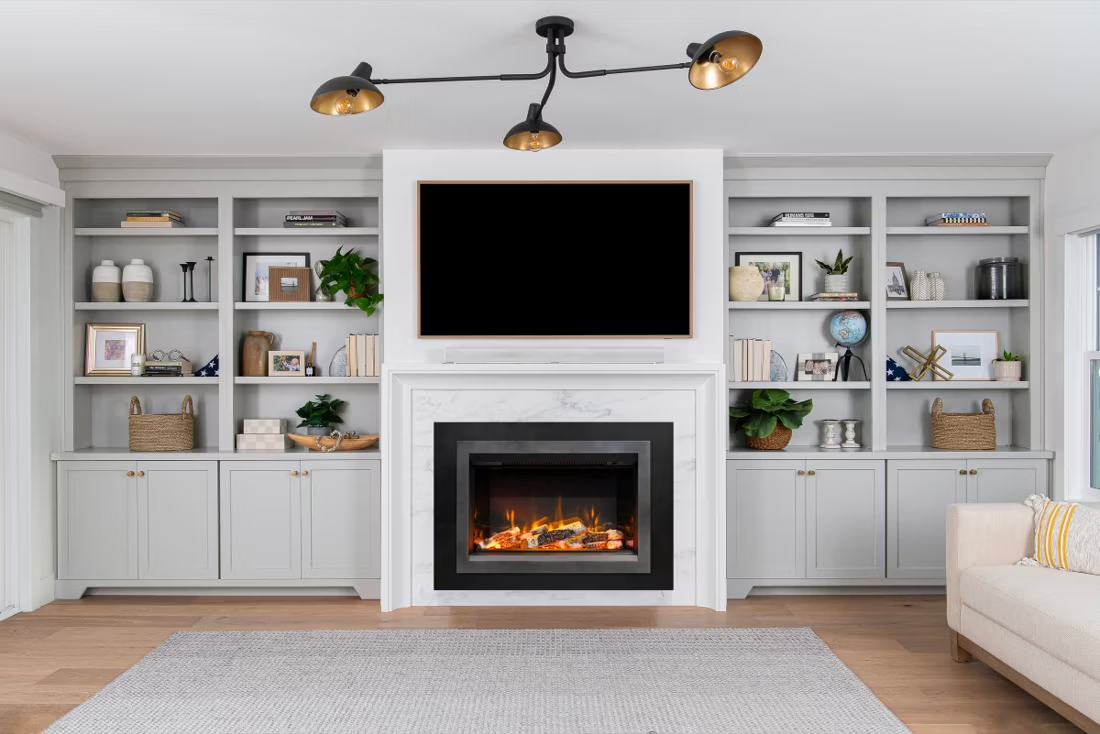
Natural gas furnaces are the standard primary heating system across the county, with Duke Energy Indiana providing electric service to most Hancock County households. That combination is exactly why electric fireplaces have found a solid niche here: they don't replace the furnace, but they add instant, controllable warmth to one room—a finished basement rec room in a McCordsville split-level, a converted den in an older Greenfield bungalow, a bonus room over the garage in a newer New Palestine build—without touching the gas line, cutting a vent path through a roof, or hiring a chimney sweep. Plug in a freestanding unit or have an electrician wire a built-in insert on a dedicated circuit, and you're done.
Three steps. No salesperson until you're ready.
Tell us about your project
Your zip code, your situation, and the fuel you're leaning toward—or let the answers point you to one.
See what's actually available
The brands dealers within 100 miles genuinely carry—real options, never a catalog mirage.
Get your dealer & Project Guide
A trusted local dealer, plus the free Project Guide & Parts List that names every component of the job.
Frequently Asked Questions
How much does an electric fireplace installation cost in Hancock County?
A plug-in freestanding electric fireplace or a mantel package typically runs $300 to $1,200 installed, since it plugs into an existing standard outlet with no electrical work required. A built-in wall unit or a linear electric insert set into a wall cavity or an existing masonry fireplace usually runs $1,200 to $3,500, and that range often includes an electrician running a dedicated 120V or 240V circuit—common in Hancock County's finished-basement conversions in Fortville and McCordsville, where the original outlets weren't sized for a heater draw. Custom surrounds, built-in cabinetry, or units with higher-output heaters push toward the top of that range.
Do I need a permit to install an electric fireplace in Hancock County?
Usually not, if you're installing a plug-in freestanding or mantel-style unit—it's treated like any other appliance you plug into the wall. If your installation requires new wiring, a dedicated circuit, or structural work to set a built-in unit into a wall (common with new-construction homes in New Palestine or remodels of older Greenfield houses), an electrical permit is typically required, and the electrician pulling it will coordinate with your local building department. Because Hancock County includes both incorporated towns and unincorporated areas, the office you file with depends on whether the property sits inside Greenfield, Fortville, McCordsville, or elsewhere—a local dealer or electrician will know which office applies to your address.
Electric vs. gas fireplace—which makes more sense in Hancock County?
Gas is the standard heating fuel across Hancock County, and a gas fireplace or insert can deliver real supplemental heat output with the ambiance of a visible flame—a good fit if you're already piped for natural gas and want a fireplace that can meaningfully offset furnace use in a large room. Electric skips the gas line and venting entirely, costs less to install, and is the more practical choice for rooms without existing gas service—basements in subdivisions like Cumberland or Mount Comfort, upstairs bonus rooms, or rentals where landlords don't want combustion appliances. Electric won't lower your gas heating bill the way a gas unit can, but it's simpler, safer for renters, and installs in an afternoon rather than a full remodel day.
Why don't more Hancock County homes have wood-burning fireplaces?
Wood heat is genuinely uncommon in Hancock County's newer housing stock, even though the county has plenty of oak, hickory, maple, and beech woodlots on older rural parcels. Most of the county's growth over the past 20 years has been suburban subdivisions in New Palestine, Fortville, and McCordsville—smaller lots, HOA covenants that restrict outdoor wood storage or chimney additions, and easy access to natural gas and reliable electric service that make wood heat unnecessary as a practical matter. A handful of older farmhouses around Wilkinson and Shirley still burn wood as supplemental heat, but for most homeowners here, electric or gas covers the ambiance-and-warmth need without the firewood logistics.
Will my electric fireplace work during a power outage?
No—electric fireplaces require power to run both the heater and any flame-effect lighting, so they go dark along with everything else when Duke Energy service is interrupted. For most Hancock County homeowners this is an acceptable tradeoff given how reliable grid service is in the area, but if backup heat during outages matters to you—winter ice storms do occasionally take down lines in this part of central Indiana—a gas fireplace with a battery-backup ignition system, or a generator sized to run your electric unit, are the two practical workarounds. A local dealer can talk through both if backup capability is a priority for your household.
What's the best electric fireplace for a Hancock County basement or bonus room?
For finished basements—a common project in the split-level and ranch homes scattered through Greenfield and McCordsville—a linear wall-mounted or built-in insert with a heater rated for the room's square footage does the job well, since basements tend to run cooler and benefit from real supplemental heat, not just the visual effect. For bonus rooms over garages, which run warmer in summer and colder in winter due to less insulation, look for a unit with a strong heater output and check that the room's electrical panel has capacity for a dedicated circuit if you're going built-in. Brands like Dimplex, Napoleon, and Amantii show up frequently in Hancock County installs and offer both plug-in and hardwired models at a range of price points—a local dealer can size the unit to your specific room.
Can I convert my old masonry fireplace to electric?
Yes, and it's a common project in Hancock County's older housing stock around downtown Greenfield and Wilkinson. An electric insert slides into the existing firebox opening, plugs in or gets hardwired depending on the model, and gives you a clean glass-front flame effect with real heat output—no more cold drafts pulling through an old, rarely-used chimney, and no more chimney sweep bills. The masonry stays in place for the look; you just stop using it for combustion. This is usually the least expensive electric conversion available since there's no new framing or wall opening required.
How do I find a certified electric fireplace dealer near me in Hancock County?
Look for a hearth retailer who carries multiple electric fireplace brands and can size a unit to your specific room rather than pointing you toward whatever's on the showroom floor. A good local dealer serving Hancock County will ask about your circuit capacity, whether you're converting an existing fireplace opening or installing fresh, and what heat output you actually need before recommending a model—the same rigor that matters for gas or wood installs, even though electric is the simplest fuel to work with. Find My Fireplace doesn't sell or ship product ourselves; we match you with a trusted local dealer who covers your part of the county and can walk your specific room in person.
How much can an electric fireplace actually lower my heating bill?
It depends on how you use it. If you're heating one occupied room—a basement rec room or a bedroom—with an electric fireplace instead of running the furnace to cover the whole house, you can see a real reduction in gas usage during the shoulder seasons and on milder Hancock County winter days when outdoor temps sit in the 30s and 40s. On the coldest stretches, when lows drop toward that 18°F average, the furnace still needs to run for the rest of the house, and the electric unit becomes more about comfort in that one room than a meaningful whole-home savings. Most homeowners here use it as a supplement to zone the space they're actually in, not as a furnace replacement.
Do electric fireplaces actually produce heat?
Yes—most put out around 4,800–5,000 BTUs from a standard outlet, which comfortably warms a bedroom, office, or den as a comfort-zone heater. What they won't do is carry a whole house the way wood, gas, or pellet can. Think of electric as ambiance-first with honest supplemental heat: flames on with no heat in July, flames plus warmth in January.
Can I put a TV above my fireplace?
Yes—with an asterisk. Fireplaces are hot and TVs don't like heat. Either put a mantel between them to deflect rising warmth, or choose a fireplace with heat-management technology that creates a cool zone on the wall above—the wall stays around 125 degrees, barely warm, while the room still gets full heat. If you like clean lines and don't want a mantel, heat management is the answer.
Can a fireplace actually lower my heating bill?
Yes—by creating a comfort zone. A furnace heats every square foot of the house just to warm the one room you're in; a gas fireplace on low burns roughly a sixth of the gas a typical furnace does. Set the furnace around 55–60 degrees as a baseline, then heat the rooms your family actually uses. Families who heat this way commonly save $20–$60 a month.
Can I install a fireplace myself?
If you're putting a fire in your house on purpose, it's best to work with an expert. Unless you're genuinely experienced in framing, gas line, vent pipe, and the national code on clearances to combustibles, have a professional do it—and ideally the same company that sells you the fireplace, so warranty, service, and liability all live under one roof.
Stove and Fireplace Dealers in Hancock County
Find your electric fireplace in Hancock County.
Tell us about your room, your circuit, and whether you're converting an old fireplace or starting fresh—we'll match you with a trusted local Hancock County dealer and send over a free Project Guide & Parts List for your project.
Find Your Fireplace →