
Find the fireplace that fits your Hancock County home.
Fireplaces are the practical choice for most homes in Hancock County—from new-construction subdivisions in McCordsville to farmhouses outside Charlottesville. This hub connects you with trusted local dealers, installers, and fuel suppliers across the county, whatever your project looks like.
Every Project Starts From One of These Five Situations
A fast-growing pocket of the Indianapolis suburbs.
Hancock County sits just east of Indianapolis along I-70, and its growth over the past two decades has been driven almost entirely by that proximity—Greenfield, the county seat, has expanded steadily, and towns like McCordsville, Fortville, and New Palestine have added subdivision after subdivision of new construction homes. Winters here are moderate by Midwest standards: an 18°F average winter low and a winter heating load noticeably lighter than places like Buffalo, NY or Madison, WI. There's no local air quality non-attainment status and no seasonal burn advisories to plan around.
That combination of newer housing stock and reliable natural gas infrastructure means gas fireplaces and inserts are the dominant choice across the county, with electric units close behind—especially in newer subdivisions where a gas line is already run to the great room but a vented masonry chimney never was. Wood-burning fireplaces and pellet stoves show up occasionally, mostly in older farmhouses on the rural fringe near Wilkinson, Shirley, or Spring Lake where oak, hickory, maple, and beech are locally abundant—but there isn't much local retail infrastructure built around wood or pellet appliances here, and most county hearth dealers focus their inventory on gas and electric. Pick your fuel below to see what's actually available and installable near you.
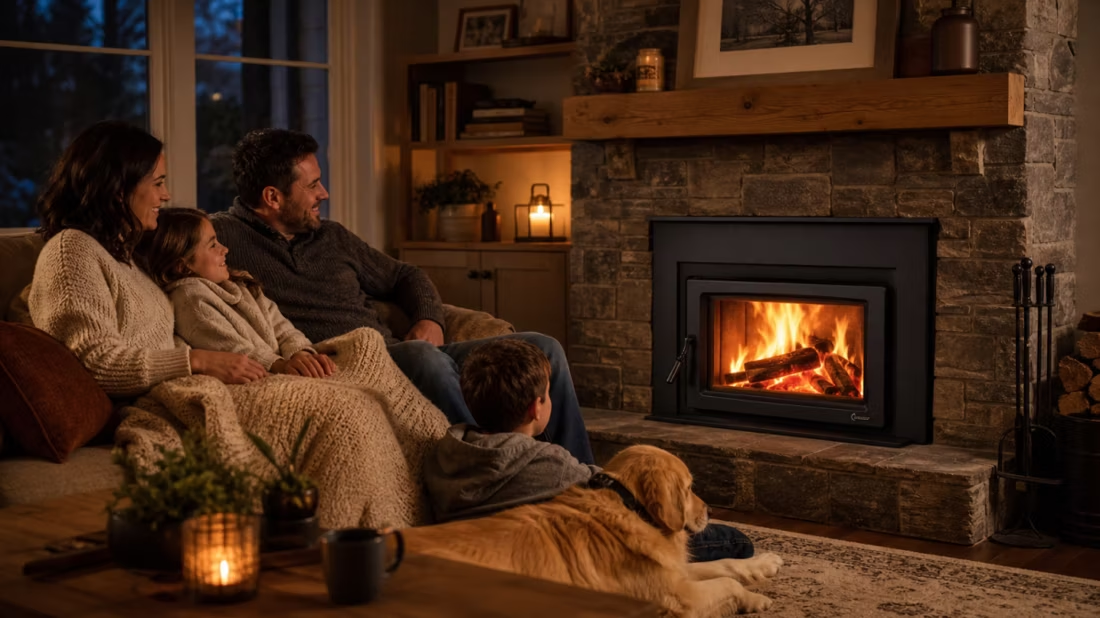
Four fuels. One honest answer for Hancock County.
Three steps. No salesperson until you're ready.
Tell us about your project
Your zip code, your situation, and the fuel you're leaning toward—or let the answers point you to one.
See what's actually available
The brands dealers within 100 miles genuinely carry—real options, never a catalog mirage.
Get your dealer & Project Guide
A trusted local dealer, plus the free Project Guide & Parts List that names every component of the job.
Frequently Asked Questions
Which fuel works best for a home in Hancock County?
For most Hancock County homes, gas is the practical default—natural gas service reaches nearly every subdivision built in the last two decades, and a gas fireplace or insert gives you instant heat with no woodpile or venting headaches. Electric fireplaces are a close second, especially popular in newer McCordsville and New Palestine construction where there's no masonry chimney to work with—they're simple to install and work in bedrooms, basements, and finished additions where running a gas line isn't practical. Wood-burning fireplaces and pellet stoves are genuinely uncommon here; the county doesn't have the Forest Service cutting permits or established firewood culture you'd find in a more rural, forested county, and most local hearth dealers don't stock much wood or pellet inventory. If you're set on wood heat—say, for a farmhouse near Wilkinson with its own woodlot of oak and hickory—it's still possible, but expect to search a bit further afield for a dealer who carries it.
Do I need a permit to install a fireplace in Hancock County?
Yes, in most cases. New gas fireplaces, gas inserts, and gas stoves require a building permit and a licensed gas-fitter for the line connection—this goes through the Hancock County Building Department for unincorporated areas, or the City of Greenfield's building office for installations inside city limits. Electric fireplace installations usually don't need a permit unless you're hardwiring a built-in unit or adding a new circuit, in which case an electrical permit applies. Wood stove or insert installs, while rare in the county, still require a permit and must meet current EPA emissions standards. Most local hearth retailers handle the permitting paperwork as part of the installation, so you typically aren't filing it yourself.
Is wood burning restricted or just uncommon in Hancock County?
It's uncommon rather than restricted. Hancock County has no air quality non-attainment status and no burn advisories to work around—there's nothing regulatory stopping you from installing a wood stove or fireplace. The reason wood heat is rare here comes down to housing stock and infrastructure: most of the county's growth over the past 20 years has been suburban subdivisions built with natural gas lines already in place, not rural acreage with a woodlot out back. If you do have access to firewood—oak, hickory, maple, and beech are all common on the county's rural fringe—a wood stove is still a legitimate option, but you'll likely need to look toward a dealer who serves a wider east-central Indiana territory rather than one based solely in Greenfield.
Can one local dealer handle both gas and electric fireplace installs?
Most Hancock County hearth retailers carry both gas and electric—it's a natural pairing given how the county's housing stock skews. A dealer who installs a gas fireplace insert in a Greenfield living room is generally also equipped to wall-mount an electric unit in a McCordsville basement or bedroom addition. Fewer dealers stock wood or pellet appliances locally, so if you want to compare wood alongside gas and electric, you may need to work with a retailer that also serves the broader Indianapolis or east-central Indiana market.
How does fireplace service work in the rural parts of Hancock County?
Technicians serving Hancock County are generally based in or near Greenfield and travel out to the county's edges—New Palestine and Cumberland to the west, Shirley and Spring Lake to the east, Wilkinson and Charlottesville along the northern rural stretch. Gas fireplace inspections and electric unit service calls make up most of the work; if you're one of the few homes running a wood-burning appliance out on acreage, plan on scheduling early in the fall, since there are fewer local techs who service wood units and their calendars fill up first.
What's the typical cost range for a fireplace installation in Hancock County?
Gas fireplace, insert, or stove: roughly $4,500–$10,000 depending on whether a new gas line needs to be run and how much venting work is involved—installs in newer subdivisions with an existing gas stub tend to land on the lower end. Electric fireplace: $200–$3,000 for the unit itself, plus $400–$1,200 in labor for anything beyond a plug-and-play wall unit, which covers most inserts and built-ins. Wood stove or insert: $4,500–$9,000, though given how few local dealers carry wood units, sourcing and installation costs can run a bit higher than in a more wood-focused county. For exact numbers tied to your project, the county + fuel pages above break down retailer pricing in more detail.
Can I install a fireplace myself?
If you're putting a fire in your house on purpose, it's best to work with an expert. Unless you're genuinely experienced in framing, gas line, vent pipe, and the national code on clearances to combustibles, have a professional do it—and ideally the same company that sells you the fireplace, so warranty, service, and liability all live under one roof.
Does a fireplace add value to my home?
On average, a fireplace adds back to the home about the same amount you spent installing it. Add the monthly savings from heating the rooms you actually use instead of the whole house—often hundreds of dollars a year—and the value case is strong before you even count what a fire does for how your family uses the room.
Can a fireplace actually lower my heating bill?
Yes—by creating a comfort zone. A furnace heats every square foot of the house just to warm the one room you're in; a gas fireplace on low burns roughly a sixth of the gas a typical furnace does. Set the furnace around 55–60 degrees as a baseline, then heat the rooms your family actually uses. Families who heat this way commonly save $20–$60 a month.
How much should I budget for a fireplace?
For an average home—covering the fireplace, the vent pipe, and basic installation—a budget between $3,900 and $5,500 gives you a lot of options across wood, gas, and pellet. By the time you add finish work, gas line, and electrical, the average complete installation lands between $5,000 and $12,000 all-in. In a remodel or new build, a good rule is to put about 2.5% of the total project cost toward the fireplace.
Stove and Fireplace Dealers in Hancock County
Listings include WhyFire partner dealers, dealers we have verified as authorized for the brands we recommend, and established local businesses that carry hearth products. Every listing shows which one it is. The ones marked Preferred run on WhyFire's software, so they can show you real pricing and book your appointment right here. No manufacturer pays for placement. How we verify dealers →
Newco Dealers Wholesale
Kindled Timber
Pate's Pool Service & Supply
O'Malia's Living
Pool City
The Cinder Box
Get matched with a Hancock County hearth dealer.
Tell us about your project and we'll match you with a trusted local dealer and send a free Project Guide & Parts List—the exact parts, including the vent kit, and the dealer we recommend for your Hancock County home.
Find Your Fireplace →