
Pellet heat is uncommon in Urbana—here's when it still makes sense.
Champaign County runs on natural gas, but a pellet stove or insert can still make sense for a sunroom, a rental, or a household that wants supplemental zone heat without a chimney.
Every Project Starts From One of These Five Situations
Natural gas, not pellets, heats most Champaign County homes.
Urbana sits at 730 feet on the flat farmland of east-central Illinois, in climate zone 5A with a solid seven-month heating season and winter lows averaging 18°F. That's a real winter—colder than most of the South and Mid-Atlantic—but nowhere near the extremes that drive pellet-stove adoption in places like Duluth, MN or Fargo, ND. What actually shapes heating choices here is infrastructure: natural gas lines run through nearly every Urbana neighborhood and most of the University of Illinois' surrounding subdivisions, and Ameren Illinois territory pricing keeps gas furnace operation cost-competitive. As a result, the vast majority of Champaign County homes heat with a gas furnace, and standalone hearth appliances—wood or pellet—are the exception rather than the rule.
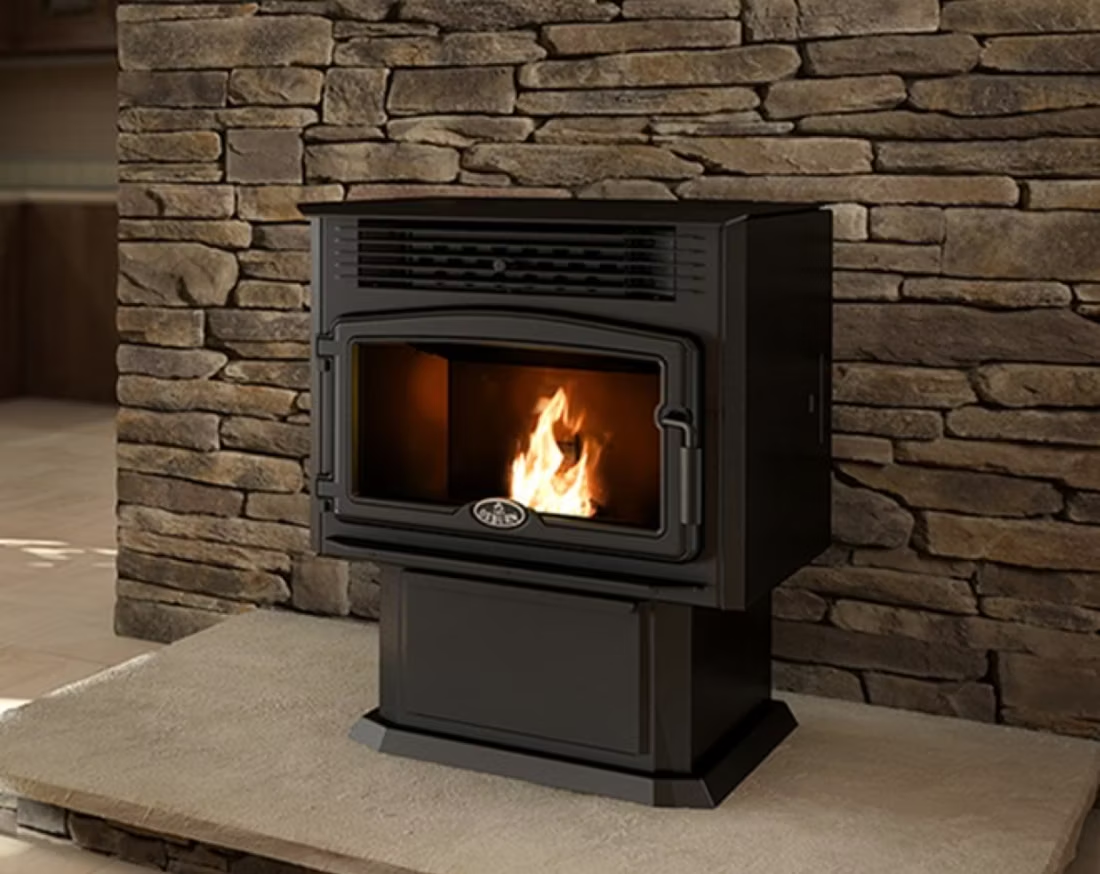
That said, pellet stoves haven't disappeared from Urbana entirely. A small number of homeowners install one in a sunroom, a finished basement, or a detached garage/workshop where running new gas or ductwork isn't practical, and appreciate that a pellet unit skips the wood-splitting and stacking that comes with burning local hardwoods like oak, hickory, walnut, or maple in a traditional stove. Pellet fuel itself is easier to source than you might expect—Lignetics and Somerset Pellet Fuel both distribute into the Midwest, and Indeck Energy Services operates biomass energy infrastructure in the region—but the retail stove and insert market here is thin compared to gas. If you're set on pellet heat, working with a dealer who genuinely stocks and services these units (rather than a big-box store that just sells bagged fuel) matters more in Urbana than it would in a market where pellet stoves are the norm.
Three steps. No salesperson until you're ready.
Tell us about your project
Your zip code, your situation, and the fuel you're leaning toward—or let the answers point you to one.
See what's actually available
The brands dealers within 100 miles genuinely carry—real options, never a catalog mirage.
Get your dealer & Project Guide
A trusted local dealer, plus the free Project Guide & Parts List that names every component of the job.
Frequently Asked Questions
How common are pellet stoves in Urbana, IL?
Not very. Champaign County is well served by natural gas, and most homes here heat with a gas furnace rather than a wood or pellet appliance—both fuels are flagged as low-relevance for this market for that reason. The homeowners who do install a pellet stove in Urbana are usually adding supplemental heat to a specific room (a sunroom, finished basement, or garage workshop) rather than replacing their primary furnace. If that's your situation, a pellet unit can still be a smart, low-maintenance choice—you'll just want a dealer who actually carries and services them locally rather than one who only sells bagged fuel at a farm supply counter.
What does a pellet stove or insert cost to install in Urbana?
Nationally, a freestanding pellet stove with venting typically installs in the $3,500 to $6,500 range, while a pellet insert into an existing masonry fireplace usually runs a bit higher once a liner and hearth adjustments are factored in. Urbana-specific quotes are harder to pin down than in markets with more pellet dealers, since fewer local installers handle these units regularly—expect some variation in bids and ask each dealer whether the price includes the vent kit, hearth pad, and electrical work for the auger and blower. Getting matched with a dealer who actually stocks pellet equipment (rather than special-ordering it) is the fastest way to get an accurate number for your house.
Where can I buy pellet fuel locally in Urbana or Champaign County?
Because Urbana doesn't have the density of pellet retailers you'd find in New England or the Pacific Northwest, most homeowners buy bagged pellets from farm supply and hardware stores rather than ordering bulk pallets direct from a mill. Lignetics and Somerset Pellet Fuel both distribute product into the Midwest and are worth asking about by name, and Indeck Energy Services' regional biomass operations reflect the broader supply chain pellets in this area come from. Expect per-bag pricing rather than the bulk-pallet discounts common in denser pellet markets—your local dealer can tell you which brands they stock and whether seasonal pre-buy pricing is available.
Why is natural gas so dominant in Urbana instead of pellet or wood heat?
It comes down to infrastructure and cost. Natural gas mains run through nearly all of Urbana and most of the surrounding University of Illinois-area subdivisions, and Ameren Illinois' rate structure keeps gas furnace operation affordable relative to installing and running a standalone stove. Compare that to a genuinely cold, gas-limited market like International Falls, MN, where wood and pellet heat fill a real gap—Urbana's solid seven-month heating season is a real winter, but the gas grid here removes most of the practical reason to install a separate hearth appliance as primary heat. Pellet and wood stoves in Urbana tend to be chosen for ambiance, backup, or zone heating rather than necessity.
Is a pellet stove a reliable backup heat source during a power outage?
Not on its own. Pellet stoves depend on an electric auger to feed fuel and a blower to circulate heat, so a standard unit shuts down the moment power drops—an important distinction from wood stoves, which burn with zero electrical dependency. If backup heat during an Ameren Illinois or Eastern Illinois Electric Cooperative outage is a priority, look at models with a battery-backup option or pair the stove with a small generator or UPS sized for the auger and blower load. If true off-grid backup heat is your main goal, a wood-burning appliance is generally the more dependable choice, even though it's also uncommon in this market.
What size pellet stove do I need for a Champaign County home?
Sizing depends on the specific space you're heating rather than your whole home, since most Urbana installs are supplemental rather than primary heat. A small pellet stove (rated for 500-1,000 sq ft) suits a sunroom, den, or single large room; a mid-size unit (1,000-1,800 sq ft) can cover an open living area or finished basement. Given winter lows averaging 18°F here, don't undersize just to save on upfront cost—a unit that's cycling on and off constantly wears out faster than one sized with a little headroom. A local dealer can walk your specific room and give you an accurate recommendation.
Can I install a pellet stove in an existing wood-burning fireplace?
Yes—a pellet insert is designed to slide into an existing masonry firebox, using a vent liner run through the chimney and a power connection for the auger and blower. This is one of the more common ways pellet appliances do show up in older Urbana homes, particularly the pre-war housing stock near downtown and the university, since it reuses a fireplace opening that would otherwise sit unused or need expensive chimney repair to keep burning wood safely. The retrofit typically requires an electrical outlet near the fireplace, which is worth flagging to your installer early if one isn't already there.
Pellet vs. gas insert—which makes more sense for my Urbana home?
For most Urbana homes, gas wins on convenience and total cost of ownership, simply because natural gas service and pricing here are so favorable—that's why gas is the standard hearth fuel in this market and pellet is the exception. A gas insert gives you instant on/off heat with no hopper to fill and no ash to empty. Pellet makes more sense in the specific case where you want a real flame and radiant heat character without running a new gas line—say, a detached space or an older home without gas service nearby—and you're willing to load fuel and clean the burn pot periodically. If your home already has gas service, most local dealers will steer you toward gas unless you have a specific reason to prefer pellet.
Are there rebates or tax incentives for pellet stoves in Illinois?
Yes, at the federal level. The IRS 25C residential energy efficiency tax credit covers 30% of the cost of a qualifying wood or pellet stove (equipment and installation) rated at 75% efficiency or higher, up to a $2,000 annual cap, and applies through 2032. Illinois doesn't currently run a separate statewide pellet-stove rebate program the way some Pacific Northwest states do, so the federal credit is the main incentive available to Urbana homeowners. Keep your dealer's efficiency documentation and receipts—you'll need them at tax time to claim the credit.
Why is a fireplace insert so efficient?
An insert does two things: it seals the chimney completely, so you stop losing air you already paid to heat, and it radiates warmth into the room through the firebox and glass. Most add a heat-exchange fan that pulls cool room air underneath, wraps it around the hot firebox, and pushes it back out warm. Your home is more efficient before you've even lit the first fire.
Why is my open fireplace making my house colder?
Open fireplaces suck—literally. As the fire burns, it consumes air your furnace already paid to heat and pulls it out through the chimney, so the house is actually colder after the fire goes out than before you lit it. An insert fixes this: it seals the chimney, puts fixed glass across the front, and turns that hole in your house into a real heat source.
Can a fireplace actually lower my heating bill?
Yes—by creating a comfort zone. A furnace heats every square foot of the house just to warm the one room you're in; a gas fireplace on low burns roughly a sixth of the gas a typical furnace does. Set the furnace around 55–60 degrees as a baseline, then heat the rooms your family actually uses. Families who heat this way commonly save $20–$60 a month.
Does a fireplace add value to my home?
On average, a fireplace adds back to the home about the same amount you spent installing it. Add the monthly savings from heating the rooms you actually use instead of the whole house—often hundreds of dollars a year—and the value case is strong before you even count what a fire does for how your family uses the room.
Nearby Dealers
Hearth shops serving Urbana and the surrounding area. Every listing shows whether it is a WhyFire partner, a dealer we have verified as authorized for the brands we recommend, or a local business carrying hearth products. No manufacturer pays for placement. How we verify dealers →
The Depot
Clayton Sales Company
Pellet Brands Stocked Around Urbana
Manufacturers will point you to the nearest stocking dealer.
Find your pellet stove in Urbana.
Tell us about your space and how you plan to use it, and we'll match you with a trusted local dealer who actually stocks and services pellet equipment—plus a free Project Guide & Parts List covering the exact parts, including the vent kit, for your Urbana project.
Find Your Fireplace →