
Find your fireplace in Champaign County, Illinois.
Fireplace resources for every city and township in Champaign County—from Champaign-Urbana to Rantoul and Mahomet. Find the right unit and connect with a trusted local hearth retailer.
Every Project Starts From One of These Five Situations
Furnace-forward heating meets gas and electric fireplaces in Champaign County.
Champaign County sits in the flat prairie farmland of east-central Illinois, home to the twin cities of Champaign and Urbana and the University of Illinois. Winters are genuinely cold—average lows around 18°F and a heating season about as demanding as Madison, Wisconsin put this county in the same climate-zone-5A range as Madison, Wisconsin—but the housing stock here is built around forced-air furnaces and Ameren Illinois natural gas service, not wood heat. Oak, hickory, walnut, and maple are common in local woodlots and shade the county's older neighborhoods, but they show up as landscape and firewood-for-the-firepit trees, not as a residential heating fuel supply chain. Wood stoves and pellet stoves are essentially absent from the local hearth market here—a handful of rural property owners install a wood stove for backup heat or aesthetic reasons, but it's the exception, not the norm.
What you'll find on this hub: gas and electric hearth retailers, service technicians, and fuel suppliers serving every community in the county—from the Champaign-Urbana core out to Rantoul, Mahomet, Tolono, St. Joseph, and the smaller unincorporated towns spread across the county's grid of farmland. Pick your fuel below to drill into specifics—local dealers, installation costs, recommended units, and the resources that match your project. Whether you're finishing a basement in a Champaign subdivision or updating a farmhouse living room outside Sidney, this is the starting point.
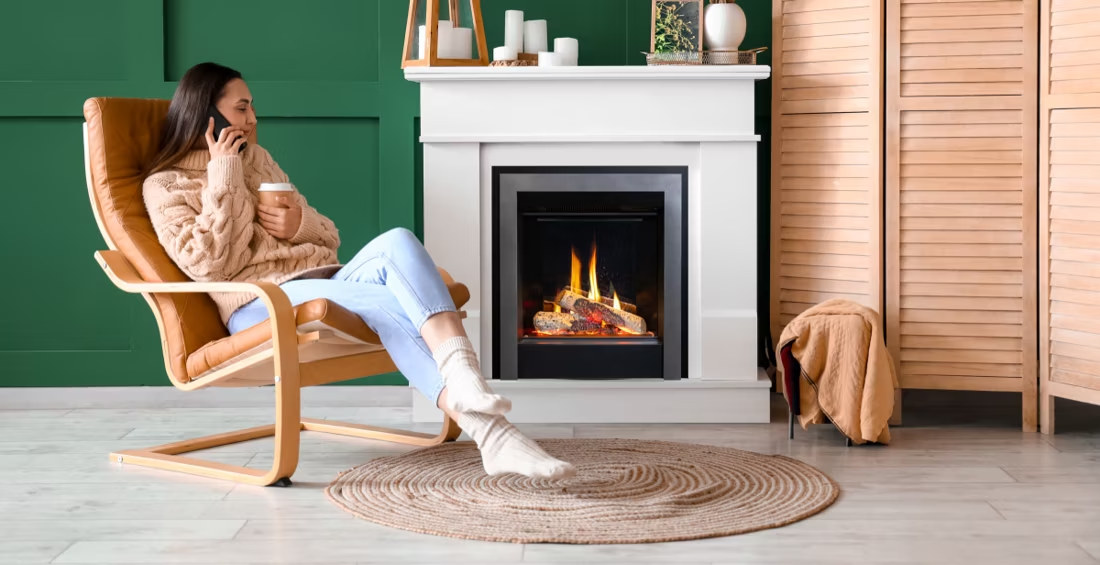
Four fuels. One honest answer for Champaign County.
Three steps. No salesperson until you're ready.
Tell us about your project
Your zip code, your situation, and the fuel you're leaning toward—or let the answers point you to one.
See what's actually available
The brands dealers within 100 miles genuinely carry—real options, never a catalog mirage.
Get your dealer & Project Guide
A trusted local dealer, plus the free Project Guide & Parts List that names every component of the job.
Frequently Asked Questions
Which fuel works best in Champaign County?
For most homes here, it's gas. Champaign County is on Ameren Illinois natural gas service almost everywhere in and around the Champaign-Urbana core and most incorporated towns, so a gas fireplace, insert, or stove is typically a straightforward hookup—instant heat, no venting compromises, low maintenance. Electric fireplaces are a strong secondary option: no venting required at all, good for bedrooms, basements, and apartments near the university, and easy in rentals. Wood stoves and pellet stoves are genuinely uncommon here—this is flat prairie farmland with a furnace-and-gas-line housing stock, not a wood-heat culture, and you won't find much local dealer inventory or install support for either. If you want a wood-burning look, most local retailers will point you toward a gas or electric unit styled to mimic a wood fire rather than an actual wood-burning appliance.
Do I need a permit to install a fireplace in Champaign County?
Usually, yes, for gas. Gas fireplace, insert, and stove installations typically require a building permit plus a licensed gas-fitter for the gas line connection—inside the city limits that runs through the City of Champaign or City of Urbana building/inspection department; in unincorporated areas it runs through the Champaign County zoning and building safety office. Electric fireplaces are usually permit-free if they're a plug-in unit, but a built-in electric fireplace that requires a new dedicated circuit or hardwiring will need an electrical permit. Most local hearth retailers pull the permit as part of the installation quote, so you typically aren't filing the paperwork yourself.
Are there air quality restrictions on burning in Champaign County?
No—Champaign County doesn't have the winter inversion or non-attainment issues that trigger burn advisories in some western basin communities. The flat, open topography of central Illinois farmland doesn't trap smoke the way a mountain valley does. That said, because wood burning is already rare here, this rarely comes up as a practical concern—most fireplace projects in the county are gas or electric installs where air quality restrictions on combustion smoke simply don't apply.
Can one local hearth retailer handle both gas and electric fireplaces?
Yes—most Champaign County hearth retailers carrying fireplaces stock both gas and electric lines, since those are the two fuels that actually move in this market. You'll typically see working gas fireplace and insert displays alongside a wall of electric units ranging from simple plug-in inserts to larger built-in models. If a retailer's listing mentions pellet or wood inventory, treat that as a smaller, secondary part of their business—regional pellet suppliers like Indeck Energy Services, Lignetics, and Somerset Pellet Fuel serve industrial and niche residential accounts in this area, not a mainstream retail pellet-stove market.
How does service work in rural areas of Champaign County?
Most gas and electrical technicians serving Champaign County are based in Champaign or Urbana and travel out across the county's grid of farm townships—toward Rantoul and the north county, Mahomet and Fisher to the west, Tolono and St. Joseph to the south and east. Expect a modest travel fee for service calls outside the Champaign-Urbana core, and expect easier scheduling in the fall shoulder season (September–October) before the first real cold snap drives up demand for gas fireplace inspections and pilot-light service.
What's the typical cost range for gas and electric fireplace installation in Champaign County?
Gas fireplace, insert, or stove installation: roughly $4,000–$10,000 depending on whether it's a straightforward hookup to existing Ameren Illinois gas service or requires new gas line runs and venting through an exterior wall. Electric fireplace: $200–$3,000 for the unit itself, with $400–$1,200 in labor for anything beyond a simple plug-in—most wall-mount, insert, and built-in electric installs fall in that labor range. Wood and pellet stove installs aren't a meaningful part of the local cost picture, since so few retailers stock or install them here. See the county + fuel pages above for cost detail tied to specific local retailer pricing.
What is an in-home preview and do I need one?
It's a visit where a hearth professional measures your space, confirms the model you picked actually works in your home, and walks the specs—framing, gas line, venting, finish work—before anything is ordered. Some details you just can't know until you see the house. Never make a down payment without one; it's the single most-skipped step that burns buyers.
Wood, gas, pellet, or electric—how do I choose?
Match the fuel to your life, not the other way around. Wood: lowest fuel cost and total power-outage independence, but you're hauling and stacking. Gas: press a button, set a thermostat, no maintenance to speak of. Pellet: wood economics with automatic feeding, in exchange for weekly cleaning and a need for electricity. Electric: plugs in anywhere with honest supplemental heat. Nobody regrets the fuel that fits how they actually live.
Can I install a fireplace myself?
If you're putting a fire in your house on purpose, it's best to work with an expert. Unless you're genuinely experienced in framing, gas line, vent pipe, and the national code on clearances to combustibles, have a professional do it—and ideally the same company that sells you the fireplace, so warranty, service, and liability all live under one roof.
What are the biggest mistakes people make buying a fireplace?
Five come up constantly: budgeting for the unit but not the full job (vent, gas line, electrical, finish work); drowning in options instead of starting from style and fuel; buying without an in-home preview; handing installation to a handyman instead of a pro; and giving up out of sheer indecision. Every one is avoidable with a clear plan—step one, step two, step three.
Stove and Fireplace Dealers in Champaign County
Listings include WhyFire partner dealers, dealers we have verified as authorized for the brands we recommend, and established local businesses that carry hearth products. Every listing shows which one it is. The ones marked Preferred run on WhyFire's software, so they can show you real pricing and book your appointment right here. No manufacturer pays for placement. How we verify dealers →
Clayton Sales Company
The Depot
Quality Propane
Find your fireplace in Champaign County.
Pick your fuel below to get matched with a trusted local dealer and receive a free Project Guide & Parts List—the exact parts, including venting, and a recommended installer for your Champaign County home.
Find Your Fireplace →