
Keep Your Family Warm and Safe—No Matter What
Winters here are genuinely cold—but in this Cook County suburb, gas dominates and wood stoves are a niche choice. If you still want one, here's what's realistic and who can actually install it.
Every Project Starts From One of These Five Situations
A cold climate that mostly heats with gas anyway.
Tinley Park sits in climate zone 5A with a long, cold winter and an average winter low around 15°F—cold enough, in principle, to make wood heat worthwhile, on par with Madison, WI. But this is a built-out Chicago suburb, not a forested county with public land nearby. There's no national forest cutting permit office serving Cook County, no cheap self-cut firewood culture, and most subdivisions were built with gas furnaces and gas fireplaces as the default, not wood-burning appliances.
That's why wood fuel relevance here is genuinely low—it's not that winters are mild, it's that the housing stock, lot sizes, and utility infrastructure all point toward gas. The homeowners who do install a wood stove or insert in Tinley Park tend to have an older home with an existing masonry fireplace, want backup heat for ComEd outages, or simply prefer the ambiance and radiant heat of a real fire over a gas unit. If that's you, oak, hickory, walnut, and maple are the cordwood species most commonly available from regional firewood suppliers, and a trusted local dealer can tell you honestly whether it's worth doing given your home's setup.
Three steps. No salesperson until you're ready.
Tell us about your project
Your zip code, your situation, and the fuel you're leaning toward—or let the answers point you to one.
See what's actually available
The brands dealers within 100 miles genuinely carry—real options, never a catalog mirage.
Get your dealer & Project Guide
A trusted local dealer, plus the free Project Guide & Parts List that names every component of the job.
Frequently Asked Questions
How much does a wood stove installation cost in Tinley Park?
Because wood stoves aren't a mainstream product in this market, pricing varies more than it would in a wood-heat region. Across the greater Chicago suburbs, a freestanding stove or insert installation typically runs $3,500 to $8,500, depending on the unit, whether you have an existing masonry chimney to work with, and whether a new Class A chimney has to be built from scratch. Homes without an existing chimney sit at the higher end since that's essentially new construction for the venting. Expect fewer competing quotes than you'd get for a gas install—a dealer matched through Find My Fireplace can tell you what's realistic for your specific house.
Does wood heat actually make sense for a home in Tinley Park?
Climate-wise, yes—a long, cold winter and 15°F average winter lows are real cold, comparable to Madison, WI. The catch isn't the weather, it's the setting. Many Tinley Park subdivisions have HOA covenants or lot layouts that make exterior chimney additions impractical, and because natural gas is already the default heat source in most homes here, wood tends to get chosen for backup heat during a ComEd outage or for the ambiance of a real fire rather than as a primary heat source. It's a legitimate option, just not the default one.
Where do people get firewood in Tinley Park if they install a wood stove?
There's no nearby national forest or public cutting-permit program the way there is in more rural parts of Illinois, so almost everyone buys delivered cordwood rather than cutting their own. Regional firewood suppliers serving the south Chicago suburbs typically deliver seasoned oak, hickory, walnut, or maple, running roughly $250 to $375 per cord depending on species and season. Order early—well-seasoned hardwood ordered in spring or summer burns noticeably cleaner than green wood delivered in November.
Do I need a permit to install a wood stove in Tinley Park?
Yes. New wood-burning appliance installations require a building permit through the Village of Tinley Park (or Cook County Building & Zoning if the property falls outside village limits), and the stove itself needs to meet current EPA emissions standards. Air quality concerns aren't a factor here the way they are in some Western states with winter inversions—there's no burn-ban season in Tinley Park—but the permit and inspection process still applies, and your installer should pull it as part of the job rather than leaving it to you.
What's the difference between a wood stove and a wood insert?
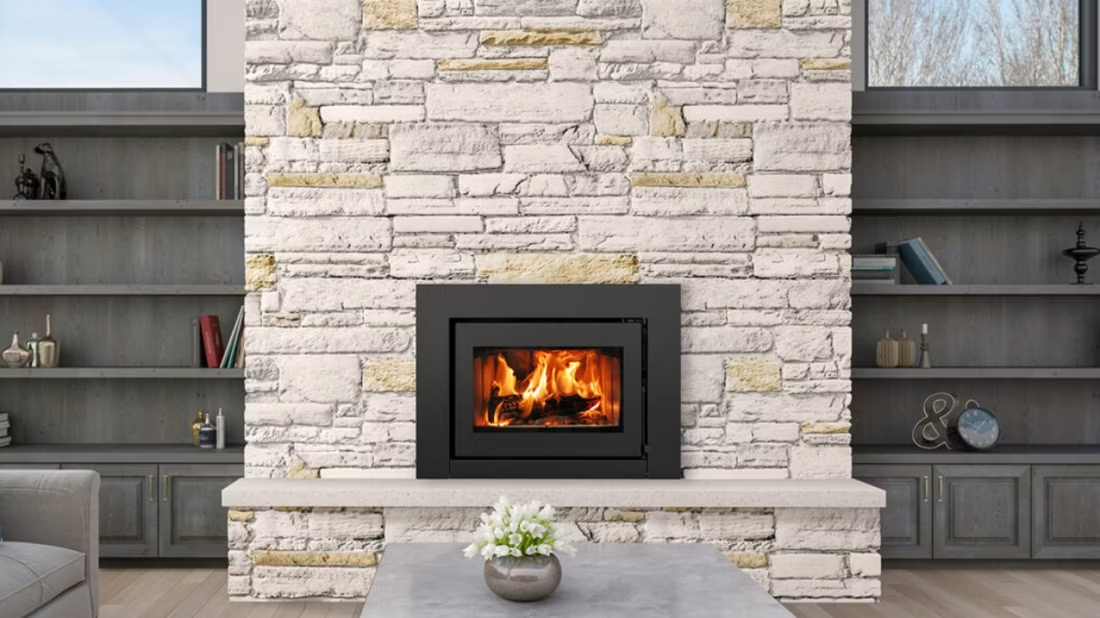
A wood stove is a freestanding unit on its own hearth pad, vented through new or existing chimney pipe—it can go almost anywhere with the right clearances. A wood insert slides into an existing masonry fireplace opening and uses that chimney (usually with a stainless liner) as its vent path. In Tinley Park, where a fair number of the older ranch and split-level homes already have a builder-grade masonry fireplace that barely heats the room, an insert is often the more sensible upgrade—it uses infrastructure you already have and turns a decorative fireplace into a real heat source. Homes without an existing fireplace are better suited to a freestanding stove.
What's the best wood stove for Tinley Park's climate?
For genuinely cold nights in the teens or single digits, a catalytic or hybrid-catalytic stove from a brand like Blaze King or Woodstock Soapstone holds a long, steady burn overnight rather than needing constant reloading. If the stove is meant for backup or supplemental heat rather than round-the-clock use, a mid-size non-catalytic model from Pacific Energy or Lopi is simpler to operate and still puts out real heat during a ComEd outage. A local dealer will size it to your square footage and insulation rather than guessing from a chart.
How often should my chimney be inspected in Tinley Park?
The CSIA recommends an annual inspection for any wood-burning appliance, and that holds regardless of how often the fireplace market leans toward gas locally. Plan on a sweep and Level 1 inspection once a year, ideally before burning season starts in fall. Because wood stoves are less common here, fewer local chimney sweeps specialize in solid-fuel systems than in a heavy wood-heat market—ask specifically about wood-burning experience, not just gas fireplace service, when booking.
Wood vs. gas—which is right for my Tinley Park home?
For most homes here, gas wins on convenience: instant on-off heat, no ash or wood handling, and it's already the standard fuel most Tinley Park houses are built around. Wood's real advantage is that it keeps working without electricity—useful for backup heat during a ComEd outage in a January cold snap—and it delivers the kind of radiant heat and ambiance a gas unit can't quite match. Most Tinley Park homeowners who install wood do it as a second heat source alongside an existing gas furnace or gas fireplace, not as a replacement for one.
Are there any local restrictions on burning wood in Tinley Park?
There's no ongoing air quality concern flagged for this area—no winter inversion or non-attainment status like some Western cities face—so you won't run into seasonal burn bans. The more common restriction is at the subdivision level: some Tinley Park HOAs and covenants limit exterior chimney additions or dictate what a new flue can look like from the street. Check with your HOA and the Village of Tinley Park building department before you commit to a design, especially if you're adding a new chimney rather than using an existing one.
Why is my open fireplace making my house colder?
Open fireplaces suck—literally. As the fire burns, it consumes air your furnace already paid to heat and pulls it out through the chimney, so the house is actually colder after the fire goes out than before you lit it. An insert fixes this: it seals the chimney, puts fixed glass across the front, and turns that hole in your house into a real heat source.
Why is a fireplace insert so efficient?
An insert does two things: it seals the chimney completely, so you stop losing air you already paid to heat, and it radiates warmth into the room through the firebox and glass. Most add a heat-exchange fan that pulls cool room air underneath, wraps it around the hot firebox, and pushes it back out warm. Your home is more efficient before you've even lit the first fire.
Does a fireplace add value to my home?
On average, a fireplace adds back to the home about the same amount you spent installing it. Add the monthly savings from heating the rooms you actually use instead of the whole house—often hundreds of dollars a year—and the value case is strong before you even count what a fire does for how your family uses the room.
Can I install a fireplace myself?
If you're putting a fire in your house on purpose, it's best to work with an expert. Unless you're genuinely experienced in framing, gas line, vent pipe, and the national code on clearances to combustibles, have a professional do it—and ideally the same company that sells you the fireplace, so warranty, service, and liability all live under one roof.
Nearby Dealers
Hearth shops serving Tinley Park and the surrounding area.
Fireside Collection By Fireplaces Plus
Find your wood stove option in Tinley Park.
Tell us about your home and we'll put together a free Project Guide & Parts List—the exact parts, venting, and a trusted local dealer who can tell you honestly whether wood heat makes sense for your Tinley Park property.
Find Your Fireplace →