
Modern hearth options for Chicagoland homes.
Fireplace resources for every neighborhood in Cook County—from Chicago's bungalow belt and high-rises to the North Shore, west suburbs, and south suburbs. Find the right unit and connect with a trusted local hearth retailer.
Every Project Starts From One of These Five Situations
Dense urban heating across Cook County, Illinois.
Cook County is the second-most populous county in the United States, home to nearly 11 million residents across Chicago and 130+ surrounding municipalities. Winters here are real Midwestern winters—average lows around 20°F, lake-effect wind chills well below zero, and a heating season that often runs from October through April. With a long, cold seven-month heating season, supplemental heat and ambiance fireplaces are a staple of both century-old bungalows and new-construction condos alike.
What you'll find on this hub: hearth retailers, service technicians, and fuel suppliers serving every part of the county—from downtown Chicago high-rises to North Shore single-family homes in Evanston and Wilmette, west to Oak Park and Schaumburg, and south to Tinley Park and Orland Park. Cook County's hearth market is dominated by gas (the practical mainstream choice with widespread Peoples Gas and Nicor service) and electric (the only viable option for most condos, apartments, and rental units). Wood and pellet are rare here for good reason—dense urban housing, strict municipal codes, and the City of Chicago's wood-burning restrictions make them impractical for the vast majority of homes.
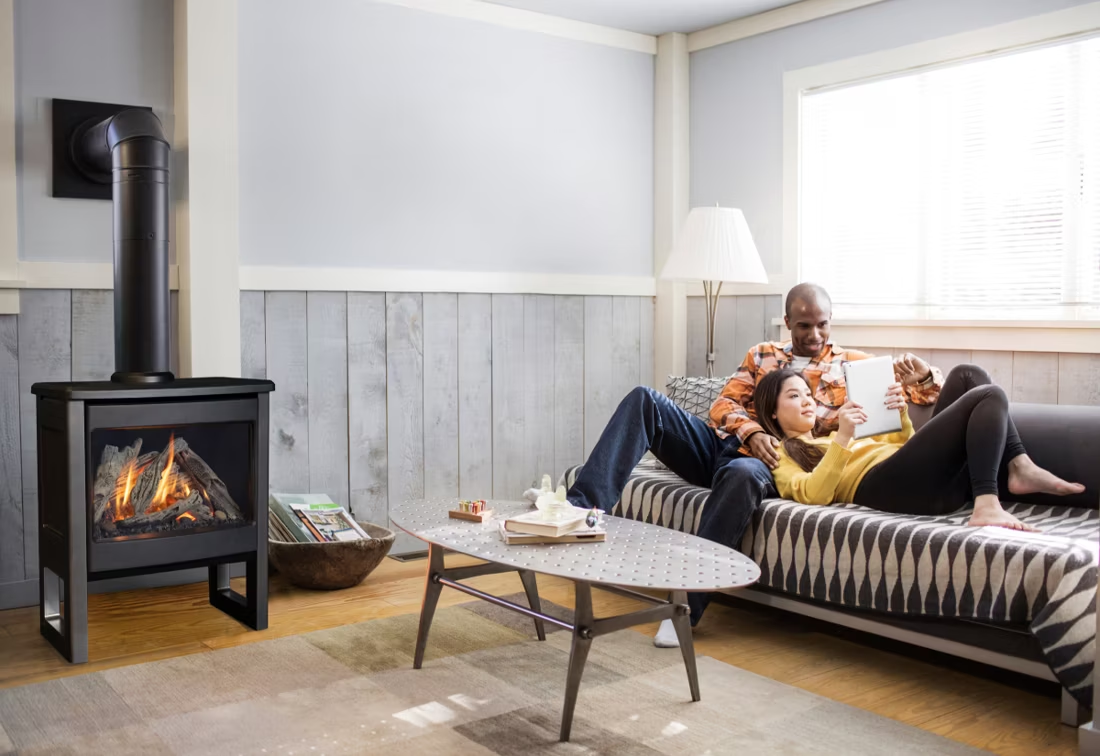
Four fuels. One honest answer for Cook County.
Three steps. No salesperson until you're ready.
Tell us about your project
Your zip code, your situation, and the fuel you're leaning toward—or let the answers point you to one.
See what's actually available
The brands dealers within 100 miles genuinely carry—real options, never a catalog mirage.
Get your dealer & Project Guide
A trusted local dealer, plus the free Project Guide & Parts List that names every component of the job.
Frequently Asked Questions
Which fuel works best in Cook County?
For the vast majority of Cook County homes, the practical answer is gas or electric. Gas is the mainstream primary choice—direct-vent gas fireplaces, inserts, and stoves deliver real heat (20,000–40,000 BTU), work with the natural gas service most homes already have (Peoples Gas in Chicago, Nicor in the suburbs), and meet Chicago and suburban building codes without hassle. Electric is the answer for condos, high-rises, apartments, rental units, and any installation where venting through a brick exterior or shared wall isn't practical—which describes a huge share of Cook County housing stock. Wood and pellet are technically possible in some detached single-family homes but are uncommon here, with limited retailer support and code complications in most municipalities.
Do I need a permit to install a fireplace in Cook County?
Almost always, yes—and the jurisdiction depends on where you live. Within the City of Chicago, permits are issued by the Department of Buildings and gas work must be done by a licensed Chicago plumber; this is one of the most strictly enforced permitting environments in the country. In the suburbs, each municipality (Evanston, Oak Park, Schaumburg, Tinley Park, etc.) has its own building department and code requirements. Gas fireplace installations require a building permit, a gas line permit, and a licensed gas-fitter for the connection. Hardwired electric fireplaces typically require an electrical permit; plug-in units don't. Condo and co-op installations add a layer—most buildings require board approval before any work begins. Most local hearth retailers handle permitting as part of installation.
Can I install a wood-burning fireplace in Chicago or Cook County?
In most cases, no—or not practically. The City of Chicago has long-standing restrictions on new solid-fuel appliances, and many suburban municipalities have similar code restrictions or HOA prohibitions. Dense lot lines, shared walls, party-wall townhomes, and proximity to neighbors make new wood-burning installations rare in Cook County. Some detached single-family homes in the suburbs can still install EPA-certified wood stoves or inserts where municipal code allows, but you should confirm with your local building department before purchasing. Existing wood-burning fireplaces in older homes can typically be relined and used, or converted to gas inserts—conversion is by far the most common path for Cook County homeowners with an old masonry wood fireplace.
What are the options for condos and high-rises in Chicago?
For most condos, apartments, and high-rise units in Chicago, electric is the only realistic option. Plug-in electric fireplaces (wall-mounts, freestanding stoves, mantel inserts, and built-ins) require no venting, no gas line, and minimal building approval beyond standard cosmetic-renovation rules. Some newer buildings have gas service to individual units and direct-vent gas fireplaces pre-installed or possible—but retrofitting gas into an existing unit is rarely practical. Building approval matters: even for electric, hardwired installations and any wall modification typically require condo board sign-off. Several Cook County retailers specialize in condo-friendly electric units and can advise on what your specific building will allow.
How does service work across Cook County?
Most service technicians serving Cook County are based in the suburbs and travel into the city, or are based in Chicago and travel outward. Travel is rarely an issue given the county's density—most techs cover their portion of the county (north, west, south, or city) within normal service hours. Gas fireplaces should be inspected annually, ideally in late summer or early fall before heating season; pre-season scheduling (August–October) is easier than mid-winter. Electric units need very little service beyond occasional cleaning and bulb or LED replacement. For high-rise and condo work, schedule with awareness of building service-elevator rules—many buildings restrict contractor access to weekday business hours.
What's the typical cost range for fireplace installation in Cook County?
Gas fireplace, insert, or stove: $4,500–$12,000 depending on gas line work, venting complexity, and finish materials; conversions of an existing wood fireplace to a gas insert typically run $4,500–$8,000 when gas service is already in place. Expect higher labor pricing in Chicago proper than in outlying suburbs due to licensed-trade requirements and permitting overhead. Electric fireplace: $200–$3,500 for the unit; $400–$1,500 in labor for hardwired wall-mounts, inserts, and built-ins (plug-in units are essentially DIY). Condo and high-rise installations often add 10–20% for building access fees, service-elevator scheduling, and protective floor coverings. See the county + fuel pages above for more detail tied to specific retailer pricing.
Does a fireplace add value to my home?
On average, a fireplace adds back to the home about the same amount you spent installing it. Add the monthly savings from heating the rooms you actually use instead of the whole house—often hundreds of dollars a year—and the value case is strong before you even count what a fire does for how your family uses the room.
What is an in-home preview and do I need one?
It's a visit where a hearth professional measures your space, confirms the model you picked actually works in your home, and walks the specs—framing, gas line, venting, finish work—before anything is ordered. Some details you just can't know until you see the house. Never make a down payment without one; it's the single most-skipped step that burns buyers.
How much should I budget for a fireplace?
For an average home—covering the fireplace, the vent pipe, and basic installation—a budget between $3,900 and $5,500 gives you a lot of options across wood, gas, and pellet. By the time you add finish work, gas line, and electrical, the average complete installation lands between $5,000 and $12,000 all-in. In a remodel or new build, a good rule is to put about 2.5% of the total project cost toward the fireplace.
Can a fireplace actually lower my heating bill?
Yes—by creating a comfort zone. A furnace heats every square foot of the house just to warm the one room you're in; a gas fireplace on low burns roughly a sixth of the gas a typical furnace does. Set the furnace around 55–60 degrees as a baseline, then heat the rooms your family actually uses. Families who heat this way commonly save $20–$60 a month.
Stove and Fireplace Dealers in Cook County
Listings include WhyFire partner dealers, dealers we have verified as authorized for the brands we recommend, and established local businesses that carry hearth products. Every listing shows which one it is. The ones marked Preferred run on WhyFire's software, so they can show you real pricing and book your appointment right here. No manufacturer pays for placement. How we verify dealers →
A Fireplace Store And More
Urban Rooftops
Ember Glow
A Cozy Fireplace
A Cozy Fireplace
General Masonry Supply
Find your fireplace in Cook County.
Pick your fuel below to find the right unit, see installation costs, and connect with a trusted local hearth retailer.
Find Your Fireplace →