
Real ambiance, zero chimney required in Tinley Park.
No gas line, no venting, no masonry work—just plug it in and get a real fire look with genuine supplemental warmth for Cook County winters.
Every Project Starts From One of These Five Situations
The heat option that fits Tinley Park's homes and codes.
Tinley Park sits about 710 feet above sea level in Cook County, with a winter heating load and average winter lows near 15°F—a heating season not far off from Madison, WI. That's a real winter, but it's not the kind of climate where most homeowners are cutting cordwood or hauling pellets. A lot of Tinley Park's housing stock is newer single-family construction, plus a substantial number of townhomes and condos in developments near the Metra station, and many of those units simply weren't built with a chimney or a masonry fireplace to work with.
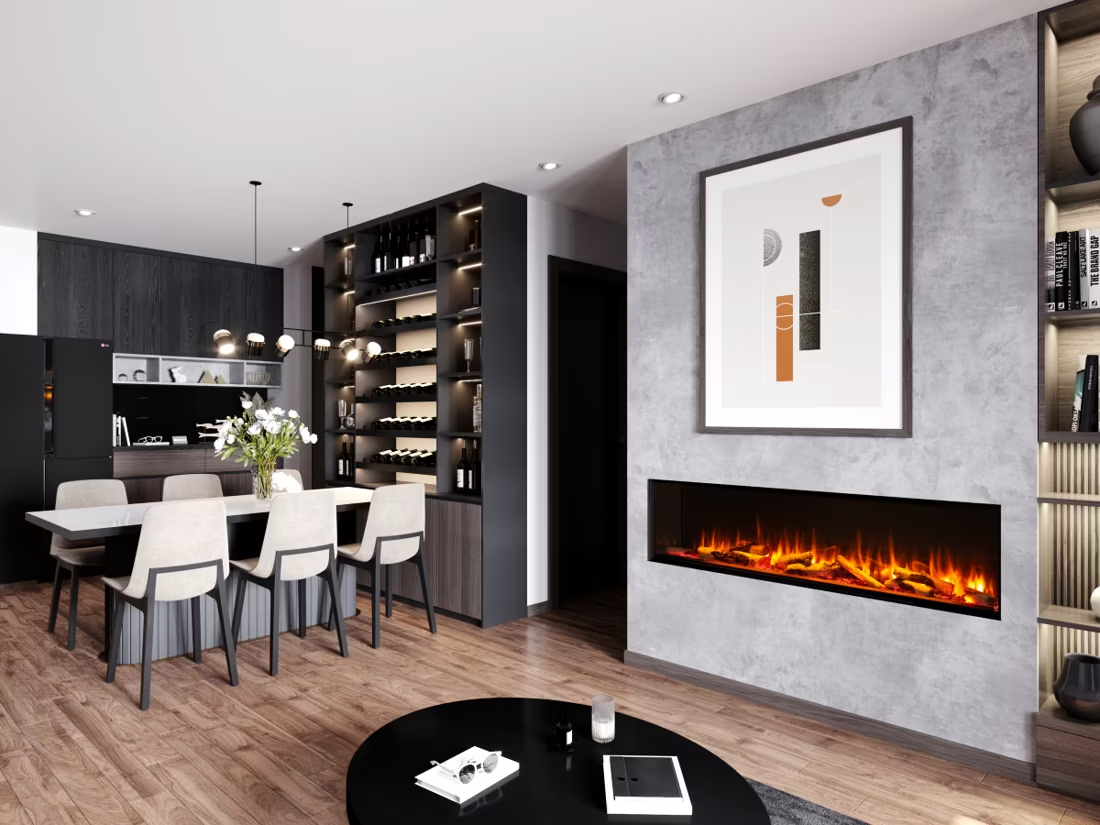
That's exactly where electric fireplaces do their best work. A built-in or insert unit drops into an existing opening, a wall cavity, or even a media console with no gas line and no venting, running on standard household power through ComEd. At Commonwealth Edison's residential rate of roughly $0.1339 per kWh, a typical unit costs a few dimes an hour to run—cheap enough to leave on for ambiance, and enough supplemental heat to take the edge off a family room without touching the furnace thermostat.
Three steps. No salesperson until you're ready.
Tell us about your project
Your zip code, your situation, and the fuel you're leaning toward—or let the answers point you to one.
See what's actually available
The brands dealers within 100 miles genuinely carry—real options, never a catalog mirage.
Get your dealer & Project Guide
A trusted local dealer, plus the free Project Guide & Parts List that names every component of the job.
Frequently Asked Questions
How much does an electric fireplace installation cost in Tinley Park?
Plug-in electric inserts and wall-mount units typically run $300 to $1,200 installed, since there's no venting or gas line to run—most of the cost is the unit itself plus a mantel or surround if you want one. Built-in electric fireplaces that require a dedicated 240V circuit, framing, or recessing into a wall run higher, typically $1,500 to $4,000 depending on the finish work. Because there's no chimney or flue involved, electric is consistently the least expensive fireplace category to install in Tinley Park—a fraction of what a gas insert with new gas line work would run in the same house.
Do I need a permit to install an electric fireplace in Tinley Park?
In most cases, no. A plug-in electric fireplace that runs off an existing 120V outlet is treated like any other appliance and doesn't require a permit. If you're adding a dedicated 240V circuit for a larger built-in unit, or having an electrician run new wiring into a wall, that electrical work typically does need a permit through the Village of Tinley Park's Building & Development Department. A licensed electrician handling the circuit work will usually pull that permit as part of the job.
Why isn't wood or pellet heat more common in Tinley Park?
Wood and pellet appliances aren't a natural fit for most of Tinley Park's housing stock—a lot of the village's newer subdivisions and townhome communities were built without masonry chimneys or the clearances a wood stove needs, and many HOAs and condo associations restrict solid-fuel burning appliances outright. There's also no local cutting-permit infrastructure here the way there is in forested parts of the country—Cook County is suburban, not timberland. Gas and electric are the two fuels that actually match how homes here are built, which is a big part of why electric fireplaces have become a popular retrofit option in rooms without an existing flue.
How much does it actually cost to run an electric fireplace here?
Most electric fireplaces draw around 1,500 watts on the heat setting (750W or less on flame-only/ambiance mode). At ComEd's residential rate of about $0.1339 per kWh, running the heater on high costs roughly 20 cents an hour, or about $1.60 for an 8-hour evening. Running it flame-only for ambiance with the heater off costs a fraction of that. It's a modest add to a monthly electric bill even used daily through a Chicago-area winter, and far cheaper than running a gas insert on standing pilot around the clock.
Can an electric fireplace actually heat a room in a Tinley Park winter?
It can meaningfully supplement a room, but it shouldn't be your only heat source through a Cook County winter with lows averaging 15°F. Most units are rated for 400-1,000 square feet and work well in a finished basement, a family room, or an addition where the furnace has to work harder to keep up. Think of it as zone heat: close the door, run the electric fireplace, and let it carry that one room while your furnace focuses on the rest of the house. For anyone hoping to fully replace furnace heat with an electric fireplace, that's not realistic here—the BTU output just isn't in the same league as a furnace or a gas insert.
Electric vs. gas fireplace—which makes more sense for my Tinley Park home?
Gas gives you real flame, higher heat output, and—with the right ignition system—heat during a power outage, but it requires either an existing gas line or new gas line work, plus venting, which raises the installation cost and adds a permit step. Electric skips all of that: no gas line, no venting, lower installation cost, and it works in rooms that were never built with a flue, like a basement or a condo unit. If your home already has a gas line and you want serious heat output, gas is usually the better long-term choice. If you want a fast, affordable upgrade to a room with no existing fireplace infrastructure, electric is usually the more practical answer.
Can I install an electric fireplace in a Tinley Park condo or townhome?
Yes—this is one of the most common electric fireplace projects in the area, given how many condo and townhome units exist in Tinley Park's developments near the Metra line. Since there's no venting or gas line involved, most condo and HOA associations that prohibit wood or gas appliances have no issue with a plug-in or hardwired electric unit. It's worth checking your specific association's covenants before a built-in installation that involves cutting into a wall, but a freestanding or mantel-mounted unit is almost always allowed without any association approval.
How long do electric fireplaces last, and what maintenance do they need?
A quality electric fireplace with an LED flame effect typically lasts 10 to 15 years with minimal upkeep—there's no chimney to sweep, no gas line to inspect, and no combustion byproducts to worry about. Maintenance is limited to occasionally dusting the heater vents, replacing a heater fan if it eventually wears out, and cleaning the glass front. Because there's no open flame or combustion involved, there's also no annual safety inspection requirement the way there is for wood or gas units—a real advantage for anyone who wants ambiance without a maintenance routine.
Where can I see electric fireplaces in person near Tinley Park?
A handful of hearth and fireplace retailers serve the southwest Chicago suburbs and carry electric lines from brands like Napoleon, Dimplex, and Amantii, alongside the gas products most Illinois homeowners also ask about. Rather than guessing which local dealer actually stocks and installs what you need, tell us about your room and we'll match you with a trusted local retailer who carries electric fireplaces suited to Cook County homes and can walk you through options in person.
Can I put a TV above my fireplace?
Yes—with an asterisk. Fireplaces are hot and TVs don't like heat. Either put a mantel between them to deflect rising warmth, or choose a fireplace with heat-management technology that creates a cool zone on the wall above—the wall stays around 125 degrees, barely warm, while the room still gets full heat. If you like clean lines and don't want a mantel, heat management is the answer.
Do electric fireplaces actually produce heat?
Yes—most put out around 4,800–5,000 BTUs from a standard outlet, which comfortably warms a bedroom, office, or den as a comfort-zone heater. What they won't do is carry a whole house the way wood, gas, or pellet can. Think of electric as ambiance-first with honest supplemental heat: flames on with no heat in July, flames plus warmth in January.
Can a fireplace actually lower my heating bill?
Yes—by creating a comfort zone. A furnace heats every square foot of the house just to warm the one room you're in; a gas fireplace on low burns roughly a sixth of the gas a typical furnace does. Set the furnace around 55–60 degrees as a baseline, then heat the rooms your family actually uses. Families who heat this way commonly save $20–$60 a month.
How much should I budget for a fireplace?
For an average home—covering the fireplace, the vent pipe, and basic installation—a budget between $3,900 and $5,500 gives you a lot of options across wood, gas, and pellet. By the time you add finish work, gas line, and electrical, the average complete installation lands between $5,000 and $12,000 all-in. In a remodel or new build, a good rule is to put about 2.5% of the total project cost toward the fireplace.
Nearby Dealers
Hearth shops serving Tinley Park and the surrounding area.
Fireside Collection By Fireplaces Plus
Electric Service in Tinley Park
An electric fireplace's heater draws about 1,500 watts—pennies per hour at local rates.
Commonwealth Edison Co
Find your electric fireplace in Tinley Park.
Tell us about your room and budget, and we'll match you with a trusted local dealer plus a free Project Guide & Parts List—the exact unit, mounting, and wiring plan for your Tinley Park home.
Find Your Fireplace →