
Add Warmth to Any Room—No Chimney, No Gas Line, No Mess.
From condos in East Peoria to older homes in Pekin and new builds in Morton and Washington, electric fireplaces bring instant ambiance and zone heat to Tazewell County's long, solidly cold winters without any venting work. Find the right unit and connect with a trusted local dealer.
Every Project Starts From One of These Five Situations
The easiest fireplace upgrade in central Illinois.
Tazewell County sits along the Illinois River across from Peoria, home to more than 108,000 residents spread across Pekin, East Peoria, Morton, Washington, Tremont, Delavan, and Mackinaw. Winters here are solidly cold—average lows around 18°F with a good, long stretch of heating season each year, enough for real cold snaps in January and February but well short of the brutal, sustained cold of a place like Duluth or Fargo. That's exactly the kind of climate where electric fireplaces earn their keep: not as a whole-home heat source, but as fast, targeted warmth in the room you're actually using.
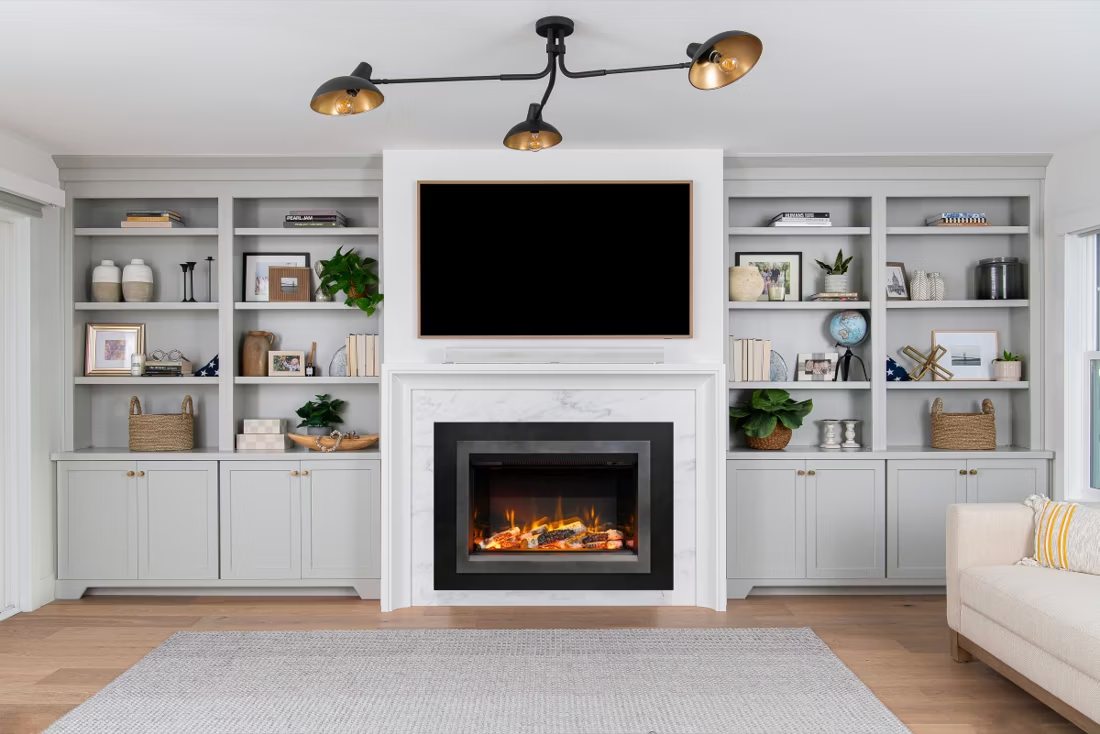
Much of the county's newer housing stock—subdivisions around Morton and Washington, condos and townhomes in East Peoria—either restricts solid-fuel appliances through HOA covenants or simply wasn't built with a chimney in mind. Electric fireplaces sidestep that entirely. A built-in linear unit or a insert into an existing masonry opening plugs into standard household current, needs no flue, no gas line, and no combustion air, and can be installed by a licensed electrician in an afternoon. That makes electric the practical choice for renters, condo owners, and anyone doing a straightforward living-room refresh in Pekin or East Peoria without opening up exterior walls.
Three steps. No salesperson until you're ready.
Tell us about your project
Your zip code, your situation, and the fuel you're leaning toward—or let the answers point you to one.
See what's actually available
The brands dealers within 100 miles genuinely carry—real options, never a catalog mirage.
Get your dealer & Project Guide
A trusted local dealer, plus the free Project Guide & Parts List that names every component of the job.
Frequently Asked Questions
How much does an electric fireplace installation cost in Tazewell County?
Plug-in electric fireplaces and stoves—the kind that just need a standard 120V outlet—typically run $150 to $600 for the unit itself, with no installation labor required beyond setting it in place. Built-in linear electric fireplaces or inserts that get hardwired into a wall or existing masonry opening run higher, generally $1,200 to $3,500 installed, once you factor in a licensed electrician for the dedicated circuit, any surround or mantel carpentry, and finish work. Local electricians and hearth retailers serving Pekin, East Peoria, and Morton can give a firm quote once they know whether you're doing a simple plug-in swap or a full built-in installation.
What size electric fireplace do I need for my room?
Most residential electric fireplaces put out 4,600 to 9,000 BTUs—enough to noticeably warm a single room of 400 to 1,000 square feet, but not intended to heat an entire Tazewell County home through a January cold snap. Sizing is mostly about the visual—linear electric fireplaces are sold by width (30 inches up to 80-plus inches) to fit the wall or existing fireplace opening—and secondarily about how much supplemental heat you actually want. If you're retrofitting an existing masonry firebox in an older Pekin home, an insert sized to that opening is usually the right call; for a new-construction wall in Morton or Washington, a wider linear unit centered on the room works better.
Who installs electric fireplaces near me in Tazewell County?
For plug-in units, no specialized installer is needed—most homeowners set them up themselves. For hardwired built-ins or inserts, you'll want a licensed electrician, and many hearth and fireplace retailers in the Pekin and East Peoria area either employ one directly or coordinate with one as part of the install. Because there's no venting or gas line to worry about, electric installs are simpler and faster than gas or wood projects, which is part of why they're a common choice for quick remodels throughout the county.
What's the difference between an electric insert, a built-in, and a freestanding electric stove?
An electric insert is built to slide into an existing masonry fireplace opening, instantly converting an old wood-burning firebox into a clean, low-maintenance heat source—a popular option in older Pekin and East Peoria homes with a chimney nobody uses anymore. A built-in electric fireplace is installed into new framing, typically as part of a remodel or new construction, and can be recessed flush into the wall for a modern linear look. A freestanding electric stove sits on the floor like a traditional wood stove and just needs an outlet, making it the easiest option for renters or anyone who doesn't want to touch a wall.
Do I need a permit to install an electric fireplace in Tazewell County?
A basic plug-in electric fireplace or stove generally doesn't require a permit since it isn't a fixed electrical installation. A hardwired built-in unit or insert that requires a new dedicated circuit typically does require an electrical permit, pulled through your local building department—the City of Pekin, City of East Peoria, or Tazewell County Building & Zoning for unincorporated areas, depending on where the home sits. Most electricians handle the permit as part of the job, so it's worth confirming with whichever installer you hire.
Will an electric fireplace actually keep me warm during a Tazewell County winter?
An electric fireplace won't replace your furnace, but it does real work as supplemental, zone heat—especially useful during the sharp cold snaps that push overnight lows well below the county's 18°F average. A 1,500-watt unit can noticeably warm the room you're in, letting you turn the thermostat down a few degrees in the rest of the house. Brands like Dimplex, Napoleon, and Amantii, commonly carried by local dealers, offer models with stronger fan-forced heaters specifically for this kind of supplemental use, while purely decorative units focus on the flame effect with little real heat output—worth clarifying with your dealer if warmth matters as much as looks.
How much maintenance does an electric fireplace need?
Very little—that's one of the main draws. There's no chimney to sweep, no ash to clean, and no annual inspection required the way there is with wood or gas units. Maintenance is mostly dusting the vents and glass, occasionally cleaning or replacing an air filter on units that have one, and eventually replacing the LED flame bulbs, which are rated for tens of thousands of hours. For Tazewell County homeowners who want fireplace ambiance without any of the upkeep of a wood-burning setup, that's the whole appeal.
Electric vs. gas fireplace—which is right for my home?
Gas fireplaces put out considerably more heat and can serve as genuine supplemental or even primary zone heat during Tazewell County's coldest stretches, with natural gas service widely available across Pekin, East Peoria, and Morton. But gas installation involves running a gas line and venting, which means more construction and higher upfront cost. Electric fireplaces trade some heat output for dramatically simpler installation, lower upfront cost, and total flexibility on placement—no venting or gas access required at all. For homeowners prioritizing ambiance and easy installation over serious heat output, especially in condos, rentals, or rooms without gas access, electric is usually the better fit.
Why would I choose electric over a wood-burning fireplace?
Wood-burning fireplaces are uncommon as a new installation choice in Tazewell County today—many of the newer subdivisions in Morton and Washington, along with condo and townhome developments in East Peoria, either restrict solid-fuel appliances or simply weren't built with a chimney. Even in older Pekin homes with existing oak, hickory, or walnut cordwood readily available locally, homeowners increasingly convert unused wood fireboxes to electric inserts to skip the annual chimney sweep, creosote buildup, and ash cleanup. If you specifically want the ritual and radiant heat of a real wood fire and already have a functioning chimney, wood remains an option—but for most Tazewell County homeowners weighing a new installation, electric is the far simpler and more common path.
Can I put a TV above my fireplace?
Yes—with an asterisk. Fireplaces are hot and TVs don't like heat. Either put a mantel between them to deflect rising warmth, or choose a fireplace with heat-management technology that creates a cool zone on the wall above—the wall stays around 125 degrees, barely warm, while the room still gets full heat. If you like clean lines and don't want a mantel, heat management is the answer.
Do electric fireplaces actually produce heat?
Yes—most put out around 4,800–5,000 BTUs from a standard outlet, which comfortably warms a bedroom, office, or den as a comfort-zone heater. What they won't do is carry a whole house the way wood, gas, or pellet can. Think of electric as ambiance-first with honest supplemental heat: flames on with no heat in July, flames plus warmth in January.
Can I install a fireplace myself?
If you're putting a fire in your house on purpose, it's best to work with an expert. Unless you're genuinely experienced in framing, gas line, vent pipe, and the national code on clearances to combustibles, have a professional do it—and ideally the same company that sells you the fireplace, so warranty, service, and liability all live under one roof.
Can a fireplace actually lower my heating bill?
Yes—by creating a comfort zone. A furnace heats every square foot of the house just to warm the one room you're in; a gas fireplace on low burns roughly a sixth of the gas a typical furnace does. Set the furnace around 55–60 degrees as a baseline, then heat the rooms your family actually uses. Families who heat this way commonly save $20–$60 a month.
Stove and Fireplace Dealers in Tazewell County
Find your electric fireplace in Tazewell County.
Tell us a bit about your home and we'll match you with the right electric fireplace, insert, or stove—and connect you with a trusted local dealer, plus a free Project Guide & Parts List for your installation.
Find Your Fireplace →