
Add Warmth to Any Room in Pekin—No Chimney Required.
Zone heat for Tazewell County homes without the venting, gas line, or masonry work. Find the right electric fireplace or insert and connect with a trusted local dealer.
Every Project Starts From One of These Five Situations
The easiest heat upgrade for Tazewell County homes.
Pekin sits along the Illinois River in Tazewell County, where winters bring an average low around 18°F and a fairly long, cold heating season each year—colder than a typical Midwest winter but nowhere near the extremes of a place like Madison, Wisconsin. Much of Pekin's housing stock dates back decades, and a lot of it either has an underused masonry fireplace or no fireplace opening at all. That's exactly the gap electric heat fills well: it doesn't need a flue, a gas line, or a chimney to work.
Ameren Illinois serves the area with a residential rate around 11.76 cents per kWh, which is below the national average, so running an electric insert or built-in unit for a few hours a night in a family room or bonus space is inexpensive. Electric fireplaces install in a fraction of the time gas or wood units require—often just a matter of an outlet or a simple dedicated circuit—which makes them a practical option for downtown Pekin's older homes, rental properties, and rooms where venting a gas unit through brick or siding just isn't realistic.
Three steps. No salesperson until you're ready.
Tell us about your project
Your zip code, your situation, and the fuel you're leaning toward—or let the answers point you to one.
See what's actually available
The brands dealers within 100 miles genuinely carry—real options, never a catalog mirage.
Get your dealer & Project Guide
A trusted local dealer, plus the free Project Guide & Parts List that names every component of the job.
Frequently Asked Questions
How much does an electric fireplace installation cost in Pekin?
Plug-in electric inserts that slide into an existing masonry firebox typically run $800 to $2,000 installed, since there's no venting or gas line to run—most of that cost is the unit itself plus a surround or finishing trim. Built-in electric fireplaces set into a new wall or entertainment center usually land between $1,500 and $3,500 once framing, a dedicated 20-amp circuit, and finish work are included. Because electric units skip the chimney and gas-fitting work that drive up wood and gas project costs, electric is consistently the least expensive fireplace category to install in a Pekin home.
Do I need a permit to install an electric fireplace in Pekin?
In most cases, no—a plug-in electric insert or freestanding unit that runs off a standard outlet doesn't trigger a building permit through the City of Pekin. If you're adding a dedicated circuit for a higher-draw built-in unit, that electrical work should be done by a licensed electrician and may require an electrical permit depending on the scope. Either way, it's a much lighter permitting lift than a wood stove installation or a gas line run, which is part of why electric is a popular choice for straightforward room-by-room upgrades in Pekin.
How much does it cost to run an electric fireplace with Ameren Illinois rates?
At Ameren Illinois's residential rate of about 11.76 cents per kWh, a typical 1,500-watt electric fireplace costs roughly 18 cents per hour to run on the heat setting. Used for supplemental heat a few hours an evening—say five hours a night in a family room—that works out to under a dollar a day, or around $25 to $30 a month during the coldest stretch of a Pekin winter. Most units also let you run the flame effect with the heater off, which draws only a few watts, so year-round ambiance costs next to nothing.
Electric vs. gas—which is right for my Pekin home?
Gas fireplaces put out more heat and can serve as a legitimate secondary heat source for a room during Pekin's coldest weeks, but they require a gas line, venting, and permitting through the local building department. Electric fireplaces max out around 5,000 to 10,000 BTU—enough to noticeably warm a bedroom, den, or basement rec room, but not a whole-home heat source given Pekin's fairly long, cold heating season. If you already have a furnace doing the heavy lifting and just want supplemental warmth and ambiance in one room without construction, electric is usually the simpler answer. If you want real backup heat capacity, gas is worth the extra install cost.
What's the difference between an electric insert, built-in, and freestanding unit?
An electric insert is built to slide into an existing masonry fireplace opening, instantly converting a cold, unused firebox into a working heat source—a common project for Pekin's older homes with existing brick fireplaces. A built-in electric fireplace is designed to be framed into a wall, much like a TV mount, and works well in new construction or remodels without an existing fireplace. A freestanding electric stove or mantel unit needs no installation at all beyond plugging it in, which makes it the fastest option for renters or anyone not ready to commit to construction.
Can I install an electric fireplace in an older Pekin home with no chimney?
Yes—that's actually where electric fireplaces solve a real problem. A lot of Pekin's older housing near downtown and along the river bluffs was built without a fireplace or chimney chase at all, which rules out wood and makes a gas installation more involved and costly. An electric built-in or freestanding unit sidesteps that entirely since it runs off house current rather than needing a flue. It's the most realistic fireplace option for homes that were never designed around one.
Do electric fireplaces actually put out real heat?
Most electric fireplaces use a 1,500-watt heating element, which puts out around 5,000 BTU of real, usable heat—enough to comfortably warm a bedroom, home office, or medium-sized living room, especially as supplemental heat alongside your central furnace. They won't replace a furnace across a whole house given Pekin's cold-season demand, but for zone heating a specific room while you turn the thermostat down elsewhere, the heat is genuine, not just visual. Look for units with a thermostat and adjustable heat settings rather than a fixed on/off switch for the most efficient use.
Why isn't pellet heat more common in Pekin—should I consider it instead of electric?
Pellet stoves aren't a typical residential option around Pekin. Regional pellet producers like Indeck Energy Services and Lignetics operate in the broader Illinois River Valley, but their volume leans toward industrial and agricultural fuel markets rather than a robust local retail network for home pellet stoves. That leaves electric as the more practical, readily available zero-hassle option for homeowners who want clean supplemental heat without sourcing and storing fuel—no hopper to fill, no ash to empty, and no need to track down a dealer that stocks pellets locally.
What are the best electric fireplace brands available through local dealers?
Brands like Dimplex, Napoleon, and Touchstone are widely carried by hearth dealers serving the Pekin and greater Peoria area, and each makes both insert-style and built-in electric units with realistic flame technology and a real 1,500-watt heater. Dimplex and Napoleon tend to be the go-to choice for built-in wall installations, while Touchstone's slimmer units are popular for mounting under a TV or into a smaller opening. A local dealer can show you the flame effect and heat output in person before you commit, which matters more with electric units than with wood or gas since the visual quality varies more by brand.
Does an electric fireplace need a vent or chimney?
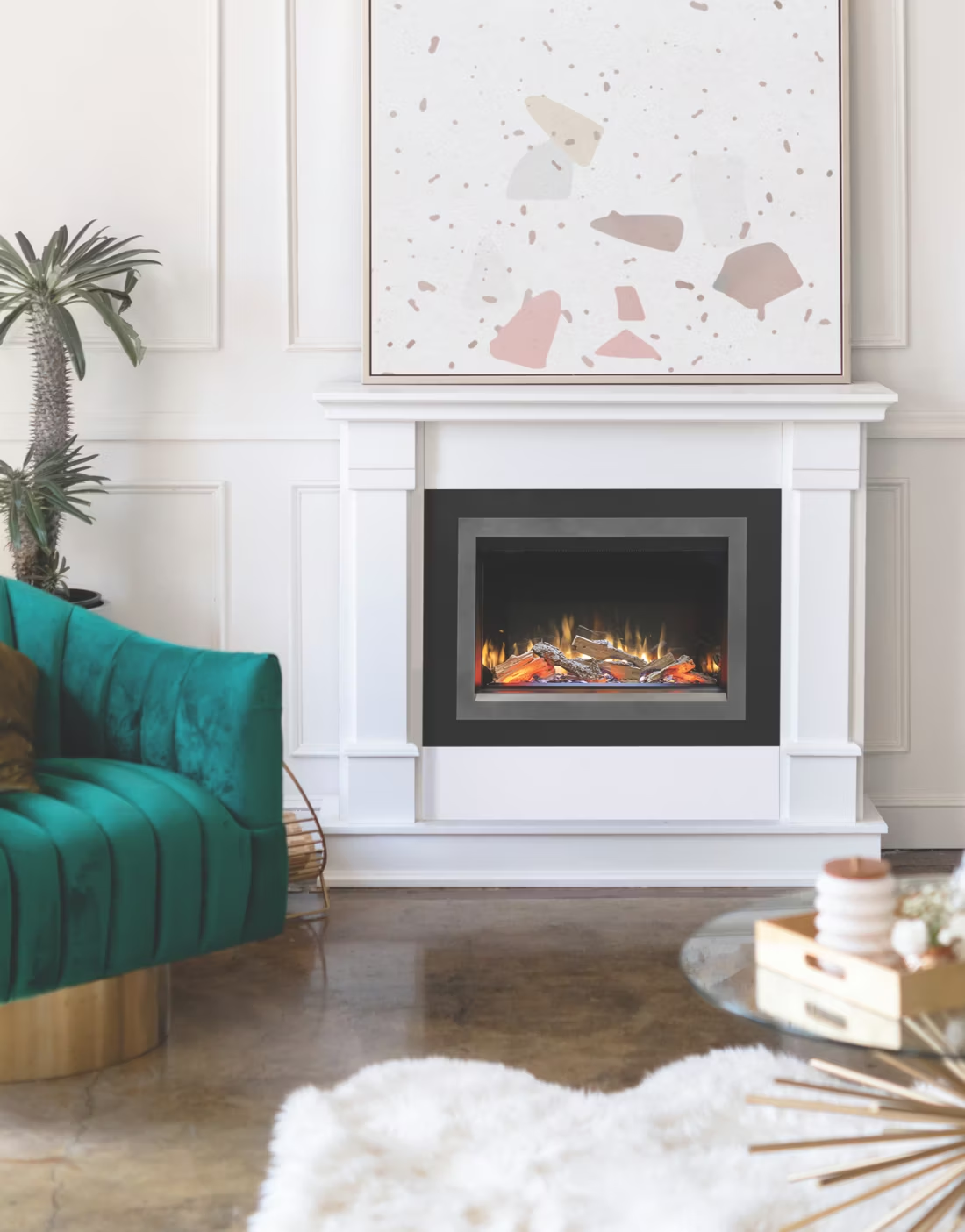
No—that's its superpower. An electric fireplace needs a wall and an outlet, period. No vent pipe, no gas line, no clearances to design around, which is why it works in bedrooms, offices, apartments, and walls where venting a gas or wood unit would be impractical or impossible. Installation is typically the simplest and least expensive of any fireplace type.
Do electric fireplaces actually produce heat?
Yes—most put out around 4,800–5,000 BTUs from a standard outlet, which comfortably warms a bedroom, office, or den as a comfort-zone heater. What they won't do is carry a whole house the way wood, gas, or pellet can. Think of electric as ambiance-first with honest supplemental heat: flames on with no heat in July, flames plus warmth in January.
Can I install a fireplace myself?
If you're putting a fire in your house on purpose, it's best to work with an expert. Unless you're genuinely experienced in framing, gas line, vent pipe, and the national code on clearances to combustibles, have a professional do it—and ideally the same company that sells you the fireplace, so warranty, service, and liability all live under one roof.
How much should I budget for a fireplace?
For an average home—covering the fireplace, the vent pipe, and basic installation—a budget between $3,900 and $5,500 gives you a lot of options across wood, gas, and pellet. By the time you add finish work, gas line, and electrical, the average complete installation lands between $5,000 and $12,000 all-in. In a remodel or new build, a good rule is to put about 2.5% of the total project cost toward the fireplace.
Nearby Dealers
Hearth shops serving Pekin and the surrounding area.
Electric Service in Pekin
An electric fireplace's heater draws about 1,500 watts—pennies per hour at local rates.
Ameren Illinois Company
Find your electric fireplace in Pekin.
Tell us a bit about your home and we'll put together a free Project Guide & Parts List for your electric fireplace project, along with a match to a trusted local dealer in the Pekin area.
Find Your Fireplace →