
Pellet Heat Isn't Common Here—But It Can Still Work For You.
Most St. Charles homes run on natural gas and ComEd or municipal electric service, so pellet stoves are the exception, not the rule. For the right room or the right property, one still makes sense—we'll help you find a dealer who genuinely stocks and installs them.
Every Project Starts From One of These Five Situations
Natural gas dominates the Fox River Valley—pellet stoves fill a smaller niche.
St. Charles sits along the Fox River in Kane County, in climate zone 5A, with a long, real winter heating season and average winter lows around 16°F—cold enough that a lot of homes want a secondary heat source for the toughest stretches of January. But unlike rural, off-grid, or heavy-timber regions where pellet stoves are a mainstream heating choice, most St. Charles homes were built with natural gas furnaces in mind, and electric service comes from either Commonwealth Edison or the City of St. Charles's own municipal utility. Wood and pellet heat simply aren't the default here the way they are in more rural parts of the Midwest.
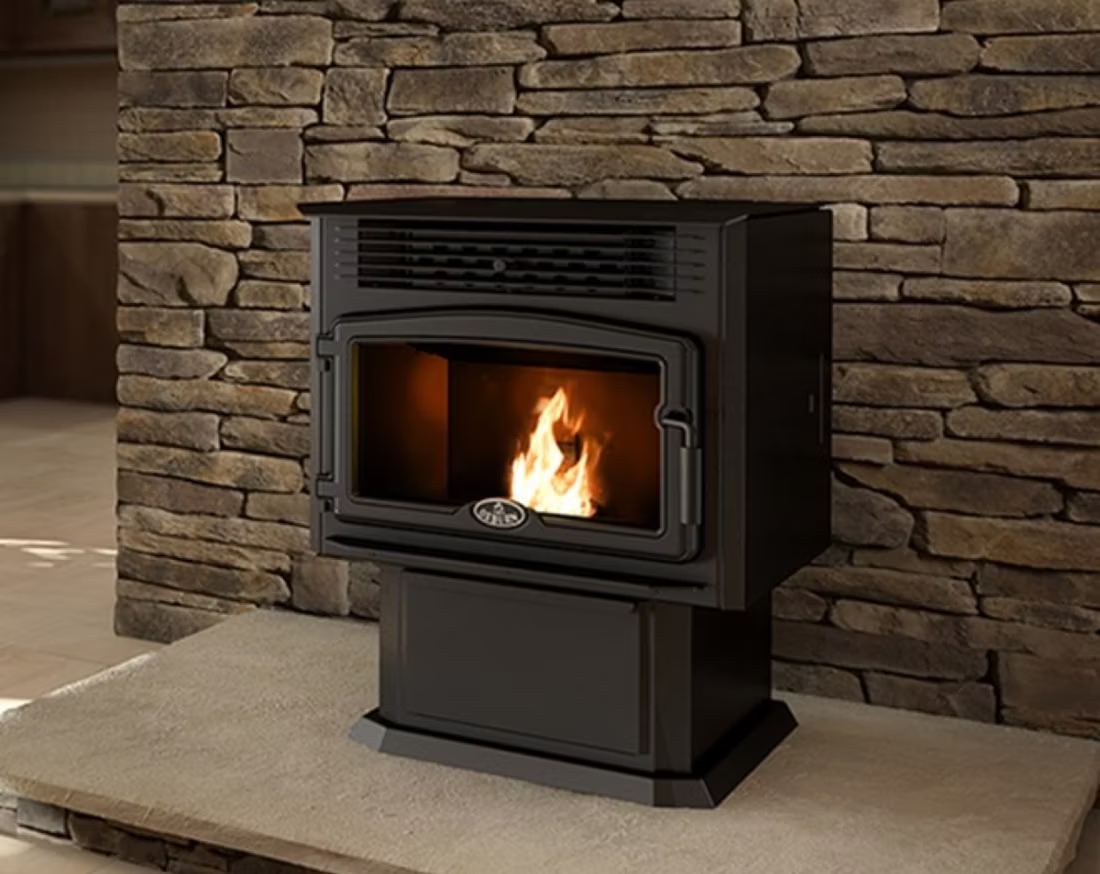
That doesn't mean pellet stoves have no place in St. Charles—it means the buyer is different. We typically see them go into sunrooms, garages, workshops, and detached spaces that aren't on the main HVAC zone, or into older homes near the historic downtown with a fireplace opening that's a natural fit for a pellet insert. Regional pellet producers like Indeck Energy Services, Lignetics, and Somerset Pellet Fuel supply the Midwest market with hardwood pellets often milled from the same oak, hickory, and maple sawmill residue common to this part of Illinois—but locally, that fuel tends to move through farm-and-fleet stores and hardware co-ops rather than dedicated hearth shops, so planning ahead for fuel supply matters more here than in pellet-heavy regions.
Three steps. No salesperson until you're ready.
Tell us about your project
Your zip code, your situation, and the fuel you're leaning toward—or let the answers point you to one.
See what's actually available
The brands dealers within 100 miles genuinely carry—real options, never a catalog mirage.
Get your dealer & Project Guide
A trusted local dealer, plus the free Project Guide & Parts List that names every component of the job.
Frequently Asked Questions
Are pellet stoves actually common in St. Charles?
Not really, and it's worth saying plainly: most St. Charles homes are set up for natural gas heat, with electric service from Commonwealth Edison or the City of St. Charles municipal utility filling in the rest. Pellet stoves are a niche choice here—homeowners who install them are usually adding supplemental zone heat to a sunroom, garage, or workshop, or upgrading an older fireplace in a home near the historic downtown. If you're comparing pellet against gas or electric for a primary living space, gas is almost always the more common local answer. If you specifically want the pellet-stove experience—a real flame, hopper-fed convenience, less mess than cordwood—it's absolutely doable, you'll just want a dealer who handles them regularly rather than as an afterthought.
How much does a pellet stove installation cost in St. Charles?
There isn't a large enough local install base in St. Charles to quote a hyper-local number with confidence, but pellet stove and insert installations nationally typically run $3,500 to $7,000 once you factor in the unit, a wall-thimble or roof vent kit, and any hearth pad work required for clearances. Inserts going into an existing masonry fireplace tend to land toward the lower end since the chimney chase is already there; freestanding stoves in a room without existing venting run higher. A local dealer will give you a firm number after seeing the space—ask specifically whether they install pellet appliances regularly, since in a gas-dominant market like this one, not every hearth shop does.
Will a pellet stove work during a ComEd power outage?
Not on its own. Pellet stoves rely on an electric auger and blower to feed fuel and circulate heat, so a Commonwealth Edison outage—which does happen here during Midwest storm season—will shut the unit down unless you have backup power. Most owners pair a pellet stove with a small battery backup or portable generator sized for the stove's low wattage draw, which is enough to keep it running through a multi-hour outage. If reliable heat during power loss is your main goal, it's worth also asking your dealer about a vented gas fireplace with a standing pilot, since gas is the dominant fuel here and some models operate with zero electrical dependence at all.
What size pellet stove do I need for a St. Charles home?
With a solid winter heating season and lows averaging 16°F, St. Charles has a real heating season, but most pellet stove installs here are supplemental rather than whole-house. A small unit (rated for 500–1,000 sq ft) is typical for a sunroom, bonus room, or garage. A medium unit (1,000–1,800 sq ft) can handle an open living/dining area as a secondary heat source alongside your furnace. Because pellet stoves are less common locally, sizing guidance from a manufacturer spec sheet is a good starting point, but a dealer walking your specific space will catch things like ceiling height and window exposure that change the math.
Where can I buy pellet fuel near St. Charles?
Regional producers including Indeck Energy Services, Lignetics, and Somerset Pellet Fuel supply hardwood pellets throughout the Midwest, and in this market you'll typically find bagged pellets at farm supply stores and hardware co-ops rather than a dedicated pellet depot. Because demand is lighter here than in pellet-heavy northern regions, it's worth buying a season's supply—generally a ton, or about fifty 40-lb bags—early in the fall rather than assuming you can restock mid-January. Your dealer can usually point you to the supplier they trust for consistent ash content and BTU output.
Do I need a permit to install a pellet stove in St. Charles?
Generally yes. Pellet stoves vent through a wall thimble or roof cap similar to a gas appliance, and most municipalities require a building permit for that penetration plus verification of clearances to combustibles. In St. Charles proper, that runs through the city's building department; for properties in unincorporated Kane County, it's the Kane County Building Department instead. Most established hearth dealers pull the permit as part of the installation, which is one more reason to work with a shop that installs pellet appliances routinely rather than occasionally.
What's the difference between a pellet stove and a pellet insert?
A pellet stove is a freestanding, self-contained unit that sits on a hearth pad and vents through a wall or the roof—it can go almost anywhere with the right clearances, which makes it a common choice for a garage or bonus room in St. Charles. A pellet insert is built to slide into an existing masonry fireplace opening, which is more likely in the older homes near downtown St. Charles that still have a traditional wood-burning fireplace. If you already have a fireplace you're not using, an insert reuses that opening and chimney chase; if you're heating a space with no fireplace at all, a freestanding stove is the more practical route.
Pellet vs. gas—which makes more sense for a St. Charles home?
For most homes here, gas wins on convenience: natural gas service is widely available, a gas fireplace or insert lights instantly with no fuel storage or auger maintenance, and some models run on battery backup during a ComEd outage with no electricity at all. Pellet stoves make more sense in specific situations—a detached garage or workshop without gas plumbed in, a homeowner who wants the look and feel of a solid-fuel fire without splitting and stacking cordwood, or a rural Kane County property where running a new gas line isn't practical. If your home already has gas service to the area you're heating, that's usually the simpler and more supportable long-term choice locally.
Is pellet heat actually a good fit for St. Charles winters?
Climate-wise, yes—with a genuinely long winter heating season and average lows around 16°F, this is a genuine heating climate and a well-sized pellet stove can meaningfully offset furnace use in the room it serves. The catch isn't the cold, it's the local ecosystem: fewer dealers stock and service pellet appliances here than in gas-focused St. Charles, and fuel isn't sold on every corner the way it is in pellet-heavy rural regions. As a supplemental heat source for a specific room, pellet works fine in this climate. As a sole primary heat source for a whole house, most St. Charles homeowners are better served sticking with the gas furnace already in place and treating pellet as the backup or bonus-room solution.
What's the difference between an insert and a zero-clearance fireplace?
An insert is a fireplace that slides into a pre-existing wood-burning fireplace—if you don't have one, there's nothing to insert it into. A zero-clearance fireplace is built into a framed wall, which makes it the answer for remodels and new construction. Simple test: existing masonry fireplace means insert; blank or framed wall means zero-clearance.
Why is a fireplace insert so efficient?
An insert does two things: it seals the chimney completely, so you stop losing air you already paid to heat, and it radiates warmth into the room through the firebox and glass. Most add a heat-exchange fan that pulls cool room air underneath, wraps it around the hot firebox, and pushes it back out warm. Your home is more efficient before you've even lit the first fire.
Can I install a fireplace myself?
If you're putting a fire in your house on purpose, it's best to work with an expert. Unless you're genuinely experienced in framing, gas line, vent pipe, and the national code on clearances to combustibles, have a professional do it—and ideally the same company that sells you the fireplace, so warranty, service, and liability all live under one roof.
Can a fireplace actually lower my heating bill?
Yes—by creating a comfort zone. A furnace heats every square foot of the house just to warm the one room you're in; a gas fireplace on low burns roughly a sixth of the gas a typical furnace does. Set the furnace around 55–60 degrees as a baseline, then heat the rooms your family actually uses. Families who heat this way commonly save $20–$60 a month.
Nearby Dealers
Hearth shops serving St. Charles and the surrounding area. Every listing shows whether it is a WhyFire partner, a dealer we have verified as authorized for the brands we recommend, or a local business carrying hearth products. No manufacturer pays for placement. How we verify dealers →
A Cozy Fireplace
Ember Glow
A Fireplace Store And More
Jhb Group, Inc.
Fireplace And Patio
Pellet Brands Stocked Around St. Charles
Manufacturers will point you to the nearest stocking dealer.
Get matched with a pellet stove dealer serving St. Charles.
Tell us about your space and we'll match you with a trusted local dealer who genuinely installs pellet appliances in this market—and send you a free Project Guide & Parts List with the exact vent kit and parts your project needs.
Find Your Fireplace →