
Real Flame Ambiance, Zero Chimney Required.
Supplemental warmth and real-flame ambiance for Fox River Valley homes—no gas line, no masonry, no venting. Find the right unit and connect with a trusted local dealer.
Every Project Starts From One of These Five Situations
Heat where you actually spend time, without new venting.
St. Charles sits along the Fox River in Kane County, a climate zone 5A suburb where winter lows average 16°F and the heating season runs long—comparable to Madison, Wisconsin. Natural gas furnaces and gas fireplaces handle most of the heavy lifting here, and wood-burning setups are uncommon in a city built on established gas infrastructure and tight suburban lots. Electric fireplaces fill a different, very real niche: finished basements along the river, condos and townhomes downtown, primary bedrooms, home offices, and any room where running new gas line or masonry isn't practical.
St. Charles is also unusual in that electric service is split between two providers—ComEd covers part of the city while the City of St. Charles runs its own municipal electric utility for the rest, and the two charge noticeably different residential rates, roughly 13.4 cents per kWh through ComEd versus 15.4 cents through the municipal utility. That difference matters more than people expect once you're running a 1,500-watt heating element for hours at a time, and it's worth checking which utility actually serves your address before you budget for daily use.
Three steps. No salesperson until you're ready.
Tell us about your project
Your zip code, your situation, and the fuel you're leaning toward—or let the answers point you to one.
See what's actually available
The brands dealers within 100 miles genuinely carry—real options, never a catalog mirage.
Get your dealer & Project Guide
A trusted local dealer, plus the free Project Guide & Parts List that names every component of the job.
Frequently Asked Questions
How much does it cost to install an electric fireplace in St. Charles?
Plug-in electric inserts and mantel packages are the least expensive route—often $200 to $1,000 for the unit itself, with no electrician needed since they run off a standard outlet. A built-in wall unit or a linear electric fireplace set into new framing is a bigger project: budget $1,500 to $3,500 once you add a dedicated 20-amp circuit, a licensed electrician, and any drywall or trim work. Homes in the historic districts near downtown St. Charles with plaster-and-lath walls tend to land at the higher end because that wall work takes longer than it does in newer drywall construction.
Will an electric fireplace actually heat my house through an Illinois winter?
Not as your primary heat source. Nearly all electric fireplaces sold in the U.S. are capped at 5,000 BTU (1,500 watts) by national code, which is enough to comfortably warm a single room of 400 to 500 square feet, not a whole house. With St. Charles winters comparable to Madison, Wisconsin and winter lows around 16°F, your furnace still needs to do the real work. Think of an electric fireplace as targeted supplemental heat for the room you're actually sitting in, plus the ambiance of a real-looking flame with none of the chimney.
Do I need a permit to install an electric fireplace in St. Charles?
A plug-in insert or freestanding electric fireplace that runs off an existing outlet doesn't require a permit. A built-in wall unit that needs a new dedicated circuit does require an electrical permit through the City of St. Charles building department, and if you're cutting into a wall for a recessed installation, a local inspector will want to confirm you're not compromising a load-bearing wall—a real consideration in some of the older homes near the Fox River. Most licensed electricians and hearth dealers handle the permit paperwork as part of the installation.
Does it matter whether ComEd or the City of St. Charles supplies my electricity?
It does, for running cost. St. Charles is split between Commonwealth Edison and the city's own municipal electric utility, and the two currently charge different residential rates—roughly 13.4 cents per kWh through ComEd versus about 15.4 cents through the municipal utility. Running a 1,500-watt electric fireplace for six hours a day costs somewhere around $0.60 to $0.70 daily depending on which utility serves your address. It's a small difference night to night, but it adds up over a full heating season, so check your bill or your address's service territory before you assume a cost.
Should I get an electric fireplace or a gas fireplace?
Gas is the more common choice for primary or near-primary heat in St. Charles homes, since natural gas service is well established here and a gas insert or fireplace can genuinely offset a furnace on cold days. Electric makes more sense when you don't have gas line access—a condo, a finished basement far from the meter, a rental—or when you want the look and glow of a fire without any venting, gas line work, or annual inspection. A lot of homeowners here end up choosing gas for the main living area and electric for a bedroom, office, or basement family room.
What types of electric fireplaces are available for St. Charles homes?
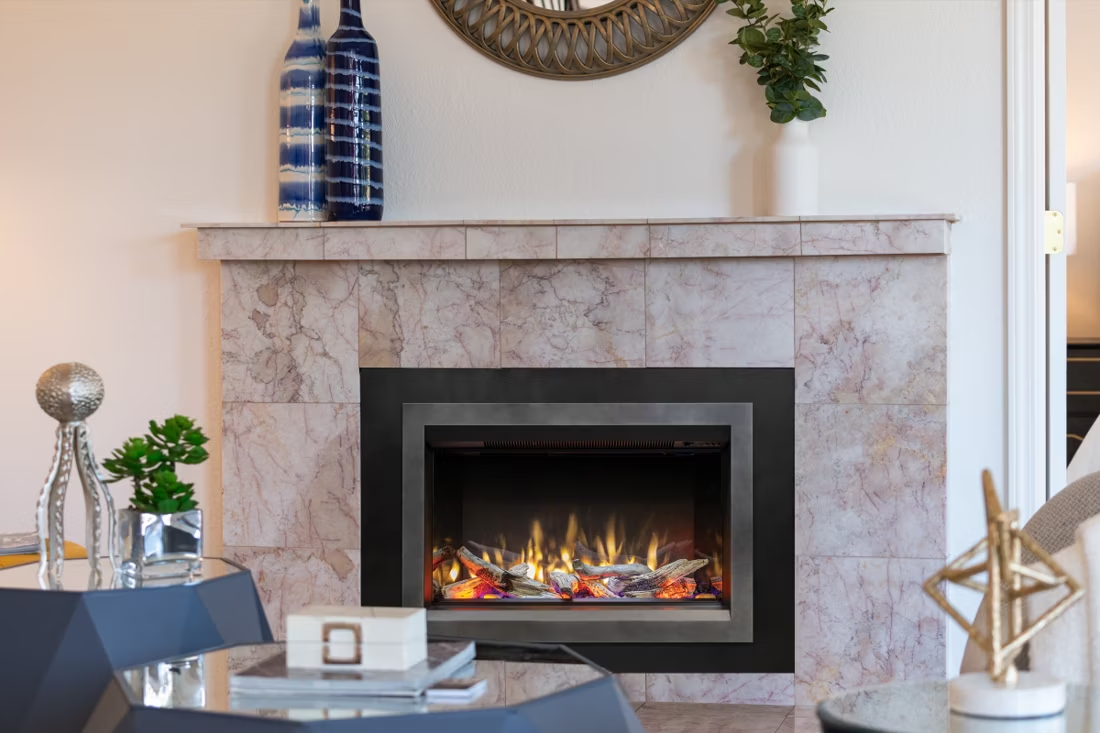
Wall-mount linear electric fireplaces are popular in newer construction and condos for their low-profile modern look. Mantel packages—a freestanding electric firebox with a surrounding wood mantel—are a common choice for a family room and require no installation beyond plugging in. Electric inserts are built specifically to slide into an existing masonry firebox, which comes up often in St. Charles's older Victorian and Colonial homes near the historic downtown that have a wood-burning fireplace no one uses anymore. A local dealer can tell you which option fits your existing opening and wiring.
How much maintenance does an electric fireplace need?
Very little compared to wood or gas. There's no chimney to sweep, no venting to inspect, and no annual gas safety check required. Maintenance is mostly dusting the unit, occasionally cleaning or replacing the LED lighting that creates the flame effect, and making sure the heating element's air intake and outlet vents stay unobstructed. Most units are rated for years of regular use with essentially no service calls.
Can I put an electric insert into my existing wood-burning fireplace?
Yes, and it's a common project in St. Charles's older housing stock, where original masonry fireplaces near downtown and along the Fox River often sit unused. An electric insert slides into the existing firebox opening, plugs into a nearby outlet or a newly added dedicated circuit, and requires no chimney work, no liner, and no venting—the existing flue can simply be capped or left as-is. It's typically the least expensive way to bring a dead fireplace back to life, usually under $1,500 including a basic electrical outlet upgrade if needed.
What features matter most for an electric fireplace in a cold-climate home like St. Charles?
Look for a unit with a real thermostat and adjustable heat settings rather than a single on/off heat switch—that lets you dial in supplemental warmth on the coldest days without overheating a small room. Since the heating element is capped at 1,500 watts industry-wide, the differences between models come down to flame realism, LED quality, and whether the heater and flame effect can run independently—useful if you want the ambiance in summer without the heat. A local dealer can walk you through which brands they carry and install regularly in this area.
Can I put a TV above my fireplace?
Yes—with an asterisk. Fireplaces are hot and TVs don't like heat. Either put a mantel between them to deflect rising warmth, or choose a fireplace with heat-management technology that creates a cool zone on the wall above—the wall stays around 125 degrees, barely warm, while the room still gets full heat. If you like clean lines and don't want a mantel, heat management is the answer.
How much does an electric fireplace cost to run?
With the heater on, a typical unit draws about 1,500 watts—at average electric rates that's roughly 20 cents an hour. Run the flame effect alone and it costs pennies; the flames are LED-driven and use about as much power as a light bulb. There's no pilot light, no fuel delivery, and essentially no maintenance.
Does a fireplace add value to my home?
On average, a fireplace adds back to the home about the same amount you spent installing it. Add the monthly savings from heating the rooms you actually use instead of the whole house—often hundreds of dollars a year—and the value case is strong before you even count what a fire does for how your family uses the room.
What is an in-home preview and do I need one?
It's a visit where a hearth professional measures your space, confirms the model you picked actually works in your home, and walks the specs—framing, gas line, venting, finish work—before anything is ordered. Some details you just can't know until you see the house. Never make a down payment without one; it's the single most-skipped step that burns buyers.
Nearby Dealers
Hearth shops serving St. Charles and the surrounding area. Every listing shows whether it is a WhyFire partner, a dealer we have verified as authorized for the brands we recommend, or a local business carrying hearth products. No manufacturer pays for placement. How we verify dealers →
A Cozy Fireplace
Ember Glow
A Fireplace Store And More
Jhb Group, Inc.
Fireplace And Patio
Electric Service in St. Charles
An electric fireplace's heater draws about 1,500 watts—pennies per hour at local rates.
Commonwealth Edison Co
City Of St Charles - (Il)
Find your electric fireplace in St. Charles.
Tell us a bit about your home and we'll match you with the right electric fireplace or insert—plus a free Project Guide & Parts List with the exact wiring and mounting hardware your local dealer recommends.
Find Your Fireplace →