
Find your electric fireplace in Peoria County.
No chimney, no venting, no permit hassle—just plug-in or hardwired warmth for homes and condos from downtown Peoria to Dunlap and Pekin. Find the right unit and connect with a trusted local dealer.
Every Project Starts From One of These Five Situations
Real warmth, zero venting, safe anywhere in the home.
Peoria County sits in climate zone 5A along the Illinois River, with average winter lows around 18°F and a winter heating load a bit above what you'd see in Chicago—cold enough for a real heating season, but not the kind of extreme, weeks-below-zero stretch you'd see in Madison, WI or International Falls, MN. That's exactly the range where electric fireplaces earn their place: enough chill to justify supplemental heat in a bonus room, finished basement, or sunroom, but not so severe that a whole-home combustion appliance is the only answer. A lot of Peoria County's housing stock—from pre-war homes in the historic West Bluff to newer condos in the Warehouse District and East Peoria—doesn't have an existing chimney or the clearance for one, which makes electric one of the few fireplace options that installs cleanly almost anywhere.
Electric service throughout Peoria County runs through Ameren Illinois, and that matters for two reasons: it's what powers the unit, and it's generally reliable enough that day-to-day operation isn't a concern the way it can be with other electric-dependent appliances. A basic plug-in insert needs nothing more than an existing 120V outlet; a built-in wall unit or a larger zero-clearance electric fireplace usually calls for a dedicated circuit, which means a licensed electrician and, in most cases, a straightforward electrical permit through the local building department. What you get in exchange is real, adjustable supplemental heat with no ash, no flue, no gas line, and no wood to split or store—a fit for renters, condo owners under HOA rules, and homeowners who want ambiance in a room the furnace doesn't reach well.
Three steps. No salesperson until you're ready.
Tell us about your project
Your zip code, your situation, and the fuel you're leaning toward—or let the answers point you to one.
See what's actually available
The brands dealers within 100 miles genuinely carry—real options, never a catalog mirage.
Get your dealer & Project Guide
A trusted local dealer, plus the free Project Guide & Parts List that names every component of the job.
Frequently Asked Questions
How much does an electric fireplace installation cost in Peoria County?
Most electric fireplace projects in Peoria County land between $300 and $2,500. A plug-in insert or freestanding electric stove that uses an existing outlet is on the low end—sometimes just the cost of the unit itself. A built-in wall unit or a linear electric fireplace set into cabinetry or a mantel surround runs higher once you factor in framing, a dedicated 20-amp circuit, and electrician labor. Recessed or fully flush-mounted units in new construction or a remodel—common in newer builds around Dunlap and West Peoria—tend to sit at the top of that range. A local dealer can give you a firm number after seeing the room and the existing electrical setup.
Do electric fireplaces actually put out real heat, or are they just for looks?
Both, depending on the model. Most electric fireplaces include a fan-forced heater rated around 4,600–5,000 BTU—enough to noticeably warm a single room (roughly 400 square feet) without touching the rest of the house. In Peoria County's climate, with average winter lows near 18°F, that's a reasonable amount of supplemental heat for a den, basement, or sunroom, but it's not going to replace a furnace on a cold January night. Many units also let you run the flame visual with the heater switched off, which is popular for spring and fall ambiance when Peoria doesn't need extra heat but people still want the fire. Look at the BTU rating and square-footage guidance on any model you're considering—that number tells you more than the flame effect does.
What's the difference between an electric insert, a built-in unit, and a freestanding stove?
An electric insert is sized to slide into an existing masonry or wood-burning fireplace opening, which is a common upgrade for older homes in Peoria's West Bluff or Averyville neighborhoods that have a fireplace but no interest in dealing with wood or a chimney liner. A built-in (or linear) unit is designed to be framed into a wall, entertainment center, or new construction—no existing fireplace required, which is why it's popular in East Peoria and Dunlap new builds. A freestanding electric stove looks like a traditional wood stove but just needs an outlet, making it the simplest option for renters or anyone who wants to avoid any construction at all. The right choice comes down to whether you already have a fireplace opening and how permanent you want the installation to be.
Do I need a permit to install an electric fireplace in Peoria County?
A basic plug-in electric fireplace or insert that runs off an existing outlet typically doesn't require a permit—there's no gas line, no venting, and no structural change. If you're installing a built-in or wall-mounted unit that needs a new dedicated circuit, that electrical work generally does require a permit through your local jurisdiction—the City of Peoria's Building & Inspection Division for city addresses, or the equivalent building department in East Peoria, Pekin, or unincorporated Peoria County. Most licensed electricians pull this permit as part of the job, so it's rarely something homeowners have to handle themselves.
Will my electric fireplace work if the power goes out?
No—and this is the honest trade-off with electric heat. Peoria County sees occasional winter ice storms that knock out power for hours or, less often, a day or two, and an electric fireplace is completely dependent on that power staying on. If backup heat during outages is a priority for your household, a wood stove or a battery-backed gas insert is a better fit for that specific job. Electric fireplaces are best understood as a convenient, low-maintenance heat source for normal day-to-day use—not an emergency heating plan.
How much does it cost to run an electric fireplace in Peoria County?
At typical Ameren Illinois residential electric rates, running a 1,500-watt electric fireplace heater for a few hours an evening usually adds somewhere in the range of $10 to $25 a month to a winter electric bill, depending on how often it's used and the rate you're on. Running just the flame effect with the heater off costs only a few cents an hour, since the LED lighting draws very little power. That makes electric fireplaces cheap to operate for ambiance and reasonably efficient for zone heating a single room, though they cost more per BTU than natural gas in homes that already have gas service.
Electric vs. gas fireplace—which makes more sense for my Peoria County home?
Gas is the better choice if you want a fireplace that can meaningfully offset furnace use and you already have (or can easily add) natural gas service, which is widely available throughout Peoria and its suburbs. Gas fireplaces also put out real heat output in the 20,000–40,000 BTU range and many models will run during a power outage with battery backup. Electric wins on installation simplicity—no gas line, no venting, no combustion byproducts—and on flexibility, since it can go into a condo, a rental, or a room where running gas line isn't practical. A lot of Peoria County homeowners end up with gas in the main living area and an electric unit in a bedroom, basement, or bonus room where a second heat source is nice but a full gas installation isn't worth it.
Why isn't wood-burning more common in Peoria County if oak and hickory are so available locally?
Peoria County does have plenty of oak, hickory, walnut, and maple in the surrounding timber, and rural pockets of the county still burn wood. But within the city of Peoria and the more built-up suburbs—East Peoria, Pekin, Bartonville—a large share of the housing stock is multi-family, condo, or built without a masonry chimney designed for a wood-burning appliance, and there isn't the kind of national-forest cutting-permit infrastructure you'd find in a heavily forested Western county. That combination is why wood-burning installs are relatively uncommon here compared to gas and electric, even though the firewood itself is regionally abundant. Electric fills a lot of the gap for people who want fireplace ambiance without the chimney, the wood storage, or the ash cleanup.
What should I look for in an electric fireplace for Peoria's climate?
Prioritize a model with a genuine BTU-rated heater (not just a decorative flame effect) if you want the unit to do real supplemental-heat work during Peoria County's winter months, since average lows around 18°F make that heat noticeable. A thermostat with a digital display, rather than a simple high/low switch, makes it easier to keep a room at a consistent temperature without babysitting it. If you're installing in an older home with older wiring—common in Peoria's historic neighborhoods—have an electrician confirm the circuit can handle a built-in unit's draw before you commit to a wall installation. A local dealer can walk through specific models against your room size and existing electrical setup.
Can I put a TV above my fireplace?
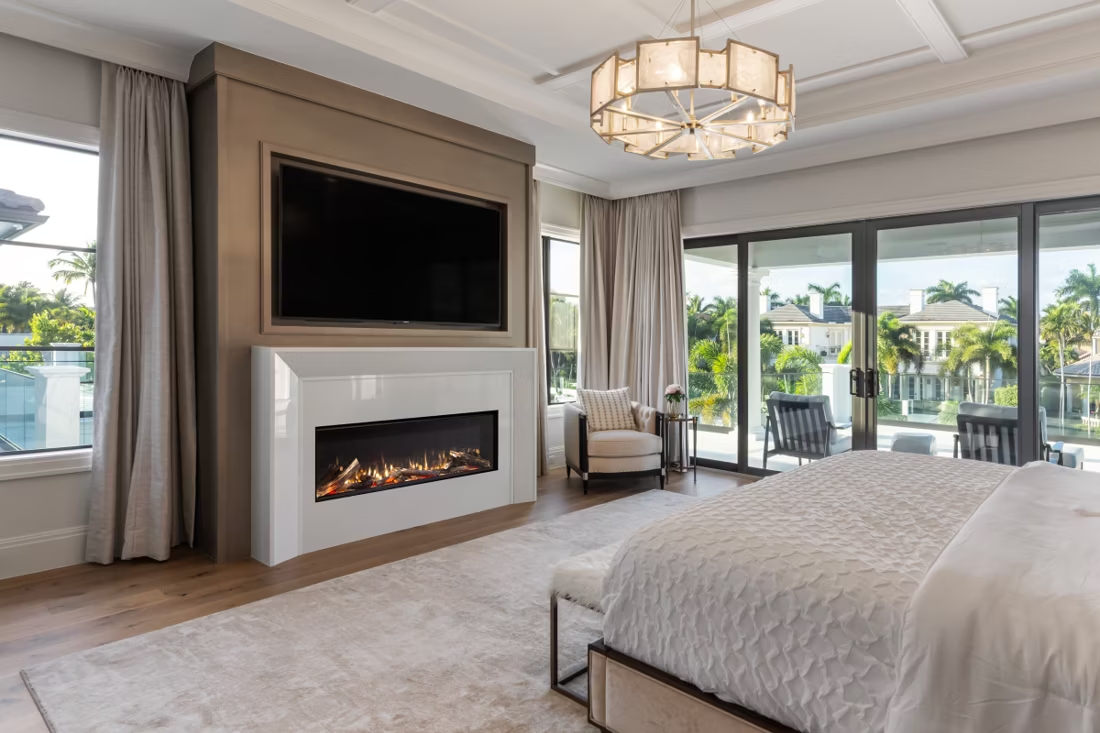
Yes—with an asterisk. Fireplaces are hot and TVs don't like heat. Either put a mantel between them to deflect rising warmth, or choose a fireplace with heat-management technology that creates a cool zone on the wall above—the wall stays around 125 degrees, barely warm, while the room still gets full heat. If you like clean lines and don't want a mantel, heat management is the answer.
Do electric fireplaces actually produce heat?
Yes—most put out around 4,800–5,000 BTUs from a standard outlet, which comfortably warms a bedroom, office, or den as a comfort-zone heater. What they won't do is carry a whole house the way wood, gas, or pellet can. Think of electric as ambiance-first with honest supplemental heat: flames on with no heat in July, flames plus warmth in January.
Does a fireplace add value to my home?
On average, a fireplace adds back to the home about the same amount you spent installing it. Add the monthly savings from heating the rooms you actually use instead of the whole house—often hundreds of dollars a year—and the value case is strong before you even count what a fire does for how your family uses the room.
What is an in-home preview and do I need one?
It's a visit where a hearth professional measures your space, confirms the model you picked actually works in your home, and walks the specs—framing, gas line, venting, finish work—before anything is ordered. Some details you just can't know until you see the house. Never make a down payment without one; it's the single most-skipped step that burns buyers.
Stove and Fireplace Dealers in Peoria County
Listings include WhyFire partner dealers, dealers we have verified as authorized for the brands we recommend, and established local businesses that carry hearth products. Every listing shows which one it is. The ones marked Preferred run on WhyFire's software, so they can show you real pricing and book your appointment right here. No manufacturer pays for placement. How we verify dealers →
Kbl Design Center
Hampton Distributing
Trouble-Free Plumbing Heating & Cooling Inc.
Excel Fireplace & Chimney
Rk Dosemagen, Inc
Get matched with an electric fireplace dealer in Peoria County.
Tell us about your room and your home's electrical setup, and we'll match you with a trusted local dealer and send over a free Project Guide & Parts List for your Peoria County electric fireplace install.
Find Your Fireplace →