
Add real warmth to your Elmwood home—without a chimney.
Zone heat for Peoria County winters, no venting or gas line required. Find the right electric unit for your space and connect with a trusted local installer.
Every Project Starts From One of These Five Situations
Electric heat that works with what you already have.
Elmwood is a small Peoria County town of just over 2,100 people, and a lot of the housing stock here is older farmhouse construction—plaster walls, limited attic insulation, and in some cases wiring that predates central air. At 631 feet elevation with a long, cold winter season and winter lows averaging 14°F, that's a real heating season, comparable to what a town like Madison, Wisconsin deals with most winters. Not every one of those older homes has a chimney fit for a wood insert or a gas line run to the room that needs it most—which is exactly where electric fits in.
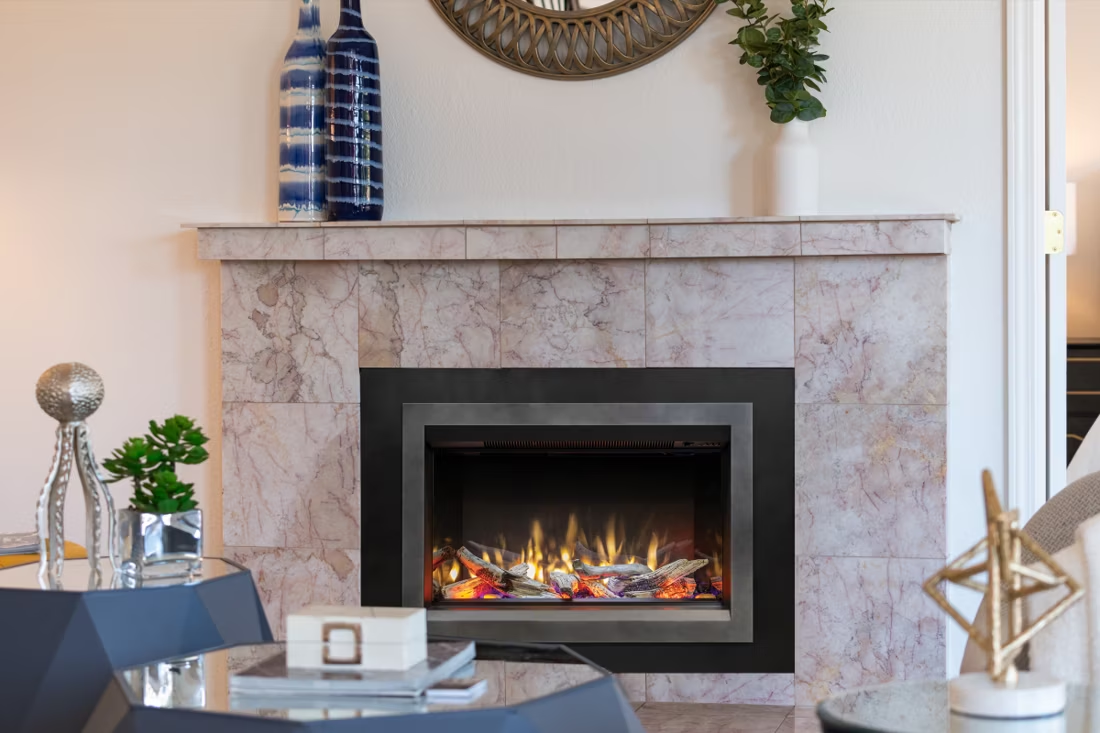
An electric fireplace or insert doesn't need venting, a flue, or a gas hookup. It plugs into a standard outlet or a dedicated circuit, depending on the model, and heats the room you're actually sitting in—the living room, a converted porch, a bedroom that the furnace never quite reaches. With Ameren Illinois residential rates around $0.1176 per kWh, running a 1,500-watt unit for supplemental heat in one room costs meaningfully less than trying to push more heat out of an aging furnace to compensate for a drafty addition.
Three steps. No salesperson until you're ready.
Tell us about your project
Your zip code, your situation, and the fuel you're leaning toward—or let the answers point you to one.
See what's actually available
The brands dealers within 100 miles genuinely carry—real options, never a catalog mirage.
Get your dealer & Project Guide
A trusted local dealer, plus the free Project Guide & Parts List that names every component of the job.
Frequently Asked Questions
How much does an electric fireplace installation cost in Elmwood?
It depends heavily on the type of unit. A plug-in electric insert or freestanding stove that drops into an existing fireplace opening or sits against a wall typically runs $200 to $900 for the unit itself, with no installation labor beyond plugging it in. A built-in wall unit or a linear electric fireplace set into new framing is a bigger project—usually $1,500 to $3,500 once you factor in a licensed electrician running a dedicated 20-amp circuit, finish carpentry, and a surround or mantel. Local dealers can tell you which category your project falls into once they see the room and the wall.
Will an electric fireplace actually heat a room, or is it just for the look?
A standard 1,500-watt electric fireplace puts out about 5,000 BTU, which is enough to noticeably warm a single room in the 300–400 square foot range—a living room, a den, a converted sunporch. It won't replace your furnace for whole-house heating in an Elmwood winter, but it's a legitimate way to take the edge off a cold room without running the furnace harder or closing vents elsewhere in the house. Think supplemental zone heat, not primary heat source, and it does that job well.
How much does it actually cost to run an electric fireplace on my Ameren Illinois bill?
At the local Ameren Illinois residential rate of about $0.1176 per kWh, a 1,500-watt electric fireplace running on high costs roughly 18 cents an hour. Run it 5 hours an evening through a cold Elmwood winter and you're looking at about $27–$30 a month in electricity—often less than the cost of running a space heater or letting the furnace work overtime to compensate for one cold room. Most units also let you run the flame effect with the heater off, which uses only a few watts, so you can get the ambiance without the heating cost in the shoulder seasons.
Do I need an electrician to install an electric fireplace?
For a plug-in insert or freestanding electric stove, no—it's a standard outlet, same as any appliance. For a built-in wall unit or a larger linear electric fireplace, most manufacturers recommend a dedicated 20-amp circuit, which means hiring a licensed electrician to run new wiring from your panel. Some of Elmwood's older homes have panels that are already near capacity, so it's worth having an electrician check available capacity before you commit to a built-in model—this is a five-minute conversation that saves a lot of trouble later.
What's the difference between an electric insert, an electric stove, and a wall-mount electric fireplace?
An electric insert is built to slide into an existing fireplace opening, masonry or zero-clearance, and typically plugs into an outlet inside the firebox—a common choice if you have an old, unused wood fireplace you'd rather not deal with. An electric stove is a freestanding cabinet-style unit that looks like a wood or pellet stove but plugs in and needs no venting or hearth pad—good for rooms without an existing fireplace. A wall-mount or linear electric fireplace is a flush-mounted unit, usually wider and shallower, popular in newer builds or remodels where a modern look matters more than a traditional firebox shape. All three heat similarly; the choice mostly comes down to what opening or wall you're working with.
Can an electric fireplace serve as backup heat if the power goes out?
No—this is worth being direct about. An electric fireplace needs electricity to run, so during a winter power outage in rural Peoria County, which does happen during ice storms, it won't provide any heat at all. If backup heat during outages is a priority for your Elmwood home, a propane stove, a gas insert, or a battery-and-generator setup paired with your electric unit is the better combination. Electric is best understood as convenient everyday zone heat, not storm-day insurance.
Are electric fireplaces safe to install in an older Elmwood farmhouse?
Generally yes, but it's worth a quick check first. Plug-in units draw on a standard 15-amp circuit and are no different from running a space heater or a window AC unit—fine in most older homes. Built-in units that call for a dedicated circuit are where it matters: if your farmhouse still has an older fuse panel or knob-and-tube wiring in parts of the house, a licensed electrician should confirm the panel has room before you run new wiring. Local installers who handle electric fireplace projects regularly will flag this during a walkthrough rather than after the unit is already on the wall.
Electric vs. gas fireplace—which is right for my Elmwood home?
Gas gives you higher heat output, works during power outages if you choose a battery-backup or self-generating ignition model, and suits homes that already have a natural gas line or are set up for a propane tank. Electric skips the venting and gas line entirely, costs far less to install, and is the simpler choice for a room where running gas line isn't practical or worth the expense. In Elmwood, homes on Ameren Illinois natural gas service near town center often lean gas for a primary living space and add electric elsewhere for bedrooms or additions; homes further out on propane sometimes go electric across the board to avoid a second fuel contract. A local dealer can walk through both once they know your gas situation.
How long do electric fireplaces last, and what tends to wear out first?
A quality electric fireplace from a brand like Dimplex or Napoleon typically lasts 10 to 15 years of regular use. The heating element is usually the first component to need service or replacement, especially in units run daily through an Elmwood winter, while the LED flame effect lights are rated for well over 20,000 hours and rarely fail first. Unlike wood or gas units, there's no chimney, flue, or venting to inspect annually—maintenance is mostly dusting the unit and occasionally replacing a bulb or heating element, which most local dealers can source directly.
Can I put a TV above my fireplace?
Yes—with an asterisk. Fireplaces are hot and TVs don't like heat. Either put a mantel between them to deflect rising warmth, or choose a fireplace with heat-management technology that creates a cool zone on the wall above—the wall stays around 125 degrees, barely warm, while the room still gets full heat. If you like clean lines and don't want a mantel, heat management is the answer.
Do electric fireplaces actually produce heat?
Yes—most put out around 4,800–5,000 BTUs from a standard outlet, which comfortably warms a bedroom, office, or den as a comfort-zone heater. What they won't do is carry a whole house the way wood, gas, or pellet can. Think of electric as ambiance-first with honest supplemental heat: flames on with no heat in July, flames plus warmth in January.
How much should I budget for a fireplace?
For an average home—covering the fireplace, the vent pipe, and basic installation—a budget between $3,900 and $5,500 gives you a lot of options across wood, gas, and pellet. By the time you add finish work, gas line, and electrical, the average complete installation lands between $5,000 and $12,000 all-in. In a remodel or new build, a good rule is to put about 2.5% of the total project cost toward the fireplace.
Does a fireplace add value to my home?
On average, a fireplace adds back to the home about the same amount you spent installing it. Add the monthly savings from heating the rooms you actually use instead of the whole house—often hundreds of dollars a year—and the value case is strong before you even count what a fire does for how your family uses the room.
Nearby Dealers
Hearth shops serving Elmwood and the surrounding area. Every listing shows whether it is a WhyFire partner, a dealer we have verified as authorized for the brands we recommend, or a local business carrying hearth products. No manufacturer pays for placement. How we verify dealers →
Kbl Design Center
Hampton Distributing
Trouble-Free Plumbing Heating & Cooling Inc.
Electric Service in Elmwood
An electric fireplace's heater draws about 1,500 watts—pennies per hour at local rates.
Ameren Illinois Company
Find your electric fireplace in Elmwood.
Tell us about your room and your home's wiring, and we'll match you with a trusted local dealer and send over a free Project Guide & Parts List—the right unit, the electrical work involved, and what it'll cost to get it installed.
Find Your Fireplace →