
Warm up Peoria County without the guesswork.
Instant, even heat for the Illinois River valley's cold stretches—from Peoria's historic bungalows to newer builds in Dunlap and West Peoria. Find the right gas fireplace or insert and get matched with a trusted local dealer.
Every Project Starts From One of These Five Situations
Reliable heat for a river-valley climate that swings hard.
Peoria County sits in the Illinois River valley in climate zone 5A, with a long seven-month heating season and winter lows that average around 18°F—a real Midwestern heating season, though noticeably milder than places like Minneapolis or Duluth. That's cold enough to want reliable heat from October through April, but not so severe that homeowners are planning around sub-zero streaks every week. Across the county's roughly 291,000 residents—in Peoria, East Peoria, Peoria Heights, Bartonville, Chillicothe, and the smaller towns ringing the river—gas has become the default choice for anyone upgrading or adding a fireplace.
Much of the county's older housing stock, especially in Peoria's West Bluff and Moss Avenue neighborhoods, was built with wood-burning masonry fireplaces framed from local oak, hickory, walnut, and maple decades ago. Today, new wood stove installations are uncommon here—most homeowners with one of these existing fireboxes convert it to a gas insert rather than keep tending a wood fire, since natural gas service through Ameren Illinois reaches most of the city and inner suburbs. The payoff is heat at the flip of a switch, no ash or creosote, and—with the right ignition system—a fireplace that still works when a winter storm knocks out power.
Three steps. No salesperson until you're ready.
Tell us about your project
Your zip code, your situation, and the fuel you're leaning toward—or let the answers point you to one.
See what's actually available
The brands dealers within 100 miles genuinely carry—real options, never a catalog mirage.
Get your dealer & Project Guide
A trusted local dealer, plus the free Project Guide & Parts List that names every component of the job.
Frequently Asked Questions
How much does a gas fireplace installation cost in Peoria County?
Costs vary by project type. Converting an existing masonry fireplace to a direct-vent gas insert—common in Peoria's older West Bluff and Averyville homes—typically runs on the lower-to-middle end of the range once a gas line is already nearby. A new built-in gas fireplace for a remodel or new construction, requiring framing and a fresh gas line run, sits higher, and jobs needing a new propane tank or longer venting runs cost more still. Expect a wide range depending on unit and scope—a local retailer will give you a firm number after seeing your home.
Can I convert my existing wood fireplace to gas?
Yes, and it's one of the most requested projects among Peoria County hearth dealers. A gas insert slides into your existing masonry firebox and uses your current chimney as the venting path with a stainless liner, so the original brickwork and mantel stay intact. This is especially common in the county's older neighborhoods, where many fireplaces were built decades ago to burn regionally abundant oak, hickory, and walnut but rarely get used as wood-burning units anymore. Homes already tied into Ameren Illinois natural gas service are usually the simplest and lowest-cost conversions; homes relying on propane take a bit more coordination for the fuel line.
Do I need natural gas, or can I use propane?
Either works, and the choice mostly comes down to where you live in the county. Ameren Illinois provides natural gas service through most of the City of Peoria and the closer-in suburbs like Peoria Heights, Bartonville, and West Peoria. Farther out—smaller towns and rural unincorporated areas toward the edges of Peoria County—propane is the more practical option, supplied by local propane dealers with tank delivery. Most gas fireplace models can be set up for either fuel; your installer sizes the orifice and regulator to match.
Will my gas fireplace work during a power outage?
Most modern units will. Fireplaces with IPI (intermittent pilot ignition) include a battery backup—usually AA batteries inside the unit—that keeps the pilot lighting on demand even with the power out. It's a small thing to remember, but check those batteries once a year. Valor's gas fireplaces take a different approach: the pilot's thermocouple generates its own electricity, so there's no battery to maintain at all. Given how often central Illinois sees ice storms and downed lines in winter, that kind of self-powered ignition is worth asking about when comparing models with a local dealer.
What's the difference between a gas fireplace, gas insert, and gas stove?
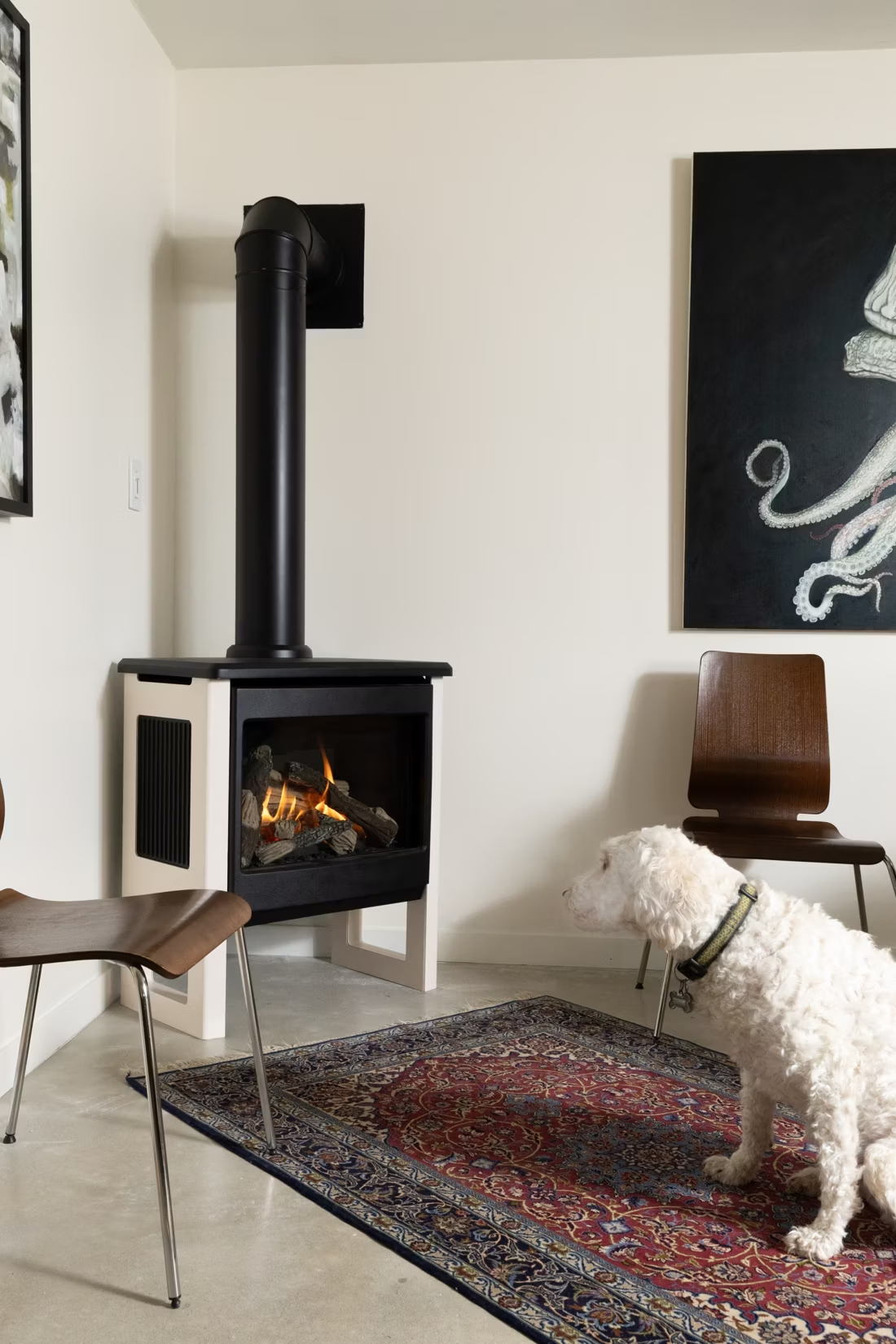
A gas fireplace is a fully built-in unit framed into a wall—the right call for new construction or a remodel without an existing hearth. A gas insert is built to slide into an existing masonry firebox, which fits a lot of Peoria County's older housing stock perfectly. A gas stove is a freestanding cast-iron or steel unit that sits on the floor on its own hearth pad, similar in footprint to a wood stove but running on gas. For most homeowners here with an existing fireplace they want to modernize, the insert is the natural fit.
Do I need a permit to install a gas fireplace in Peoria County?
In most cases, yes—both a building permit and a gas line permit, typically handled through the City of Peoria's Building Safety Division for homes inside city limits, or Peoria County's Planning & Zoning Department for unincorporated areas. The gas line connection has to be done by a licensed gas-fitter, which is one reason working with an established hearth dealer helps—they coordinate the gas hookup, venting, and inspection instead of leaving you to juggle separate trades.
What's the difference between vented and vent-free gas fireplaces?
Vented (direct-vent or B-vent) fireplaces pull combustion air from outside and exhaust the byproducts back outside through sealed venting—the cleanest and most universally code-approved option. Vent-free units burn directly into the room without external venting; they're legal in Illinois but come with strict room-size minimums and oxygen depletion sensors, and release some water vapor and combustion byproducts indoors. Direct-vent fireplaces are by far the most common choice among Peoria County dealers, since they deliver strong heat output without any indoor air quality trade-offs—worth confirming which type you're looking at before you buy.
How often should my gas fireplace be serviced?
Plan on an annual inspection, ideally in late summer or early fall before the heating season starts. A technician checks the burner, pilot assembly, venting, and gas connections, and cleans the glass and interior. It's a quicker job than a wood-stove chimney sweep, but skipping it is the main reason gas fireplaces develop pilot or ignition problems mid-winter—not something you want to discover on a night when it's 18°F outside.
Gas vs. wood vs. pellet—which is right for my Peoria County home?
Gas is by far the standard choice in Peoria County today—reliable Ameren Illinois service, instant on-off heat, and no ash or wood handling. Wood stoves and pellet stoves are both genuinely uncommon here as new installs: the county's mild-enough 5A climate and widespread gas infrastructure mean most homeowners skip wood heat entirely, even though local oak, hickory, walnut, and maple are the same species that once fueled the older masonry fireplaces around town. Pellets are actually produced regionally—Indeck Energy Services, Lignetics, and Somerset Pellet Fuel all operate in the broader area—but that supply feeds industrial and out-of-region markets more than local home heating, and pellet stoves remain a rare sight in Peoria County living rooms. If you want real fire, wood is still an option for a cabin or hobby setup; for everyday home heat, gas is the practical answer here.
What's the difference between an insert and a zero-clearance fireplace?
An insert is a fireplace that slides into a pre-existing wood-burning fireplace—if you don't have one, there's nothing to insert it into. A zero-clearance fireplace is built into a framed wall, which makes it the answer for remodels and new construction. Simple test: existing masonry fireplace means insert; blank or framed wall means zero-clearance.
Why is my open fireplace making my house colder?
Open fireplaces suck—literally. As the fire burns, it consumes air your furnace already paid to heat and pulls it out through the chimney, so the house is actually colder after the fire goes out than before you lit it. An insert fixes this: it seals the chimney, puts fixed glass across the front, and turns that hole in your house into a real heat source.
How much should I budget for a fireplace?
For an average home—covering the fireplace, the vent pipe, and basic installation—a budget between $3,900 and $5,500 gives you a lot of options across wood, gas, and pellet. By the time you add finish work, gas line, and electrical, the average complete installation lands between $5,000 and $12,000 all-in. In a remodel or new build, a good rule is to put about 2.5% of the total project cost toward the fireplace.
Can a fireplace actually lower my heating bill?
Yes—by creating a comfort zone. A furnace heats every square foot of the house just to warm the one room you're in; a gas fireplace on low burns roughly a sixth of the gas a typical furnace does. Set the furnace around 55–60 degrees as a baseline, then heat the rooms your family actually uses. Families who heat this way commonly save $20–$60 a month.
Stove and Fireplace Dealers in Peoria County
Listings include WhyFire partner dealers, dealers we have verified as authorized for the brands we recommend, and established local businesses that carry hearth products. Every listing shows which one it is. The ones marked Preferred run on WhyFire's software, so they can show you real pricing and book your appointment right here. No manufacturer pays for placement. How we verify dealers →
Kbl Design Center
Hampton Distributing
Trouble-Free Plumbing Heating & Cooling Inc.
Excel Fireplace & Chimney
Rk Dosemagen, Inc
Find the right gas fireplace for your Peoria County home.
Tell us about your home and your existing fireplace, and we'll match you with a trusted local Peoria County dealer and put together a free Project Guide & Parts List—the exact parts, including the vent kit, for your gas fireplace project.
Find Your Fireplace →