
Real Ambiance, Real Heat, No Venting Required.
Electric fireplaces and inserts for Peoria Heights homes and condos on the bluff above the Illinois River—supplemental warmth and ambiance without a gas line or chimney, matched with a trusted local dealer.
Every Project Starts From One of These Five Situations
Heat without the construction project.
Peoria Heights is a small bluff-top village of under 6,000 people overlooking the Illinois River and the city of Peoria below. Winters here are solidly cold—average lows near 18°F and a long, steady heating season that keeps furnaces working hard most of the winter, less severe than Madison, WI or Duluth, MN but plenty enough that a furnace runs steadily from November through March. Many of the village's homes are older bungalows built into the hillside along Grandview Drive, plus a growing number of condo and loft conversions in redeveloped buildings that never had a chimney to begin with.
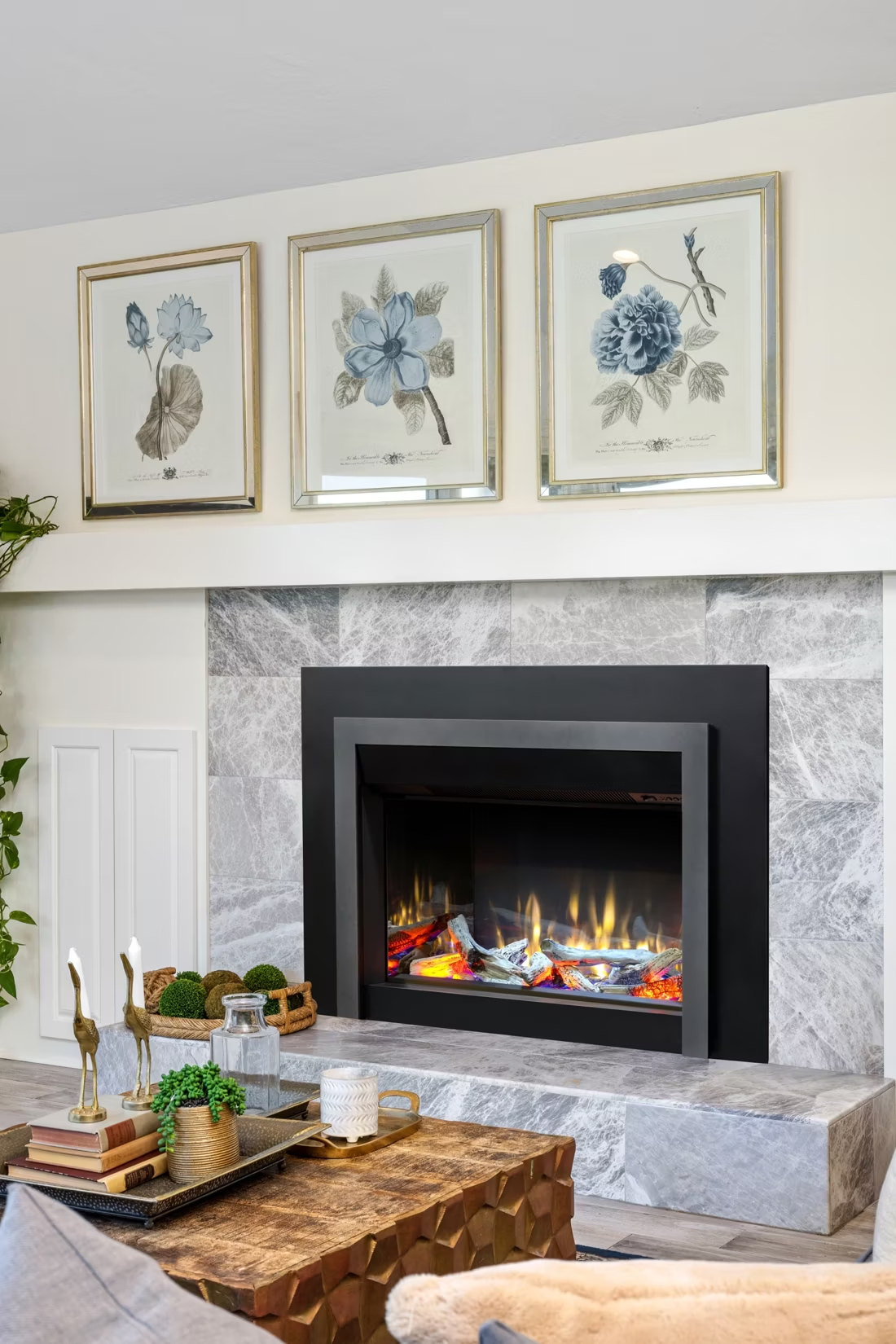
That housing mix is exactly where electric fireplaces earn their keep. There's no gas line to run, no masonry chimney to inspect, and no combustion air to worry about—just a plug or a dedicated circuit. Ameren Illinois serves the village at a residential rate of about 11.76 cents per kWh, which is below the national average and keeps the cost of running a unit for zone heat or evening ambiance modest. For a condo along the bluff or a bungalow basement without existing venting, electric is often the only realistic fireplace option—and a good one.
Three steps. No salesperson until you're ready.
Tell us about your project
Your zip code, your situation, and the fuel you're leaning toward—or let the answers point you to one.
See what's actually available
The brands dealers within 100 miles genuinely carry—real options, never a catalog mirage.
Get your dealer & Project Guide
A trusted local dealer, plus the free Project Guide & Parts List that names every component of the job.
Frequently Asked Questions
How much does an electric fireplace cost to install in Peoria Heights?
A plug-in insert or mantel package runs $150 to $600 and needs nothing more than a standard outlet—no installer required, though most local dealers will deliver and set it in place. A built-in wall unit or a full custom mantel surround with a dedicated 20-amp circuit typically runs $1,500 to $4,000 once an electrician is involved. There's no venting, gas line, or chimney work to budget for either way, which is the main reason electric costs so much less than a comparable wood or gas installation in a village with a lot of older, retrofit housing stock.
Do I need a permit for an electric fireplace in Peoria Heights?
A basic plug-in unit needs no permit—it's treated like any other appliance on a standard outlet. If you're adding a built-in wall unit that requires a new dedicated circuit, the Village of Peoria Heights Building & Zoning Department typically requires an electrical permit for that wiring work, which your electrician pulls as part of the job. There's no combustion venting, gas line inspection, or chimney clearance to worry about, which is part of why electric installs move faster than wood or gas projects in older bluff homes.
How much does it cost to run an electric fireplace here?
Most electric fireplace inserts draw around 1,500 watts on the high heat setting. At Ameren Illinois's residential rate of $0.1176 per kWh, that works out to roughly 17.6 cents an hour. Run it for five hours on a cold evening and you're looking at under a dollar a day—call it $20 to $30 a month for regular winter use in a family room or finished basement. Flame-only mode with the heater off uses only a few watts, so ambiance without heat costs next to nothing.
What kind of electric fireplace works best in a Peoria Heights home?
For the village's older bungalows on the bluff, a built-in wall insert or a freestanding stove-style unit tends to fit best, since most of these homes don't have an existing masonry fireplace to retrofit. For the newer condo and loft conversions along Grandview Drive, a slim wall-mount unit is popular because it adds a focal point without eating into limited square footage. Brands like Dimplex and Napoleon are common choices locally for their more realistic flame technology, but any of the local dealers can match the unit to your specific room and finish.
Electric vs. gas fireplace—which should I choose?
Gas fireplaces produce real heat—often 20,000 to 30,000+ BTUs—and can genuinely warm a room on their own, but they require a gas line or propane tank and venting work that adds real cost and complexity. Electric fireplaces top out around 5,000 BTU-equivalent of supplemental heat and won't replace your furnace, but they install anywhere with an outlet and cost far less. For a Grandview Drive condo or an addition without gas service nearby, electric is usually the practical answer. For a primary living space where you want the fireplace to meaningfully cut your furnace's workload, gas is worth the extra investment.
Will my electric fireplace still work during a power outage?
No—this is the honest trade-off with electric heat. Unlike a wood stove that keeps burning with the power off, or a gas fireplace with battery-backup ignition, an electric fireplace goes dark the moment the power does. Peoria Heights sits in the Illinois River valley and does see occasional winter ice storms that knock out power for a day or more. If backup heat during outages matters to you, plan for a wood or gas option somewhere in the home and treat the electric unit as what it's best at: convenient daily ambiance and supplemental warmth.
What size electric fireplace do I need?
Electric units are built to supplement a room, not heat a whole house—most are rated to comfortably warm 400 to 1,000 square feet. Given the modest footprint of most Peoria Heights bungalows and condo units, a standard 1,500-watt insert or wall unit is usually plenty for a family room, bonus room, or finished basement. If you're trying to take the edge off a larger open-concept space, talk to a local dealer about placement—a unit centered on the room's main seating area performs better than one just filling an empty wall.
Where in my home should an electric fireplace go?
Because there's no chimney chase or gas line to route, electric fireplaces go almost anywhere: finished basements, sunrooms, primary bedrooms, or a condo living room along the bluff where a river view already competes for wall space. They're a particularly good fit for the redeveloped lofts and condo buildings in the village that were never built with a fireplace at all—a wall-mount or built-in unit adds the look and warmth of one without any structural work.
Electric vs. wood or pellet—how do they compare for a home here?
Peoria County has plenty of good local firewood—oak, hickory, walnut, and maple are all common—and pellet options from regional producers like Indeck Energy Services, Lignetics, and Somerset Pellet Fuel are readily available too. Both burn hotter and can serve as real backup heat during an outage, but both also mean hauling fuel, cleaning ash, and in the case of wood, chimney maintenance. Electric skips all of that: no fuel storage, no venting, and a flip of a switch instead of a fire to tend. The trade-off is heat output and outage resilience—electric is about convenience and ambiance, not primary or emergency heat.
Can I put a TV above my fireplace?
Yes—with an asterisk. Fireplaces are hot and TVs don't like heat. Either put a mantel between them to deflect rising warmth, or choose a fireplace with heat-management technology that creates a cool zone on the wall above—the wall stays around 125 degrees, barely warm, while the room still gets full heat. If you like clean lines and don't want a mantel, heat management is the answer.
Does an electric fireplace need a vent or chimney?
No—that's its superpower. An electric fireplace needs a wall and an outlet, period. No vent pipe, no gas line, no clearances to design around, which is why it works in bedrooms, offices, apartments, and walls where venting a gas or wood unit would be impractical or impossible. Installation is typically the simplest and least expensive of any fireplace type.
Can a fireplace actually lower my heating bill?
Yes—by creating a comfort zone. A furnace heats every square foot of the house just to warm the one room you're in; a gas fireplace on low burns roughly a sixth of the gas a typical furnace does. Set the furnace around 55–60 degrees as a baseline, then heat the rooms your family actually uses. Families who heat this way commonly save $20–$60 a month.
Can I install a fireplace myself?
If you're putting a fire in your house on purpose, it's best to work with an expert. Unless you're genuinely experienced in framing, gas line, vent pipe, and the national code on clearances to combustibles, have a professional do it—and ideally the same company that sells you the fireplace, so warranty, service, and liability all live under one roof.
Nearby Dealers
Hearth shops serving Peoria Heights and the surrounding area. Every listing shows whether it is a WhyFire partner, a dealer we have verified as authorized for the brands we recommend, or a local business carrying hearth products. No manufacturer pays for placement. How we verify dealers →
Hampton Distributing
Kbl Design Center
Excel Fireplace & Chimney
Rk Dosemagen, Inc
Trouble-Free Plumbing Heating & Cooling Inc.
Electric Service in Peoria Heights
An electric fireplace's heater draws about 1,500 watts—pennies per hour at local rates.
Ameren Illinois Company
Find your electric fireplace in Peoria Heights.
Tell us a bit about your home and we'll put together a free Project Guide & Parts List for your electric fireplace—matched with a trusted local dealer who can size and install it right.
Find Your Fireplace →