
Pellet heat is uncommon in Pekin—but it still has a place.
Natural gas runs most Tazewell County homes, so pellet stoves are a niche choice here—usually for supplemental heat, backup warmth, or a specific room. We'll help you figure out if it's the right fit and connect you with a local dealer if it is.
Every Project Starts From One of These Five Situations
Pekin homes are built around natural gas, not pellet hoppers.
Pekin sits along the Illinois River in Tazewell County, in climate zone 5A with a real, sustained winter heating season and an average winter low near 18°F. That's a real heating season—colder than most of the Southeast, though nowhere near what a place like Fargo, ND or Duluth, MN sees—and it's almost entirely met with piped natural gas furnaces and gas fireplaces, which is why gas is the standard recommendation for this area and pellet appliances remain uncommon. Air quality here isn't a factor either way; Pekin has no burn-ban or non-attainment restrictions that would push homeowners toward or away from a particular appliance.
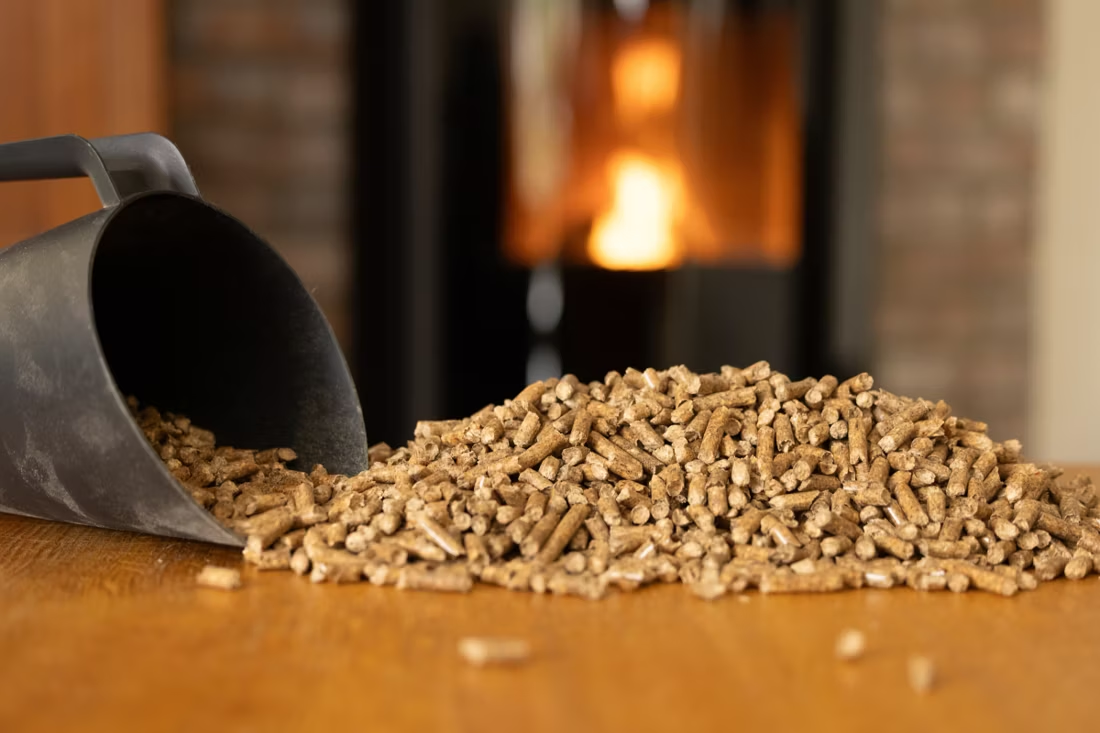
That doesn't mean pellet is off the table. A handful of Pekin homeowners install a pellet stove or insert as supplemental heat for a sunroom or finished basement, as a hedge against Ameren Illinois outages during ice storms, or simply because they like the low-maintenance, thermostat-controlled burn a pellet appliance offers over a wood stove. Regional suppliers including Indeck Energy Services, Lignetics, and Somerset Pellet Fuel produce and distribute bagged pellets across the Midwest, so fuel sourcing isn't the obstacle—availability of installers who regularly work on pellet units is the bigger variable, which is exactly the kind of local matchmaking we do.
Three steps. No salesperson until you're ready.
Tell us about your project
Your zip code, your situation, and the fuel you're leaning toward—or let the answers point you to one.
See what's actually available
The brands dealers within 100 miles genuinely carry—real options, never a catalog mirage.
Get your dealer & Project Guide
A trusted local dealer, plus the free Project Guide & Parts List that names every component of the job.
Frequently Asked Questions
Is a pellet stove actually a good fit for a Pekin home?
For most Pekin homes, no—not as a primary heat source. Natural gas is widely available across the city and handles central Illinois winters (18°F average lows, a solidly long heating season) efficiently and with far less maintenance than a pellet appliance. Where pellet makes sense here is as supplemental heat for a room that runs cold, as backup warmth during an Ameren Illinois outage, or for homeowners who specifically want the look and low-mess convenience of a pellet-fed fire without cutting or stacking wood. If that's your situation, a local dealer can tell you honestly whether it's worth it for your layout.
How much does a pellet stove installation cost?
Nationally, pellet stove installations typically run $3,000 to $6,500 depending on the unit, whether you need a new dedicated electrical circuit for the auger and blower motor, and the venting path through an exterior wall. Because pellet installs are uncommon in Pekin specifically, pricing here can vary more between dealers than it would for a gas fireplace install—get two or three in-home quotes rather than assuming a single number applies. Ask specifically about hopper capacity and whether the unit needs a dedicated 15-amp circuit, since older Pekin homes sometimes need panel work to accommodate one.
Where can I buy pellets near Pekin?
Bagged pellets from regional producers like Lignetics and Somerset Pellet Fuel are typically stocked at farm supply and hardware stores throughout central Illinois, and Indeck Energy Services operates biomass facilities in the region that support the broader pellet supply chain. Because pellet stoves aren't common appliances here, expect to call ahead or order a pallet (usually 50 forty-pound bags) rather than finding a wide retail selection on the shelf. Buying a full season's supply—roughly 2 to 3 tons for a supplemental-heat setup—in late summer or early fall avoids the price bump and stock shortages that hit pellet retailers nationwide once cold weather sets in.
Do I need a permit to install a pellet stove in Pekin?
Most likely yes—new solid-fuel and pellet-burning appliances typically require a building permit through the City of Pekin Building Department, or the Tazewell County Building Department if you're outside city limits. The permit process mainly confirms proper venting clearances and, if applicable, the new electrical circuit for the stove's auger and blower. A dealer who regularly installs pellet appliances in this area—even if that's not their most common job—should be able to pull the permit as part of the install rather than leaving you to handle it.
Will a pellet stove keep working if the power goes out?
Not on its own. Pellet stoves rely on an electric auger to feed fuel and a blower to distribute heat, so a standard unit shuts down the moment Ameren Illinois power drops—a real consideration during Midwest ice storms. Some homeowners pair a pellet stove with a small battery backup or generator to keep it running through an outage; without one, a pellet stove won't provide the same off-grid resilience a wood stove does. If backup heat during outages is your main goal, that's worth discussing honestly with a local dealer before you commit to pellet over another option.
Should I get a pellet stove or just burn wood instead?
Both are genuinely uncommon as primary heat in Pekin, since natural gas covers most homes here, but if you're choosing between the two: wood is the traditional route given how much oak, hickory, walnut, and maple grow in this part of Illinois, and a wood stove works without electricity. Pellet is more convenient—no splitting or stacking, a thermostat-controlled burn, and a cleaner glass front—but it needs power and a steady bagged-pellet supply rather than a woodpile in the backyard. Neither is the obvious default the way it might be in a heavily wooded, off-grid part of the country; it comes down to whether you value fuel convenience (pellet) or self-sufficiency (wood).
What pellet stove models handle central Illinois winters well?
For a Pekin winter—regularly dipping into the teens, occasionally lower during a cold snap—a mid-size pellet stove with a hopper in the 40 to 60 pound range will typically run 24 to 40 hours between refills, which is plenty for supplemental or backup use rather than round-the-clock primary heat. National brands like Harman and Enviro are common recommendations for reliable auger systems and are worth asking any local dealer about, since dealer support and parts availability matter more for a pellet stove than for a gas appliance most installers see every week.
Pellet insert or gas insert—which makes more sense for my fireplace?
For most Pekin homes with an existing masonry fireplace, a gas insert is the more straightforward and better-supported upgrade, since natural gas lines and qualified gas installers are common throughout Tazewell County. A pellet insert is a reasonable alternative if you specifically want a wood-look flame without a gas line, or if you're outside the natural gas service footprint, but expect a smaller pool of installers and a electrical requirement (a nearby outlet for the auger and blower) that gas doesn't need. If convenience and easy servicing matter most, gas is the safer bet here; if you have a specific reason to avoid gas, pellet remains a workable option.
How does Find My Fireplace help if pellet stoves are this uncommon in Pekin?
That's exactly the situation we're built for. Because pellet installs are less routine here than gas, matching with a dealer who actually installs and services pellet appliances regularly—not just one who'll sell you a unit and figure out the venting later—matters more, not less. We're not a manufacturer or retailer; we match you with a trusted local pro and hand you a free Project Guide & Parts List so you walk into that conversation knowing what your home actually needs.
How often does a pellet stove need cleaning?
A clean pellet stove is a happy pellet stove. Plan on cleaning the burn pot about once a week when you're burning regularly—ash and clinkers gum up the air holes just like a pellet barbecue. Most pellet stove problems trace back to skipped cleaning that nobody explained up front. Some designs make it easy with a trapdoor burn pot: pull a lever and the gunk drops into the ash pan.
Why is my open fireplace making my house colder?
Open fireplaces suck—literally. As the fire burns, it consumes air your furnace already paid to heat and pulls it out through the chimney, so the house is actually colder after the fire goes out than before you lit it. An insert fixes this: it seals the chimney, puts fixed glass across the front, and turns that hole in your house into a real heat source.
Does a fireplace add value to my home?
On average, a fireplace adds back to the home about the same amount you spent installing it. Add the monthly savings from heating the rooms you actually use instead of the whole house—often hundreds of dollars a year—and the value case is strong before you even count what a fire does for how your family uses the room.
What is an in-home preview and do I need one?
It's a visit where a hearth professional measures your space, confirms the model you picked actually works in your home, and walks the specs—framing, gas line, venting, finish work—before anything is ordered. Some details you just can't know until you see the house. Never make a down payment without one; it's the single most-skipped step that burns buyers.
Nearby Dealers
Hearth shops serving Pekin and the surrounding area.
Pellet Brands Stocked Around Pekin
Manufacturers will point you to the nearest stocking dealer.
See if a pellet stove makes sense for your Pekin home.
Tell us about your home and heating goals. We'll send you a free Project Guide & Parts List—including the exact vent kit your setup needs—and match you with a trusted local dealer who installs pellet appliances in the Pekin area.
Find Your Fireplace →