
Keep Your Family Warm and Safe—No Matter What
Most Palatine homes run on gas furnaces and gas fireplaces, but a real minority of homeowners still install wood stoves or inserts for backup heat, ambiance, or an older home's existing masonry fireplace. We'll help you find out if it's the right move for yours.
Every Project Starts From One of These Five Situations
A dense suburb built around gas, not cordwood.
Palatine sits in Cook County at 755 feet, with genuinely cold winters—an average low of 13°F and a long, demanding heating season, putting it in the same climate territory as Madison, Wisconsin. So the cold isn't the reason wood heat is uncommon here. It's the built environment: Palatine is a dense northwest Chicago suburb of over 67,000 people, made up largely of postwar and later subdivisions with attached garages, prefab chimneys sized for gas appliances, and lot sizes that leave little room for a woodshed or a cord of split oak. There's no national forest or BLM land nearby offering cutting permits the way there is in parts of the Mountain West or Pacific Northwest—firewood here is a purchased commodity, not a self-cut one.
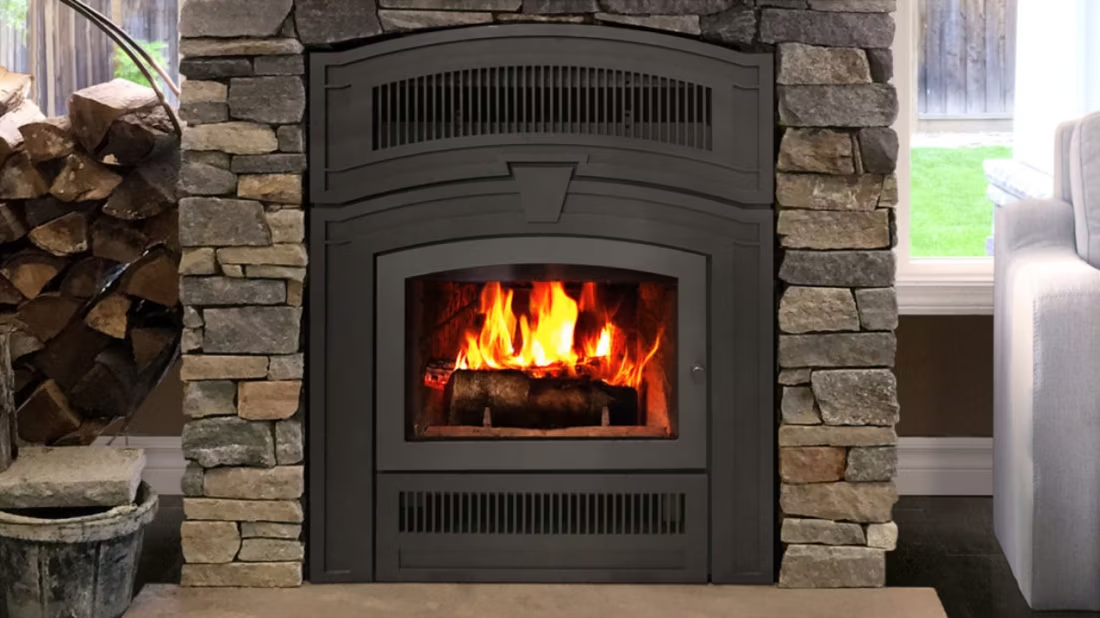
That doesn't mean wood heat has disappeared. Homeowners in Palatine's older neighborhoods near downtown—many with existing masonry fireplaces from the 1950s and '60s—sometimes install a high-efficiency insert to actually use a fireplace that's currently just decorative. Others want a wood stove as genuine backup heat for the ice storms and outages that occasionally hit ComEd's grid. And regional hardwood—oak, hickory, walnut, and maple—burns hot and clean when it's available, which matters if you're one of the households actually doing this. Air quality isn't a local constraint either; Cook County has no wood-smoke nonattainment designation affecting Palatine, unlike some western basin cities.
Three steps. No salesperson until you're ready.
Tell us about your project
Your zip code, your situation, and the fuel you're leaning toward—or let the answers point you to one.
See what's actually available
The brands dealers within 100 miles genuinely carry—real options, never a catalog mirage.
Get your dealer & Project Guide
A trusted local dealer, plus the free Project Guide & Parts List that names every component of the job.
Frequently Asked Questions
How much does it cost to install a wood stove or insert in Palatine?
Because most Palatine homes weren't built with solid-fuel venting in mind, cost depends heavily on whether you already have a masonry chimney. If you have an existing fireplace and chimney in reasonable shape, a wood-burning insert with a stainless liner is the more affordable path. If you're starting from scratch—a freestanding stove with no existing chimney—you're looking at full Class A chimney pipe run through the roof or an exterior wall, which pushes costs toward the higher end of what installers in the Chicago suburbs typically quote. Get a firm number from a local installer after they've actually seen your home; the range swings widely based on chimney condition alone here.
What size wood stove do I need for a Palatine home?
Sizing depends on square footage, ceiling height, and whether the stove is primary or supplemental heat. Given Palatine's long, cold winter season, a stove that's undersized will struggle to keep up on the coldest January nights, while an oversized stove in a smaller, better-insulated suburban home will smolder and build creosote fast. Most Palatine houses being retrofit for wood heat are looking for supplemental heat in a single living area rather than whole-house heating, so a small-to-medium stove is more common here than the large units you'd see in a rural cabin. A local dealer will size it properly during an in-home visit—this is not a step to guess on.
Where do I find a certified wood stove installer near Palatine?
Because wood heat is a smaller niche in this part of Cook County than it is farther north or west, dedicated wood-stove specialists are fewer and farther between than gas fireplace dealers. Look for NFI (National Fireplace Institute) or CSIA (Chimney Safety Institute of America) certification specifically—those credentials matter more here precisely because solid-fuel installation isn't the bulk of most local hearth shops' business. A shop that regularly services Chicago's northwest suburbs and can show you completed wood installs, not just gas conversions, is worth the extra mile of driving if needed.
What's the difference between a wood stove and a wood insert for a Palatine home?
A wood insert slides into an existing masonry fireplace and uses your current chimney (typically relined with stainless steel)—this is the more common route for Palatine's older homes near downtown that already have a fireplace opening but want real heat output instead of a decorative fire. A freestanding wood stove sits on a hearth pad and needs its own dedicated Class A chimney run, which is a bigger project in a home that was never built with a chimney in mind—most newer Palatine subdivisions fall into this category. If your home has a working fireplace already, start there; if it doesn't, expect a more involved install.
Do I need a permit to install a wood stove in Palatine?
Yes. New solid-fuel appliance installations require a building permit through the Village of Palatine's Building Division, and the stove or insert itself needs to meet current EPA 2020 NSPS emissions standards—most reputable installers only sell certified units anyway. Unlike wildfire- or inversion-prone regions out west, Palatine and Cook County don't have seasonal burn curtailment periods tied to air quality, so once it's installed and permitted, you're not dealing with red/yellow/green burn-day restrictions. Your installer will typically pull the permit as part of the job.
What's the best wood stove for a Cook County winter?
With average lows around 13°F and winters comparable to Madison, Wisconsin, Palatine's winters are cold enough to justify a genuinely capable stove, not a decorative one. Non-catalytic stoves from brands like Pacific Energy or Lopi are a solid, lower-maintenance fit for supplemental heat in a suburban living room. If you want longer burn times overnight—useful during a ComEd outage in a January cold snap—a catalytic model from Blaze King will hold a fire considerably longer on a single load of local hardwood. Oak and hickory, both common regionally, burn hot and steady; softer maple works fine as well but burns faster.
How often should my chimney be inspected in Palatine?
Annually, per CSIA guidance—and it matters more here than in newer wood-heat markets because a lot of the fireplaces being converted in Palatine are in homes built in the 1950s through '70s, where the original masonry chimney may have deteriorated liners, old mortar joints, or code-noncompliant clearances that need addressing before a new insert goes in. Plan the inspection for late summer, before burning season, so any repair work doesn't cost you weeks of your first cold stretch.
Where can I buy firewood in Palatine?
Since Cook County has no public forest land offering cutting permits the way national forests do out west, firewood in Palatine is purchased rather than self-cut. Regional suppliers deliver seasoned oak, hickory, walnut, and maple by the cord throughout the northwest Chicago suburbs—oak and hickory are the preferred choices locally for heat output, while maple splits easier and lights faster if you're mixing loads. Ask any supplier how long the wood has been seasoned; unseasoned hardwood is a common complaint in this region and it burns dirty and inefficiently.
Should I get a wood stove or just stick with gas in Palatine?
For most Palatine homeowners, gas is genuinely the better everyday fit—it's why gas fireplaces and furnaces dominate this market, with instant heat and none of the wood handling. Where wood earns its place is backup: a wood stove keeps running with zero electricity when a winter storm knocks out ComEd service (residential rates here run about 13.4 cents per kWh, and outages do happen), and it gives you a real heat source independent of the grid. If you already have a working masonry fireplace, adding an insert for occasional backup or ambiance is a reasonable middle ground rather than a full wood-heat commitment.
Why won't my new wood stove get going like my old one?
New wood stoves are 70%+ efficient, so far less heat goes up the flue—which also means less draft to get a fire established. The rule: build a genuinely hot fire for about 45 minutes before you choke it down. Skip that and you get smoke in the room, creosote in the chimney, and a fire that never takes off. Most performance complaints trace straight back to this.
Why is a fireplace insert so efficient?
An insert does two things: it seals the chimney completely, so you stop losing air you already paid to heat, and it radiates warmth into the room through the firebox and glass. Most add a heat-exchange fan that pulls cool room air underneath, wraps it around the hot firebox, and pushes it back out warm. Your home is more efficient before you've even lit the first fire.
Can I install a fireplace myself?
If you're putting a fire in your house on purpose, it's best to work with an expert. Unless you're genuinely experienced in framing, gas line, vent pipe, and the national code on clearances to combustibles, have a professional do it—and ideally the same company that sells you the fireplace, so warranty, service, and liability all live under one roof.
Can a fireplace actually lower my heating bill?
Yes—by creating a comfort zone. A furnace heats every square foot of the house just to warm the one room you're in; a gas fireplace on low burns roughly a sixth of the gas a typical furnace does. Set the furnace around 55–60 degrees as a baseline, then heat the rooms your family actually uses. Families who heat this way commonly save $20–$60 a month.
Nearby Dealers
Hearth shops serving Palatine and the surrounding area.
Fireside Collection By Fireplaces Plus
Find your wood stove or insert in Palatine.
Tell us about your home—including whether you already have a masonry fireplace—and we'll match you with a trusted local dealer and send over a free Project Guide & Parts List for your Palatine wood heat project.
Find Your Fireplace →