
Pellet Heat in a Natural-Gas Suburb.
Palatine homes are almost universally piped for natural gas, so pellet stoves are uncommon here—but for basements, additions, and backup heat, they still have a place. Find the right unit and connect with a trusted local dealer.
Every Project Starts From One of These Five Situations
A niche option in gas country.
Palatine sits in Cook County at 755 feet, with winters cold enough to matter—an average low of 13°F and a long, demanding heating season, putting it in the same general range as Madison, WI for winter severity. That cold is real, and a pellet stove could absolutely handle it. But the reason pellet heat rarely comes up in Palatine isn't the climate—it's the infrastructure. This is a dense, built-out Chicago suburb where natural gas service reaches nearly every block, and the vast majority of homes already have a gas furnace or gas fireplace doing the work a pellet stove would otherwise do.
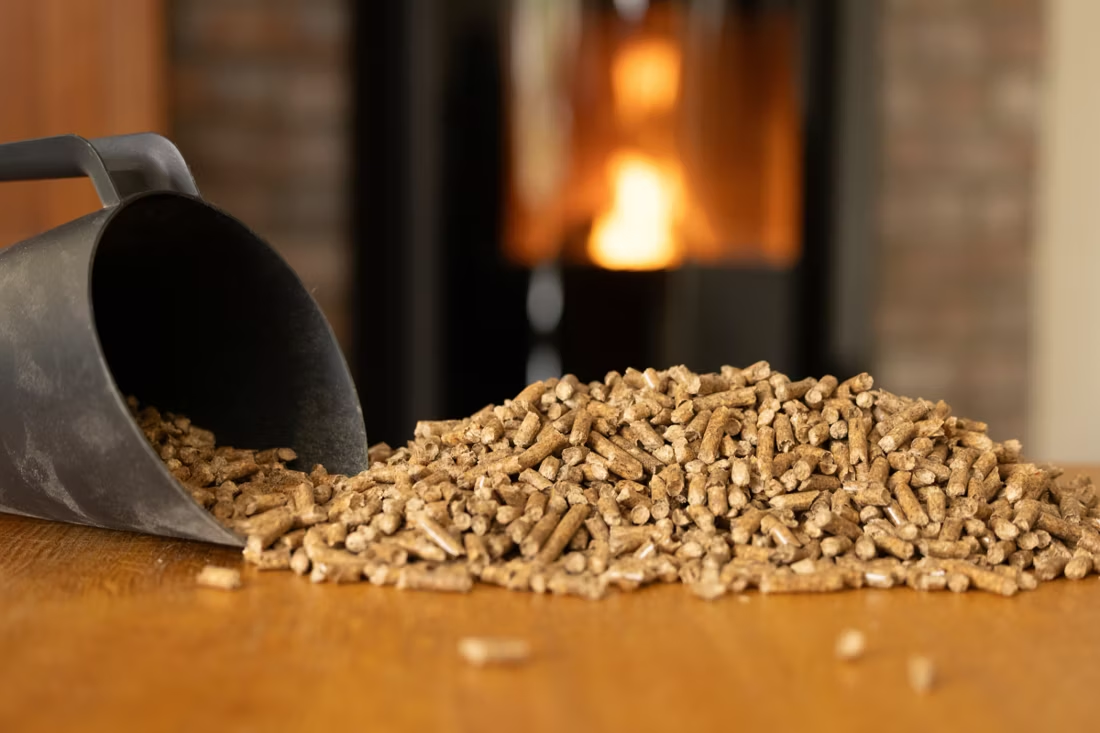
That doesn't mean pellet stoves have no place here. Homeowners finishing a basement without an existing gas line, families who want backup heat that doesn't depend on the grid staying up, or anyone drawn to the look of a stove without the wood-storage hassle still install them—just in smaller numbers than you'd see in a rural, wood-heat-heavy market. Pellet supply itself isn't a problem: regional producers like Indeck Energy Services, Lignetics, and Somerset Pellet Fuel all serve the broader Chicagoland market, so fuel is available even where the appliance itself is a specialty request rather than a standard stock item at every hearth shop.
Three steps. No salesperson until you're ready.
Tell us about your project
Your zip code, your situation, and the fuel you're leaning toward—or let the answers point you to one.
See what's actually available
The brands dealers within 100 miles genuinely carry—real options, never a catalog mirage.
Get your dealer & Project Guide
A trusted local dealer, plus the free Project Guide & Parts List that names every component of the job.
Frequently Asked Questions
How much does a pellet stove installation cost in Palatine?
There isn't a well-established local price range for pellet installs in Palatine the way there is for gas, since so few homes go this route—cost depends heavily on the specific unit, whether you're venting through an exterior wall or an existing chimney chase, and whether a hearth pad is needed for clearance. Because pellet work is a specialty request rather than a routine job for most Chicagoland hearth dealers, it's worth getting an actual in-home quote rather than assuming a number. A trusted local dealer matched through our free Project Guide & Parts List will price your specific venting path and hopper size rather than a generic estimate.
Does a pellet stove even make sense for a Palatine home?
Sometimes, but it's usually a supplemental or situational choice rather than a replacement for what you already have. With natural gas reaching nearly every home in the village, most Palatine homeowners get reliable, low-maintenance heat from a furnace or gas fireplace already. A pellet stove tends to make sense for a specific problem: a finished basement or garage addition without a gas line nearby, a family room that needs zone heat without running new gas piping, or a household that wants a heat source that doesn't rely entirely on ComEd staying up. If none of those apply, gas is almost always the simpler and more common answer here.
Where can I buy pellet fuel in Palatine?
Pellets aren't stocked on every corner in Palatine the way they might be in a rural Midwest town with a strong wood-heat culture, but they're not hard to find either. Regional producers including Indeck Energy Services, Lignetics, and Somerset Pellet Fuel supply the broader Chicago market, and bags typically show up at farm supply stores, larger hardware chains, and some hearth retailers seasonally. Because demand is lower here than in more pellet-heavy regions, it's worth calling ahead in early fall to confirm stock rather than assuming a store carries multiple pallets year-round.
Do I need a permit to install a pellet stove in Palatine?
Yes—a building permit is typically required for a new pellet stove installation in the Village of Palatine, covering the appliance placement, clearances, and venting through the wall or existing chimney. Most established hearth installers handle this paperwork as part of the job rather than leaving it to the homeowner. Given how few pellet installs happen locally compared to gas, it's worth confirming your installer has actually pulled a pellet-specific permit before, rather than assuming general contracting experience covers it.
Pellet vs. gas—which is the better fit in Palatine?
For the vast majority of Palatine homes, gas wins on convenience alone: it's already piped to the house, ignites instantly, and needs no fuel storage or hopper refilling. A pellet stove requires bagged fuel storage, periodic hopper loading, and ash cleanup—real tradeoffs in a suburb where gas infrastructure is essentially universal. Where pellet can still win is independence from the gas line for a specific room, or a homeowner who simply prefers the visual of a real flame with hardwood-style pellets over a gas burner. For most primary living spaces here, though, gas remains the default, and pellet stays the exception.
Will a pellet stove work if the power goes out?
Not without help. Pellet stoves depend on an electric auger to feed fuel and a blower to distribute heat, so a ComEd outage shuts the stove down along with everything else unless you have a battery backup or a generator sized for it. This is a meaningful consideration in Palatine, where winter storms occasionally knock out power for hours at a time. If backup heat during outages is the main reason you're considering a pellet stove, ask your dealer about battery backup options specifically—without one, a pellet stove offers no real advantage over your existing gas furnace during a blackout.
Why is wood heat also uncommon in Palatine—should I consider it instead of pellet?
Wood faces the same infrastructure reality as pellet here: with gas service this complete, dense residential lots, and no nearby national forest or public land for cutting permits, there's little of the self-sufficient wood-heat culture you'd find in a more rural county. Local hardwoods like oak, hickory, walnut, and maple are common in the area's tree canopy, but they reach homeowners through tree services and firewood delivery rather than public cutting permits. Between the two, pellet is generally the more practical niche choice for a Palatine home—no splitting or seasoning wood required, and cleaner burns with less ash than cordwood.
What size pellet stove do I need for a Palatine home?
With a long, demanding heating season and average winter lows around 13°F, Palatine's cold is real even if most homes rely on gas for primary heat. For a pellet stove used as zone or supplemental heat—a finished basement, a family room addition, or a single large space—a mid-size unit rated for 1,000 to 1,800 square feet is typically enough. Whole-home heating with pellet alone is rare in this market and would call for a larger-capacity unit plus a hopper large enough to avoid daily refilling on the coldest nights. A local dealer can size this against your actual floor plan and insulation rather than square footage alone.
Are there any rebates for installing a pellet stove in Palatine?
ComEd periodically runs energy-efficiency incentive programs for home heating equipment, though pellet stoves aren't always the headline item compared to furnaces and heat pumps, so availability changes year to year. Because pellet installations are uncommon locally, it's worth asking your dealer directly whether any current ComEd or Illinois state program applies to your specific unit rather than assuming a rebate exists—this is one of the questions we make sure gets covered in the free Project Guide & Parts List when we match you with a local installer.
Why is my open fireplace making my house colder?
Open fireplaces suck—literally. As the fire burns, it consumes air your furnace already paid to heat and pulls it out through the chimney, so the house is actually colder after the fire goes out than before you lit it. An insert fixes this: it seals the chimney, puts fixed glass across the front, and turns that hole in your house into a real heat source.
What's the difference between an insert and a zero-clearance fireplace?
An insert is a fireplace that slides into a pre-existing wood-burning fireplace—if you don't have one, there's nothing to insert it into. A zero-clearance fireplace is built into a framed wall, which makes it the answer for remodels and new construction. Simple test: existing masonry fireplace means insert; blank or framed wall means zero-clearance.
Can a fireplace actually lower my heating bill?
Yes—by creating a comfort zone. A furnace heats every square foot of the house just to warm the one room you're in; a gas fireplace on low burns roughly a sixth of the gas a typical furnace does. Set the furnace around 55–60 degrees as a baseline, then heat the rooms your family actually uses. Families who heat this way commonly save $20–$60 a month.
What is an in-home preview and do I need one?
It's a visit where a hearth professional measures your space, confirms the model you picked actually works in your home, and walks the specs—framing, gas line, venting, finish work—before anything is ordered. Some details you just can't know until you see the house. Never make a down payment without one; it's the single most-skipped step that burns buyers.
Nearby Dealers
Hearth shops serving Palatine and the surrounding area.
Fireside Collection By Fireplaces Plus
Pellet Brands Stocked Around Palatine
Manufacturers will point you to the nearest stocking dealer.
Find your pellet stove in Palatine.
Tell us a bit about your home and we'll put together a free Project Guide & Parts List—the right pellet stove, the exact venting and hearth parts you'll need, and a trusted local dealer in the Palatine area who can actually install it.
Find Your Fireplace →