
Pellet Stoves Are Rare in Melrose Park—But Not Impossible.
Most Melrose Park homes heat with natural gas, so pellet stoves are a niche choice here. If you're one of the homeowners who wants one anyway, we'll connect you with a dealer who actually stocks and installs them.
Every Project Starts From One of These Five Situations
A dense, gas-heated suburb, not pellet country.
Melrose Park sits just west of Chicago in Cook County, at 632 feet of elevation with a climate zone 5A profile—a real, sustained heating season and winter lows that average around 19°F. That's a real heating season, comparable to Madison, Wisconsin, but the housing stock here is older and denser: bungalows, two-flats, and brick homes on tight lots, many built before pellet appliances existed as a category. Natural gas is the near-universal heat source in this part of Cook County, and most homes are already piped for a gas furnace or boiler.
That combination—reliable gas infrastructure plus close-set housing with limited exterior wall clearance—is why pellet stoves rarely show up on local installers' schedules. A handful of homeowners still install them, usually for supplemental heat in a converted basement, a detached garage, or a room where running new gas line isn't practical. Regional pellet producers like Indeck Energy Services, Lignetics, and Somerset Pellet Fuel keep fuel available in the Chicago area even though demand for the stoves themselves is thin locally, so sourcing bags of pellets isn't the hard part—finding a dealer who installs and services the appliance is.
Three steps. No salesperson until you're ready.
Tell us about your project
Your zip code, your situation, and the fuel you're leaning toward—or let the answers point you to one.
See what's actually available
The brands dealers within 100 miles genuinely carry—real options, never a catalog mirage.
Get your dealer & Project Guide
A trusted local dealer, plus the free Project Guide & Parts List that names every component of the job.
Frequently Asked Questions
Are pellet stoves actually available in Melrose Park, or is this a niche product here?
Niche is the right word. Pellet stoves aren't a mainstream heating choice in Melrose Park the way they are in rural, wood-heavy parts of the Midwest—natural gas dominates here, and most homes are already set up for it. That said, a small number of local homeowners do install pellet stoves, typically as a secondary heat source in a basement or add-on room, or because they like the lower-mess alternative to a wood stove. If you want one, you'll likely be working with a dealer who covers the broader Chicago metro rather than one based in Melrose Park itself.
How much does a pellet stove installation cost in Melrose Park?
There isn't a well-established local price band the way there would be for gas fireplace installs here, simply because so few get installed. Nationally, a pellet stove installation with venting typically runs $3,000 to $7,000 depending on the unit and whether you need a new exterior vent penetration through brick or siding. In a dense Cook County suburb like Melrose Park, expect the venting work—coring through masonry, sizing the vent kit correctly—to be a bigger share of the job than the appliance itself. A local dealer can give you a firm number after seeing your wall construction.
Will a pellet stove keep working if the power goes out?
No, not without a backup power source. Pellet stoves rely on an electric auger to feed fuel and a blower to distribute heat, so a ComEd outage shuts the stove down along with everything else. Some homeowners pair a pellet stove with a small battery backup or generator specifically for this reason, especially given Melrose Park's real winter cold—lows averaging around 19°F in the coldest months. If uninterrupted heat during outages matters most to you, that's worth discussing with a local dealer before you commit to pellet over a vented gas alternative.
Where can I buy pellets near Melrose Park?
Fuel is easier to find than the stoves are. Regional producers including Indeck Energy Services, Lignetics, and Somerset Pellet Fuel supply the Chicago market, and bagged pellets are typically available through home improvement retailers and hearth dealers serving Cook County even if they don't stock many stoves locally. Buying pellets in bulk ahead of the heating season—rather than one bag at a time in January—is the usual way local owners avoid running short during a cold stretch.
Do I need a permit to install a pellet stove in Melrose Park?
Yes. Any new solid-fuel or pellet-burning appliance install typically requires a building permit through the Village of Melrose Park Building Department, covering the appliance clearances and the exterior vent penetration. Because pellet installs are uncommon here, it's worth confirming with the village directly and working with a dealer who has pulled hearth-appliance permits in Cook County before—that experience matters more here than in areas where pellet stoves are a routine request.
Why are both wood stoves and pellet stoves considered unusual in Melrose Park?
Both run into the same local realities: tight lot lines, older attached and semi-attached housing, and a heating market that's built almost entirely around natural gas. Oak, hickory, walnut, and maple are all common regionally for wood-burning appliances elsewhere in the Midwest, but that's largely irrelevant in Melrose Park because so few homes here are set up—or have room—for a solid-fuel appliance and its venting. Pellet stoves are somewhat easier to shoehorn in than wood because they vent through a smaller-diameter direct-vent pipe rather than a full masonry chimney, which is part of why pellet, not wood, is the more realistic of the two solid-fuel options here.
Pellet vs. gas—which makes more sense for a Melrose Park home?
For most homes here, gas wins on practicality: natural gas service is already run to the house, a gas fireplace or insert installs faster, and it doesn't depend on hauling 40-pound pellet bags or keeping a hopper filled. Pellet's case is narrower—it can make sense as a supplemental heat source in a room without gas line access, or for homeowners who specifically want the visual and ambiance of a real flame with a self-feeding hopper instead of a switch-lit gas unit. If cost and simplicity are the priority, gas is the more common answer in this suburb; if you have a specific reason to want pellet, a local dealer can tell you honestly whether it's a good fit for your house.
What size pellet stove would a Melrose Park home need?
Sizing follows square footage and how well-insulated the space is, same as anywhere in this climate zone. With a long, real heating season typical of this area, a small pellet stove (rated for up to around 1,000-1,300 sq ft) is usually plenty for supplemental heat in a basement or converted room, while a larger unit would be needed to seriously offset a furnace's workload in a whole first floor. Given how few installs happen locally, oversizing is a common mistake—a dealer who's actually done the math on Cook County housing stock is worth more here than a generic size chart.
How much maintenance does a pellet stove need?
More than a gas fireplace, less than a wood stove. Plan on emptying the ash pan every few days during regular use, a deeper cleaning of the burn pot and heat exchanger every one to two weeks, and an annual professional service to check the auger motor, blower, and venting. Because pellet stove owners are relatively rare in Melrose Park, it's worth asking a prospective dealer directly whether they service pellet units regularly—not every hearth shop in the Chicago area does, even if they sell gas appliances daily.
Why is a fireplace insert so efficient?
An insert does two things: it seals the chimney completely, so you stop losing air you already paid to heat, and it radiates warmth into the room through the firebox and glass. Most add a heat-exchange fan that pulls cool room air underneath, wraps it around the hot firebox, and pushes it back out warm. Your home is more efficient before you've even lit the first fire.
How often does a pellet stove need cleaning?
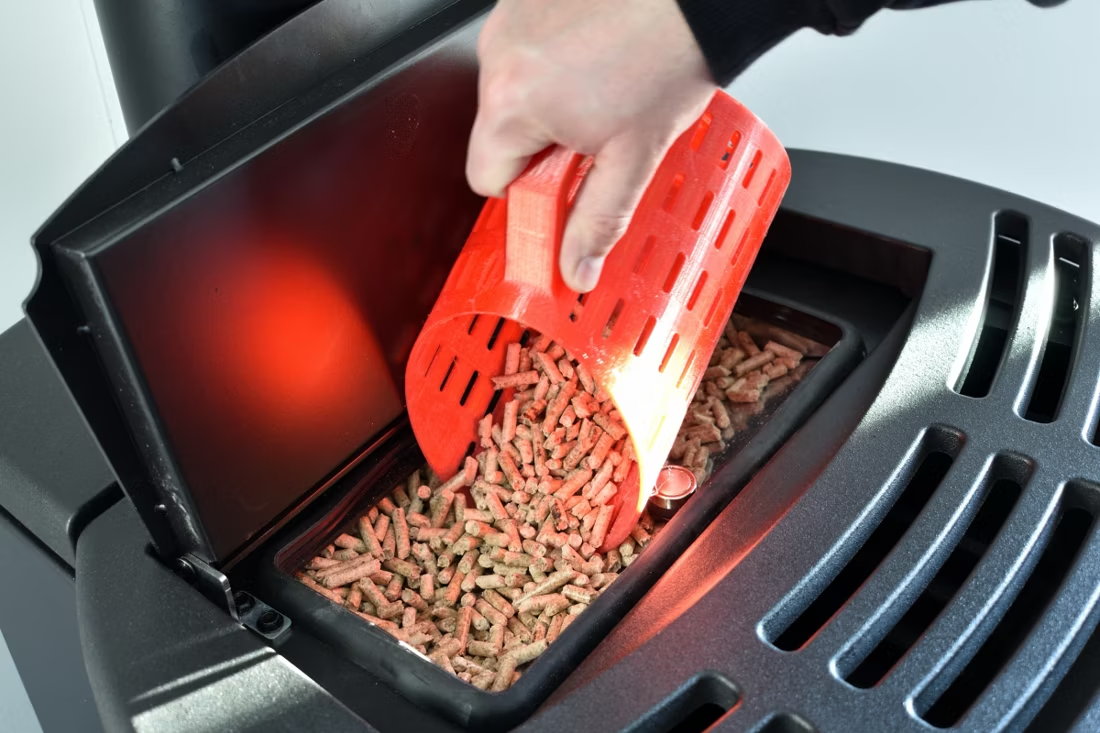
A clean pellet stove is a happy pellet stove. Plan on cleaning the burn pot about once a week when you're burning regularly—ash and clinkers gum up the air holes just like a pellet barbecue. Most pellet stove problems trace back to skipped cleaning that nobody explained up front. Some designs make it easy with a trapdoor burn pot: pull a lever and the gunk drops into the ash pan.
How much should I budget for a fireplace?
For an average home—covering the fireplace, the vent pipe, and basic installation—a budget between $3,900 and $5,500 gives you a lot of options across wood, gas, and pellet. By the time you add finish work, gas line, and electrical, the average complete installation lands between $5,000 and $12,000 all-in. In a remodel or new build, a good rule is to put about 2.5% of the total project cost toward the fireplace.
Can I install a fireplace myself?
If you're putting a fire in your house on purpose, it's best to work with an expert. Unless you're genuinely experienced in framing, gas line, vent pipe, and the national code on clearances to combustibles, have a professional do it—and ideally the same company that sells you the fireplace, so warranty, service, and liability all live under one roof.
Nearby Dealers
Hearth shops serving Melrose Park and the surrounding area.
Fireside Collection By Fireplaces Plus
Pellet Brands Stocked Around Melrose Park
Manufacturers will point you to the nearest stocking dealer.
Find your pellet stove in Melrose Park.
Tell us about your home and your reason for wanting pellet heat, and we'll match you with a trusted local dealer plus a free Project Guide & Parts List—the exact parts, including the vent kit, for your Melrose Park install.
Find Your Fireplace →