
Instant Heat for Cook County's Coldest Nights.
Clean, on-demand gas heat for Melrose Park homes, from brick bungalow conversions to new builds. Find the right unit and connect with a trusted local dealer.
Every Project Starts From One of These Five Situations
Clean-burning warmth without the woodpile.
Melrose Park sits in Cook County's climate zone 5A, where a long, demanding winter heating season and an average winter low near 19°F mean the furnace runs from October through April most years. The village's housing stock—tight-lot bungalows, two-flats, and postwar brick homes built close together along narrow streets and alleys—leaves little room for stacked cordwood or an open burn pile, which is a big part of why wood heat never really took hold here even though oak, hickory, walnut, and maple all grow throughout the region. Gas, by contrast, fits the density: no fuel storage, no smoke drifting into a neighbor's yard, no chimney maintenance beyond an annual check.
Most of Melrose Park is served by Nicor Gas, and natural gas lines already run to the vast majority of homes here for furnaces, water heaters, and ranges—which makes adding a gas fireplace or insert a matter of tapping an existing line rather than starting from scratch. For homes where electric baseboard or space heaters are the fallback, Commonwealth Edison's residential rate of roughly 13.4 cents per kWh makes gas the more economical choice for real heat output, though electric units still have a place in condos and apartments where venting isn't an option. A trusted local dealer can tell you within a single visit which path fits your home, your existing chimney (if you have one), and your budget—and Find My Fireplace's free Project Guide & Parts List spells out the exact parts, including the vent kit, before anyone shows up to install anything.
Three steps. No salesperson until you're ready.
Tell us about your project
Your zip code, your situation, and the fuel you're leaning toward—or let the answers point you to one.
See what's actually available
The brands dealers within 100 miles genuinely carry—real options, never a catalog mirage.
Get your dealer & Project Guide
A trusted local dealer, plus the free Project Guide & Parts List that names every component of the job.
Frequently Asked Questions
How much does a gas fireplace installation cost in Melrose Park?
For a Melrose Park home already on Nicor Gas service, a direct-vent gas insert dropped into an existing masonry fireplace typically runs $3,500 to $8,000, depending on the insert model and whether the existing flue needs a stainless liner. A new built-in gas fireplace for a room without an existing chimney—where framing, venting through an exterior wall, and a fresh gas line tie-in are all part of the job—usually lands between $6,000 and $10,000. Older two-flats and bungalows with masonry chimneys already in place tend to fall on the lower end since the venting path already exists.
Can I convert my old masonry fireplace to gas?
Yes, and it's one of the most common gas projects in Melrose Park's older housing stock. Many of the village's brick bungalows and two-flats were built with a wood-burning fireplace that's rarely used—often because there's nowhere on a narrow city lot to season or store firewood. A gas insert uses that existing chimney with a liner run down to the firebox, so the exterior look of the fireplace stays the same while the heat output and convenience improve dramatically. Expect $4,000 to $8,500 depending on the insert and whether a new gas line needs to be run from the meter to the fireplace location.
Do I need natural gas service, or is propane an option in Melrose Park?
The great majority of Melrose Park is already served by Nicor Gas, so most homeowners simply extend an existing gas line to the fireplace location—there's no need to involve propane at all. Propane shows up occasionally for detached garages, workshops, or outbuildings that sit far from the gas meter, but for a primary living space in a village this built-out, natural gas is by far the standard choice. Your local dealer can confirm line pressure and capacity at your meter before quoting the job.
Will my gas fireplace still work if the power goes out?
Most direct-vent gas fireplaces sold today use IPI (intermittent pilot ignition) with a battery backup—typically a set of AA batteries inside the unit—so the fireplace lights normally even when ComEd service is down. That matters in a Cook County winter, when a single ice storm can knock out power for hours. Valor's gas fireplaces take a different approach: the pilot's thermocouple generates its own electricity, so there's no battery to remember or replace. Either system will get you real heat during an outage—ask your dealer which ignition type is built into any unit you're considering.
What's the difference between a gas fireplace, a gas insert, and a gas stove?
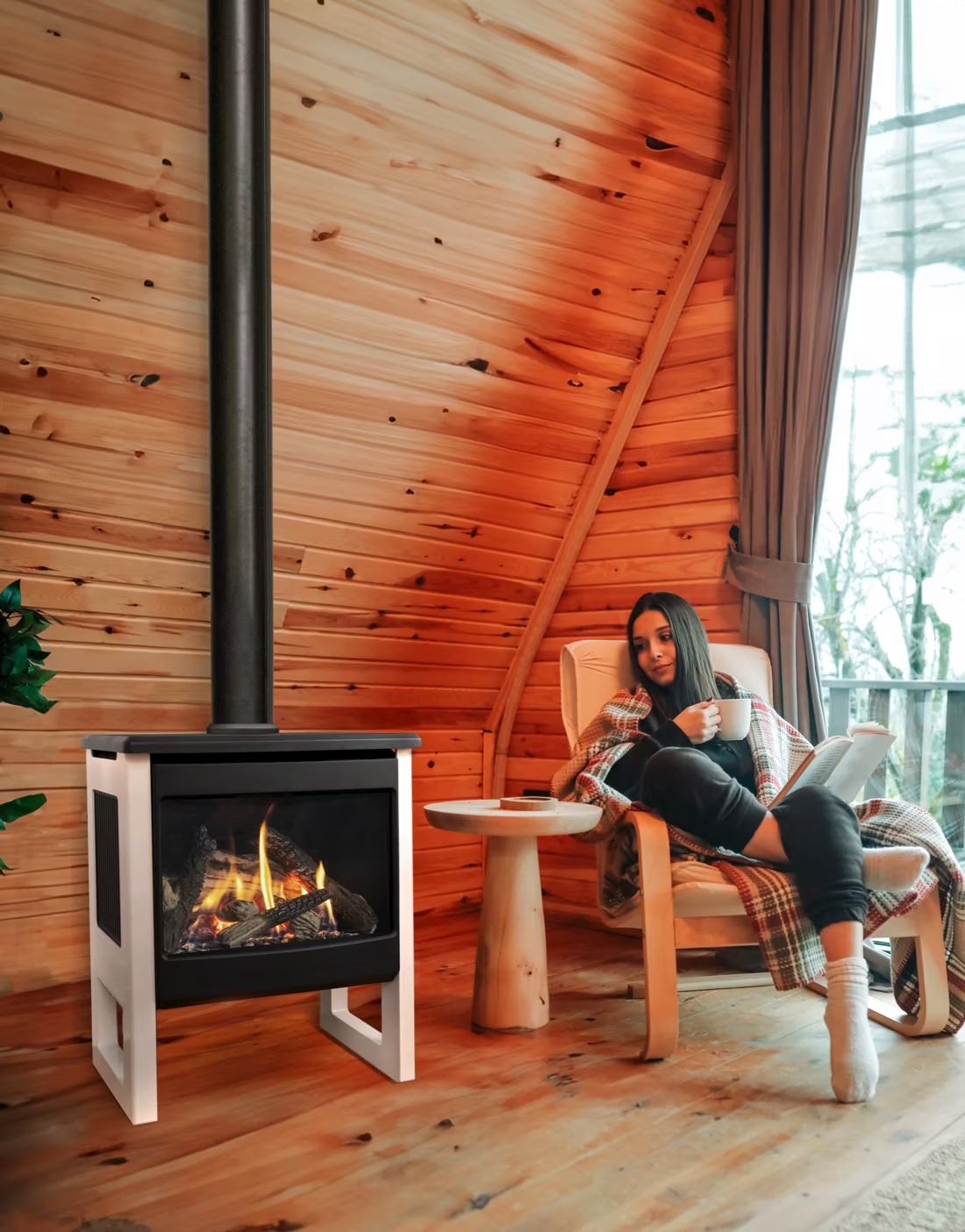
A gas fireplace is a fully built-in unit framed into a wall—the right call for new construction or a room with no existing chimney. A gas insert slides into an existing masonry firebox and vents up through the chimney you already have, which is why it's the go-to choice for Melrose Park's older bungalows and two-flats with unused wood fireplaces. A gas stove is a freestanding cast-iron or steel unit that sits on the floor like a wood stove but runs on gas—a good option for a basement rec room or an addition where there's no fireplace opening to work with at all.
Do I need a permit to install a gas fireplace in Melrose Park?
Yes—the Village of Melrose Park requires a building permit for new gas fireplace and insert installations, and any new gas line work needs a licensed gas-fitter as part of the job. Most established hearth dealers handle the permit application and inspection scheduling as part of the installation price, so you're not left coordinating separate trades. It's worth confirming with your dealer up front that the permit is included in their quote rather than treated as an add-on.
Should I choose a vented or vent-free gas fireplace?
Vented (direct-vent) units draw combustion air from outside and exhaust it back outside through a sealed pipe—they're the standard recommendation almost everywhere, including Melrose Park, because they don't affect indoor air quality and deliver strong, consistent heat. Vent-free units burn directly into the room and are legal in Illinois within specific room-size and ventilation limits, but they release some moisture and combustion byproducts indoors, which matters more in a smaller bungalow-sized room than in an open great room. For most Melrose Park homes, a direct-vent insert or fireplace is the simpler, safer call, and it's what the majority of local dealers install.
How often does a gas fireplace need to be serviced?
Plan on an annual inspection, ideally before the heating season kicks in around October given the long, demanding winter heating season the area sees each year. A technician checks the burner, pilot assembly, venting, and gas connections, and cleans the glass and interior—a much quicker job than chimney sweeping for a wood unit. Local gas appliance service providers typically charge $150 to $250 for this annual visit, and it's worth doing every year even if the fireplace only runs occasionally, since sediment and spiders can clog pilot orifices over a long off-season.
Why don't more Melrose Park homes use wood heat instead of gas?
It comes down to the lot sizes and density here. Wood heat works best where there's room to store and season a few cords of oak, hickory, or maple and where local ordinances allow open burning—neither is really the case in a built-out inner-ring suburb like Melrose Park, where homes sit close together on narrow lots with shared alleys. Some older homes still have a wood-capable masonry fireplace from decades past, but converting it to gas is far more common than keeping it wood-burning, simply because gas doesn't require fuel storage, ash cleanup, or a place to season firewood. For a Chicago-area winter this cold, gas delivers the same instant, reliable warmth without any of those logistics.
Can I put a TV above my fireplace?
Yes—with an asterisk. Fireplaces are hot and TVs don't like heat. Either put a mantel between them to deflect rising warmth, or choose a fireplace with heat-management technology that creates a cool zone on the wall above—the wall stays around 125 degrees, barely warm, while the room still gets full heat. If you like clean lines and don't want a mantel, heat management is the answer.
What's the difference between an insert and a zero-clearance fireplace?
An insert is a fireplace that slides into a pre-existing wood-burning fireplace—if you don't have one, there's nothing to insert it into. A zero-clearance fireplace is built into a framed wall, which makes it the answer for remodels and new construction. Simple test: existing masonry fireplace means insert; blank or framed wall means zero-clearance.
Does a fireplace add value to my home?
On average, a fireplace adds back to the home about the same amount you spent installing it. Add the monthly savings from heating the rooms you actually use instead of the whole house—often hundreds of dollars a year—and the value case is strong before you even count what a fire does for how your family uses the room.
What is an in-home preview and do I need one?
It's a visit where a hearth professional measures your space, confirms the model you picked actually works in your home, and walks the specs—framing, gas line, venting, finish work—before anything is ordered. Some details you just can't know until you see the house. Never make a down payment without one; it's the single most-skipped step that burns buyers.
Nearby Dealers
Hearth shops serving Melrose Park and the surrounding area.
Fireside Collection By Fireplaces Plus
Find your gas fireplace in Melrose Park.
Tell us a bit about your home and we'll match you with the right gas fireplace, insert, or stove, plus a free Project Guide & Parts List and a trusted local dealer to install it.
Find Your Fireplace →