
Steady, hands-off heat for Lee County's long Illinois winters.
From Dixon and Amboy to the farmhouses along the Rock River, Lee County sees a long, cold winter with lows near 14°F. Find the right pellet stove or insert, and connect with a trusted local dealer who can size it and get it installed correctly.
Every Project Starts From One of These Five Situations
Consistent warmth without the wood pile.
Lee County sits in north-central Illinois farm country, where old farmhouses and newer homes alike face a real winter—a long, cold heating season with average lows around 14°F, roughly in the same range as Madison, Wisconsin. Oak, hickory, walnut, and maple grow throughout the county along the Rock River corridor, and plenty of households still burn wood. But for homeowners in Dixon, Amboy, Ashton, Paw Paw, and Sublette who want reliable heat without cutting, splitting, and stacking cordwood, a pellet stove or insert is an increasingly common answer.
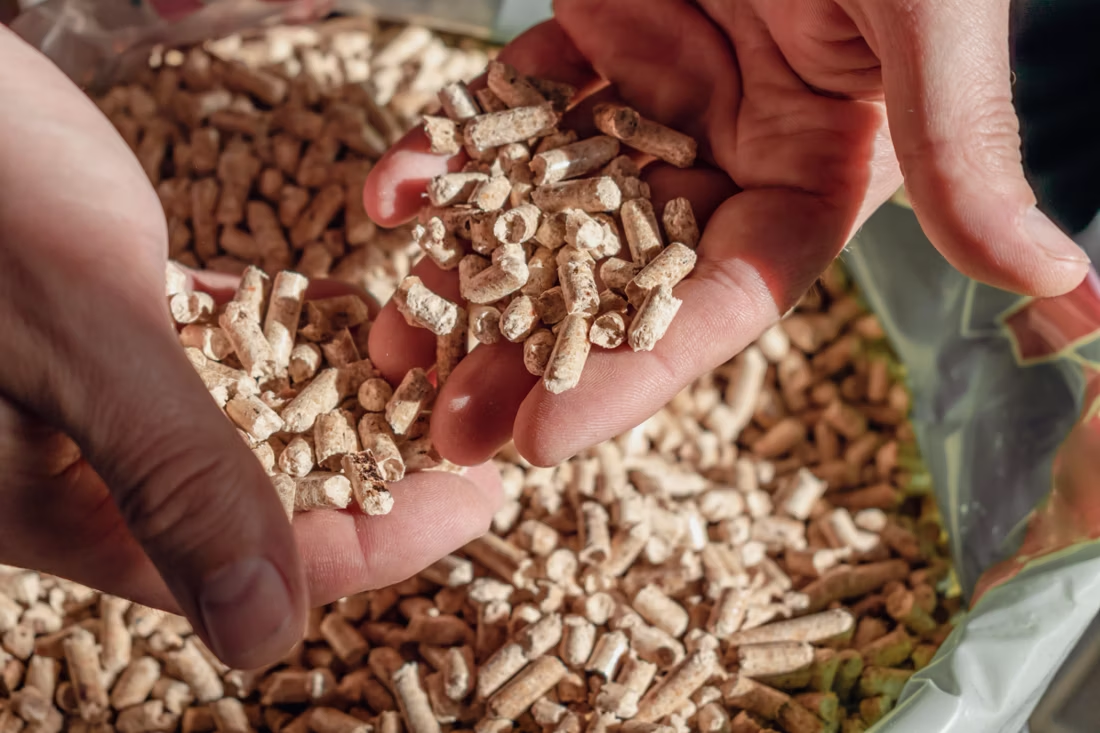
Pellet appliances load from a hopper, run on a thermostat, and hold a consistent output through Lee County's long cold stretches—no middle-of-the-night reloading required the way a wood stove often demands. Fuel supply is also a local advantage: Indeck Energy Services, which operates biomass energy facilities in Illinois, along with Lignetics and Somerset Pellet Fuel, keep pellets reasonably accessible in this part of the state without long trucking distances. And because Lee County has no air quality non-attainment designation, there's no curtailment schedule or inversion advisory to plan burning around—just a straightforward, code-compliant install.
Three steps. No salesperson until you're ready.
Tell us about your project
Your zip code, your situation, and the fuel you're leaning toward—or let the answers point you to one.
See what's actually available
The brands dealers within 100 miles genuinely carry—real options, never a catalog mirage.
Get your dealer & Project Guide
A trusted local dealer, plus the free Project Guide & Parts List that names every component of the job.
Frequently Asked Questions
How much does a pellet stove installation cost in Lee County?
A freestanding pellet stove installation in Lee County typically runs $3,000 to $4,500, including the unit, venting through an exterior wall, and a hearth pad if one isn't already in place. A pellet insert going into an existing masonry fireplace—common in the older homes around Dixon and Amboy—usually runs $4,000 to $6,500, since it involves a liner kit and sometimes an adapter plate to fit the existing firebox opening. Homes on rural routes outside town may see a modest trip charge added by the installer for travel time.
What size pellet stove do I need for my home?
Sizing depends on square footage, ceiling height, and how well-insulated the home is. Many Lee County homes are older farmhouses with higher heat loss than newer construction, so given how long and cold the county's winters run, it's usually worth sizing up rather than down—a stove rated for 1,500 square feet in a mild climate may only comfortably heat 1,000 to 1,200 square feet here on the coldest nights. A local dealer can walk through your floor plan and insulation and recommend hopper capacity along with BTU output, since a larger hopper means fewer refills during the stretches when lows sit near 14°F.
Where can I find pellet stove dealers and installers near me?
Look for NFI-certified installers who regularly work with both pellet and wood-burning appliances, since many Lee County homes still have existing wood fireplaces that could be converted. Dealers serving the county typically cover Dixon, Amboy, Ashton, and the surrounding townships as their core service area, with a small travel charge for more remote addresses near Paw Paw or Sublette. Ask any installer whether they also handle the venting kit and hearth pad as part of the quote—a full-service install avoids the coordination headaches of hiring separate trades.
What's the difference between a pellet stove and a pellet insert?
A pellet stove is a freestanding appliance that sits on a hearth pad and vents out through a wall or existing chimney—it can go almost anywhere in a home with a suitable spot for the vent run. A pellet insert is built to slide into an existing masonry fireplace opening, which makes it a natural fit for Lee County's older housing stock where a wood-burning fireplace already exists but sits unused most of the year. If you already have a fireplace, an insert usually delivers better efficiency for less added construction; if you don't, a freestanding stove gives you more placement flexibility.
Do I need a permit to install a pellet stove in Lee County?
Yes—a building permit is required for a new pellet stove or insert installation, whether through the local municipal building department in Dixon or Amboy, or through the Lee County building office for unincorporated areas. Because Lee County has no air quality non-attainment designation, there's no burn-curtailment schedule to navigate the way some other counties require—the permit process is mainly about verifying clearances, venting, and electrical work for the stove's hopper motor and auger. Most dealers pull the permit as part of the installation package.
What's the best pellet stove for Lee County's winters?
With winter lows averaging 14°F and a long heating season, a larger hopper—40 to 60 pounds—is worth prioritizing so you're not refilling multiple times a day during the coldest stretches. Look for a stove with a reliable auger feed system and a thermostat that can hold steady output overnight; brands like Harman and US Stove Company are common choices in this part of the Midwest and hold up well to daily winter use. For homes without a dedicated backup heat source, ask your dealer about models compatible with a small battery backup, since pellet stoves need continuous power to run the feed and combustion blower.
Where do I get pellet fuel in Lee County, and how much does it cost?
Regional pellet brands including Indeck Energy Services, Lignetics, and Somerset Pellet Fuel supply this part of Illinois, and bags or pallets are generally available through farm supply stores and hearth dealers rather than requiring long-distance shipping. Pricing fluctuates with fuel markets, but pellet fuel in north-central Illinois typically runs in the $230 to $300 per ton range. Buying a season's supply—usually 2 to 3 tons for an average home—ahead of the cold months helps avoid shortages during high-demand cold snaps.
Will my pellet stove work if the power goes out?
Not without a backup power source. Pellet stoves depend on electricity to run the auger that feeds pellets and the blower that distributes heat, so a power outage stops the stove even with a full hopper. Some homeowners pair a pellet stove with a small battery backup or generator for exactly this reason, particularly given how a winter storm outage in Lee County's rural areas can stretch longer than in town. If backup heat during outages is a priority, some households keep a wood-burning option as well—Lee County's abundant oak, hickory, and walnut make that a practical supplement even for a home built primarily around pellet heat.
Pellet stove vs. wood stove—which is right for my Lee County home?
Wood stoves run on cordwood—plentiful in Lee County given the oak, hickory, walnut, and maple along the Rock River—and keep working during a power outage, which matters in rural areas with longer utility response times. Pellet stoves trade that off-grid independence for convenience: load the hopper, set the thermostat, and let it run with far less ash and none of the splitting or stacking wood requires. For a primary residence in town where reliable electric service is a given, pellet is often the easier day-to-day choice. For a rural property where storm-related outages are a real concern, many homeowners either lean wood or keep a smaller wood-burning unit as backup alongside a pellet stove.
What's the difference between an insert and a zero-clearance fireplace?
An insert is a fireplace that slides into a pre-existing wood-burning fireplace—if you don't have one, there's nothing to insert it into. A zero-clearance fireplace is built into a framed wall, which makes it the answer for remodels and new construction. Simple test: existing masonry fireplace means insert; blank or framed wall means zero-clearance.
How often does a pellet stove need cleaning?
A clean pellet stove is a happy pellet stove. Plan on cleaning the burn pot about once a week when you're burning regularly—ash and clinkers gum up the air holes just like a pellet barbecue. Most pellet stove problems trace back to skipped cleaning that nobody explained up front. Some designs make it easy with a trapdoor burn pot: pull a lever and the gunk drops into the ash pan.
Can I install a fireplace myself?
If you're putting a fire in your house on purpose, it's best to work with an expert. Unless you're genuinely experienced in framing, gas line, vent pipe, and the national code on clearances to combustibles, have a professional do it—and ideally the same company that sells you the fireplace, so warranty, service, and liability all live under one roof.
Does a fireplace add value to my home?
On average, a fireplace adds back to the home about the same amount you spent installing it. Add the monthly savings from heating the rooms you actually use instead of the whole house—often hundreds of dollars a year—and the value case is strong before you even count what a fire does for how your family uses the room.
Pellet Brands Stocked Around Lee County
Manufacturers will point you to the nearest stocking dealer.
Find your pellet stove in Lee County.
Tell us a bit about your home and we'll match you with a trusted local dealer and send over your free Project Guide & Parts List—a plan for your pellet project in Lee County with the exact parts, including the vent kit, and a recommended installer.
Find Your Fireplace →