
Warm the room you're in, without touching a chimney or a duct.
With winter lows averaging 14°F and 6,487 heating degree days—in the same cold range as Madison, WI—Lee County homes need real heat, but not every room here has a flue or a duct run to it. I'll match you with a trusted local dealer who can tell you honestly whether a plug-in unit or a wired-in insert is the right call for your space.
Every Project Starts From One of These Five Situations
A no-vent option for the county's older housing stock.
Lee County covers roughly 725 square miles of north-central Illinois farmland along the Rock River, anchored by Dixon, the county seat and Ronald Reagan's boyhood hometown. A lot of the county's housing predates central air and modern venting standards—Dixon's historic district has early-1900s homes with enclosed porches and additions that were never built with a chimney or a duct run, and outlying towns like Amboy, Franklin Grove, and Ashton have manufactured and modular homes with the same limitation. With a 5A climate zone, a 14°F average winter low, and 6,487 heating degree days, those rooms still get cold—they just can't take a wood stove or a vented gas unit without real construction work.
That's the gap electric fills. Oak, hickory, walnut, and maple firewood, and natural gas from Nicor Gas in Dixon and the larger towns, remain the standard heat sources for main living spaces across the county, and unincorporated farmland outside gas service typically runs on propane. Electric isn't trying to replace any of that—a plug-in or built-in unit is a supplemental or ambiance layer, best suited to a single room like a converted porch, finished basement, or apartment above a downtown Dixon storefront where running a flue simply isn't practical. No venting means no masonry work, no gas line, and in most cases no permit at all.
Three steps. No salesperson until you're ready.
Tell us about your project
Your zip code, your situation, and the fuel you're leaning toward—or let the answers point you to one.
See what's actually available
The brands dealers within 100 miles genuinely carry—real options, never a catalog mirage.
Get your dealer & Project Guide
A trusted local dealer, plus the free Project Guide & Parts List that names every component of the job.
Frequently Asked Questions
How much does an electric fireplace cost to install in Lee County?
A freestanding or insert-style unit that plugs into a standard outlet typically runs $300 to $800 installed, since there's no venting or gas line involved. A built-in wall unit that needs a new dedicated 20-amp circuit run by a licensed electrician lands closer to $1,200 to $2,500 depending on how far the wiring has to travel from your panel. Either way, that's well under the $4,500-plus you'd typically see for a vented wood or gas installation in this area, which is a big part of why electric is popular for secondary rooms in Dixon, Amboy, and the smaller townships around them.
Can an electric fireplace actually heat a room during a Lee County winter?
It can noticeably warm a single room, but it's not a furnace replacement. Most electric fireplaces top out around 1,500 watts, roughly 5,000 BTU of heat output, which is enough for a 300 to 400 square foot space with decent insulation. With average winter lows of 14°F and 6,487 heating degree days, Lee County's heating season is long and genuinely cold, so an electric unit works best paired with your existing furnace as zone heat for a home office, sunroom, or finished basement—not as the primary source of warmth for the house.
Do I need a permit for an electric fireplace in Lee County?
If it's a plug-in freestanding or insert-style unit running off a standard outlet, no permit is typically required anywhere in the county, whether you're inside Dixon city limits or on unincorporated township land. If you're installing a built-in wall unit that needs a new dedicated circuit, that electrical work does require a permit—pulled by your electrician through Dixon's building department for in-city addresses, or Lee County's zoning office for rural properties. Most local dealers handle that paperwork as part of the job.
Will my electric fireplace still work if the power goes out?
No, and that's worth being upfront about. Electric fireplaces stop the moment ComEd service drops, and rural stretches of Lee County have seen multi-hour outages during winter ice storms. If you want heat that survives an outage, a wood stove burning local oak or hickory, or a propane appliance with battery-backup ignition, is the better standalone choice. Electric is best thought of as a convenience and ambiance layer on top of a home that already has reliable primary heat, not a backup plan for when the grid goes down.
I have an old fireplace in my Dixon home that doesn't work—is electric a good fix?
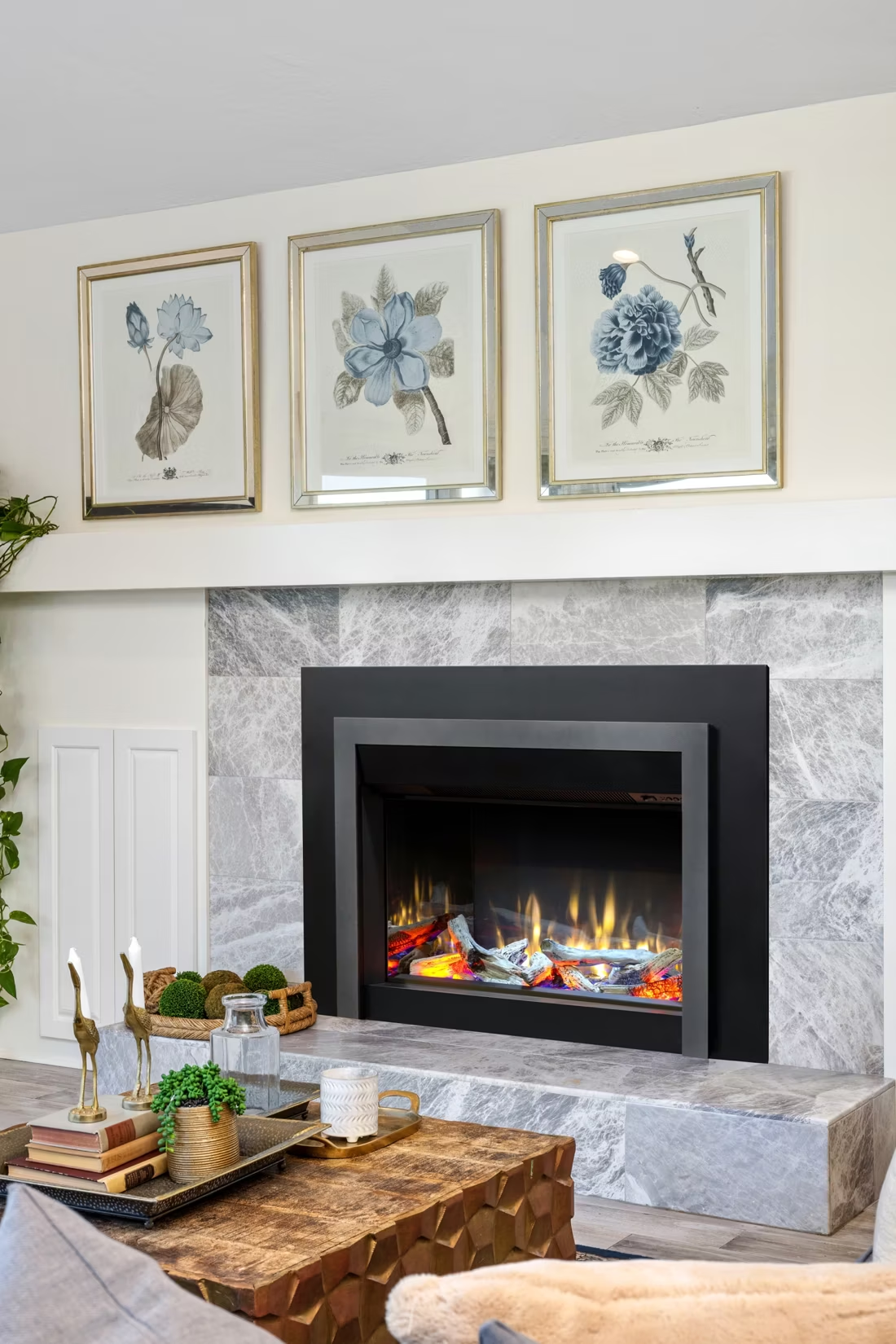
Often, yes. A lot of homes in Dixon's historic district have original masonry fireboxes with a flue that hasn't been relined in decades, and getting that chimney back to code for real wood or gas use can run $3,000 or more. An electric insert drops into that existing opening, gives you the visual of a working fireplace, and adds modest supplemental heat, without touching the chimney at all. It's a common, practical fix for a decorative fireplace nobody wants to sink chimney money into.
Where does an electric fireplace make the most sense in a Lee County home?
Anywhere a flue or gas line isn't realistic. That includes apartments above downtown Dixon storefronts, manufactured and modular homes in places like Franklin Grove or West Brooklyn, finished basements, and additions or sunrooms built without a chimney chase. Since electric units only need an outlet or a standard circuit, they go into spaces that would otherwise be stuck with baseboard heat or nothing extra at all.
How much does it cost to run an electric fireplace compared to propane heat?
Nicor Gas serves natural gas into Dixon and the larger towns, but a good share of unincorporated Lee County farmland runs on propane, which climbs in price during hard winter stretches. A 1,500-watt electric fireplace run for a few hours in the evening typically costs somewhere around a dollar or two at standard ComEd residential rates—cheap for occasional supplemental use, though it adds up if you're trying to heat a whole addition all day rather than just the hours you're actually in the room.
How much maintenance does an electric fireplace need?
Very little, which is one of its advantages over combustion appliances. There's no annual chimney sweep like you'd schedule for a wood stove burning oak or hickory, and no gas line or venting to inspect. Occasional dusting of the heating element and a vacuum of the intake vents is generally all that's needed, and most units are simple enough that a local dealer can walk you through it in a few minutes at installation.
Are there any rebates for electric fireplaces in Lee County?
Not typically—Illinois utility efficiency programs are generally built around whole-home heating and insulation upgrades, and a supplemental electric fireplace usually doesn't qualify on its own. Where it can save money indirectly is zone heating: some Lee County homeowners use an electric unit in a guest room or sunroom to justify setting the main furnace thermostat back a few degrees, trimming the overall heating bill during the long 6,487-heating-degree-day season without heating rooms that sit empty most of the day.
Can I put a TV above my fireplace?
Yes—with an asterisk. Fireplaces are hot and TVs don't like heat. Either put a mantel between them to deflect rising warmth, or choose a fireplace with heat-management technology that creates a cool zone on the wall above—the wall stays around 125 degrees, barely warm, while the room still gets full heat. If you like clean lines and don't want a mantel, heat management is the answer.
Do electric fireplaces actually produce heat?
Yes—most put out around 4,800–5,000 BTUs from a standard outlet, which comfortably warms a bedroom, office, or den as a comfort-zone heater. What they won't do is carry a whole house the way wood, gas, or pellet can. Think of electric as ambiance-first with honest supplemental heat: flames on with no heat in July, flames plus warmth in January.
How much should I budget for a fireplace?
For an average home—covering the fireplace, the vent pipe, and basic installation—a budget between $3,900 and $5,500 gives you a lot of options across wood, gas, and pellet. By the time you add finish work, gas line, and electrical, the average complete installation lands between $5,000 and $12,000 all-in. In a remodel or new build, a good rule is to put about 2.5% of the total project cost toward the fireplace.
Can I install a fireplace myself?
If you're putting a fire in your house on purpose, it's best to work with an expert. Unless you're genuinely experienced in framing, gas line, vent pipe, and the national code on clearances to combustibles, have a professional do it—and ideally the same company that sells you the fireplace, so warranty, service, and liability all live under one roof.
Get your free Project Guide & Parts List for an electric fireplace in Lee County.
Tell me about your home and the room you're trying to heat, and I'll match you with a trusted local Lee County dealer and send over a free Project Guide & Parts List—the right unit, the circuit requirements if you need one, and a recommended installer, no big-box guesswork.
Find Your Fireplace →