
Find the right fireplace for your Lee County, Illinois home.
Wood, gas, pellet, and electric fireplace resources for Dixon, Amboy, Franklin Grove, and every community along the Rock River in Lee County. Get matched with a trusted local dealer who can tell you what's actually installable in your home.
Every Project Starts From One of These Five Situations
Rock River heating traditions across Lee County, Illinois.
Lee County sits along the Rock River in north-central Illinois, with Dixon as the county seat and farmland stretching out toward Amboy, Ashton, and Franklin Grove. With winters comparable to Madison, Wisconsin—average lows near 14°F, with the heating season typically spanning October through April—the county sees a solid stretch of cold weather. The river bottoms and remaining farm woodlots still produce plenty of oak, hickory, walnut, and maple, and a good number of households split their own firewood or buy it from a neighbor rather than a retailer.
This hub rolls up every fuel type and every hearth business serving Lee County—retailers in Dixon and Amboy, chimney sweeps and gas technicians who cover the smaller towns like Paw Paw, Sublette, and Compton, and the fuel suppliers stocking cordwood, pellets, and propane. Pick a fuel below to see local dealers, typical installation costs, and the specific units that make sense for a Lee County home, whether that's a farmhouse outside Ashton or a bungalow in downtown Dixon.
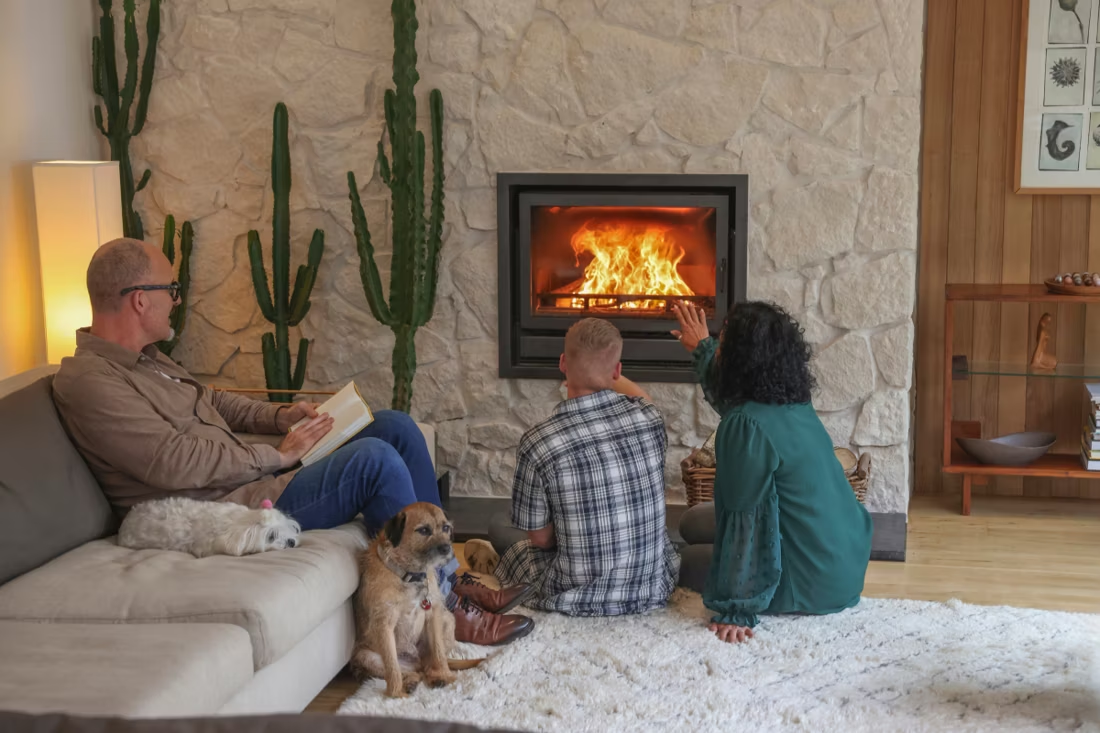
Four fuels. One honest answer for Lee County.
Three steps. No salesperson until you're ready.
Tell us about your project
Your zip code, your situation, and the fuel you're leaning toward—or let the answers point you to one.
See what's actually available
The brands dealers within 100 miles genuinely carry—real options, never a catalog mirage.
Get your dealer & Project Guide
A trusted local dealer, plus the free Project Guide & Parts List that names every component of the job.
Frequently Asked Questions
Which fireplace fuel makes the most sense in Lee County?
It comes down to what you already have and how hands-on you want to be. Wood is still common here—Lee County's farm woodlots and river-bottom timber produce plenty of oak, hickory, walnut, and maple, and a lot of households heat with a wood stove or insert as a way to use land they already own. Gas is the low-maintenance choice for homes on natural gas or propane—no wood to split, no ash to haul, heat on demand during a January cold snap. Pellet stoves are a middle path: you're buying fuel (regional suppliers like Lignetics and Somerset Pellet Fuel serve this area) instead of cutting it, but you still get a real firebox and a hopper that runs 24-48 hours on a fill. Electric fireplaces work well as supplemental heat in a bedroom or a room addition, but with average lows around 14°F and a long, cold winter typical of this part of Illinois, most Lee County homes need something more than electric resistance heat carrying the load solo.
Do I need a permit to install a fireplace or stove in Lee County?
Generally yes, for anything beyond a plug-in electric unit. New wood stoves, wood inserts, gas fireplaces, gas inserts, and pellet stoves typically require a building permit, and gas installations need a licensed gas-fitter for the line work in addition to the appliance permit. If you're inside Dixon, Amboy, or another incorporated town, the city handles permitting; in unincorporated Lee County, that goes through the county building and zoning office. Wood-burning appliances installed today need to meet current EPA emissions standards regardless of jurisdiction. Most local hearth retailers pull the permit as part of the installation quote, so you're not usually filing paperwork yourself.
Are there air quality restrictions on wood burning in Lee County?
No—Lee County doesn't have the inversion or non-attainment issues that trigger mandatory burn bans in some parts of the country, and there are no local air-quality advisories tied to wood smoke here. That said, any new wood stove or insert installed today still has to meet current federal EPA emissions standards, which is mostly a non-issue since virtually every stove sold by a licensed dealer now is EPA-certified. If you're burning green or wet wood from a farm woodlot, the bigger practical concern is chimney creosote buildup, not a regulatory one—which is a good reason to get an annual sweep regardless of local air rules.
Will one dealer in Lee County carry all four fuel types?
Not usually all four with equal depth. Most hearth retailers serving Lee County lean heavily into wood and gas, since those are the two fuels with the deepest local demand, and carry pellet stoves as a secondary line. Electric fireplaces are often available too, but as a smaller display section rather than a specialty. If you're cross-shopping—say, deciding between a wood insert and a pellet stove for the same fireplace opening—ask the dealer directly which fuels they install and service themselves versus which they just sell; installation and post-sale service quality varies more than the product lineup does.
How does fireplace service work if I live outside Dixon?
Most of the technicians covering Lee County are based in or near Dixon and drive out to the smaller towns—Ashton, Franklin Grove, Paw Paw, Sublette, Compton—for both installs and annual service. Expect to book a bit further ahead for rural addresses, and don't be surprised by a modest trip charge on top of the service call if you're 20+ miles out. The practical move is scheduling your annual sweep or gas inspection in late summer or early fall, before the October-to-April heating season fills up every tech's calendar.
What does fireplace installation typically cost across fuel types in Lee County?
Costs track fairly closely with national averages, adjusted for the smaller, more rural dealer base here. Wood stove or insert: roughly $4,000–$8,500 installed, more if the chimney needs relining or rebuilding. Gas fireplace, insert, or stove: roughly $4,000–$10,000, with the range driven mostly by how much new gas line or venting work is required. Pellet stove or insert: roughly $4,000–$7,000 for a typical install. Electric fireplace: $200–$2,500 for the unit itself, plus $300–$1,000 in labor if it's a built-in rather than a plug-and-play insert. Ask your local dealer for a written quote that breaks out unit, venting, and labor separately—that's the easiest way to compare across fuels.
Wood, gas, pellet, or electric—how do I choose?
Match the fuel to your life, not the other way around. Wood: lowest fuel cost and total power-outage independence, but you're hauling and stacking. Gas: press a button, set a thermostat, no maintenance to speak of. Pellet: wood economics with automatic feeding, in exchange for weekly cleaning and a need for electricity. Electric: plugs in anywhere with honest supplemental heat. Nobody regrets the fuel that fits how they actually live.
How much should I budget for a fireplace?
For an average home—covering the fireplace, the vent pipe, and basic installation—a budget between $3,900 and $5,500 gives you a lot of options across wood, gas, and pellet. By the time you add finish work, gas line, and electrical, the average complete installation lands between $5,000 and $12,000 all-in. In a remodel or new build, a good rule is to put about 2.5% of the total project cost toward the fireplace.
Can a fireplace actually lower my heating bill?
Yes—by creating a comfort zone. A furnace heats every square foot of the house just to warm the one room you're in; a gas fireplace on low burns roughly a sixth of the gas a typical furnace does. Set the furnace around 55–60 degrees as a baseline, then heat the rooms your family actually uses. Families who heat this way commonly save $20–$60 a month.
I know I want a fireplace—where do I actually start?
Do two things today: snap a photo of the wall or fireplace you want to transform, and take a tape measure to the space—width, height, depth. Those two artifacts answer most of a hearth professional's first questions. Then settle fuel (wood, gas, pellet, or electric) and set a realistic budget: $3,900–$5,500 covers fireplace, vent, and basic install for most homes.
Stove and Fireplace Dealers in Lee County
Listings include WhyFire partner dealers, dealers we have verified as authorized for the brands we recommend, and established local businesses that carry hearth products. Every listing shows which one it is. The ones marked Preferred run on WhyFire's software, so they can show you real pricing and book your appointment right here. No manufacturer pays for placement. How we verify dealers →
Bradford Supply Co
Frary Lumber
Loescher Heating & Ac
Advanced Chimney Systems
The Fireworks Store
The Fireplace Shop, Etc
Find your fireplace fuel in Lee County.
Tell us about your home and we'll match you with a trusted local dealer and send over a free Project Guide & Parts List—the exact parts, including the vent kit, and a dealer recommendation for your project.
Find Your Fireplace →