
Keep Your Family Warm and Safe—No Matter What
In one of Illinois' fastest-growing counties, most homes run on natural gas—but on the older farmsteads and acreage lots scattered around Yorkville, Oswego, and Plano, a wood stove still earns its keep. We'll help you figure out if it fits your property and match you with a local dealer who installs it right.
Every Project Starts From One of These Five Situations
A niche fuel in a fast-growing suburb.
Kendall County has grown faster than almost any other county in Illinois over the last two decades, and most of that growth looks like Yorkville, Oswego, Montgomery, and Plainfield township subdivisions built on natural gas from the start. Winters here are genuinely cold—a 6,256 heating-degree-day climate with average lows around 16°F, not far off from what a homeowner in Madison, WI deals with—but the housing stock built to handle that cold is almost entirely gas-forced-air and gas fireplace inserts, not wood. That's the honest starting point: a wood stove is not the default heating appliance in most of Kendall County, and it isn't going to be for most subdivision homeowners.
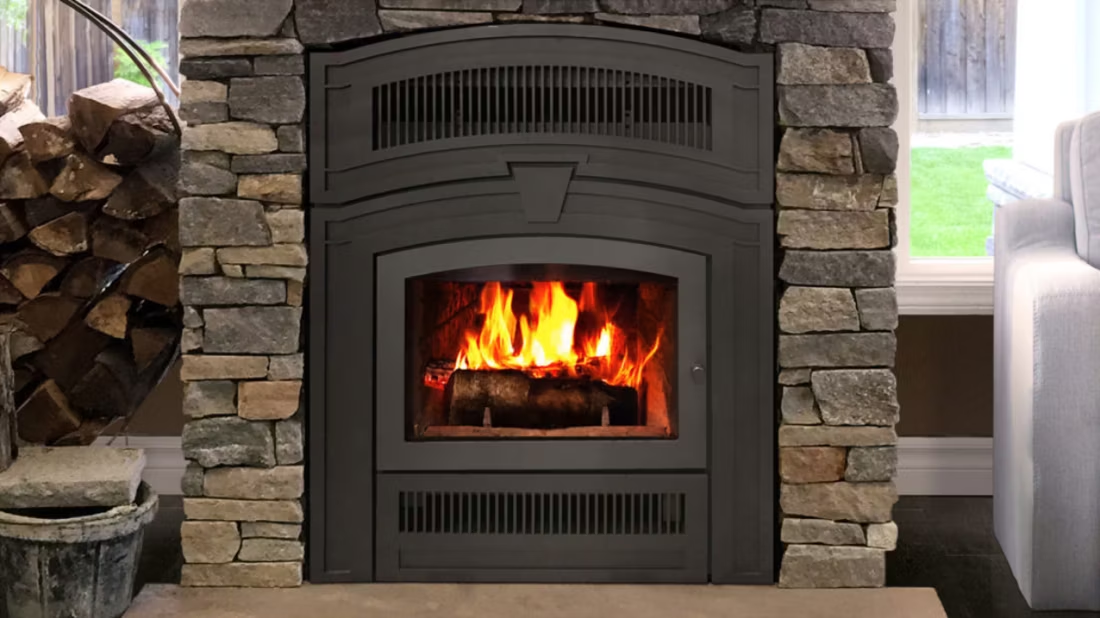
Where wood heat does make sense is on the older properties—farmhouses that predate the subdivisions, hobby farms and acreage in the unincorporated township land around Na-Au-Say, Seward, and Fox, and rural lots with an existing woodlot of oak, hickory, walnut, or maple already on the property. Those homeowners install wood stoves for the same reasons people always have: a hedge against ComEd outages during ice storms, a cheap supplemental heat source in a big farmhouse, or simply the fact that they've got standing hardwood and a fireplace already. Kendall County has no non-attainment status and no seasonal burn restrictions tied to air quality, so if wood heat fits your property, there's no local smoke ordinance standing in your way the way there is in some other parts of the country.
Three steps. No salesperson until you're ready.
Tell us about your project
Your zip code, your situation, and the fuel you're leaning toward—or let the answers point you to one.
See what's actually available
The brands dealers within 100 miles genuinely carry—real options, never a catalog mirage.
Get your dealer & Project Guide
A trusted local dealer, plus the free Project Guide & Parts List that names every component of the job.
Frequently Asked Questions
Is a wood stove actually a realistic option in Kendall County?
For most Kendall County homes—the newer construction in Yorkville, Oswego, Montgomery, and similar subdivisions—a gas fireplace or gas insert is the more common and more practical choice, since natural gas service is already run to nearly every one of these homes. Wood stoves are a real option, but they tend to make the most sense on older farmhouses, acreage properties, and homes in unincorporated township areas where a family already has access to standing hardwood or wants a heat source that works without electricity. If that's your situation, a wood stove is a genuinely good fit for a 6,256-HDD climate with 16°F average winter lows. If you're in a newer subdivision on a small lot, it's worth talking through whether gas makes more sense before committing to wood.
What does a wood stove installation cost in Kendall County?
For a Chicago-exurb market like Kendall County, a freestanding wood stove installation typically runs in the $4,000 to $8,500 range, depending on whether you're venting through an existing masonry chimney, installing new Class A chimney pipe through a roof, or adding a hearth pad to meet clearance requirements. Homes without any existing fireplace or chimney—common in newer subdivision construction—sit at the higher end once full venting is factored in. A local dealer will give you a firm number after walking the specific install, since older farmhouses often have chimney conditions (age, flue size, structural issues) that affect the scope of the job.
Will my subdivision or HOA allow a wood-burning stove?
This is worth checking before you get too far into planning. Many of the newer subdivisions across Kendall County—in Oswego, Yorkville, and Montgomery in particular—have HOA covenants that restrict or prohibit exterior chimneys, exposed stovepipe, or solid-fuel appliances, largely because the homes were designed around gas from the start. Rural and unincorporated properties outside those subdivisions typically don't carry HOA restrictions, though you'll still need to meet county building code. If you're in a covenant-controlled neighborhood, read the architectural guidelines or ask your HOA board directly before ordering a stove.
Do I need a permit to install a wood stove in Kendall County?
Yes. If your property sits within a municipality—Yorkville, Oswego, Plano, Montgomery, or Plainfield—the local village building department handles the permit and inspection. If you're in unincorporated Kendall County, the Kendall County Building & Zoning Department handles it instead. Either way, the inspection covers clearances to combustibles, hearth protection, and chimney or Class A pipe venting. Most local dealers pull the permit as part of the installation, so you're not coordinating that step yourself, but it's worth confirming who has jurisdiction over your specific address before scheduling work.
Where do I get firewood in Kendall County?
Kendall County isn't surrounded by national forest land the way a lot of Western wood-heat markets are, so there's no Forest Service cutting permit system here. Firewood in this area comes primarily from local tree services, farm woodlots, and dedicated firewood dealers selling seasoned oak, hickory, walnut, and maple by the rick or cord. If you're on acreage with mature hardwoods already on the property, self-supply is common and cuts your fuel cost to essentially nothing beyond the labor of cutting and splitting. Otherwise, expect to budget for delivered firewood each fall, priced by species and how well-seasoned it is.
Does a wood stove make sense as backup heat for power outages?
It's one of the strongest arguments for wood heat in this part of Illinois. Overhead ComEd lines feeding the rural and township areas around Kendall County are exposed to the same ice storms and summer derechos that periodically knock out power across northern Illinois, sometimes for days. A wood stove keeps running with zero electricity, which matters most for homes on private wells (no power means no water pump either) or homes far enough out that utility crews reach them last. For subdivision homes with underground utilities and shorter outage windows, this argument carries less weight—it's really the rural and acreage properties where a wood stove earns its place as an outage hedge.
Wood stove or pellet stove—which fits better here?
Neither is the default heating choice in Kendall County's gas-dominated housing stock, but between the two, wood tends to fit rural properties better because it doesn't need electricity to run—a real advantage during ComEd outages. Pellet stoves, sold regionally through brands like Indeck Energy Services, Lignetics, and Somerset Pellet Fuel, offer easier day-to-day operation and cleaner burns, but the auger and blower require power, so they go dark in an outage right when you might need heat most. If you already have hardwood on your property and want outage-proof backup heat, wood is the better fit. If convenience matters more than outage resilience, pellet is worth a look.
How often does a wood stove chimney need to be inspected?
The Chimney Safety Institute of America recommends an annual inspection for any wood-burning appliance, and that holds regardless of how rural or suburban your Kendall County property is. If you're burning through a full northern Illinois heating season—several cords of oak or hickory between late fall and early spring—plan on a sweep and inspection before the season starts, typically in late summer or early fall. Older farmhouse chimneys in particular are worth a close look, since flue conditions and mortar integrity can change year to year in a way newer construction doesn't.
Does adding a wood stove affect my homeowner's insurance?
Often, yes—most insurers require you to disclose a wood-burning stove or insert, and some will ask for proof of a code-compliant installation with the correct clearances and a recent chimney inspection before they'll cover it without an added rider. This is one more reason to have the installation permitted and inspected through your village or the Kendall County Building & Zoning Department rather than doing it informally: a documented, permitted install with a compliance certificate is exactly what an insurer wants to see, and it protects you if you ever need to file a claim.
Why is a fireplace insert so efficient?
An insert does two things: it seals the chimney completely, so you stop losing air you already paid to heat, and it radiates warmth into the room through the firebox and glass. Most add a heat-exchange fan that pulls cool room air underneath, wraps it around the hot firebox, and pushes it back out warm. Your home is more efficient before you've even lit the first fire.
What's the difference between an insert and a zero-clearance fireplace?
An insert is a fireplace that slides into a pre-existing wood-burning fireplace—if you don't have one, there's nothing to insert it into. A zero-clearance fireplace is built into a framed wall, which makes it the answer for remodels and new construction. Simple test: existing masonry fireplace means insert; blank or framed wall means zero-clearance.
What is an in-home preview and do I need one?
It's a visit where a hearth professional measures your space, confirms the model you picked actually works in your home, and walks the specs—framing, gas line, venting, finish work—before anything is ordered. Some details you just can't know until you see the house. Never make a down payment without one; it's the single most-skipped step that burns buyers.
Can I install a fireplace myself?
If you're putting a fire in your house on purpose, it's best to work with an expert. Unless you're genuinely experienced in framing, gas line, vent pipe, and the national code on clearances to combustibles, have a professional do it—and ideally the same company that sells you the fireplace, so warranty, service, and liability all live under one roof.
Stove and Fireplace Dealers in Kendall County
Find your wood stove in Kendall County.
Tell us about your property and we'll help you figure out if a wood stove is the right call for your Kendall County home—then match you with a trusted local dealer and hand you a free Project Guide & Parts List with the exact venting and parts your install needs.
Find Your Fireplace →