
Find the electric fireplace that fits your Kendall County home.
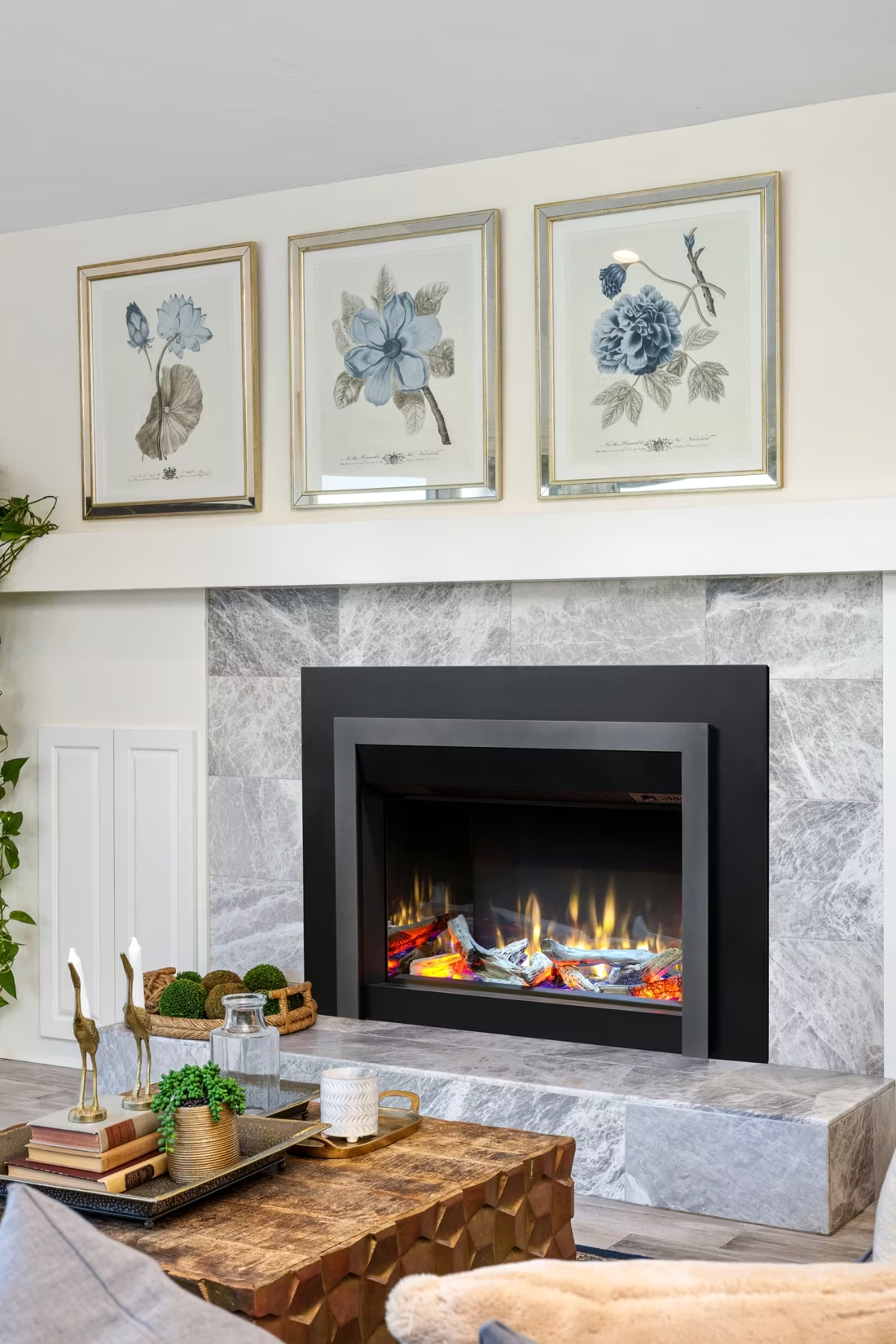
From new-build subdivisions in Oswego and Plainfield to older farmhouses around Newark and Lisbon, electric fireplaces bring instant zone heat and ambiance without a chimney or gas line. Find the right unit and connect with a trusted local dealer.
Every Project Starts From One of These Five Situations
Instant heat, zero venting, easy install.
Kendall County has nearly doubled in population over the past two decades as Chicago's exurbs pushed west through Oswego, Yorkville, Plano, and Montgomery. Most of that growth is newer construction—townhomes, subdivision single-families, finished basements—built without masonry fireplaces or existing chimneys. At the same time, winters here are genuinely cold: climate zone 5A, an average winter low of 16°F, and roughly 6,256 heating degree days a year, putting Kendall County in the same heating-load range as Madison, Wisconsin. That combination—cold winters, chimney-free housing stock—is exactly where electric fireplaces earn their place.
Electric units plug into a standard outlet or, for larger built-ins, a dedicated circuit an electrician sets up in an afternoon. There's no gas line to run, no flue to inspect, and no combustion byproducts to vent—which matters in a county where a lot of housing is newer construction with sealed, energy-efficient envelopes. ComEd serves electric accounts throughout Kendall County, and most homeowners here use an electric fireplace as supplemental zone heat for a family room or finished basement rather than as a whole-home heat source. It's also the fuel of choice for renters, condo owners, and anyone in an HOA-governed subdivision where a wood or gas appliance isn't an option.
Three steps. No salesperson until you're ready.
Tell us about your project
Your zip code, your situation, and the fuel you're leaning toward—or let the answers point you to one.
See what's actually available
The brands dealers within 100 miles genuinely carry—real options, never a catalog mirage.
Get your dealer & Project Guide
A trusted local dealer, plus the free Project Guide & Parts List that names every component of the job.
Frequently Asked Questions
How much does an electric fireplace installation cost in Kendall County?
A plug-in electric insert or wall-mount unit typically runs $400 to $1,200 installed, since most models need nothing more than an existing outlet and basic mounting hardware. Larger built-in units—the kind framed into a wall or a custom mantel surround in a new Oswego or Plainfield-area build—run higher, up to $2,000 to $2,500, once you factor in a dedicated 20-amp circuit and an electrician's time to run it. Because there's no venting or gas line involved, electric installs are consistently the fastest and least invasive of any fireplace fuel, which is part of why they're common in finished-basement projects around the county.
What size electric fireplace do I need for my room?
Most electric fireplaces are rated around 4,600 to 5,000 BTU (roughly 1,500 watts), which is enough to comfortably supplement heat in a room up to about 400 to 1,000 square feet, depending on insulation and ceiling height. For a finished basement family room common in newer Yorkville and Montgomery subdivisions, a single mid-size insert or wall-mount unit is usually plenty. For open-concept great rooms, some homeowners install two smaller units or a wider linear model rather than one oversized unit, since output on electric fireplaces is fixed and doesn't scale the way a gas unit's BTU rating does. A local dealer can walk through your room's square footage and layout before you buy.
Do I need a permit to install an electric fireplace in Kendall County?
A simple plug-in unit generally doesn't require a permit since it uses an existing outlet. Built-in units that require a new dedicated circuit typically need an electrical permit, and the process depends on where you are: inside Yorkville, Oswego, Plano, or Montgomery, permits go through that municipality's building department; in unincorporated Kendall County, they go through the county. Most electricians and hearth dealers who install built-in electric units handle the permit application as part of the job, so it's rarely something homeowners have to manage themselves.
Electric vs. gas fireplace—which makes more sense for my Kendall County home?
Gas fireplaces produce genuine heat output and can serve as a real supplemental heat source during Kendall County's cold stretches, but they require either a natural gas line or propane tank and proper venting—a bigger project, especially in a home without existing gas service. Electric fireplaces produce less raw heat but install in a fraction of the time, work in any home regardless of gas access, and are the default choice for condos, townhomes, and HOA communities where venting or gas work isn't permitted. If you're in a newer Oswego or Plainfield-area subdivision without a gas fireplace stub already roughed in, electric is usually the more practical near-term option.
Will an electric fireplace still work during a power outage?
No—this is worth knowing before you buy. Electric fireplaces need power to run the heater and, on most models, the flame-effect display, so they shut off completely during an outage. In a county with real winter cold like Kendall's, that's a meaningful gap if you're relying on the unit as backup heat. Wood stoves are uncommon in Kendall County's newer housing stock, so most homeowners here who want outage-proof heat lean on a portable generator or a whole-home backup system rather than switching fuel types. If backup heat during outages is a priority, mention that to your dealer—it changes the recommendation.
What's the difference between an electric insert, wall-mount, and built-in unit?
An electric insert is sized to slide into an existing fireplace opening—useful if you have an old, unused masonry firebox you want to convert without chimney work. A wall-mount unit hangs on the wall like a flat-screen TV and needs only a nearby outlet, making it the fastest option for a basement or bonus room. A built-in unit is framed into new construction or a custom mantel surround and usually needs a dedicated electrical circuit. For the many newer homes in Oswego, Plainfield, and Montgomery that were never built with a fireplace opening at all, wall-mount and built-in units are the two realistic choices.
How much does it cost to run an electric fireplace in Kendall County?
Most electric fireplaces draw around 1,500 watts on the heat setting. At ComEd's typical residential rates, running one for several hours a night through the coldest months costs roughly $10 to $25 per month depending on usage—far less than most homeowners assume, and a fraction of what it costs to heat the same square footage with central forced-air alone. Running it flame-only, without the heater engaged, costs only a few cents an hour, which is why many Kendall County homeowners use theirs for ambiance on mild evenings and heat output only during the coldest stretches.
Can I install an electric fireplace in a condo or HOA-governed subdivision?
Yes, and it's one of the main reasons electric fireplaces are popular in Kendall County's newer developments. Because there's no venting, no chimney, and no gas line, electric units generally clear HOA and condo association rules that would block a wood stove or gas appliance outright. It's still worth checking your specific HOA's covenants before a built-in installation that involves cutting into a wall, since some associations regulate exterior appearance or require notification for electrical work—but plug-in and wall-mount units are almost always permitted without issue.
Why don't more Kendall County homes use wood or pellet stoves given the local hardwoods?
Kendall County sits in oak, hickory, walnut, and maple country, so firewood availability isn't the limiting factor—it's the housing stock. Much of the county's growth over the past twenty years has been newer subdivision construction in Oswego, Plainfield, and Yorkville built without masonry chimneys, and many of those developments carry HOA restrictions that make wood-burning installations impractical or prohibited outright. Pellet stoves face a similar gap: without an existing chimney or approved through-wall vent path, retrofitting one into a newer home adds real cost. Electric fills that niche well—it delivers fireplace ambiance and supplemental heat without requiring any of the structural changes wood or pellet appliances need.
Can I put a TV above my fireplace?
Yes—with an asterisk. Fireplaces are hot and TVs don't like heat. Either put a mantel between them to deflect rising warmth, or choose a fireplace with heat-management technology that creates a cool zone on the wall above—the wall stays around 125 degrees, barely warm, while the room still gets full heat. If you like clean lines and don't want a mantel, heat management is the answer.
Does an electric fireplace need a vent or chimney?
No—that's its superpower. An electric fireplace needs a wall and an outlet, period. No vent pipe, no gas line, no clearances to design around, which is why it works in bedrooms, offices, apartments, and walls where venting a gas or wood unit would be impractical or impossible. Installation is typically the simplest and least expensive of any fireplace type.
Does a fireplace add value to my home?
On average, a fireplace adds back to the home about the same amount you spent installing it. Add the monthly savings from heating the rooms you actually use instead of the whole house—often hundreds of dollars a year—and the value case is strong before you even count what a fire does for how your family uses the room.
Can a fireplace actually lower my heating bill?
Yes—by creating a comfort zone. A furnace heats every square foot of the house just to warm the one room you're in; a gas fireplace on low burns roughly a sixth of the gas a typical furnace does. Set the furnace around 55–60 degrees as a baseline, then heat the rooms your family actually uses. Families who heat this way commonly save $20–$60 a month.
Stove and Fireplace Dealers in Kendall County
Find your electric fireplace in Kendall County.
Tell us a bit about your home—and whether you're in Yorkville, Oswego, Plano, or elsewhere in the county—and we'll match you with a trusted local dealer and a free Project Guide & Parts List, including the exact electrical requirements and unit specs for your space.
Find Your Fireplace →