
Pellet heat in a county wired for natural gas.
Kendall County has winters on par with Minneapolis, MN and lows around 16°F, but nearly every home from Yorkville to Oswego to Plano already heats with a gas furnace. Pellet stoves still have a real, if narrow, place here—and I'll match you with a trusted local dealer who can tell you honestly whether one makes sense for your house.
Every Project Starts From One of These Five Situations
A gas-heated county with a growing case for backup.
Kendall County covers roughly 320 square miles of the Fox River Valley southwest of Chicago and was, for years, one of the fastest-growing counties in Illinois—subdivisions in Oswego, Yorkville, Montgomery, and Plano built out largely on natural gas forced-air furnaces, the default for new construction in this part of the Midwest. With winters comparable to Minneapolis, MN and lows averaging 16°F, the season here is genuinely long and cold, but the housing stock and utility infrastructure were built around gas, not solid-fuel appliances. That's the honest starting point for anyone shopping pellet stoves in this county: they're not the default heating source, and you won't find a pellet dealer on every corner the way you might in a rural, off-grid part of the Midwest.
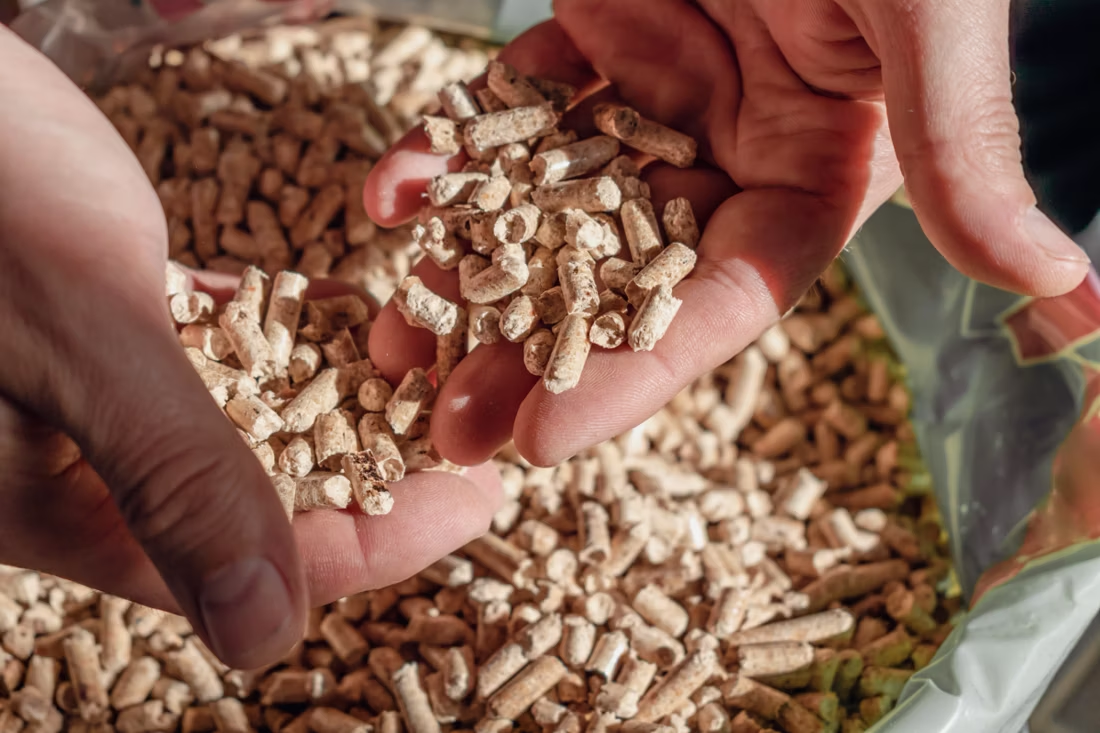
Where pellet appliances do show up in Kendall County, it's usually as a supplemental heat source in a finished basement or sunroom, a design feature during a remodel, or a hedge against the ComEd outages that hit the Fox River Valley during winter ice storms and summer derechos. That last use case comes with a real caveat: pellet stoves need electricity to run the auger, igniter, and blower, so a standard unit goes cold in an outage unless it's paired with a battery backup. Regional pellet supply isn't a problem—Indeck Energy Services, Lignetics, and Somerset Pellet Fuel all produce and distribute bagged pellets across Illinois and the wider Midwest, often milled from the same oak, hickory, walnut, and maple that grow throughout the county's woodlots and river corridors.
Three steps. No salesperson until you're ready.
Tell us about your project
Your zip code, your situation, and the fuel you're leaning toward—or let the answers point you to one.
See what's actually available
The brands dealers within 100 miles genuinely carry—real options, never a catalog mirage.
Get your dealer & Project Guide
A trusted local dealer, plus the free Project Guide & Parts List that names every component of the job.
Frequently Asked Questions
How much does a pellet stove installation cost in Kendall County?
There's no dense local pellet-dealer network the way there is for gas fireplaces here, so pricing depends heavily on which installer you use and how far they're traveling into the county. As a general range, a freestanding pellet stove with a straightforward through-wall vent typically runs in the $3,000-$5,500 installed range nationally; expect the upper end if you're converting an existing wood fireplace to a pellet insert or if the installer is coming from outside the immediate Yorkville-Oswego-Plano corridor. A local building department permit and inspection are standard parts of that cost regardless of who does the work.
Is a pellet stove actually a good fit for a Kendall County home?
It depends on what you're asking it to do. As a primary heat source, no—Kendall County's housing stock is built around gas forced-air systems, and a pellet stove won't out-compete a furnace for whole-house heating in a winter as long and cold as Minneapolis, MN's. As a supplemental heater for a finished basement, sunroom addition, or a room that runs cold on the coldest January nights, a mid-size pellet stove rated for 1,000-1,800 square feet is a genuinely useful add-on. The honest answer most local dealers will give you is that it's a secondary appliance here, not a furnace replacement.
Do I need a permit to install a pellet stove in Kendall County?
Yes. A pellet stove installation involves fuel-burning appliance venting and typically a new electrical circuit for the unit, both of which fall under your local municipal or county building department's permit and inspection process, whether you're in Yorkville, Oswego, Montgomery, or unincorporated Kendall County. Because pellet installs aren't a routine job for every contractor in this market, ask any installer you're considering whether they pull permits and schedule inspections as a matter of course—it's a good filter for finding someone who genuinely knows the appliance.
Will a pellet stove keep working during a power outage?
Not without extra equipment. A standard pellet stove depends on electricity to run its auger motor, igniter, and combustion blower, so when ComEd power drops during a Fox River Valley ice storm or summer derecho, the stove stops feeding fuel and shuts down. Some homeowners pair a pellet stove with a battery backup unit or a small generator specifically to keep it running through an outage; if backup heat during a power failure is your main goal, it's worth discussing with a dealer whether a battery-backed pellet unit or a non-electric appliance makes more sense for your situation.
What pellet brands are actually available to Kendall County homeowners?
Indeck Energy Services, Lignetics, and Somerset Pellet Fuel all supply bagged hardwood and softwood pellets into the Illinois and broader Midwest market, and any dealer who installs a pellet appliance in Kendall County will generally have access to one or more of these brands through regional distribution rather than a dedicated in-county pellet retailer. Because Kendall County doesn't have the pellet-buying volume of a more wood-heat-dependent region, expect to order pellets a pallet at a time from a farm supply store, hardware co-op, or the dealer who installed your unit rather than picking bags up at a corner hearth shop.
Pellet stove vs. gas fireplace—which makes more sense in Kendall County?
For most Kendall County homes, gas wins on convenience: it's the fuel the house is already built around, Nicor Gas service reaches most of the county's developed areas, and a gas fireplace or insert runs on demand with no fuel storage or hopper refilling. A pellet stove makes sense in narrower circumstances—a room with no gas line nearby, a preference for a real flame with wood-adjacent ambiance, or a household that specifically wants a solid-fuel backup option. If your goal is efficient, low-maintenance heat for a main living space, a gas fireplace is the more straightforward fit for this county's climate and infrastructure.
Pellet stove vs. wood stove—is either one common here?
Both are uncommon in Kendall County for the same underlying reason: this is suburban Fox River Valley housing stock built on natural gas, not a rural region with public timberland and a wood-heat tradition. Unlike counties with national forest cutting permits, Kendall County has no significant public land where residents cut their own firewood—most local oak, hickory, walnut, and maple firewood comes from private tree removal or landscaping companies. Between the two, pellet stoves are somewhat easier to live with in a suburban lot since they don't require stacked cordwood storage, but neither fuel sees meaningful adoption as a primary heat source here.
How much maintenance does a pellet stove need?
Plan on a quick ash-pan and burn-pot cleaning every few days of regular use, a hopper refill as needed, and a full professional service once a year—checking the auger, exhaust blower, gaskets, and venting. That's a lighter lift than a wood-burning chimney sweep, but because pellet-specific technicians aren't as thick on the ground in Kendall County as gas fireplace service techs, it's worth confirming with your installer up front that they also handle annual maintenance, not just the initial install.
Are there rebates or tax credits for installing a pellet stove in Kendall County?
Illinois doesn't currently run a state-level rebate specific to pellet stoves, but the federal biomass stove tax credit (Section 25C) offers a 30% credit, up to $2,000, for pellet appliances rated at 75% efficiency or higher (HHV)—most modern EPA-certified pellet stoves qualify. Since Kendall County homeowners are often installing a pellet stove as a supplemental unit rather than a full heating-system replacement, that credit can meaningfully offset the cost. Ask your dealer for the manufacturer's efficiency documentation so you have what you need to claim it at tax time.
What's the difference between an insert and a zero-clearance fireplace?
An insert is a fireplace that slides into a pre-existing wood-burning fireplace—if you don't have one, there's nothing to insert it into. A zero-clearance fireplace is built into a framed wall, which makes it the answer for remodels and new construction. Simple test: existing masonry fireplace means insert; blank or framed wall means zero-clearance.
Why is my open fireplace making my house colder?
Open fireplaces suck—literally. As the fire burns, it consumes air your furnace already paid to heat and pulls it out through the chimney, so the house is actually colder after the fire goes out than before you lit it. An insert fixes this: it seals the chimney, puts fixed glass across the front, and turns that hole in your house into a real heat source.
Can a fireplace actually lower my heating bill?
Yes—by creating a comfort zone. A furnace heats every square foot of the house just to warm the one room you're in; a gas fireplace on low burns roughly a sixth of the gas a typical furnace does. Set the furnace around 55–60 degrees as a baseline, then heat the rooms your family actually uses. Families who heat this way commonly save $20–$60 a month.
What is an in-home preview and do I need one?
It's a visit where a hearth professional measures your space, confirms the model you picked actually works in your home, and walks the specs—framing, gas line, venting, finish work—before anything is ordered. Some details you just can't know until you see the house. Never make a down payment without one; it's the single most-skipped step that burns buyers.
Stove and Fireplace Dealers in Kendall County
Pellet Brands Stocked Around Kendall County
Manufacturers will point you to the nearest stocking dealer.
Get your Kendall County pellet stove Project Guide & Parts List.
Tell me about your home and what you're hoping the stove will do—supplemental heat, outage backup, or ambiance—and I'll match you with a trusted local dealer and send a free Project Guide & Parts List: the exact equipment, vent kit, and installer recommendation for your Kendall County pellet project.
Find Your Fireplace →