
Automated, hopper-fed heat for Hardin County homes.
From Elizabethtown to Cave-In-Rock to Rosiclare, pellet stoves give Ohio River bluff-country homes clean, thermostat-controlled heat without the daily wood-splitting. Find the right unit and connect with a trusted local dealer.
Every Project Starts From One of These Five Situations
Consistent heat, no woodpile required.
Hardin County is Illinois' smallest and southernmost mainland county, tucked into the limestone bluffs of the Shawnee Hills along the Ohio River. With a population of just under 1,500 spread across Elizabethtown, Cave-In-Rock, and Rosiclare, this is rural country—big timber tracts of oak, hickory, walnut, and maple, older farmhouses and river-bottom homes, and a climate zone 4A profile that brings real winter cold (January nights regularly drop into the teens) without the sustained sub-zero stretches you'd find up around Duluth or Fargo. That's a climate where a mid-size pellet stove can carry a home through the coldest weeks without needing the oversized, industrial-grade units cold-climate installers spec farther north.
Because Hardin County reports no air quality non-attainment issues or winter inversion restrictions, there's no curtailment schedule to work around—pellet stoves here run whenever you want heat, with none of the burn-ban complications some Illinois counties face. Regional pellet supply runs through producers like Indeck Energy Services, Lignetics, and Somerset Pellet Fuel, all of whom draw on the same hardwood base—oak, hickory, walnut—that fills the county's timberland. For a county this size, with retail infrastructure spread thin across Harrisburg, Marion, and Metropolis, having a dealer who actually stocks parts and can get to your property matters more than browsing a catalog. A pellet stove also sidesteps a real rural-Illinois problem: many older or manufactured homes here don't have a masonry chimney, and pellet units vent through a small wall penetration instead of requiring one.
Three steps. No salesperson until you're ready.
Tell us about your project
Your zip code, your situation, and the fuel you're leaning toward—or let the answers point you to one.
See what's actually available
The brands dealers within 100 miles genuinely carry—real options, never a catalog mirage.
Get your dealer & Project Guide
A trusted local dealer, plus the free Project Guide & Parts List that names every component of the job.
Frequently Asked Questions
How much does a pellet stove installation cost in Hardin County?
Most pellet stove installations in Hardin County run in the $3,000 to $6,500 range, depending on the unit, whether it's a freestanding stove or an insert into an existing fireplace, and how much wall or floor prep is needed. Because pellet stoves vent through a simple side-wall or through-wall pipe rather than a full masonry chimney, installs in the county's older farmhouses and manufactured homes are often on the lower end of that range compared to wood stove installs that require new chimney work. Homes without an existing hearth pad or electrical outlet nearby will see costs creep toward the higher end.
What size pellet stove do I need for my home?
For Hardin County's mix of older farmhouses, river-bottom homes, and newer construction, sizing comes down to square footage and how drafty the structure is. Small units (up to 1,000 sq ft) suit a single room or a small cabin near Cave-In-Rock; medium units (1,000 to 1,800 sq ft) cover most main living areas; larger units handle open-plan homes or supplemental whole-house heat. Older, less-insulated farmhouses common along the Ohio River bottoms often need a size up from what square footage alone would suggest. A local dealer can size your home correctly during an in-home visit—oversizing leads to short, inefficient burn cycles, while undersizing leaves you running the auger nonstop on the coldest nights.
Where can I find pellet stove dealers near me in Hardin County?
Given Hardin County's population of under 1,500, most hearth retailers with in-stock inventory and certified installers are based in nearby Harrisburg, Marion, or Metropolis, with some homeowners also looking across the river toward Paducah, Kentucky. Expect a modest travel charge factored into installs for more remote parts of the county, including Cave-In-Rock and Rosiclare. Working with a dealer who's installed pellet units in this specific climate and housing stock—rather than a big-box retailer—matters for correct venting length and hopper sizing.
Pellet stove vs. wood stove—which makes sense in Hardin County?
Hardin County has abundant local hardwood—oak, hickory, walnut, maple—and no air quality restrictions on burning, so wood heat is a genuinely practical option here. Wood stoves work without electricity, which matters during the ice storms that periodically knock out power along the river bluffs. Pellet stoves trade that off for convenience: load the hopper, set the thermostat, and get a steady, low-ash burn with far less daily tending—but they need electricity to run the auger and blower, so a generator or battery backup is worth considering if you're relying on one as primary heat. Many county homeowners end up with a wood stove or fireplace for backup and ambiance and a pellet unit for daily convenience in the main living space.
Do I need a permit to install a pellet stove in Hardin County?
Yes—new pellet stove installations typically require a building permit through Hardin County's building department, mainly to confirm proper clearances and venting termination. Because Hardin County has no reported air quality non-attainment status, there are no burn curtailment periods to navigate, unlike counties in Illinois' Chicago metro area or other non-attainment zones. Most local dealers handle the permitting paperwork as part of the installation, so it's rarely something homeowners have to manage themselves.
What's the best pellet stove for Hardin County's climate?
Hardin County's zone 4A climate is real winter—regular nights in the teens—but not the sustained sub-zero cold of places like Bismarck or International Falls, so most homes don't need the largest cold-climate-rated units. A mid-size pellet stove with a multi-day hopper capacity handles the county's cold snaps well. Because winter ice storms can take down power along the river bluffs for stretches, ask your local dealer about models with battery-backup compatibility or plan for a small generator, since pellet stoves stop running without electricity. Local dealers can match hopper size and BTU output to your home's insulation and square footage.
How often does a pellet stove need maintenance?
Plan on daily ash pan emptying during heavy use, a weekly glass and burn-pot cleaning, and a full professional service once a year—typically before the start of the winter burn season. Annual service includes cleaning the auger, exhaust fan, and venting, and checking gaskets and igniter function. Skipping the annual service is the most common reason pellet stoves lose efficiency or jam mid-season, which matters most on the coldest nights when you can least afford downtime.
Where can I buy pellet fuel in Hardin County?
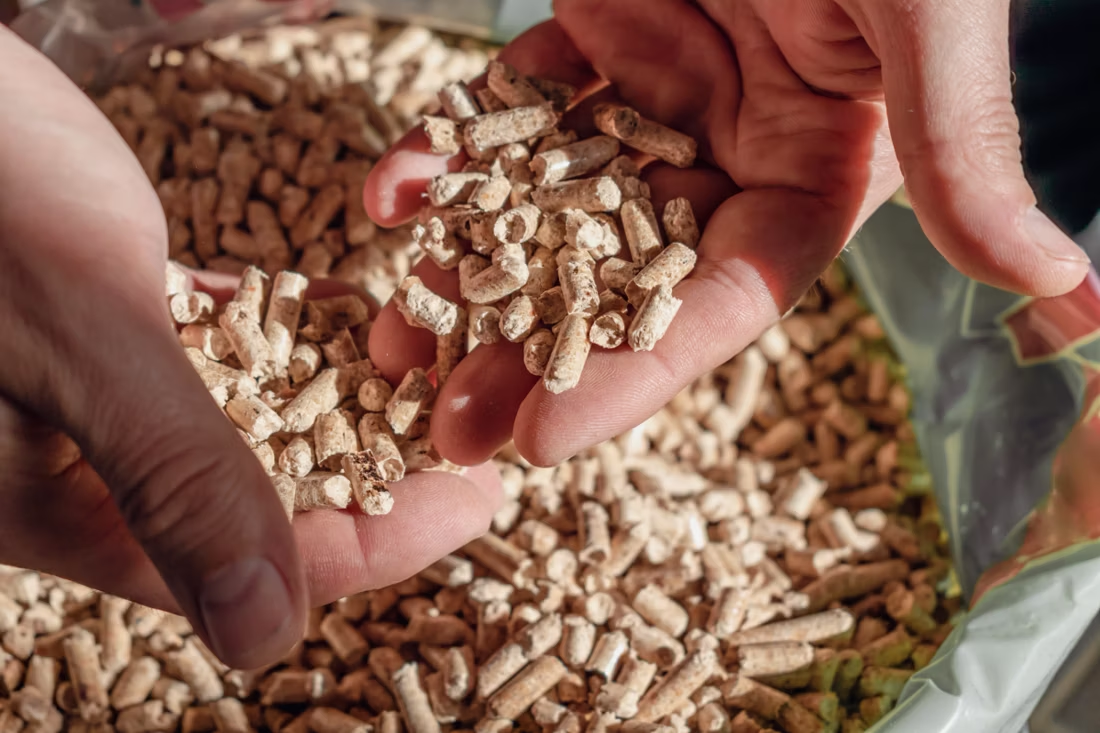
Regional pellet brands including Indeck Energy Services, Lignetics, and Somerset Pellet Fuel supply much of the hardwood pellet stock sold in southern Illinois, typically through farm supply and hardware retailers in Harrisburg, Marion, and Metropolis rather than in-county, given Hardin County's small population. Bagged pellets generally run in the $230 to $300 per ton range depending on brand and season; buying a full ton or more ahead of winter, and storing it dry, is the standard approach for rural county homeowners who don't want to make repeat trips.
Pellet stove vs. gas fireplace—which is right for my home?
Gas fireplaces offer instant on-off heat with no fuel handling, but in a county as rural as Hardin, natural gas service is limited outside the small town centers, which pushes many homes toward propane—meaning tank refills and delivery scheduling either way. Pellet stoves use bagged fuel you can stock up on locally, offer a more substantial heat output for supplemental or even primary heating, and tap into the same hardwood supply chain that already serves the region. For homes without existing gas or propane infrastructure, a pellet stove is often the simpler retrofit, especially into a home without a masonry chimney.
Why is my open fireplace making my house colder?
Open fireplaces suck—literally. As the fire burns, it consumes air your furnace already paid to heat and pulls it out through the chimney, so the house is actually colder after the fire goes out than before you lit it. An insert fixes this: it seals the chimney, puts fixed glass across the front, and turns that hole in your house into a real heat source.
What's the difference between an insert and a zero-clearance fireplace?
An insert is a fireplace that slides into a pre-existing wood-burning fireplace—if you don't have one, there's nothing to insert it into. A zero-clearance fireplace is built into a framed wall, which makes it the answer for remodels and new construction. Simple test: existing masonry fireplace means insert; blank or framed wall means zero-clearance.
What is an in-home preview and do I need one?
It's a visit where a hearth professional measures your space, confirms the model you picked actually works in your home, and walks the specs—framing, gas line, venting, finish work—before anything is ordered. Some details you just can't know until you see the house. Never make a down payment without one; it's the single most-skipped step that burns buyers.
Can a fireplace actually lower my heating bill?
Yes—by creating a comfort zone. A furnace heats every square foot of the house just to warm the one room you're in; a gas fireplace on low burns roughly a sixth of the gas a typical furnace does. Set the furnace around 55–60 degrees as a baseline, then heat the rooms your family actually uses. Families who heat this way commonly save $20–$60 a month.
Pellet Brands Stocked Around Hardin County
Manufacturers will point you to the nearest stocking dealer.
Find your pellet stove in Hardin County.
Tell us a bit about your home and we'll match you with the right pellet stove or insert, plus a free Project Guide & Parts List—the exact parts, vent kit, and a recommended local Hardin County dealer for your project.
Find Your Fireplace →