
Real heat, no gas line required, anywhere in Hardin County.
From the river bluffs near Cave-in-Rock to the farmhouses outside Elizabethtown and Rosiclare, electric fireplaces solve the one problem most of Hardin County shares: no natural gas main nearby. Find the right unit and connect with a trusted local dealer.
Every Project Starts From One of These Five Situations
The simplest heat upgrade in Illinois' smallest county.
Hardin County sits at the southern tip of Illinois where the Ohio River bends past Cave-in-Rock and the Shawnee National Forest, and with roughly 1,486 residents it's the least populated county in the state. Climate zone 4A means a mixed-humid pattern—hot, sticky summers and winters that swing from mild to genuinely cold, with cold snaps that push overnight lows into the teens and single digits a handful of nights each year. None of that requires a masonry chimney or a gas main to manage comfortably, which is exactly the point of an electric fireplace or insert.
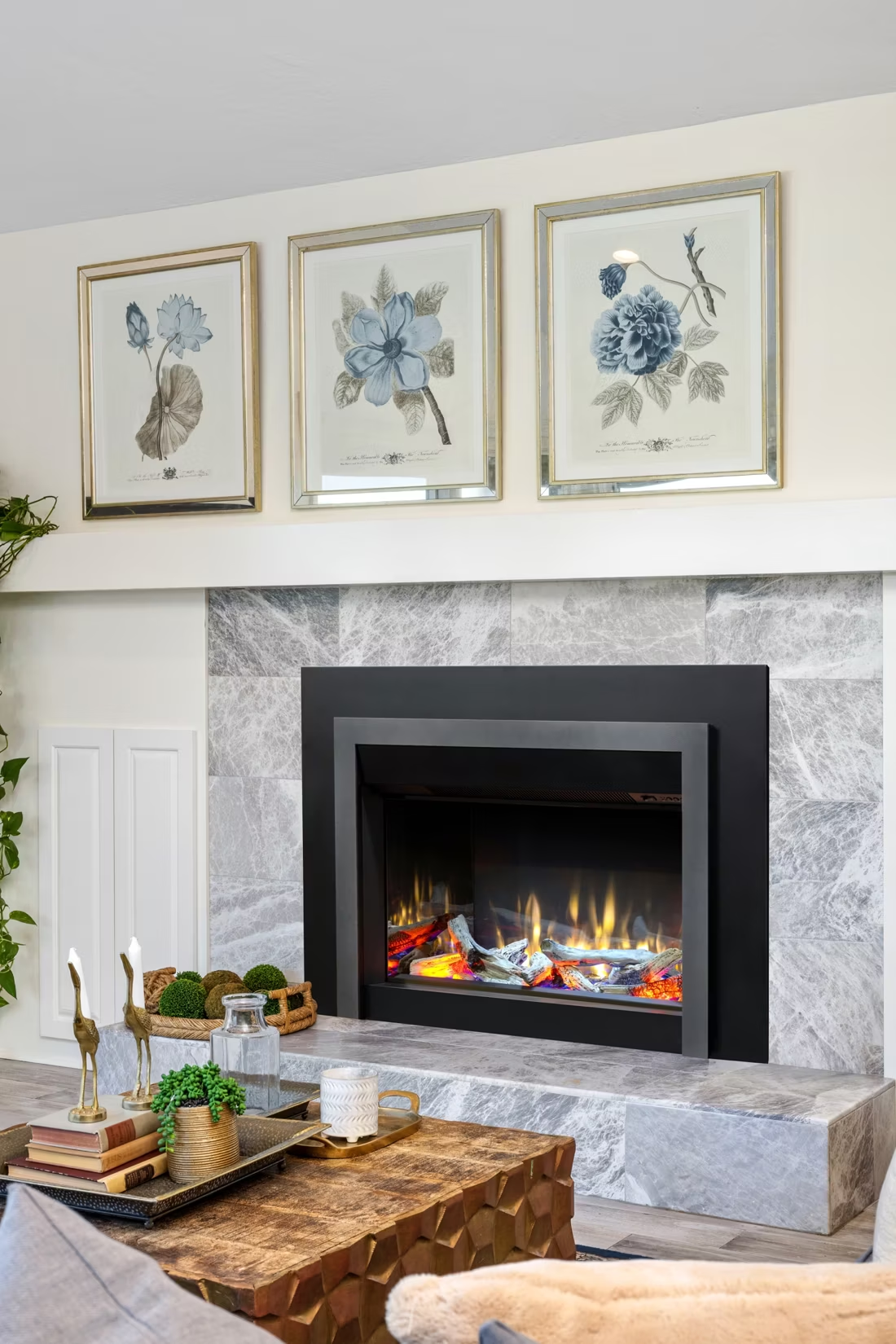
Natural gas service is limited to nonexistent across most of unincorporated Hardin County—Elizabethtown, Cave-in-Rock, and Rosiclare are mostly propane, electric, or wood-heat territory. That makes electric fireplaces a genuinely practical fit here rather than a novelty: no venting, no gas line, no chimney inspection, and a straightforward 120V or 240V circuit is often all that's needed. For older farmhouses, river-bluff cabins, and the manufactured and modular homes common throughout the county, an electric insert or wall unit adds real supplemental zone heat and ambiance without touching the structure's existing heating system.
Three steps. No salesperson until you're ready.
Tell us about your project
Your zip code, your situation, and the fuel you're leaning toward—or let the answers point you to one.
See what's actually available
The brands dealers within 100 miles genuinely carry—real options, never a catalog mirage.
Get your dealer & Project Guide
A trusted local dealer, plus the free Project Guide & Parts List that names every component of the job.
Frequently Asked Questions
How much does an electric fireplace installation cost in Hardin County?
Electric fireplaces are the most affordable hearth option available, typically running $400 to $1,200 installed in Hardin County, including the unit and basic electrical work. A plug-in insert or mantel package that uses an existing standard outlet sits at the low end. A built-in wall unit or a larger insert requiring a dedicated 240V circuit—common when a homeowner wants a stronger heat output for a drafty older farmhouse near Elizabethtown or Rosiclare—runs toward the higher end once an electrician runs new wiring. There's no venting, chimney, or masonry work involved, which is a big part of why the cost stays low compared to wood or gas.
Will an electric fireplace actually heat a room in a Hardin County winter?
Yes, for zone heating—most electric inserts and stoves are rated for 400 to 1,500 square feet and put out real, usable heat, not just a glowing screen. In a 4A mixed-humid climate like Hardin County's, where cold snaps rather than sustained deep freezes are the main challenge, an electric unit works well as the primary heat source for a single room (a den, a bedroom addition, a converted porch) or as supplemental heat that lets you turn the central thermostat down elsewhere in the house. It's not designed to replace a furnace in a whole farmhouse, but paired with existing heat it covers a lot of ground for very little running cost.
Do I need an electrician to install an electric fireplace?
It depends on the unit. Many electric fireplace inserts and mantel packages plug into a standard 120V outlet and need no electrician at all—you can be running it the same day it arrives. Larger built-in wall units or higher-output inserts often call for a dedicated 240V circuit, which does require a licensed electrician to run new wiring, especially in older Hardin County homes that may still have outdated panels. Your local dealer will tell you upfront which category your chosen model falls into before you commit.
Insert, mantel package, or built-in wall unit—which is right for my home?
An electric insert is built to slide into an existing fireplace opening (masonry or old wood-burning), instantly converting an unused or drafty hearth into working supplemental heat—a common upgrade in Hardin County's older river-town homes. A mantel package pairs a freestanding or wall-mount unit with a surrounding shelf and is popular for rooms with no existing fireplace. A built-in wall unit is recessed into framing, drywalled around, and looks the most like a true fireplace—best suited to new construction, additions, or a remodel where you're opening the wall anyway. For manufactured and modular homes common throughout the county, a plug-in insert or wall-mount unit is usually the simplest path.
Do I need a permit to install an electric fireplace in Hardin County?
In most cases, no—because electric units don't burn fuel, don't produce combustion byproducts, and don't need venting, they typically fall outside the building permit requirements that apply to wood or gas installations. If a project involves adding a new dedicated circuit or a subpanel, the electrical work itself may need to meet code and get inspected, which your electrician will handle. For anything involving structural changes—like framing a new built-in wall unit into an addition—check with the county before starting. Your local dealer can tell you whether your specific project needs a permit.
Electric vs. wood—which makes more sense for a Hardin County home?
Wood has deep roots here—oak, hickory, walnut, and maple are all common in the Shawnee Hills, and plenty of Hardin County households already burn wood for primary or supplemental heat. Wood also works without electricity, which matters during the occasional outage tied to Ohio River-area storms. Electric, on the other hand, needs zero fuel handling, no chimney sweeping, no ash cleanup, and no cutting or seasoning firewood—you flip a switch and it runs. For a low-maintenance secondary heat source in a bedroom, sunroom, or rental property, electric usually wins. For anyone wanting heat that works when the power's out, wood or a battery-backed gas unit is the better call.
Electric vs. propane—which fits better where there's no natural gas line?
Since natural gas mains don't reach most of Hardin County, the real comparison for many homeowners is electric versus propane rather than electric versus natural gas. Propane fireplaces put out more heat and can run during a power outage on some models, but they require a tank, periodic refills, and a bit more upfront installation cost. Electric fireplaces skip the tank and fuel deliveries entirely, cost less to install, and are simpler to maintain—the tradeoff is that they stop working the moment the power does. For a supplemental heat source in a home that already has a primary furnace, electric is usually the lower-hassle, lower-cost choice.
What happens to my electric fireplace during a power outage?
It simply won't run—electric fireplaces have no battery backup or standalone fuel source, so an outage means no heat and no flame effect until power returns. In a rural county like Hardin, where storms along the Ohio River bottoms can occasionally knock out power for a stretch, that's worth planning around. Many homeowners here pair an electric unit for everyday convenience and low operating cost with a wood stove, propane heater, or portable generator as backup for outages. If backup heat during outages is your top priority, ask your local dealer about that combination rather than relying on electric alone.
Where can I find someone to install an electric fireplace near me in Hardin County?
With a population under 1,500 spread across Elizabethtown, Cave-in-Rock, and Rosiclare, Hardin County doesn't support its own dedicated hearth showroom, so most installers serving the area are based out of nearby Harrisburg or Marion and travel in for jobs. That's exactly the gap Find My Fireplace is built to close—rather than guessing which regional dealer actually covers your address, we match you with a trusted local installer who services Hardin County, sized and specced for your specific home.
Can I put a TV above my fireplace?
Yes—with an asterisk. Fireplaces are hot and TVs don't like heat. Either put a mantel between them to deflect rising warmth, or choose a fireplace with heat-management technology that creates a cool zone on the wall above—the wall stays around 125 degrees, barely warm, while the room still gets full heat. If you like clean lines and don't want a mantel, heat management is the answer.
Does an electric fireplace need a vent or chimney?
No—that's its superpower. An electric fireplace needs a wall and an outlet, period. No vent pipe, no gas line, no clearances to design around, which is why it works in bedrooms, offices, apartments, and walls where venting a gas or wood unit would be impractical or impossible. Installation is typically the simplest and least expensive of any fireplace type.
Can I install a fireplace myself?
If you're putting a fire in your house on purpose, it's best to work with an expert. Unless you're genuinely experienced in framing, gas line, vent pipe, and the national code on clearances to combustibles, have a professional do it—and ideally the same company that sells you the fireplace, so warranty, service, and liability all live under one roof.
What is an in-home preview and do I need one?
It's a visit where a hearth professional measures your space, confirms the model you picked actually works in your home, and walks the specs—framing, gas line, venting, finish work—before anything is ordered. Some details you just can't know until you see the house. Never make a down payment without one; it's the single most-skipped step that burns buyers.
Get your electric fireplace project mapped out in Hardin County.
Tell us about your home and we'll put together a free Project Guide & Parts List—the exact parts for your electric fireplace project in Hardin County, plus a recommended local dealer who can install it.
Find Your Fireplace →