
Find the Right Fireside Fit for Your Hardin County Home.
Wood, gas, pellet, and electric fireplace resources for Elizabethtown, Rosiclare, Cave-in-Rock, and the rest of Hardin County—Illinois' least populous, southernmost county along the Ohio River.
Every Project Starts From One of These Five Situations
Wood heat and rural living along Illinois' Ohio River frontier.
Hardin County is Illinois' least populous county—just under 1,500 residents spread across the state's southernmost tip, hemmed in by the Ohio River and Kentucky to the south and east. Climate zone 4A means winters here are noticeably milder than what you'd find in Madison, Wisconsin, but still cold enough to make wood heat a practical, everyday choice rather than a novelty. Oak, hickory, walnut, and maple grow thick on the bluffs above the river and in the Shawnee National Forest lands that reach into the county, and dense, well-seasoned hardwood has heated Hardin County farmhouses and river-bottom homes for generations.
With a population this small, there's no big-box hearth showroom sitting inside county lines—most retailers and technicians who serve Hardin County are based in nearby Marion, Harrisburg, or across the river in Paducah, Kentucky, and they travel out to Elizabethtown, Rosiclare, and Cave-in-Rock for consultations, installs, and service calls. The county carries no air quality non-attainment designation, so wood burning here isn't subject to the advisory days or curtailment periods you'd see in more urban parts of the state. Pick your fuel below to see local dealers, typical installed costs, and the options that actually fit a Hardin County home.
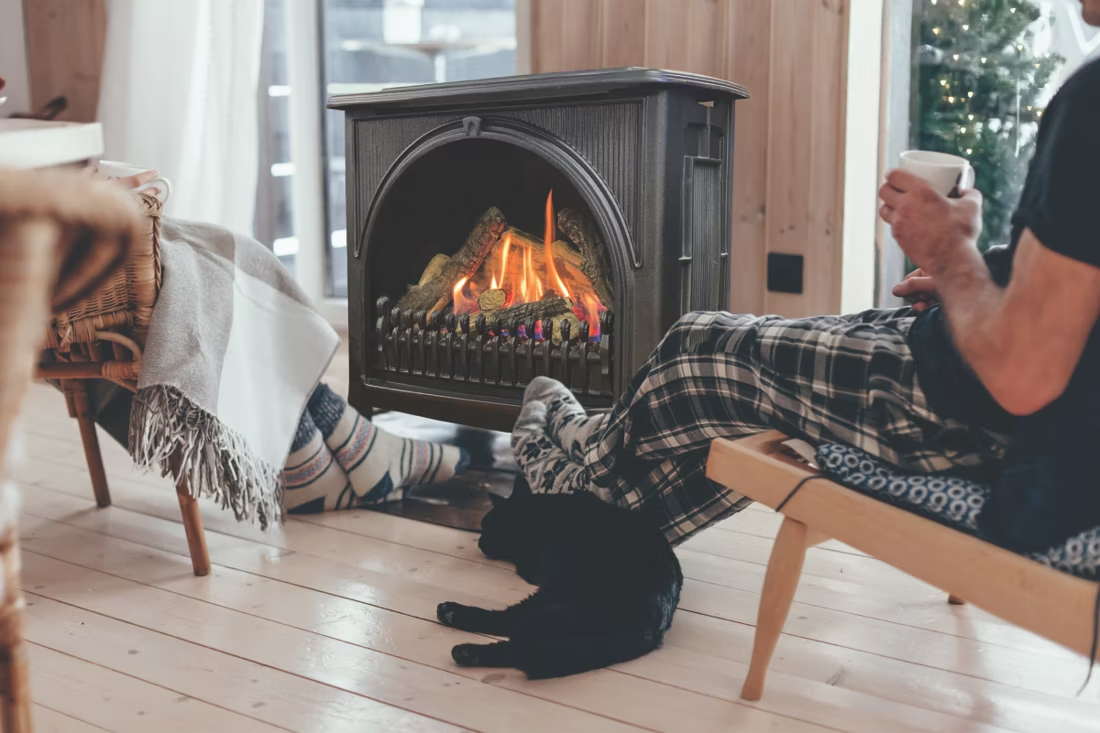
Four fuels. One honest answer for Hardin County.
Three steps. No salesperson until you're ready.
Tell us about your project
Your zip code, your situation, and the fuel you're leaning toward—or let the answers point you to one.
See what's actually available
The brands dealers within 100 miles genuinely carry—real options, never a catalog mirage.
Get your dealer & Project Guide
A trusted local dealer, plus the free Project Guide & Parts List that names every component of the job.
Frequently Asked Questions
Which fuel works best in Hardin County?
Most Hardin County homes lean on wood, and for good reason—oak and hickory from the river bluffs and Shawnee National Forest edges burn dense and long, and firewood is cheap or free if you're cutting your own. Gas is the convenience option for homes on propane service (natural gas mains are limited in a county this rural, so propane tanks are the norm rather than piped gas). Pellet stoves are a solid middle path—Indeck Energy Services and Lignetics both distribute into this part of southern Illinois, so supply isn't a problem even in a small county. Electric fireplaces show up mostly as supplemental heat in bedrooms or as ambiance in living rooms—zone 4A winters aren't brutal enough to demand electric as a primary heat source, but they're not so mild that it's the only thing you'd need, either.
Do I need a permit to install a fireplace in Hardin County?
In most cases, yes, though the process is simpler here than in a larger jurisdiction. New gas line work generally requires a permit and a licensed installer regardless of where you live in Illinois. Wood stove and insert installs typically need to meet local zoning and setback requirements—if you're inside Elizabethtown, Rosiclare, or Cave-in-Rock, check with that municipality's clerk; if you're in the unincorporated county, the county zoning office handles it. Electric fireplace installs usually skip the permit process unless you're hardwiring a built-in unit into a new circuit. Local retailers who regularly work Hardin County jobs typically know exactly who to call and handle this as part of the installation.
Are there air quality restrictions on wood burning in Hardin County?
No. Hardin County carries no air quality non-attainment designation and no winter burn advisories—unlike counties around Chicago or St. Louis that deal with inversion-driven air quality days. That means no curtailment periods, no voluntary burn bans, and no extra hoops for a new wood stove install here. The only real consideration is basic chimney maintenance and using seasoned hardwood—oak and hickory that's been split and dried at least six months to a year burns cleaner and hotter than green wood, and it's the difference between a stove that heats well and one that smokes up the neighborhood.
Can one local hearth retailer handle all four fuel types?
Given how few households are in Hardin County, most of the retailers who make the drive out here carry more than one fuel type—it's not economical for a dealer to specialize in just one fuel when they're covering a wide, sparsely populated service area that stretches from the river towns up toward Harrisburg. Expect the dealers listed on this hub to show wood, gas, and pellet units side by side, with electric fireplaces as a smaller add-on line. If you're not sure which fuel fits your home, a multi-fuel dealer serving this county can walk you through the trade-offs for a river-bottom farmhouse versus a house up on the bluffs.
How does service work in rural Hardin County?
Technicians serving Hardin County are almost always based outside the county—Marion, Harrisburg, and Paducah, Kentucky are the closest hubs with regular hearth service crews—and they build routes that swing through Elizabethtown, Rosiclare, and Cave-in-Rock rather than dispatching one-off trips. Expect a modest trip charge for service calls given the distance, and expect to book pre-season chimney sweeps and gas inspections (late summer through early fall) rather than trying to get same-week service once cold weather hits. If you're relying on a single wood stove for primary heat, it's worth keeping a small backup supply of dry firewood on hand in case a service issue or an early cold snap hits before your appointment.
What's the typical cost range for fireplace installation across all fuel types in Hardin County?
Wood stove or insert installation: roughly $4,000–$8,500 for a typical setup, more if new chimney or liner work is involved. Gas fireplace, insert, or stove: $4,000–$10,000, with propane tank setup or gas line work pushing costs toward the higher end for homes without existing service. Pellet stove or insert: $4,000–$7,000 for a standard install. Electric fireplace: $200–$3,000 for the unit itself, plus $400–$1,000 in labor for anything beyond a simple plug-in placement. Because most dealers and installers are traveling in from Marion, Harrisburg, or Paducah, budget for a modest trip or travel fee on top of these ranges—it's usually built into the quote rather than billed separately.
Can I install a fireplace myself?
If you're putting a fire in your house on purpose, it's best to work with an expert. Unless you're genuinely experienced in framing, gas line, vent pipe, and the national code on clearances to combustibles, have a professional do it—and ideally the same company that sells you the fireplace, so warranty, service, and liability all live under one roof.
Does a fireplace add value to my home?
On average, a fireplace adds back to the home about the same amount you spent installing it. Add the monthly savings from heating the rooms you actually use instead of the whole house—often hundreds of dollars a year—and the value case is strong before you even count what a fire does for how your family uses the room.
Wood, gas, pellet, or electric—how do I choose?
Match the fuel to your life, not the other way around. Wood: lowest fuel cost and total power-outage independence, but you're hauling and stacking. Gas: press a button, set a thermostat, no maintenance to speak of. Pellet: wood economics with automatic feeding, in exchange for weekly cleaning and a need for electricity. Electric: plugs in anywhere with honest supplemental heat. Nobody regrets the fuel that fits how they actually live.
How much should I budget for a fireplace?
For an average home—covering the fireplace, the vent pipe, and basic installation—a budget between $3,900 and $5,500 gives you a lot of options across wood, gas, and pellet. By the time you add finish work, gas line, and electrical, the average complete installation lands between $5,000 and $12,000 all-in. In a remodel or new build, a good rule is to put about 2.5% of the total project cost toward the fireplace.
Stove and Fireplace Dealers in Hardin County
Listings include WhyFire partner dealers, dealers we have verified as authorized for the brands we recommend, and established local businesses that carry hearth products. Every listing shows which one it is. The ones marked Preferred run on WhyFire's software, so they can show you real pricing and book your appointment right here. No manufacturer pays for placement. How we verify dealers →
Synergy Gas
Akridge Farm Supply
Master Sweeps
Russell Electric
Hank Bros. True Value
Find your fireplace in Hardin County.
Tell us about your home and we'll match you with a trusted local dealer and send over a free Project Guide & Parts List—the exact parts, including the vent kit, and the dealer we recommend for your project.
Find Your Fireplace →