
Keep Your Family Warm and Safe—No Matter What
Natural gas heats most Elmwood homes, but a fair number of farmstead owners and woodlot families still choose wood—for backup heat, lower bills, or the ambiance a furnace can't give you. We'll connect you with a local dealer who installs it right.
Every Project Starts From One of These Five Situations
A niche heat source in gas country.
Elmwood sits in Peoria County farm country at just over 600 feet elevation, with winters cold enough to matter—average lows near 14°F and a long, demanding heating season, not far off the demands of a place like Bismarck, ND in a mild year. Oak, hickory, walnut, and maple grow throughout the surrounding woodlots and fence rows, so firewood is not hard to come by if you have the land or the connections. But this is a natural-gas town at its core: most Elmwood homes, including the older farmhouses that ring the village, heat with a gas furnace, and that's the default most builders and buyers expect.
That doesn't mean wood is absent—it means it's a deliberate choice rather than the default. Families with mature hardwood on their property, hobby farmers who process their own deadfall, and homeowners who remember what an ice storm does to Ameren Illinois power lines are the ones who install a wood stove or insert here. There's no national forest cutting permit system to lean on the way there is out West—this is private farmland, so firewood comes from your own woodlot, a neighbor's tree removal, or a local firewood seller. If that's your situation, a properly sized, EPA-certified stove is still a smart piece of equipment to own in central Illinois.
Three steps. No salesperson until you're ready.
Tell us about your project
Your zip code, your situation, and the fuel you're leaning toward—or let the answers point you to one.
See what's actually available
The brands dealers within 100 miles genuinely carry—real options, never a catalog mirage.
Get your dealer & Project Guide
A trusted local dealer, plus the free Project Guide & Parts List that names every component of the job.
Frequently Asked Questions
Is wood heat actually common in Elmwood?
Not especially. Natural gas is the standard heating fuel across Peoria County, and most Elmwood homes run a gas furnace as primary heat. Wood stoves and inserts show up in a smaller slice of homes—usually farmsteads with their own hardwood woodlots, rural properties outside the village core, or homeowners who want a heat source that still works when an ice storm takes down power lines. If you fall into one of those categories, wood is a legitimate and often smart choice; it's just not the default the way it would be in a heavily forested region.
How much does a wood stove installation cost in Elmwood?
Because wood-burning installs are less frequent here than in more wood-reliant regions, pricing tends to track regional Midwest averages rather than a large local market: figure roughly $3,500 to $7,500 for a freestanding stove with a new Class A chimney, hearth pad, and clearances brought up to code. An insert into an existing masonry fireplace that just needs a liner and surround typically comes in lower, around $3,000 to $5,500. Because certified installers who specialize in wood appliances aren't on every corner in a town this size, some quotes will include a service trip from a Peoria-area dealer—worth asking about up front.
Where do people in Elmwood actually get firewood?
There's no national forest permit system to use here—this is private farmland, so firewood sourcing looks different than it would out West. Most Elmwood-area burners rely on their own woodlot, a neighbor clearing fence rows, or a local tree service that's happy to drop off logs instead of paying to haul them away. Oak and hickory are the most prized for heat output and long burn times; walnut and maple are common too, though walnut splits easier and burns a bit faster. If you're buying, expect $150 to $250 a cord from area sellers, with seasoned oak or hickory at the higher end.
Do I need a permit to install a wood stove in Elmwood?
Most likely yes, though the process is simpler than it sounds. New wood-burning installations typically require a building permit—for property inside the village limits that runs through Elmwood's local building authority, and for surrounding unincorporated Peoria County it runs through the Peoria County Building Department. Either way, the stove needs to meet current EPA emissions standards and the installation needs proper clearances and Class A chimney pipe. Any dealer who regularly installs wood stoves in this area will pull the permit as part of the job, so you're not stuck figuring out jurisdiction yourself.
What size wood stove makes sense for a home in Elmwood?
With average winter lows around 14°F and a long, demanding heating season, most Elmwood homes need a mid-size stove rather than the largest catalytic units built for true sub-zero climates. A stove rated for 1,200 to 2,000 square feet handles a typical farmhouse living area or main floor as supplemental heat well; if you're aiming to heat a full older home as primary heat, size up and talk to a dealer about your insulation and ceiling height. Non-catalytic stoves from brands like Englander or Drolet are common, budget-friendly choices for this kind of secondary-heat use; if you want 12+ hour burn times for overnight, ask about catalytic options from Blaze King or Woodstock Soapstone.
Why isn't wood heat more common in Elmwood given how cold it gets?
It comes down to infrastructure and convenience. Central Illinois towns like Elmwood have well-established natural gas service, and gas furnaces require none of the labor that wood does—no splitting, stacking, hauling ash, or feeding a fire at 2 a.m. A century ago, wood and coal were the norm here; today gas is cheaper on a per-BTU basis for most households and far less hands-on. The families who still choose wood tend to have a practical reason: a woodlot they're already managing, a background in farming where using what you have is second nature, or a desire for heat that doesn't depend on the grid or a gas line.
Wood vs. gas—which makes more sense for an Elmwood home?
For most Elmwood households, gas wins on convenience: it's instant, requires no fuel handling, and it's already the standard in this part of Peoria County. Wood makes sense as a second heat source rather than a replacement—it keeps a home warm during an ice-storm power outage, it can meaningfully cut a gas bill if you have free or cheap access to oak and hickory, and some people simply prefer a real fire. If you already heat with gas and are considering wood, think of it as a supplemental system for the coldest weeks and the occasional outage, not a full swap.
Wood stove or wood insert—what's the difference, and which fits an older Elmwood farmhouse?
A wood insert slides into an existing masonry fireplace and uses a liner run up your current chimney—a natural fit if your farmhouse already has an old, drafty open fireplace you want to make useful again. A freestanding wood stove sits on its own hearth pad and can go almost anywhere with the right clearances, which suits homes without an existing chimney, like a detached workshop, mudroom, or a newer addition. Given how many older homes around Elmwood already have a masonry fireplace that's rarely used, an insert is often the more cost-effective upgrade—you're improving something you already have rather than building venting from scratch.
How often does a wood stove or chimney need to be inspected in Elmwood?
The Chimney Safety Institute of America recommends an annual inspection for any wood-burning system, and that guidance doesn't change based on how common wood heat is in your zip code. For a stove used mainly as backup or supplemental heat through an Elmwood winter, an inspection and sweep once a year—before the first cold snap in fall—is enough for most households. If you're burning heavily as a primary heat source, or burning less-seasoned wood, check more often for creosote buildup. Because certified sweeps aren't as plentiful in a town of about 2,000 people, plan your appointment early in the season rather than waiting until the first hard freeze.
Why won't my new wood stove get going like my old one?
New wood stoves are 70%+ efficient, so far less heat goes up the flue—which also means less draft to get a fire established. The rule: build a genuinely hot fire for about 45 minutes before you choke it down. Skip that and you get smoke in the room, creosote in the chimney, and a fire that never takes off. Most performance complaints trace straight back to this.
What's the difference between an insert and a zero-clearance fireplace?
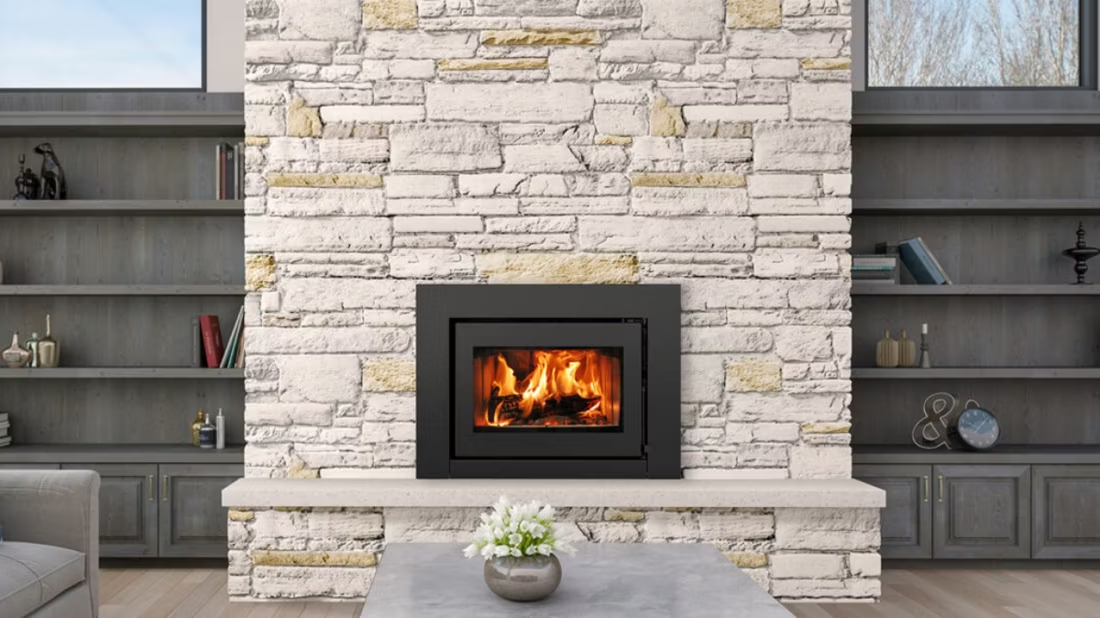
An insert is a fireplace that slides into a pre-existing wood-burning fireplace—if you don't have one, there's nothing to insert it into. A zero-clearance fireplace is built into a framed wall, which makes it the answer for remodels and new construction. Simple test: existing masonry fireplace means insert; blank or framed wall means zero-clearance.
Can a fireplace actually lower my heating bill?
Yes—by creating a comfort zone. A furnace heats every square foot of the house just to warm the one room you're in; a gas fireplace on low burns roughly a sixth of the gas a typical furnace does. Set the furnace around 55–60 degrees as a baseline, then heat the rooms your family actually uses. Families who heat this way commonly save $20–$60 a month.
What is an in-home preview and do I need one?
It's a visit where a hearth professional measures your space, confirms the model you picked actually works in your home, and walks the specs—framing, gas line, venting, finish work—before anything is ordered. Some details you just can't know until you see the house. Never make a down payment without one; it's the single most-skipped step that burns buyers.
Nearby Dealers
Hearth shops serving Elmwood and the surrounding area. Every listing shows whether it is a WhyFire partner, a dealer we have verified as authorized for the brands we recommend, or a local business carrying hearth products. No manufacturer pays for placement. How we verify dealers →
Kbl Design Center
Hampton Distributing
Trouble-Free Plumbing Heating & Cooling Inc.
Find your wood stove in Elmwood.
Tell us about your home and your reason for wanting wood heat—backup power, a woodlot you're putting to use, or supplemental warmth—and we'll match you with a local dealer plus a free Project Guide & Parts List built around your specific install.
Find Your Fireplace →